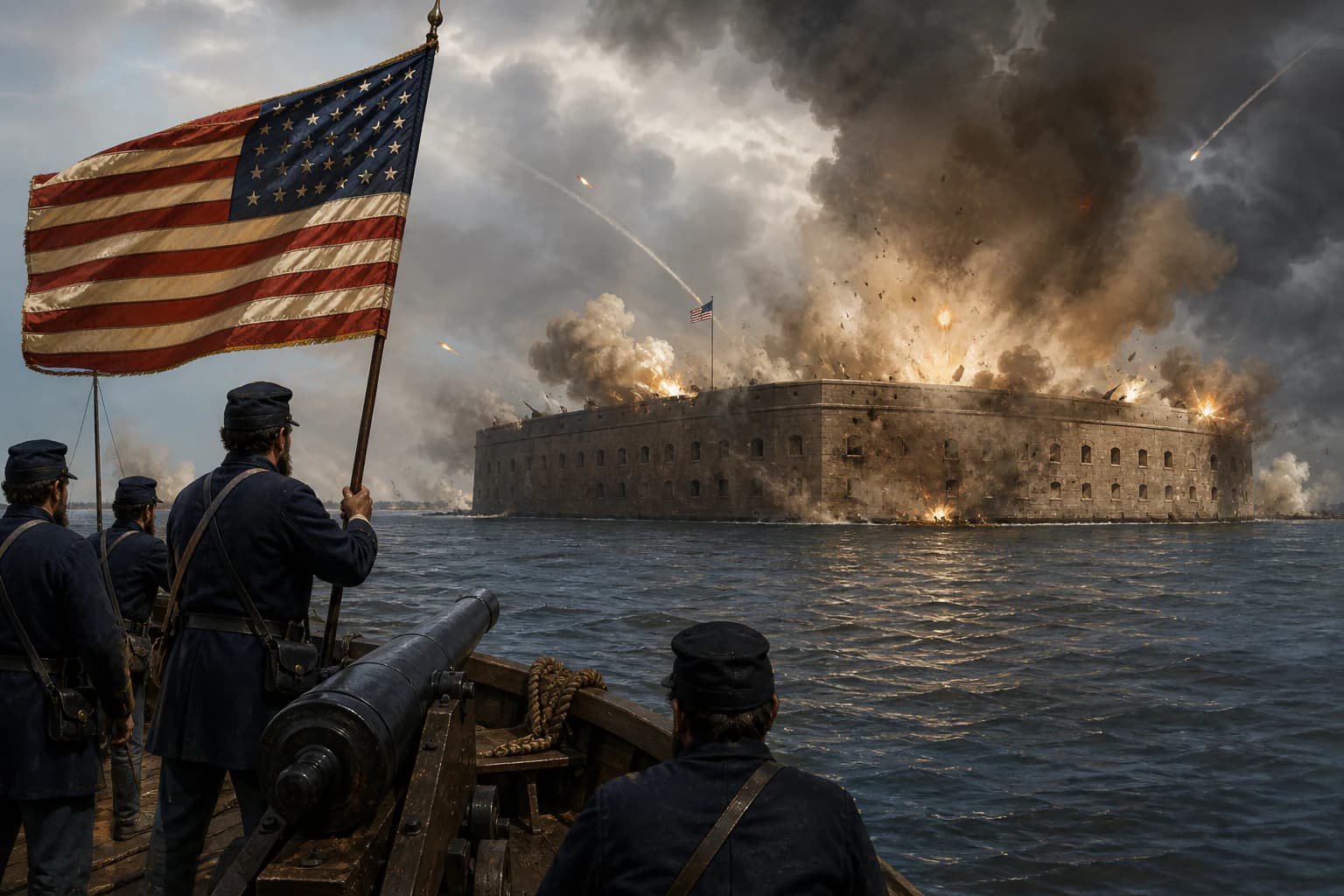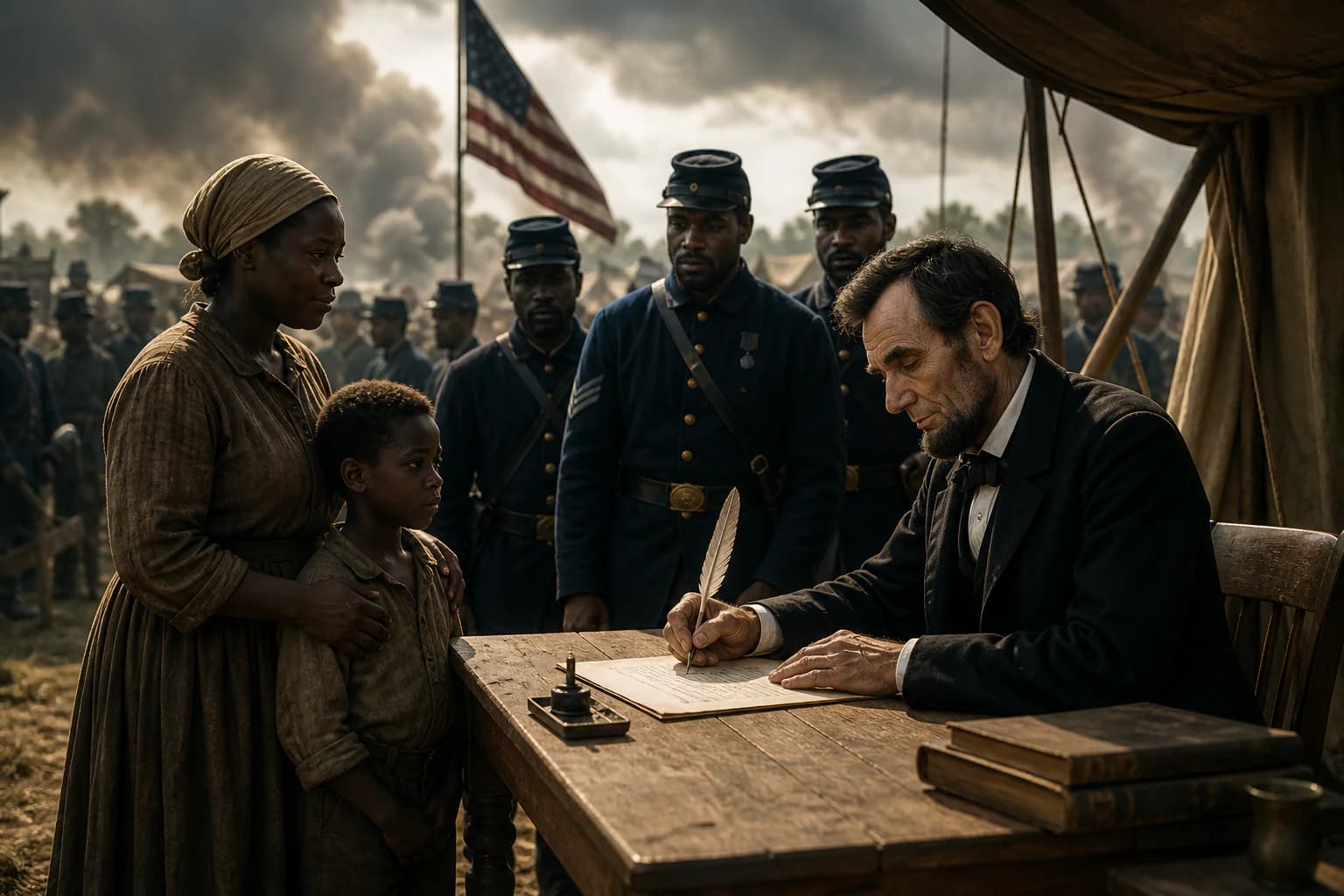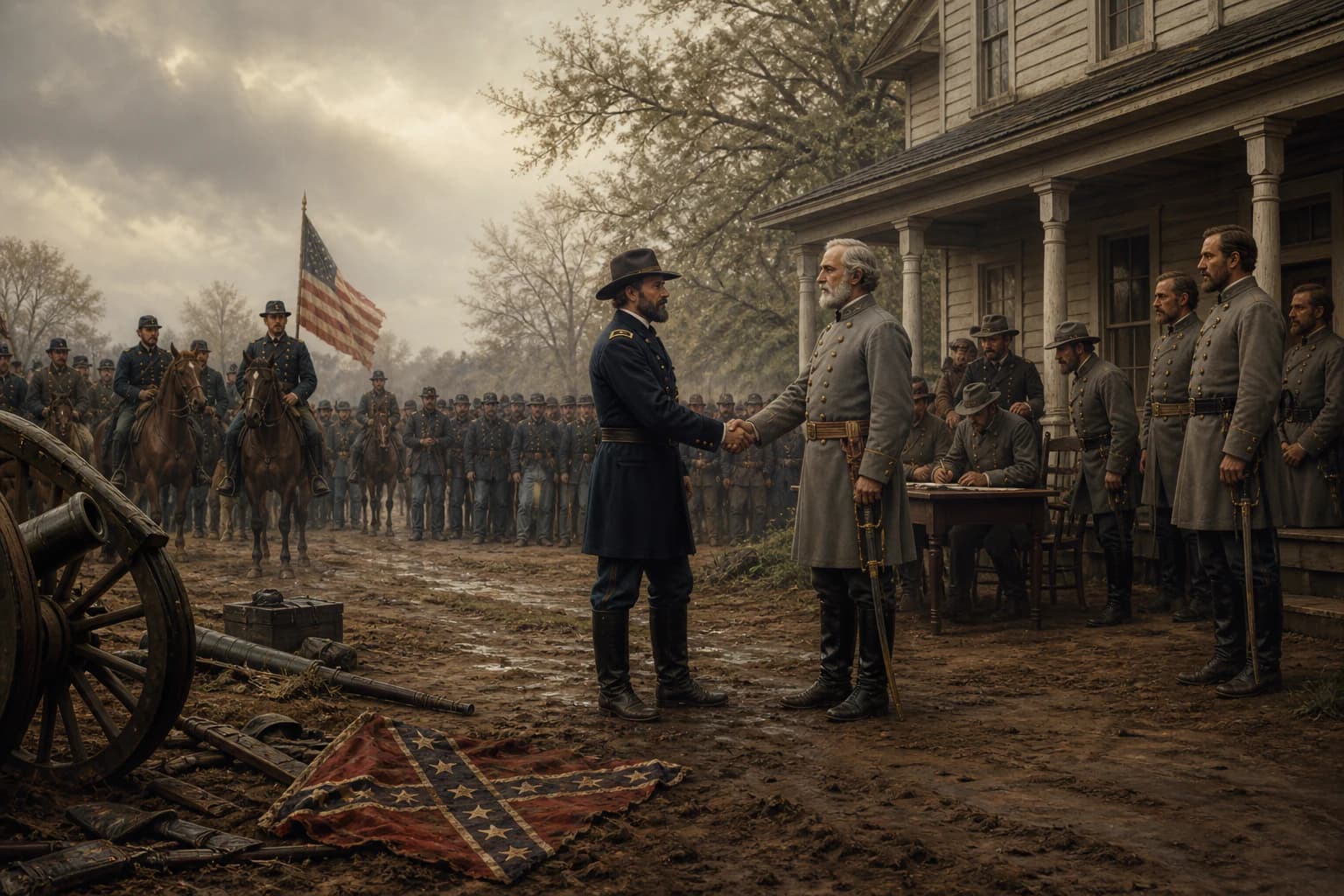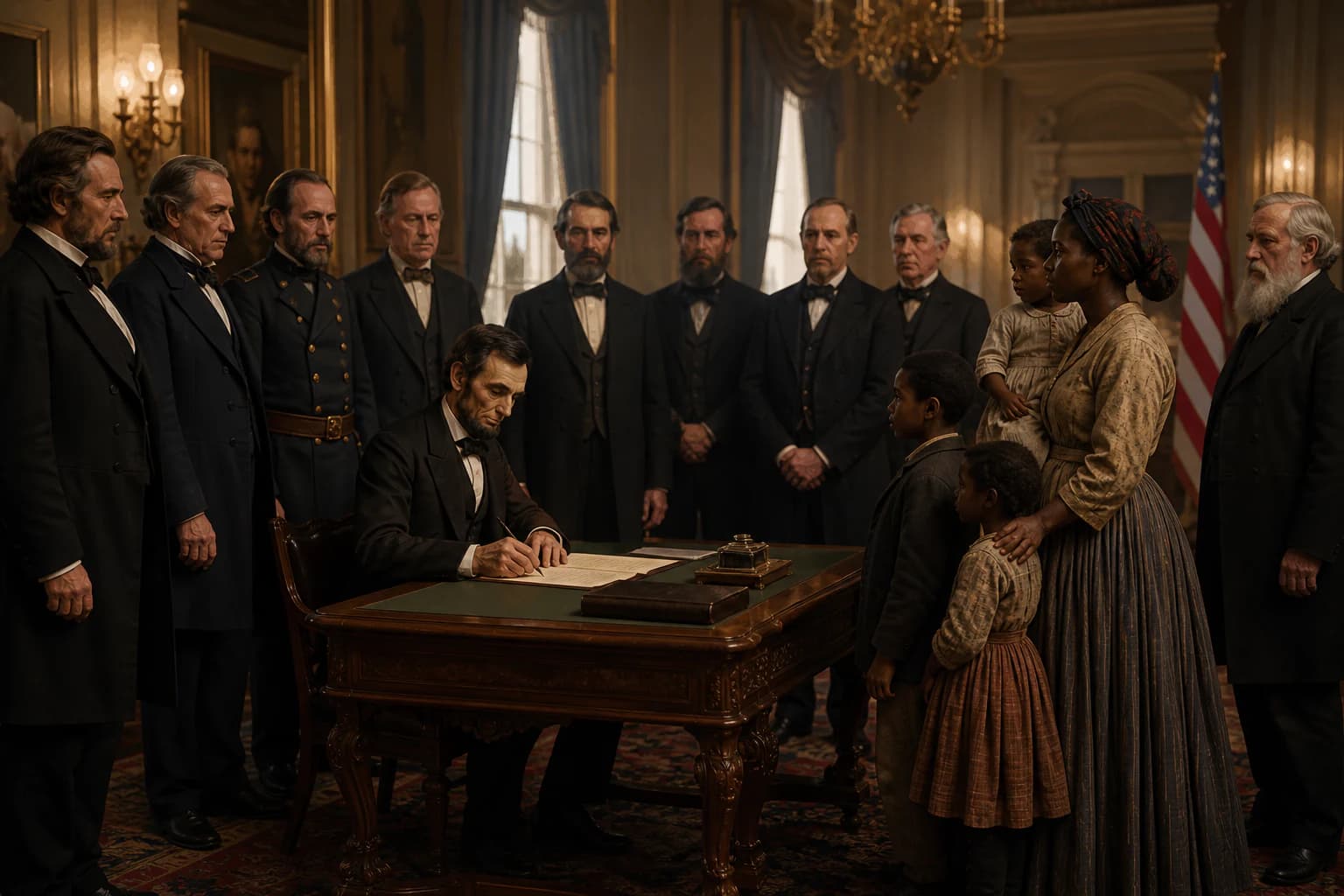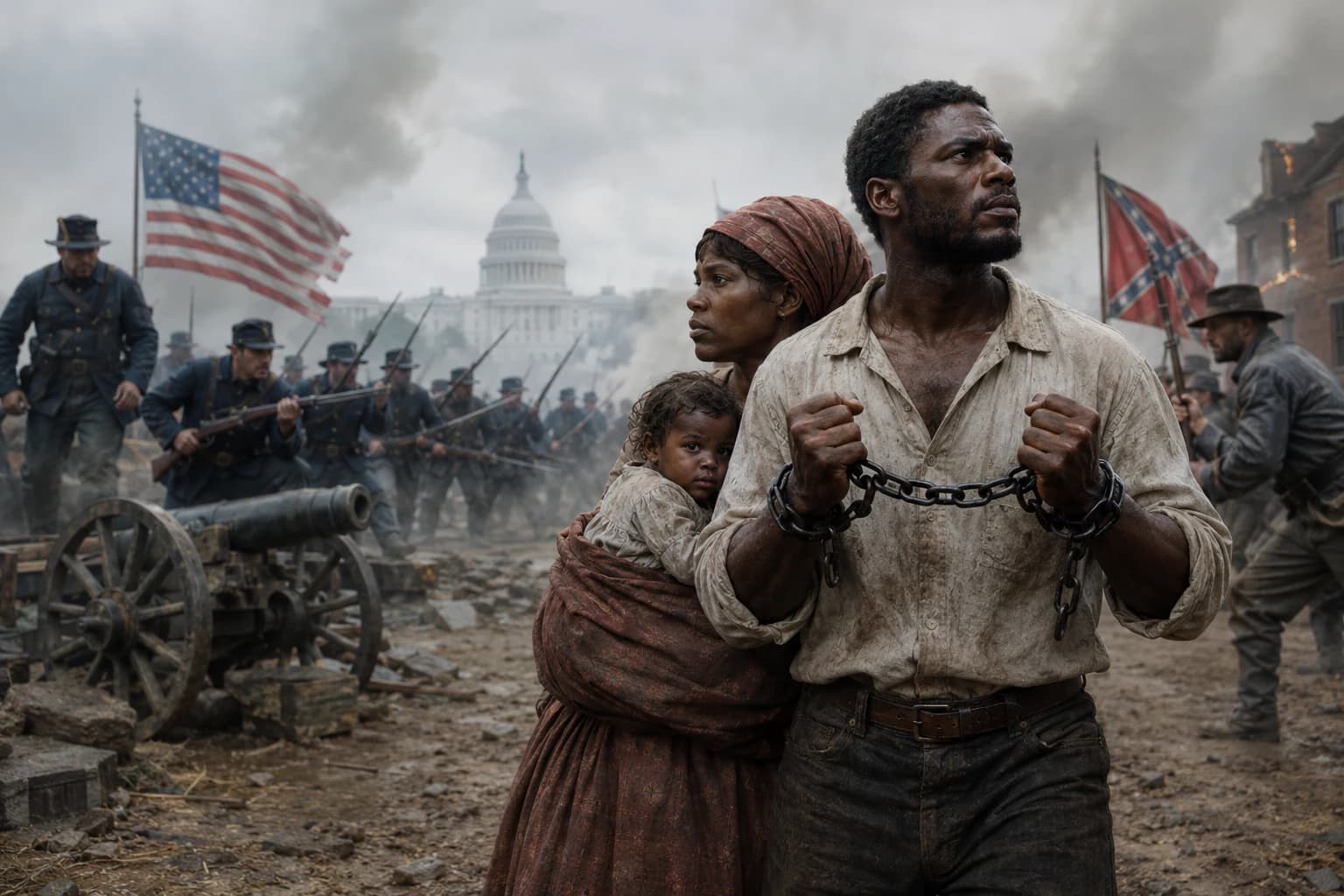
Union soldiers advancing through smoke as enslaved people move towards freedom beneath a torn American flag
Premium Story

The American Civil War and the Abolition of Slavery

Follow the American Civil War from slavery and secession to emancipation, Union victory, and unfinished freedom.

11 chapters

Next

Content note

This story discusses slavery, exploitation, racial persecution, and violence in an educational historical context.

Context

Introduction

Overview

The American Civil War was fought from 1861 to 1865 between the United States and the Confederate states that seceded to defend slavery and regional power. What began as a war over union became a revolutionary conflict over emancipation and the future of American democracy. Union victory destroyed slavery, but Reconstruction and its failure left unresolved struggles over citizenship, race, federal power, and freedom.

What you'll learn: You will see how slavery, expansion, party politics, secession, war, emancipation, and constitutional change combined to remake the United States.
Key forces

The Cotton Kingdom
1793 CE
Step 1 of 101793 CEAccessible mode

The Cotton Kingdom

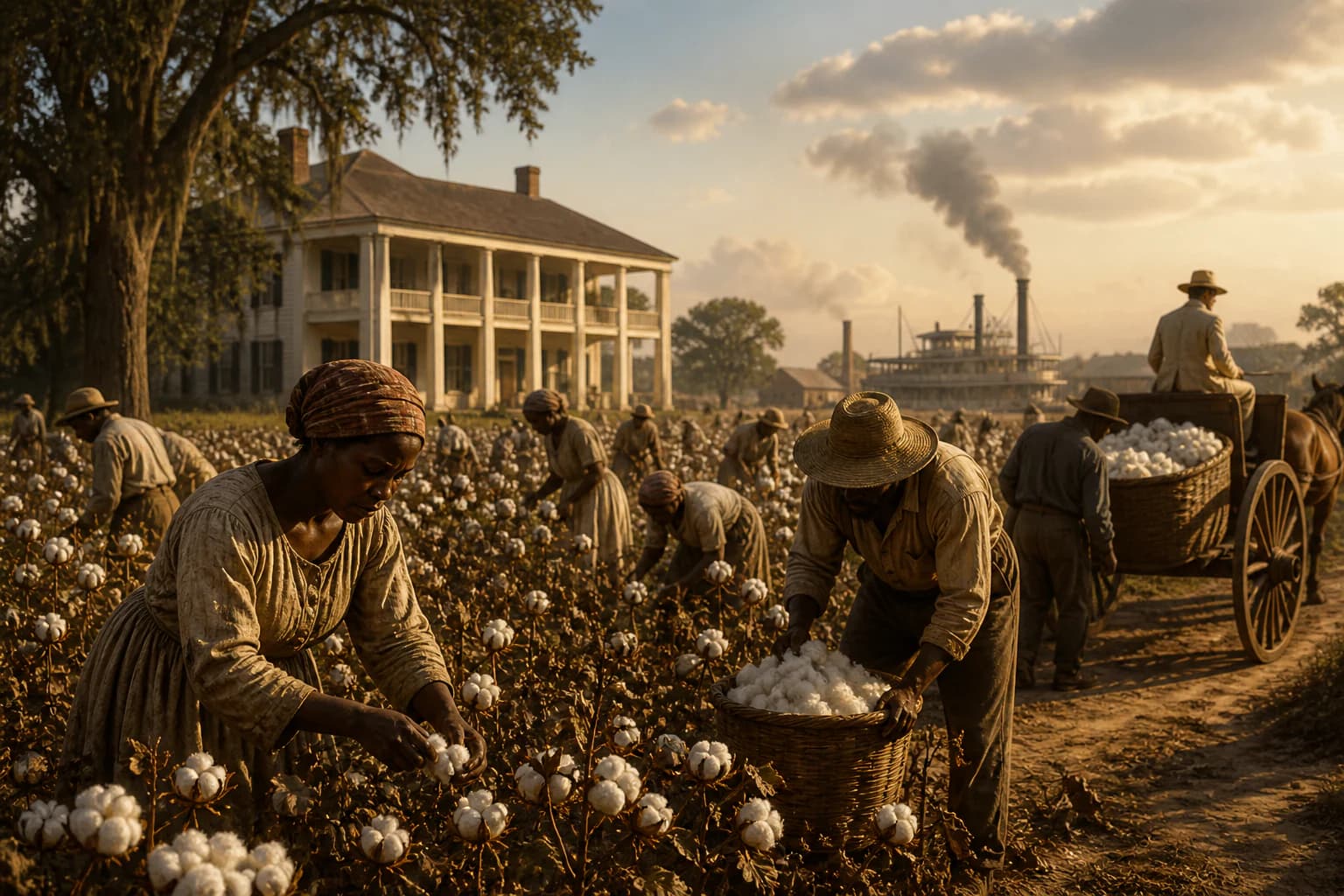
In 1793, one invention changed the American South. It made cotton king — and made slavery the engine of a nation's wealth.

Before Eli Whitney's cotton gin, growing short-staple cotton was slow and expensive. After it, the crop could be processed quickly and at vast scale. Plantations spread rapidly across the South.

More cotton meant more enslaved labour. Planters pushed into new territory, buying thousands of men, women, and children to work the land. By 1860, nearly four million people were held in bondage.

Where cotton grew, slavery followed.

Cotton became the country's most valuable export. Northern banks financed Southern plantations. New England mills processed Southern cotton. The whole national economy was entangled with slavery.

Slavery had once seemed like it might gradually fade. After the cotton gin, it expanded rapidly. Wealthy planters built their politics around protecting it.

This is where the road to civil war began. Once slavery became central to Southern wealth, any threat to it felt like a threat to Southern survival.

The Missouri Compromise
1820 CE
Step 2 of 101820 CEAccessible mode

The Missouri Compromise

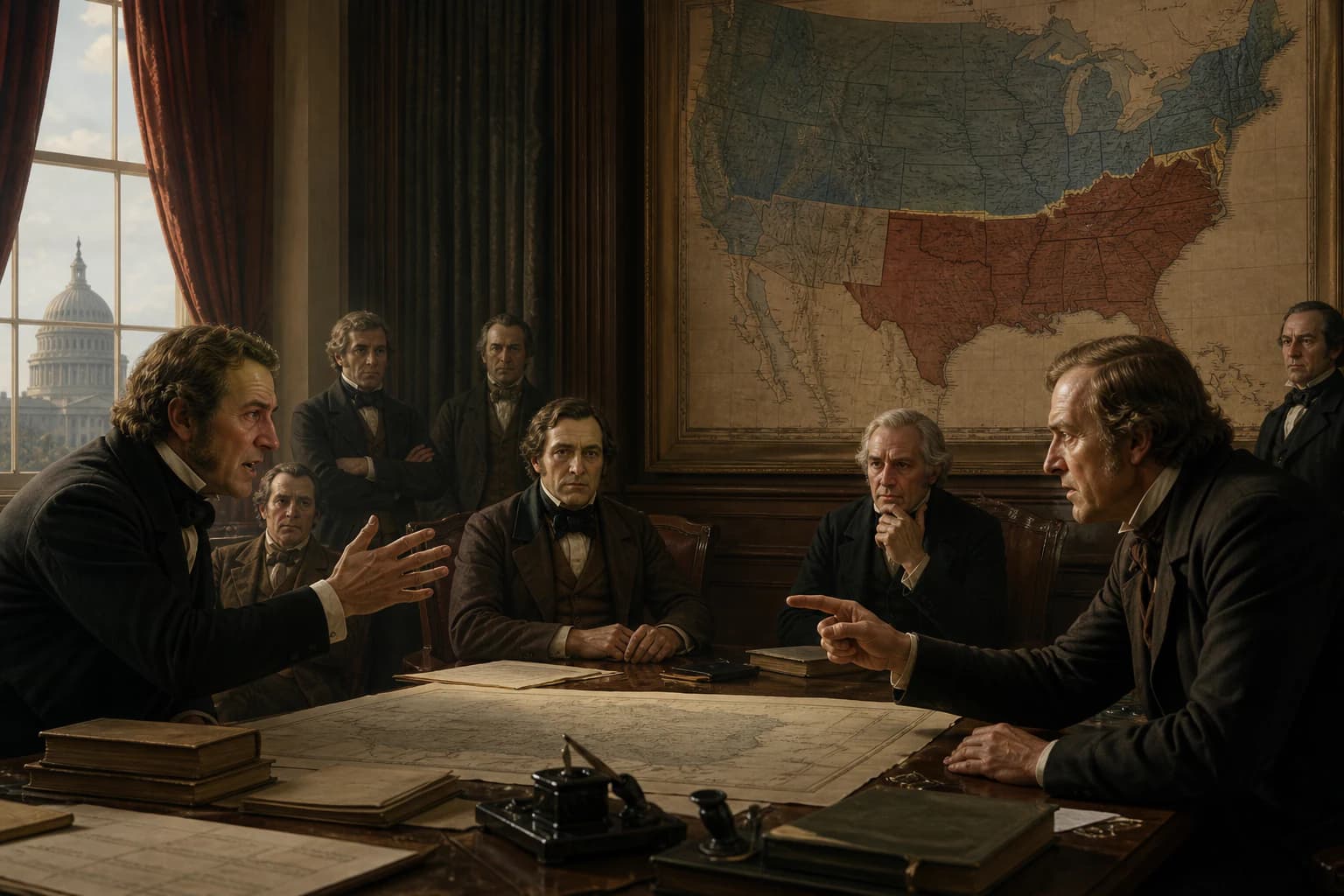
In 1820, a crisis over Missouri revealed something important: the United States could not agree on whether slavery should spread.

Missouri applied to join the Union as a slave state. Northerners objected. If Missouri entered, slavery would grow stronger in a country already divided.

Henry Clay brokered a deal. Missouri would join as a slave state. Maine would join as a free state, keeping the balance. A line drawn across future western territories would separate where slavery was permitted from where it was not.

The debate was not really about Missouri. It was about the future of slavery.

Both sides accepted the deal, but neither was satisfied. Thomas Jefferson called the crisis a fire bell in the night — a warning of something dangerous that could not be put off forever.

The Missouri Compromise did not solve the problem. It postponed it. The line across the map would hold for thirty years — until the tensions it contained finally broke through.

The Mexican Cession
1848 CE
Step 3 of 101848 CEAccessible mode

The Mexican Cession

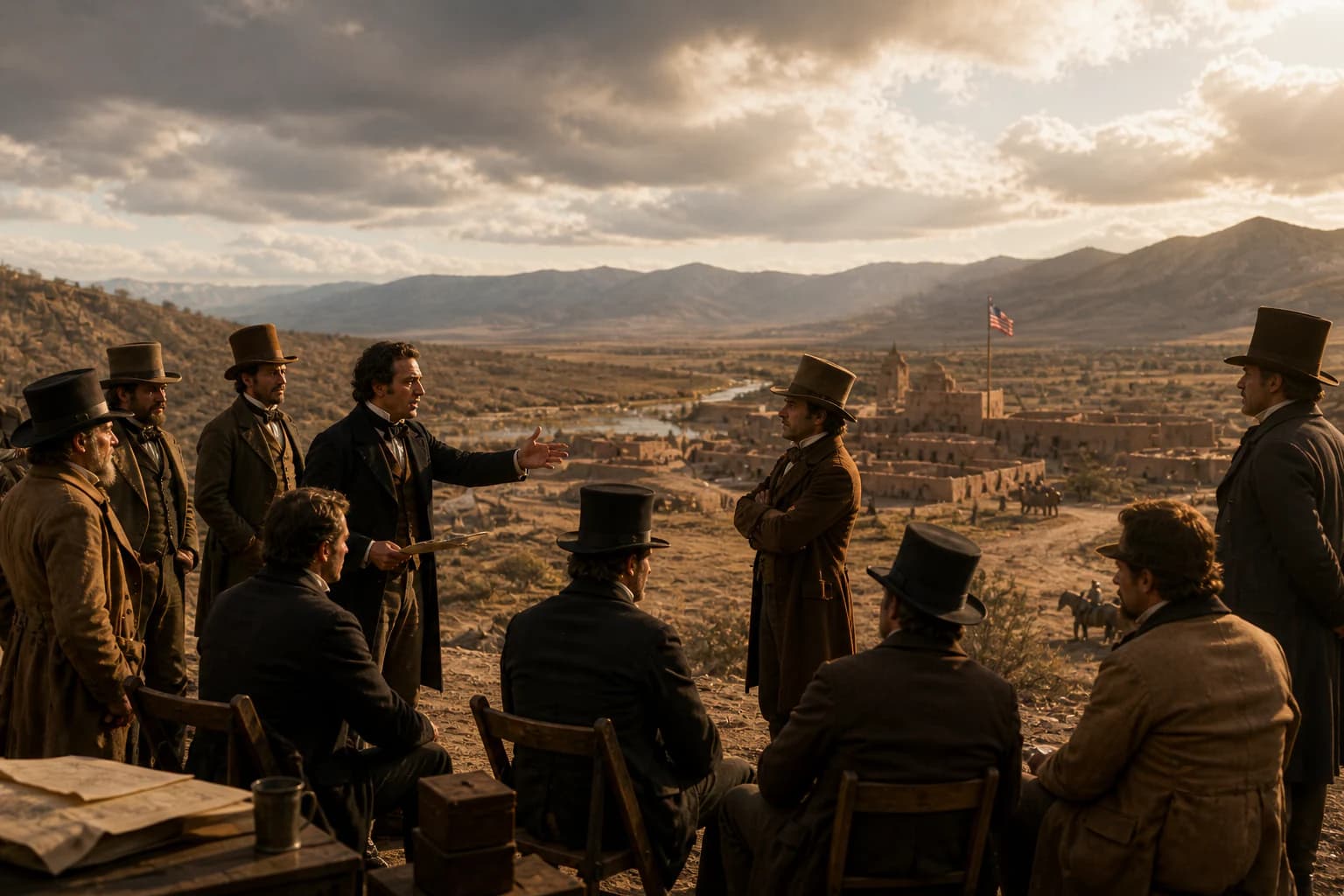
In 1848, the United States won a war against Mexico and gained enormous new territories. Almost immediately, a new argument began: would slavery follow?

The Mexican-American War ended with the United States taking land that would become California, New Mexico, and much of the American West. It was a massive prize — and a political problem.

New land meant a new fight over slavery.

Congressman David Wilmot proposed banning slavery from all new territories. The South refused. If slavery could not expand into new land, Southern power in Congress would eventually shrink.

A Free-Soil movement grew in the North. Many Northerners did not want slavery in the new West — though not always for moral reasons. They wanted free white settlers to work the land.

The Compromise of 1850 patched things up temporarily. But the deeper argument remained. Every new territory now carried the same question inside it — and no one had a permanent answer.

Premium

You've reached the turning point

The opening chapters show slavery's expansion turning American politics into a moral and constitutional crisis. Premium follows the point of no return: compromise fails, violence spreads, Lincoln's election splits the Union and war becomes the path to emancipation.

Continue into the reversals, crises and human stakes that make the story matter.

Unlock full story

What Premium unlocks next

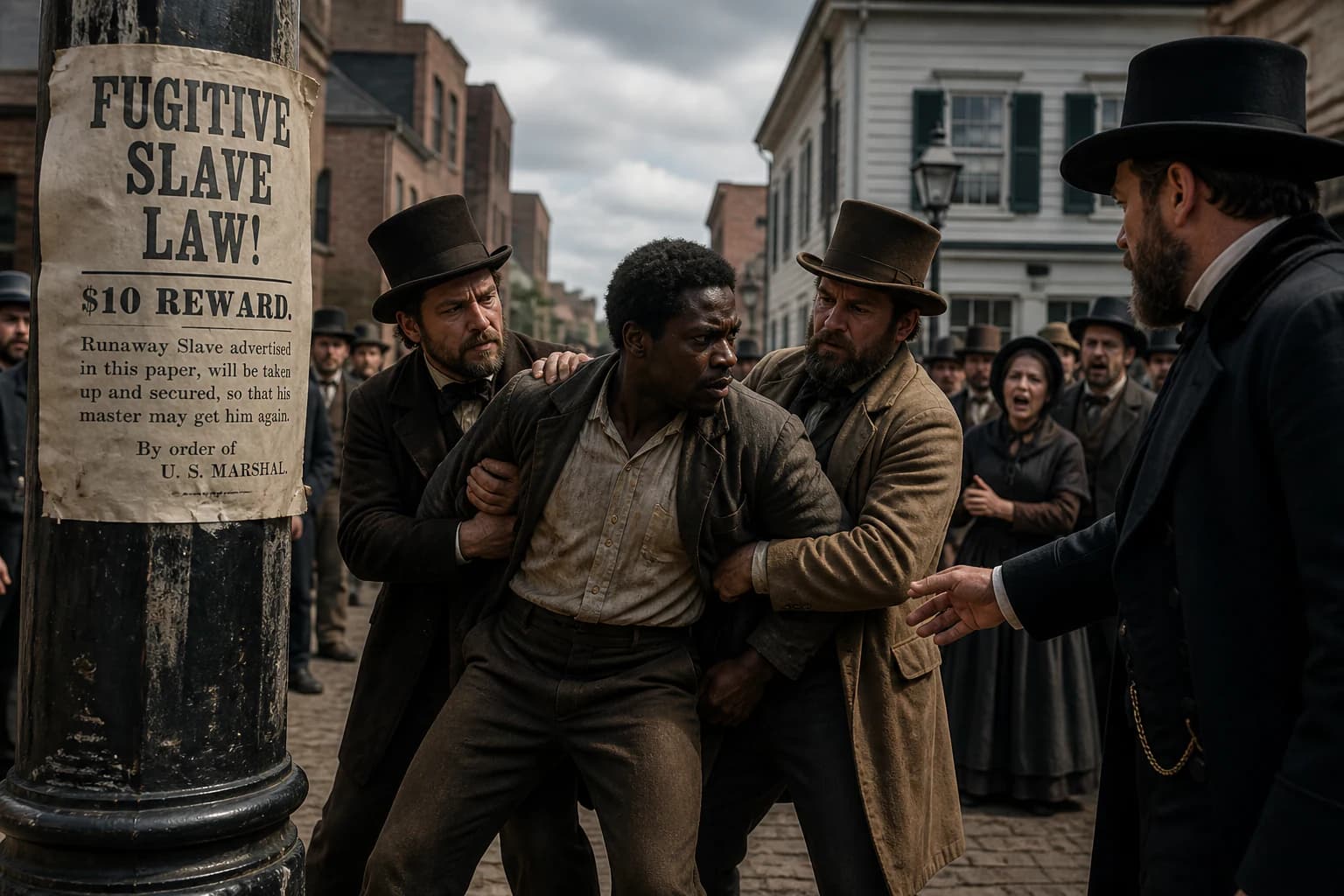
  1. 4The Fugitive Slave Act
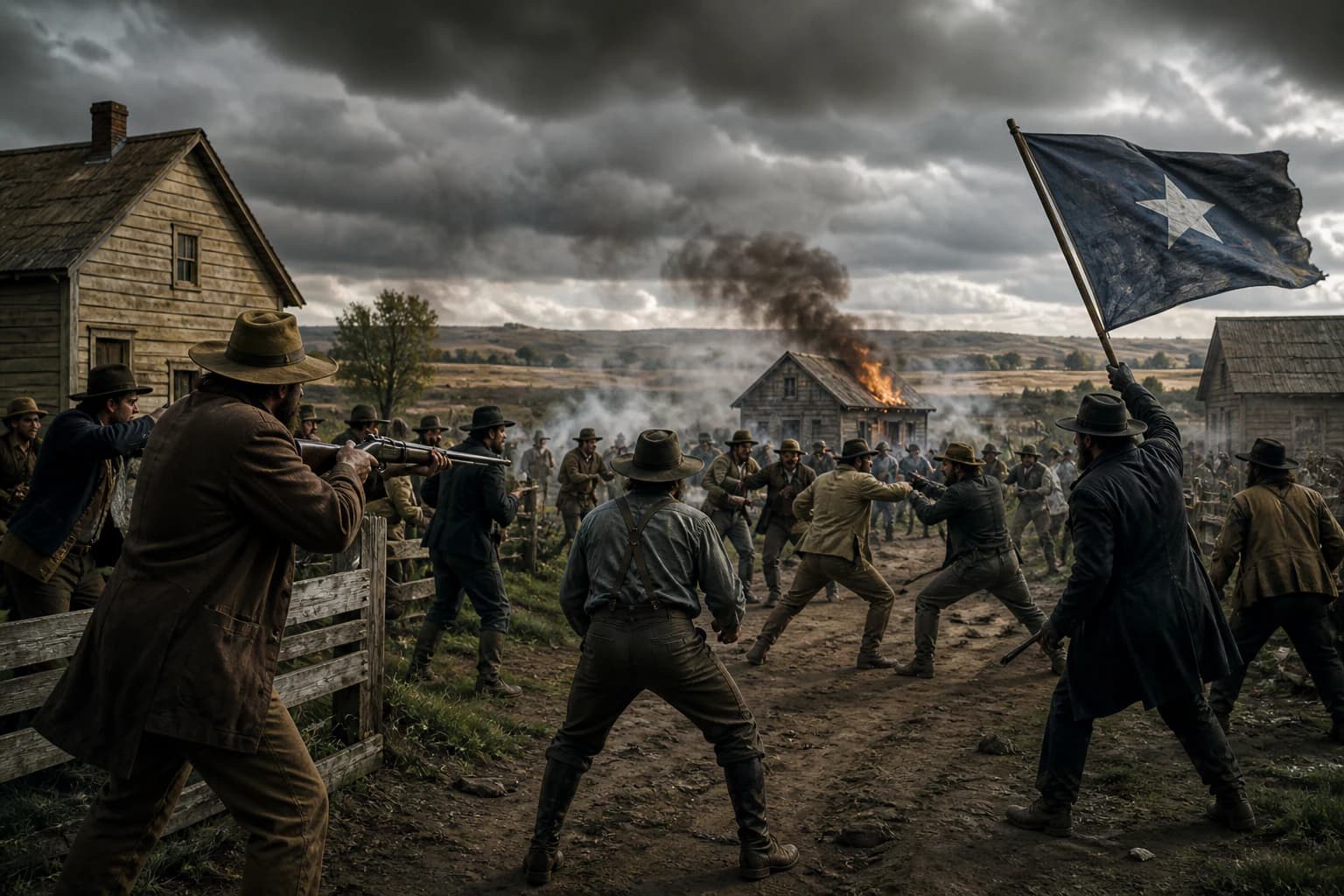
  2. 5Bleeding Kansas
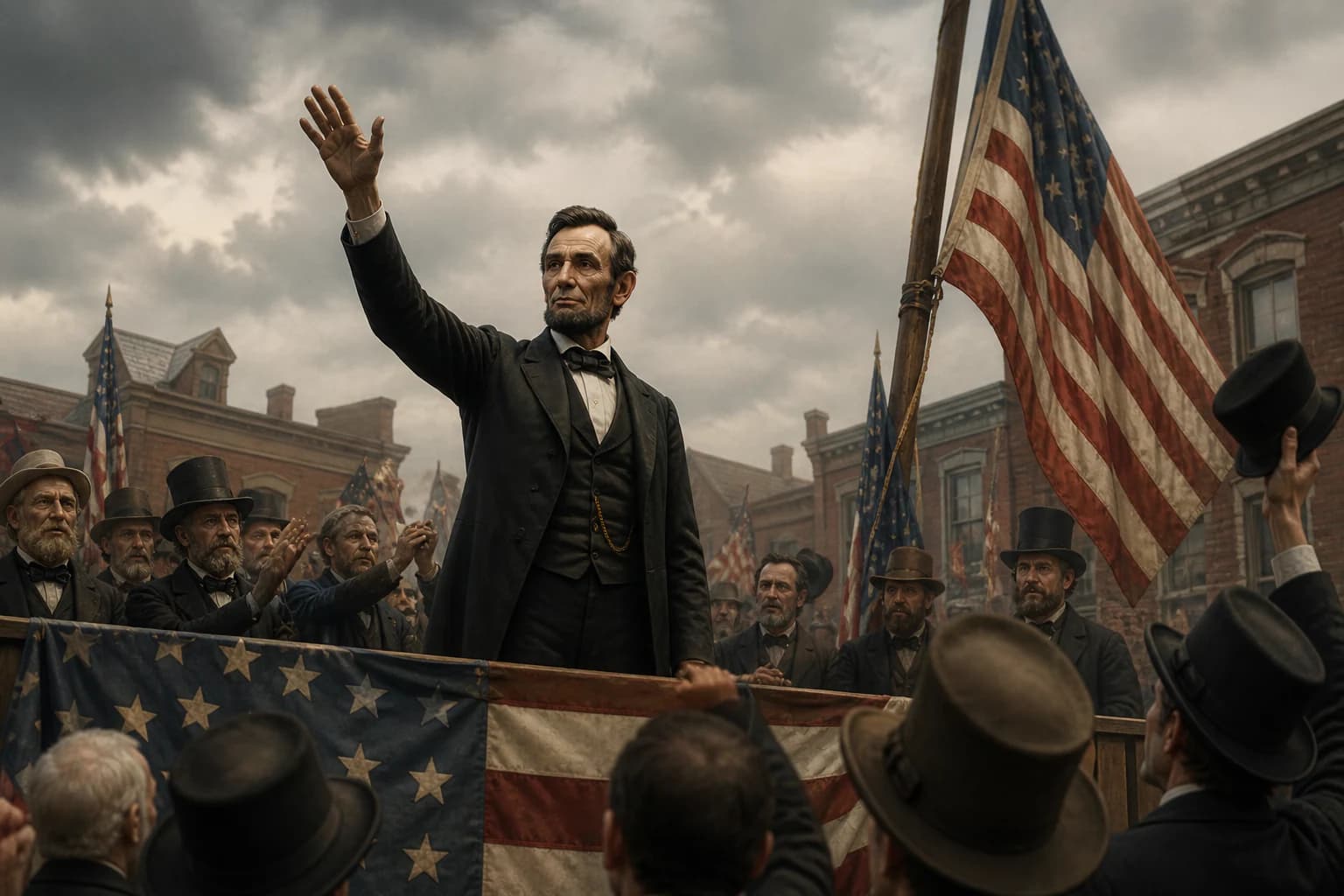
  3. 6Lincoln's Election
  4. 7The War Begins
  5. 8The Emancipation Proclamation
  6. 9The Fall of the Confederacy
  7. 10The Thirteenth Amendment

Browse stories

Browse stories for free

Explore the people connected to this turning point or enjoy one of our free stories.

Unlock full storyBrowse stories

References

Sources & Further Reading

Reliable sources, primary-source collections and reading paths connected to this page.

Sources used

  1. U.S. National Archives, Civil War Records,” Open source
  2. Library of Congress, Civil War,” Open source

Further reading

  1. James M. McPherson, Battle Cry of Freedom, Oxford University Press.

Primary sources

  1. Yale Law School, Avalon Project: Confederate States of America,” Open source

Image references

  1. Library of Congress, Civil War Glass Negatives and Related Prints,” Open source

A weekly route through history

Find out first about the latest published stories, feature notes and occasional Premium offers in one weekly email.