Related Moment
The Night the Berlin Wall Fell
History moved faster than the people trying to manage it.
On 9 November 1989, a confused press conference, hesitant officials, and thousands of ordinary Berliners opened the most famous border of the Cold War.
At 6:53 p.m. on 9 November 1989, an East German official sat before a room full of journalists and accidentally triggered the collapse of one of the most heavily guarded borders in the world.
When was asked when new travel regulations would take effect, he shuffled through his notes, appeared uncertain, and gave an answer that was not supposed to be given. As far as he knew, he said, the rules were effective immediately.
Within minutes, television broadcasts carried the announcement across . Citizens heard that they could travel freely. Border guards heard the same thing. Neither group had received any further instructions.
The Wall had divided Berlin since 1961. Guard towers, floodlights, patrol roads, and checkpoints formed one of the most visible frontiers of the Cold War. For nearly three decades, it had separated families, neighborhoods, and political systems while serving as a symbol of Communist control over Eastern Europe.
By the autumn of 1989, however, that control was beginning to crack. was facing mounting protests, a stagnant economy, and a growing exodus of citizens through neighboring countries. The government was searching for ways to relieve pressure without surrendering authority.
Officials intended to loosen restrictions through a carefully managed process. Instead, 's muddled explanation created the impression that the border was opening immediately. Millions watched the announcement on television. Thousands decided to test it.
As darkness fell, people began making their way toward Berlin's border crossings. Among them, quickly became the most important.
The checkpoint's guards knew little more than the crowd gathering outside its barriers. Citizens arrived carrying newspapers, repeating television reports, and demanding passage to West Berlin. Every hour brought more people. Hundreds became thousands.
Inside the checkpoint, uncertainty deepened. Officers repeatedly telephoned their superiors for instructions. The answers were vague, contradictory, or nonexistent. Hold the crossing. Wait for clarification. More orders would follow.
But no meaningful orders came. The officers had neither the authority to open the crossing nor any realistic way to disperse the people gathering outside.
As the evening wore on, the pressure became unbearable. The East German state had always relied on clear chains of command. Yet on this night, responsibility seemed to vanish at every level.
At , the decision was made anyway. Shortly before 11:30 p.m., checkpoint commander ordered the barriers opened.
At first, a handful of people crossed cautiously into West Berlin. Then the trickle became a flood. Thousands surged through the checkpoint as cheers erupted from both sides of the border.
News of the opening spread almost instantly across the city. Other checkpoints followed. The carefully constructed border system that had controlled movement for decades began collapsing in a matter of hours.
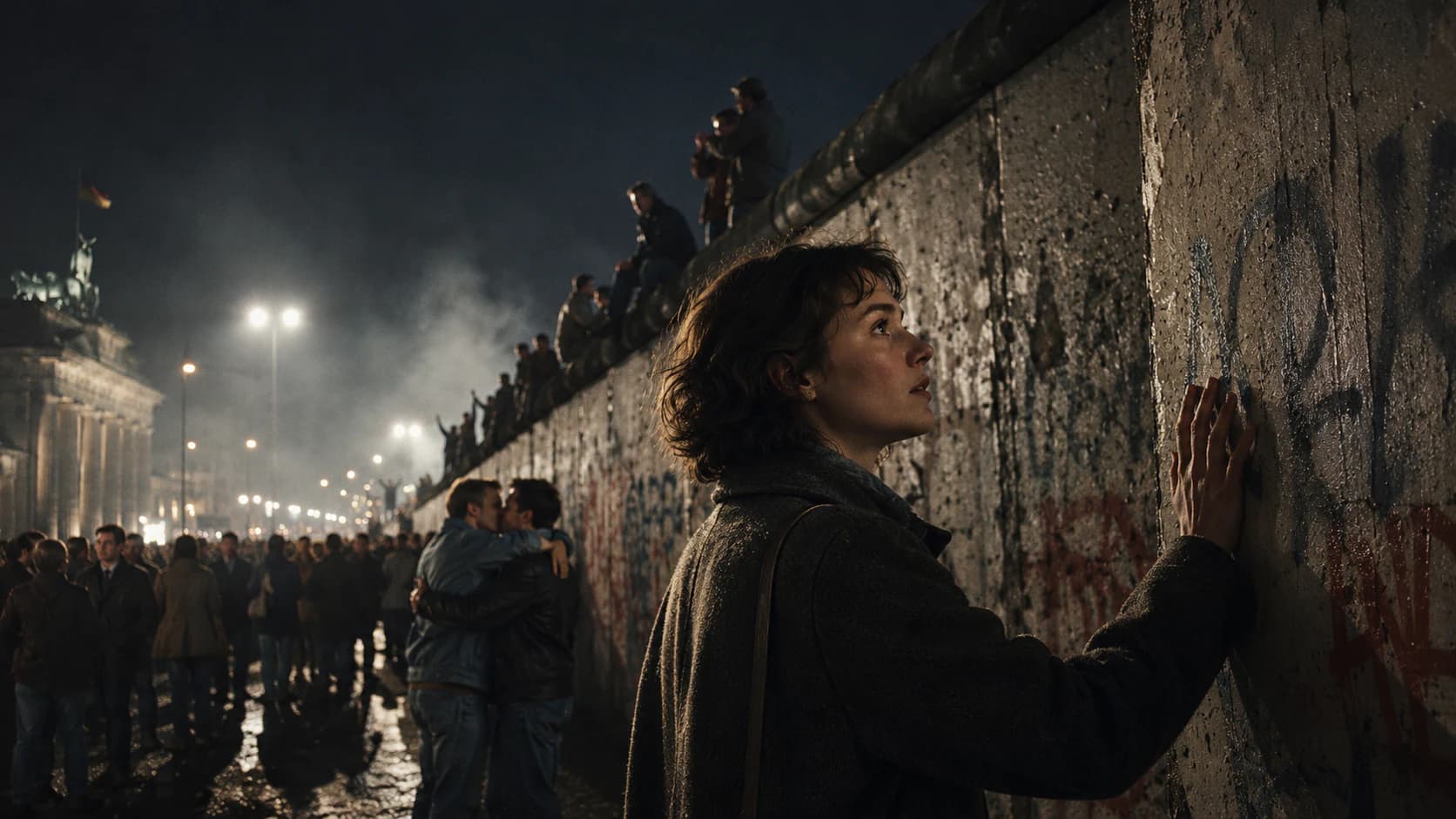
Throughout the night, Berliners climbed onto itself. Television cameras captured scenes that would become some of the defining images of the twentieth century: crowds standing atop the concrete barrier, waving flags, singing, dancing, and celebrating together where armed guards had once patrolled below.
What made the scenes remarkable was their spontaneity. There had been no grand ceremony, no treaty signing, and no formal declaration ending the division of Berlin. Instead, a system built over decades unraveled because its own officials could no longer explain how it was supposed to function.
By dawn, still stood physically across the city. Politically, it was finished.
The extraordinary thing about the night fell is how accidental it seemed. No revolutionary assault breached the border. No military defeat forced it open. Instead, a confused press conference, hesitant officials, and thousands of ordinary citizens created a momentum that the state could no longer control.
For a few hours on a November evening, history moved faster than the people trying to manage it.