Related Moment
The Explosion That Shook the Soviet Union
The reactor exploded in seconds. The doubt lasted longer.
Chernobyl exposed how secrecy, delay, and mistrust weakened the Soviet state just as Gorbachev was trying to reform it.
The reactor exploded in seconds. The took days to fully acknowledge it. That delay would become almost as consequential as the disaster itself.
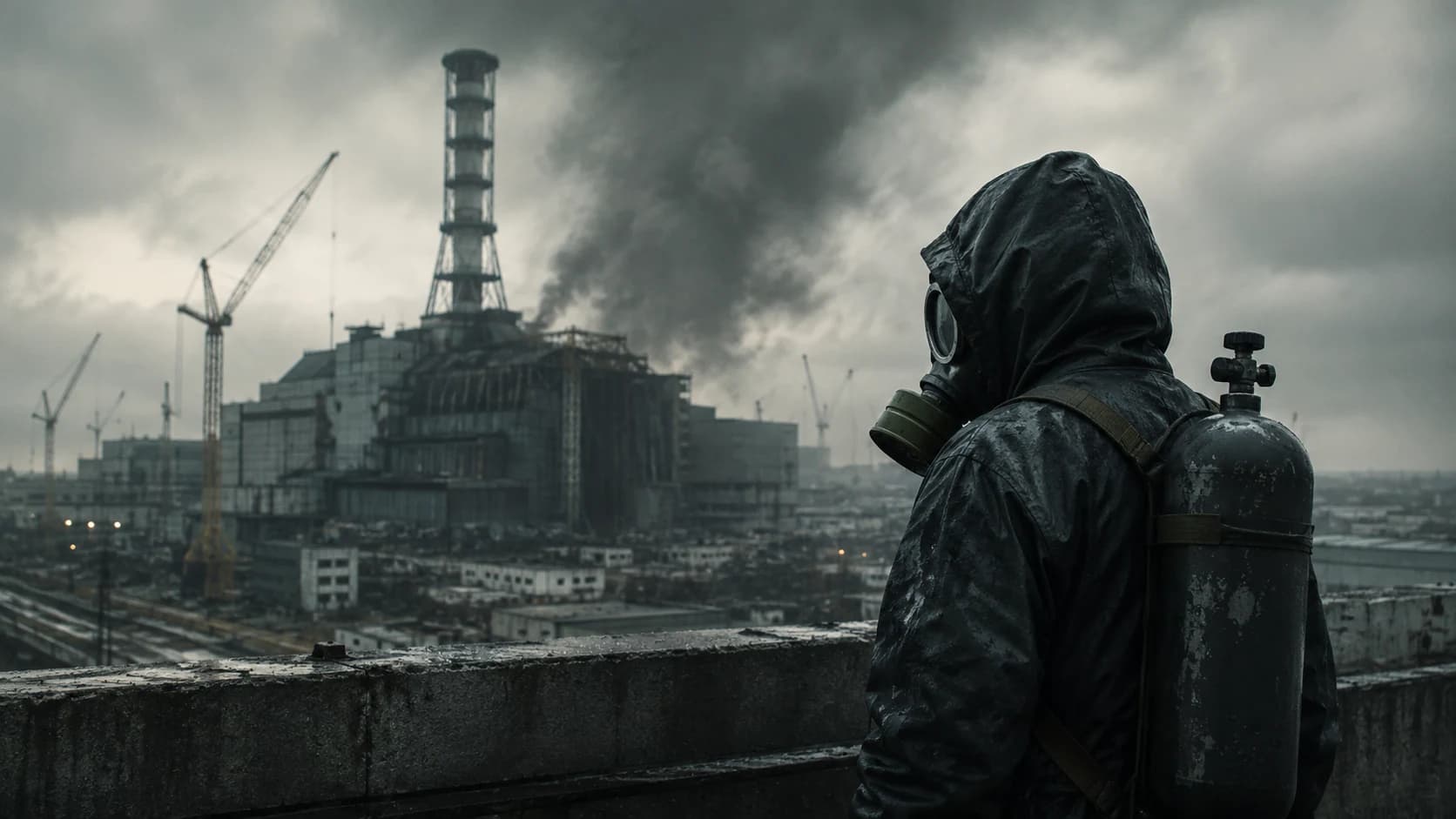
When at tore itself apart in the early hours of 26 April 1986, radioactive material poured into the atmosphere. But another force was escaping as well: a crisis that would expose the weaknesses of one of the most powerful states on Earth.
For decades, the Soviet government had built its authority on an image of competence, control, and technological mastery. shattered that image in front of its own citizens and, eventually, the world.
By the mid-1980s, the was already under strain. Economic growth had slowed. The war in Afghanistan dragged on. Public confidence in the Communist Party was weaker than officials cared to admit. Yet the state still maintained one powerful advantage: control of information.
Bad news could be hidden. Failures could be minimized. Mistakes could be blamed on individuals rather than systems.
When came to power in 1985, he inherited a country struggling beneath decades of bureaucracy and stagnation. He hoped to revitalize the Soviet system through perestroika, meaning restructuring, and glasnost, meaning .
But many institutions remained deeply secretive. That culture of secrecy would collide head-on with the events at .
When the reactor exploded, confusion spread immediately. Plant managers struggled to understand what had happened. Local officials hesitated to make decisions. Information moved upward through layers of bureaucracy where admitting failure carried enormous risks.
The nearby city of was not evacuated immediately. Residents attended weddings, went fishing, and walked through parks while radiation levels climbed around them.
Even as the scale of the disaster became clearer, authorities were reluctant to release information that might cause panic or reveal weakness. The Soviet leadership in Moscow initially received fragmented reports. Some officials believed the situation was serious but manageable. Others feared the political consequences of admitting the truth.
Then the cover-up began to unravel. Two days after the explosion, workers at a nuclear power plant in Sweden detected unusual radiation levels. At first, they suspected a leak at their own facility. When investigations found nothing wrong, attention shifted eastward.
The radioactive cloud pointed directly toward the . Suddenly, the world knew something had happened. The Kremlin could no longer keep the disaster hidden.
Instead of controlling the narrative, Soviet leaders found themselves reacting to events they could not contain. For a government that prided itself on absolute control, the loss was deeply humiliating.
The immediate costs were staggering. Entire communities were evacuated. Vast territories were contaminated. Hundreds of thousands of people were mobilized for cleanup operations. The economic burden stretched into the billions of rubles at a time when the Soviet economy was already struggling.
Yet the political damage ran even deeper. Citizens discovered that official statements often contradicted reality. Rumors spread faster than government announcements. People learned that local authorities had withheld information, delayed evacuations, and underestimated risks.
Trust began to erode. Once citizens stop believing official information, governing becomes far more difficult.
The disaster also transformed 's reform agenda. In the months that followed, demands for greater transparency became harder to resist. If a nuclear catastrophe could be hidden, what else had been concealed?
Questions multiplied. Archives were opened. Past failures were discussed publicly. Criticism that once would have been suppressed began appearing in newspapers and public forums.
Ironically, a disaster born from secrecy helped accelerate a movement toward . himself would later describe as one of the most significant turning points of his leadership.
By the late 1980s, nationalist movements were gaining strength across several Soviet republics. Political opposition was growing. Economic problems were worsening. The authority of the Communist Party was fading.
Five years after the explosion, the ceased to exist. Historians continue to debate exactly how much weight carried in that outcome. But few dispute that it marked a turning point.
The reactor explosion exposed cracks that had long been hidden beneath the surface. The radioactive cloud eventually dispersed. The political fallout did not.
In that sense, the most consequential thing released from may not have been radiation at all. It was doubt. And once doubt entered the Soviet system, it proved impossible to contain.
