Complete chronology
Full overview and deeper context for every journey step.
c. 1085
A military household
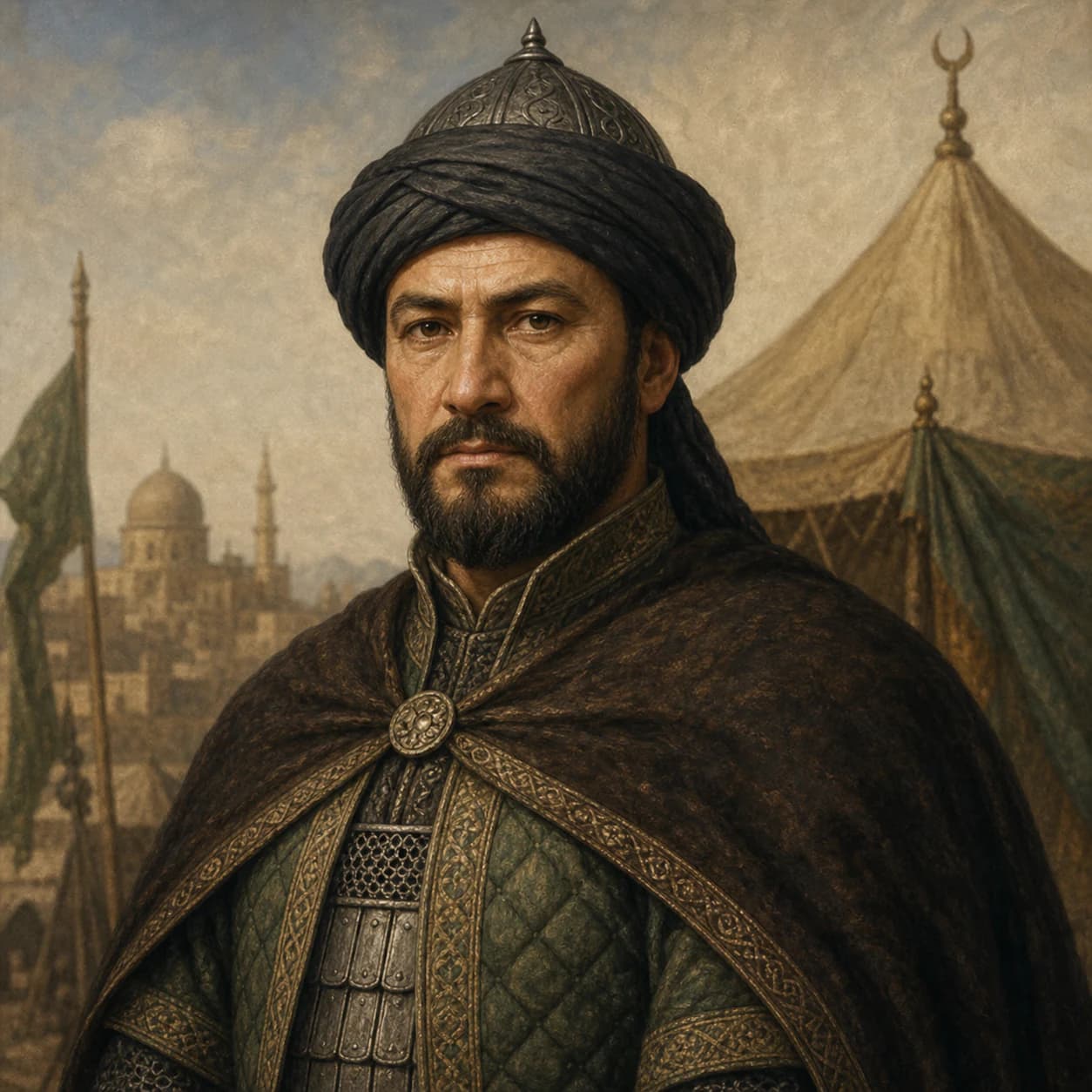
Imad al-Din Zengi was born around 1085 into a world shaped by Seljuk power, Turkish military households, Arab cities, Kurdish and Persian elites, and fractured regional politics. His father, Aq Sunqur, had been a powerful governor of Aleppo before being executed in a political struggle. That inheritance did not give Zengi a settled kingdom, but it did place him inside the networks of command and service that mattered in the Islamic Near East. His career grew from military skill, patronage and the ability to survive dangerous court politics.
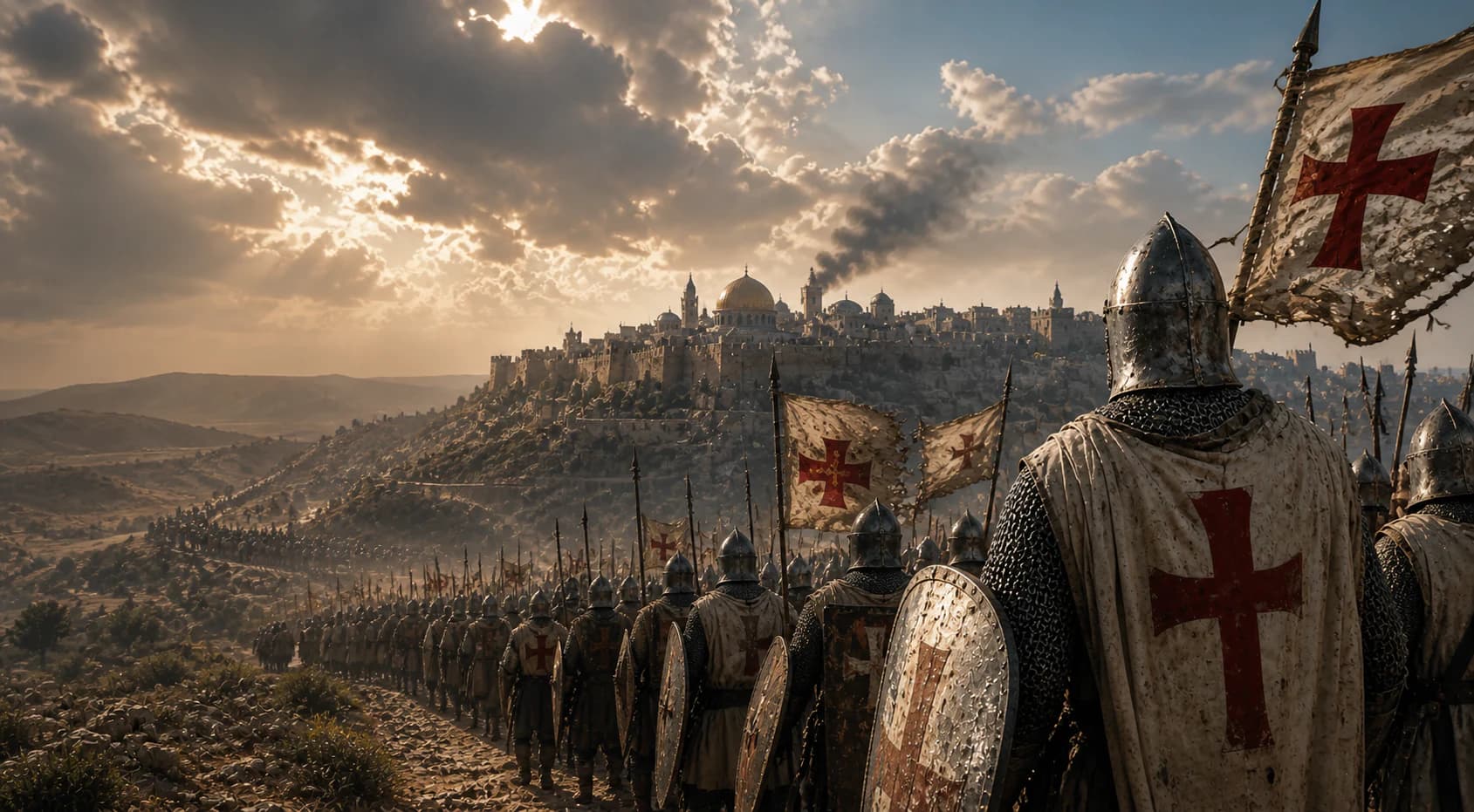
Zengi's world was not divided neatly between crusaders and Muslims; it was a crowded field of rival rulers and commanders.
1127
Atabeg of Mosul
In 1127, Zengi became atabeg of Mosul, a powerful office that combined military command with guardianship over Seljuk authority. Mosul mattered because it sat near the routes linking Iraq, Syria and upper Mesopotamia. From there Zengi could press west toward the Syrian cities and north toward the frontier with the Crusader states. His authority was still contested, and he had to balance formal loyalty to higher rulers with his own ambitions. Like many strongmen of the period, he governed through a mix of force, negotiation and opportunism.
Mosul gave Zengi the platform from which he could become more than a regional commander.
1128
Aleppo secured
Aleppo was one of the great prizes of northern Syria. When Zengi gained control of it in 1128, he joined Mosul and Aleppo under one ruler and changed the strategic balance near Antioch and Edessa. The Crusader states had benefited from Muslim political fragmentation, especially the rivalry between Syrian cities and Mesopotamian rulers. Zengi did not end that fragmentation, but he showed that a determined commander could begin to bridge it. Aleppo became the western anchor of his power.
By holding Mosul and Aleppo together, Zengi created a pressure point on the crusader frontier.
1130s
Ambition before ideology
Later memory often treated Zengi as an early champion of the anti-crusader struggle, but his career was more complicated. He fought the Crusader states when opportunity allowed, yet he also fought Muslim rivals, pressured Damascus and pursued his own regional dominance. Religious language mattered in his world, but Zengi's politics were not simply a single-minded holy war. His importance lies partly in this tension: a ruler driven by hard political ambition could still produce consequences that later writers framed as a decisive stage in the struggle against the Franks.
Zengi's capture of Edessa became a crusading turning point even if his motives were not purely ideological.
1144
Edessa captured
Zengi's most famous victory came in 1144, when he attacked Edessa while its ruler was absent and the county was dangerously isolated. The city fell after a brief but intense siege. Edessa had been the first Crusader state founded after the First Crusade, and it was the most exposed: inland, far from the Mediterranean ports and surrounded by Muslim-held territories. Its fall was the first major loss of a Latin Christian state in the Levant and sent shockwaves across western Europe.
Edessa's fall proved that the Crusader states could lose territory, not just defend fragile gains.
1145
Shock in the West
The loss of Edessa alarmed Latin Christendom. It undermined the confidence created by the First Crusade's capture of Jerusalem and revealed how vulnerable the crusader settlements remained. Pope Eugenius III called for a new crusade, and Bernard of Clairvaux became its most famous preacher. The Second Crusade would ultimately fail, especially after its disastrous attack on Damascus in 1148. Zengi did not live to see that failure, but his victory at Edessa created the crisis that made the expedition possible.
A victory on the frontier forced western Europe to confront the cost of holding the Crusader states.
1146
Assassinated
Zengi was assassinated in 1146, only two years after the capture of Edessa. His death could have undone the political structure he had built. Instead, parts of his power survived through his sons: Sayf al-Din Ghazi held Mosul, while Nur al-Din secured Aleppo. The division mattered, but it did not erase the momentum created by Edessa's fall. Nur al-Din would go on to build a more coherent Syrian project from the inheritance Zengi left behind.
Zengi died before turning victory into a programme, but his successors kept the Zengid project alive.
After 1146
Zengid legacy
Zengi did not recover Jerusalem and did not create the fully developed counter-crusading ideology later associated with Nur al-Din and Saladin. Yet he changed the trajectory of the Crusades. By joining Mosul and Aleppo, pressuring the northern Crusader states and capturing Edessa, he showed that Muslim political consolidation could reverse Latin Christian expansion. Later rulers and writers turned that achievement into part of a larger story of resistance. Zengi therefore stands at the beginning of a chain that runs through Nur al-Din to Saladin.
His importance is not that he completed the counter-crusade, but that he made its later success imaginable.