Complete chronology
Full overview and deeper context for every journey step.
1914–1930s
Early Soviet Formation
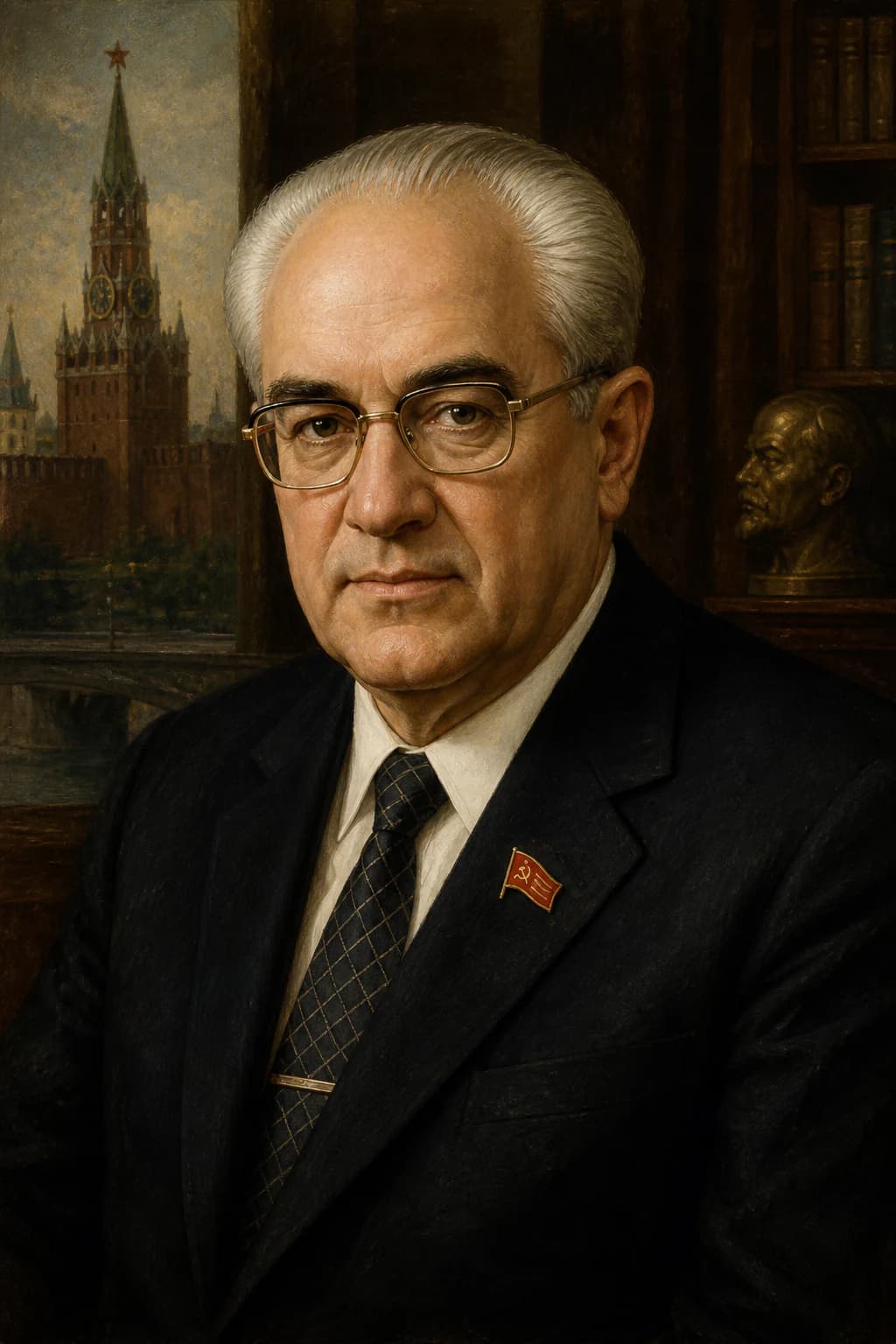
Yuri Vladimirovich Andropov was born in 1914 in the North Caucasus, in a Russian Empire that was already close to collapse. His childhood and youth unfolded through revolution, civil war, famine, forced mobilisation and the construction of Soviet authority. Before he became a figure of state security, he worked in ordinary jobs and entered the political world through the Komsomol, the Communist youth organisation that trained ambitious young officials in discipline, ideology and bureaucratic survival. This route mattered. Andropov did not rise as a soldier-hero or a charismatic tribune. He rose through paperwork, committees, loyalty tests and organisational patience, the hidden machinery by which the Soviet system reproduced itself.
His early career taught him that power in the Soviet Union belonged to those who mastered institutions rather than public crowds.
1930s–1953
Komsomol and Party Rise
Andropov joined the Communist Party in 1939 and built his career in the political apparatus during one of the most dangerous periods in Soviet history. He worked in youth and party roles in regions including Karelia, where the wartime and postwar Soviet state demanded reliable officials able to mobilise society and enforce political discipline. His advancement required caution. Stalin's system rewarded initiative only when it was wrapped in obedience, and Andropov learned to present himself as capable, orthodox and controlled. By the time Stalin died in 1953, he had become the kind of official the party valued: intelligent, discreet, ideologically fluent and difficult to read.
He survived Stalinism by becoming useful to the system without making himself dangerously visible.
1954–1957
Hungarian Crucible
Andropov's posting as Soviet ambassador to Hungary placed him at the centre of one of the Cold War's defining crises. In 1956, Hungarian unrest turned into a national uprising against Soviet domination and one-party rule. Andropov reported to Moscow as events accelerated, watched Communist authority collapse in the streets of Budapest, and supported the hard line that ended with Soviet tanks restoring control. The experience shaped him deeply. To later critics, Hungary revealed the repressive instincts that would define his career. To Andropov himself, it appears to have confirmed a lifelong lesson: ideological relaxation, if not tightly managed, could become state collapse. That fear would later influence both his security policy and his suspicion of dissent.
Hungary taught him to see liberalisation not as release, but as a possible doorway to revolt.
1957–1967
Into the Secretariat
Following his return from Budapest, Andropov entered the Communist Party's central structures in Moscow. He worked on relations with other socialist countries and Communist parties, a role that required ideological precision and diplomatic discipline. These years placed him near the nervous system of Soviet power. He observed the split with China, the management of Eastern Europe, and the difficulties of holding together an international movement that claimed historical certainty while constantly confronting national interests. Andropov's reputation grew as a serious, analytical official. He was not flamboyant like Nikita Khrushchev or publicly reassuring like Leonid Brezhnev. His authority came from competence, secrecy and a cold ability to diagnose threats.
He became a specialist in the vulnerabilities of Communist power at home and abroad.
1967–1982
Chairman of the KGB
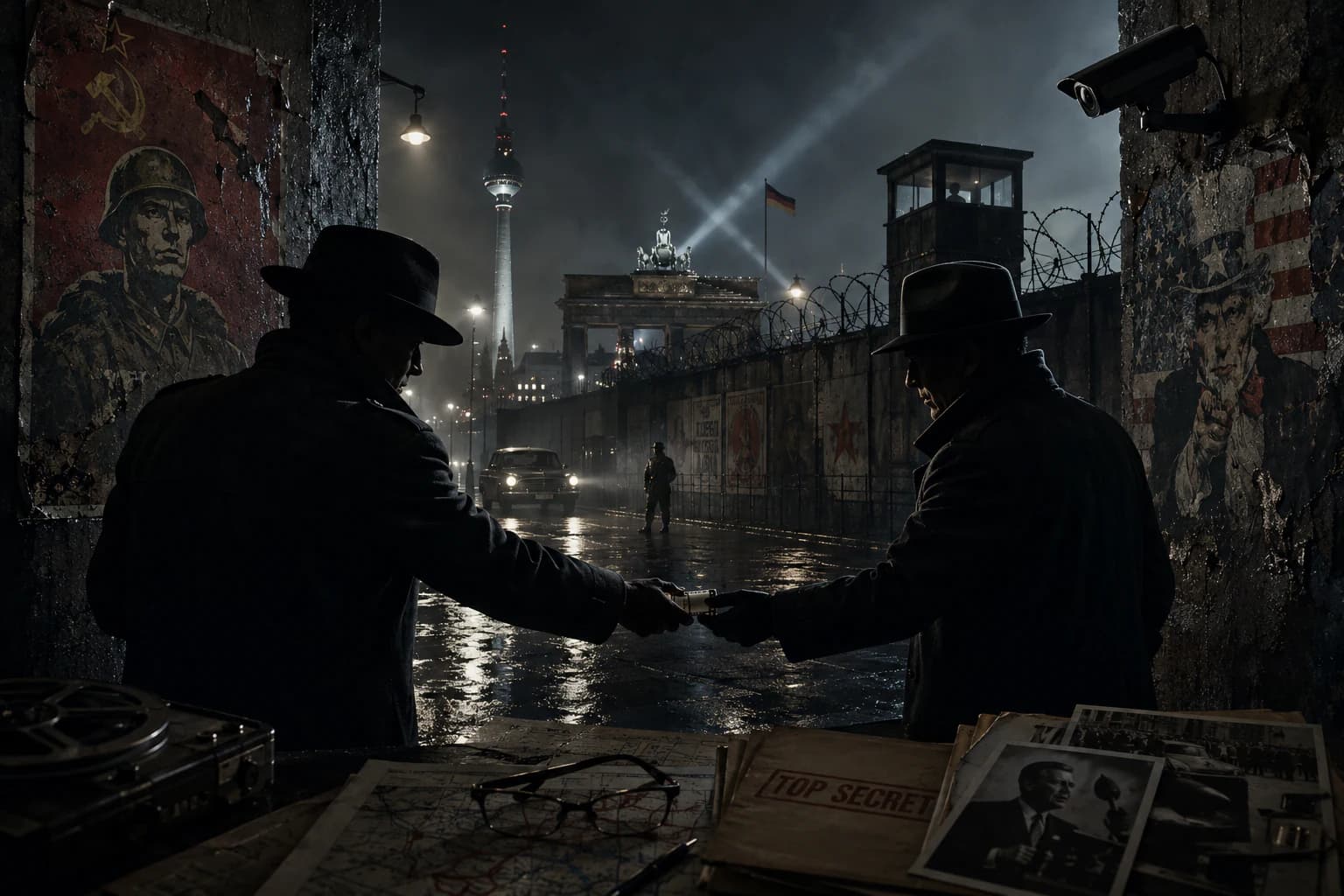
In 1967, Andropov became chairman of the KGB, the Soviet state security organisation responsible for foreign intelligence, counterintelligence, internal surveillance and political policing. He held the post until 1982, longer than any other KGB chairman. Under him, the agency became more professional, more technologically ambitious and more deeply embedded in the management of dissent. Soviet dissidents, human rights activists, religious campaigners and nationalist critics faced surveillance, exile, imprisonment and psychiatric abuse. At the same time, Andropov understood that coercion alone could not solve the country's deeper problems. He saw corruption, alcoholism, poor labour discipline and economic stagnation eating away at Soviet strength. This combination made him distinctive: a repressor who recognised decay, a conservative who knew the system was not healthy.
His years at the KGB gave him unmatched knowledge of Soviet weakness, but also trained him to treat openness as danger.
1982
After Brezhnev
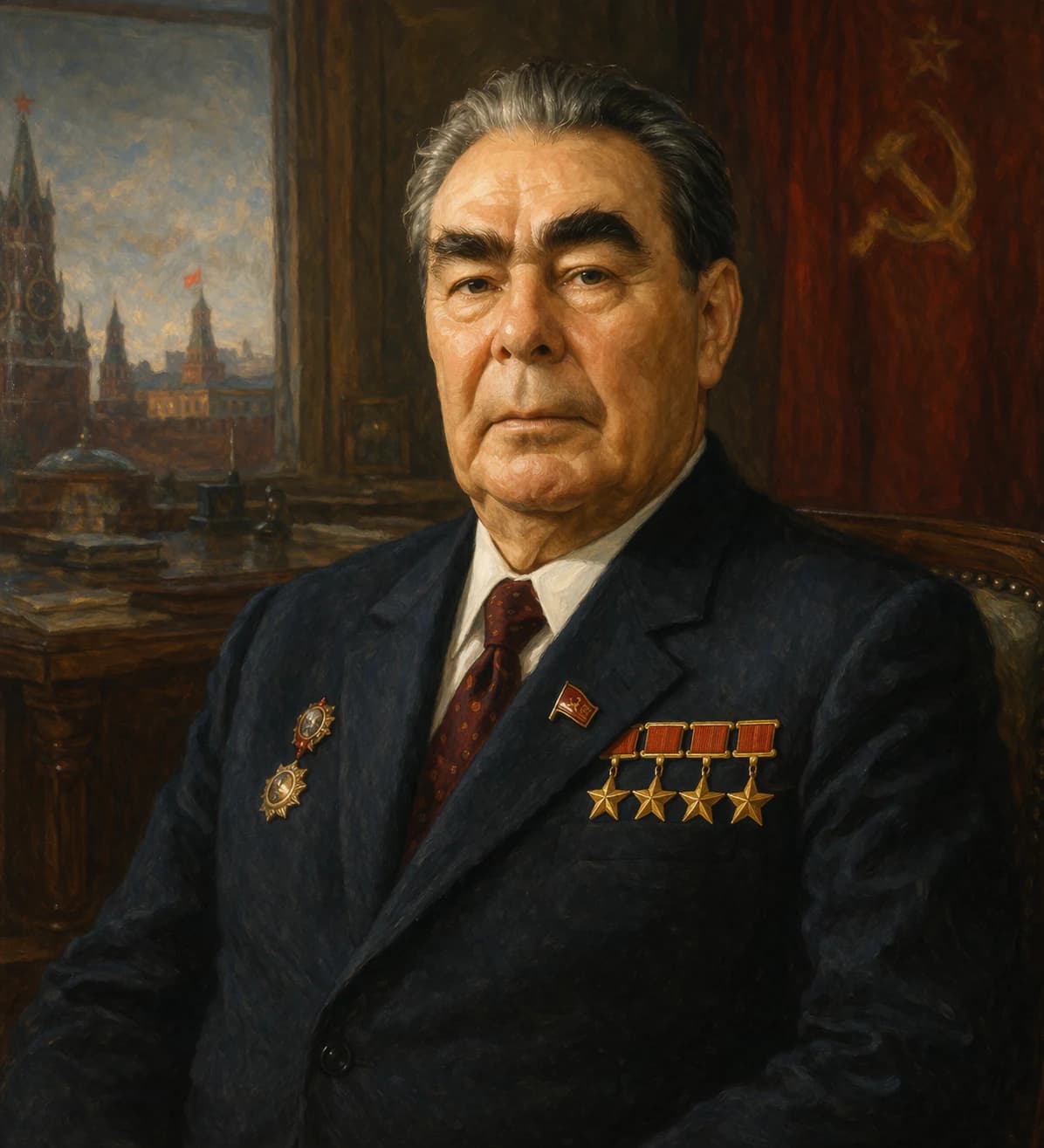
By the early 1980s, Leonid Brezhnev's long era of stability had hardened into stagnation. The economy was sluggish, the leadership was elderly, the war in Afghanistan was draining resources, and the gap between official optimism and lived reality had grown wide. When Brezhnev died in November 1982, Andropov emerged as General Secretary of the Communist Party, defeating the expectations of those who saw Konstantin Chernenko as Brezhnev's natural heir. His accession mattered because it suggested that at least part of the elite recognised the need for discipline and renewal. Andropov came to power with a reputation for seriousness. He knew the files, the weaknesses and the people. What he lacked was time.
His rise signalled that the leadership understood something was wrong, even if it still feared genuine reform.
1982–1983
Discipline Campaigns
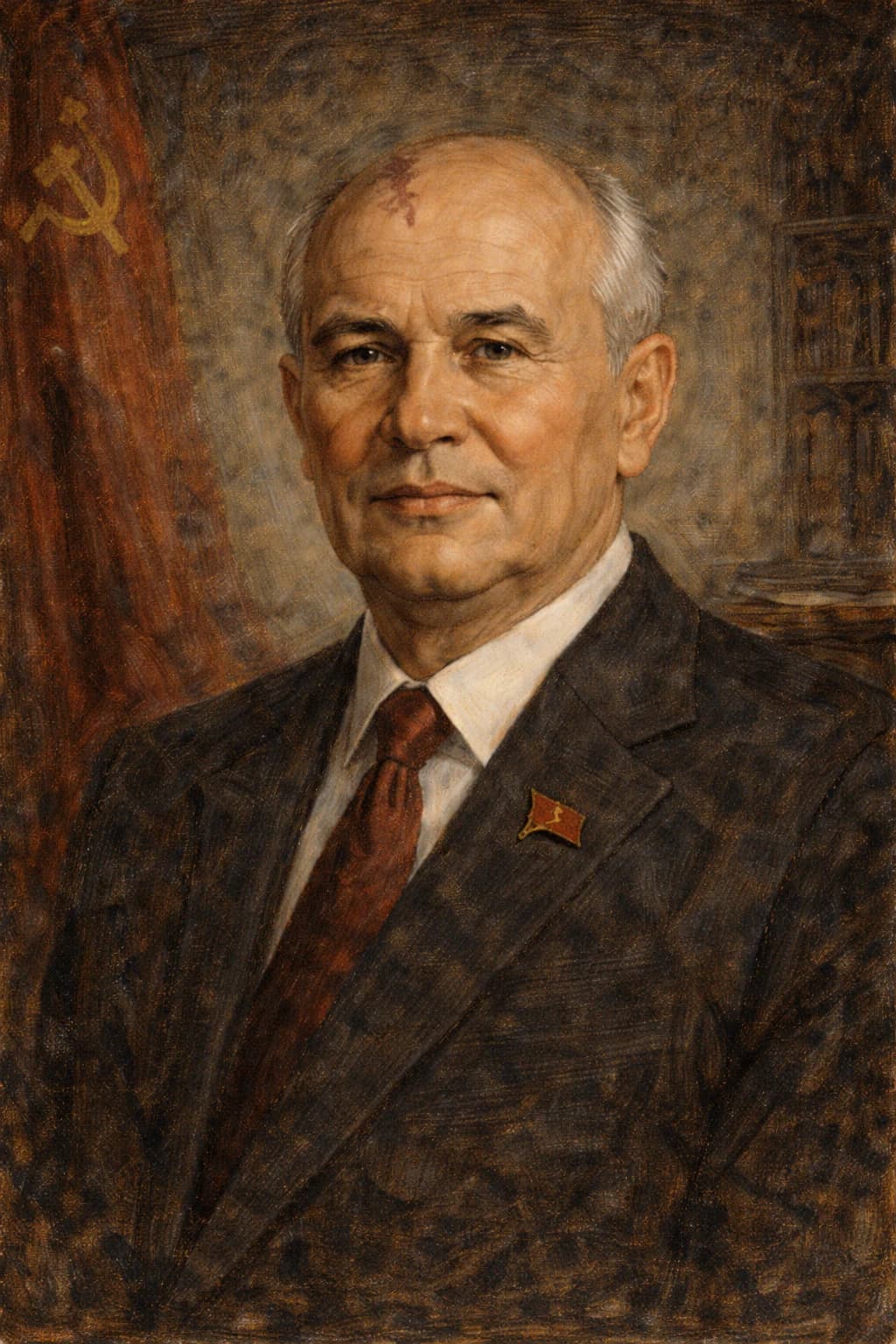
Andropov's brief rule focused on restoring seriousness to Soviet public life. Police checked cinemas, shops and bathhouses during working hours to catch people absent from their jobs. Officials associated with corruption lost protection. The message was blunt: the state would no longer tolerate the habits of decay that had spread during the late Brezhnev years. Yet Andropov's approach was not simply nostalgic repression. He promoted younger officials, including Mikhail Gorbachev, and showed interest in limited economic experimentation. Still, his reforms remained cautious and administrative. He wanted a more efficient Soviet Union, not a pluralist one. He sought discipline before freedom, productivity before democracy, and order before public truth.
He tried to repair the Soviet machine by tightening its bolts, not by redesigning it.
1983
Late Cold War Tension
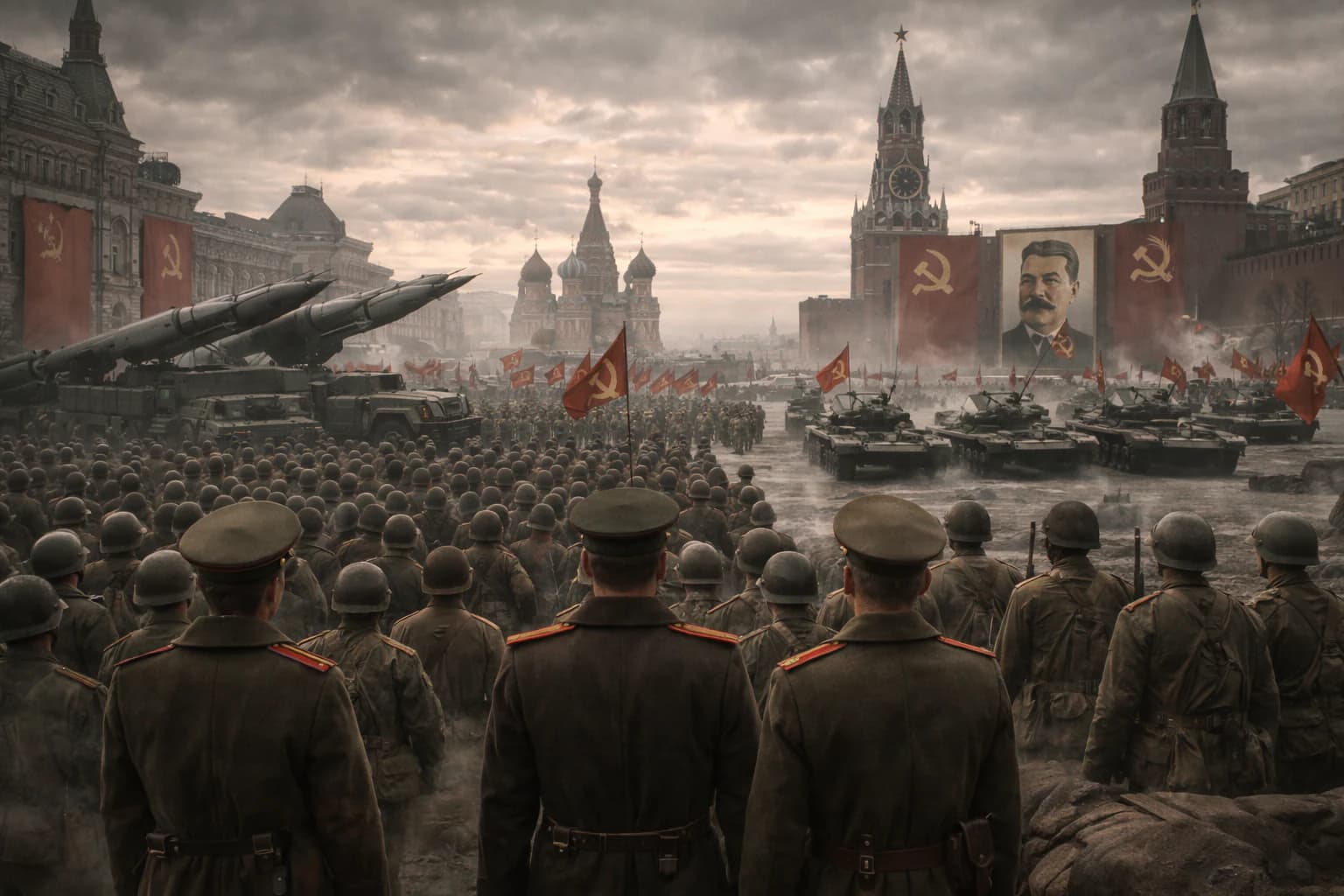
Andropov governed during one of the chilliest moments of the late Cold War. Relations with the United States deteriorated sharply under Ronald Reagan, whose administration denounced the Soviet system and pursued military pressure. In September 1983, Soviet forces shot down Korean Air Lines Flight 007 after it strayed into restricted Soviet airspace, killing all aboard and provoking international outrage. The crisis deepened distrust and reinforced the image of a paranoid, militarised superpower. Andropov's declining health limited his ability to shape events personally, but the atmosphere of his rule remained tense: suspicion abroad, discipline at home, and no clear path out of confrontation.
His security worldview suited confrontation better than reconciliation, even as the Soviet Union needed breathing space.
1983–1984
Illness and Legacy
Andropov's health collapsed soon after he reached the summit. Kidney disease and other complications kept him away from public view for long periods, turning a potentially significant leadership into a short interregnum. He died in Moscow on 9 February 1984, after only fifteen months as General Secretary. His legacy is therefore partly a question of possibility. Some historians see him as a precursor to reform because he recognised stagnation and elevated younger figures. Others stress that his career was rooted in surveillance, coercion and the defence of one-party rule. Both views are necessary. Andropov saw that the Soviet Union was in trouble, but his instincts were those of a security chief. He diagnosed decay more clearly than many around him, yet the cure he offered remained discipline from above.
He understood the Soviet crisis earlier than most leaders, but not in a way that could free the system from itself.