Complete chronology
Full overview and deeper context for every journey step.
c. 958
Rurikid origins
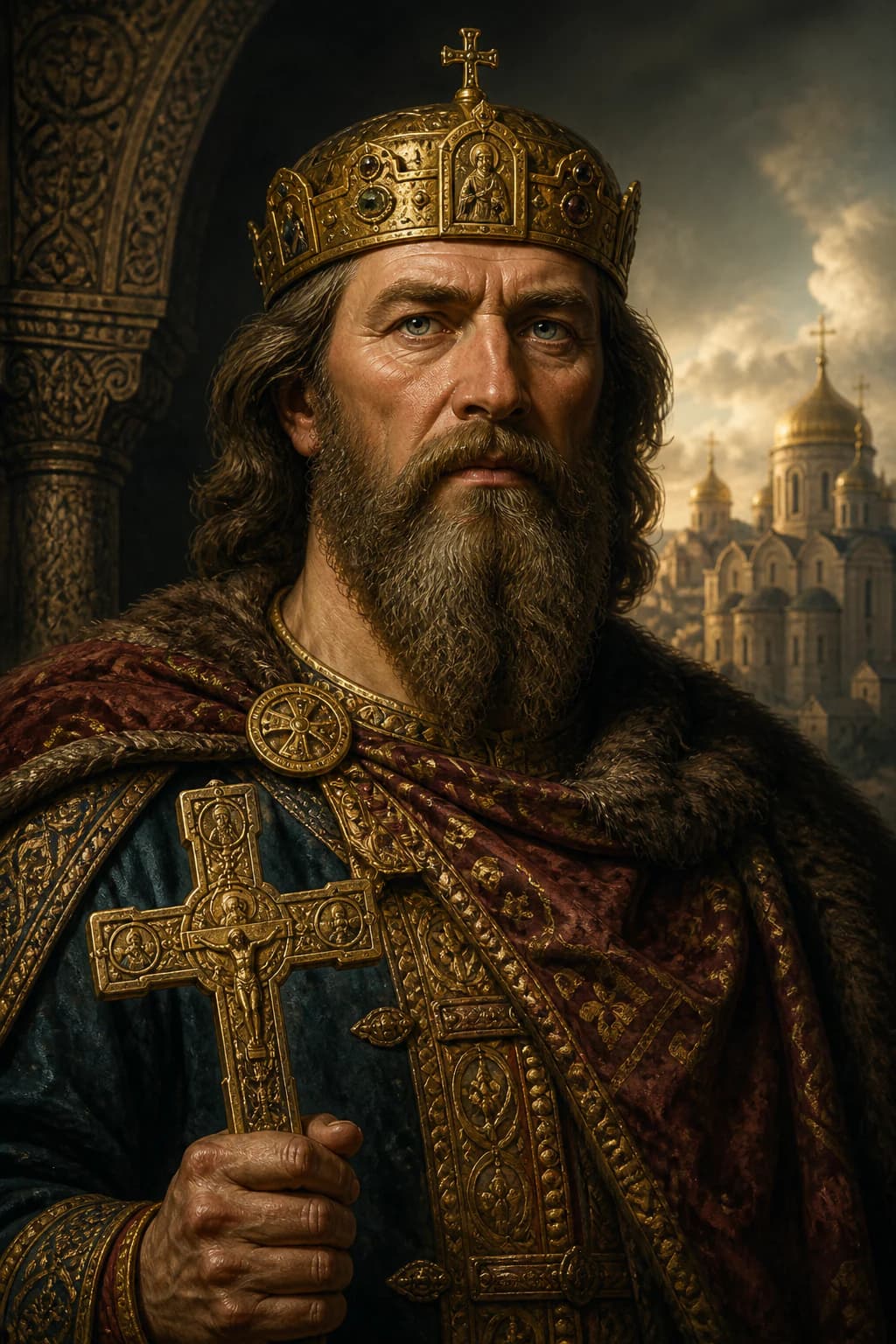
Vladimir Sviatoslavich, remembered as Vladimir the Great and in Ukrainian tradition as Volodymyr the Great, was born into the hard-edged politics of tenth-century Rus. His father, Sviatoslav I, was a celebrated warrior prince whose campaigns battered Khazars, Bulgars, and Byzantines. Vladimir's mother, Malusha, is described in the chronicles as connected to the household of Princess Olga, a detail that later writers used to explain his complicated status among princely sons. He was appointed to rule Novgorod while his brothers held other centres. This was not peaceful apprenticeship. Rurikid succession encouraged rivalry, and the death of a powerful father often opened a struggle among sons. Vladimir learned politics in a world where family, loyalty, force, and legitimacy could never be separated.
Vladimir's later religious transformation began with a career shaped by violence and dynastic competition.
972-980
Struggle for Kiev
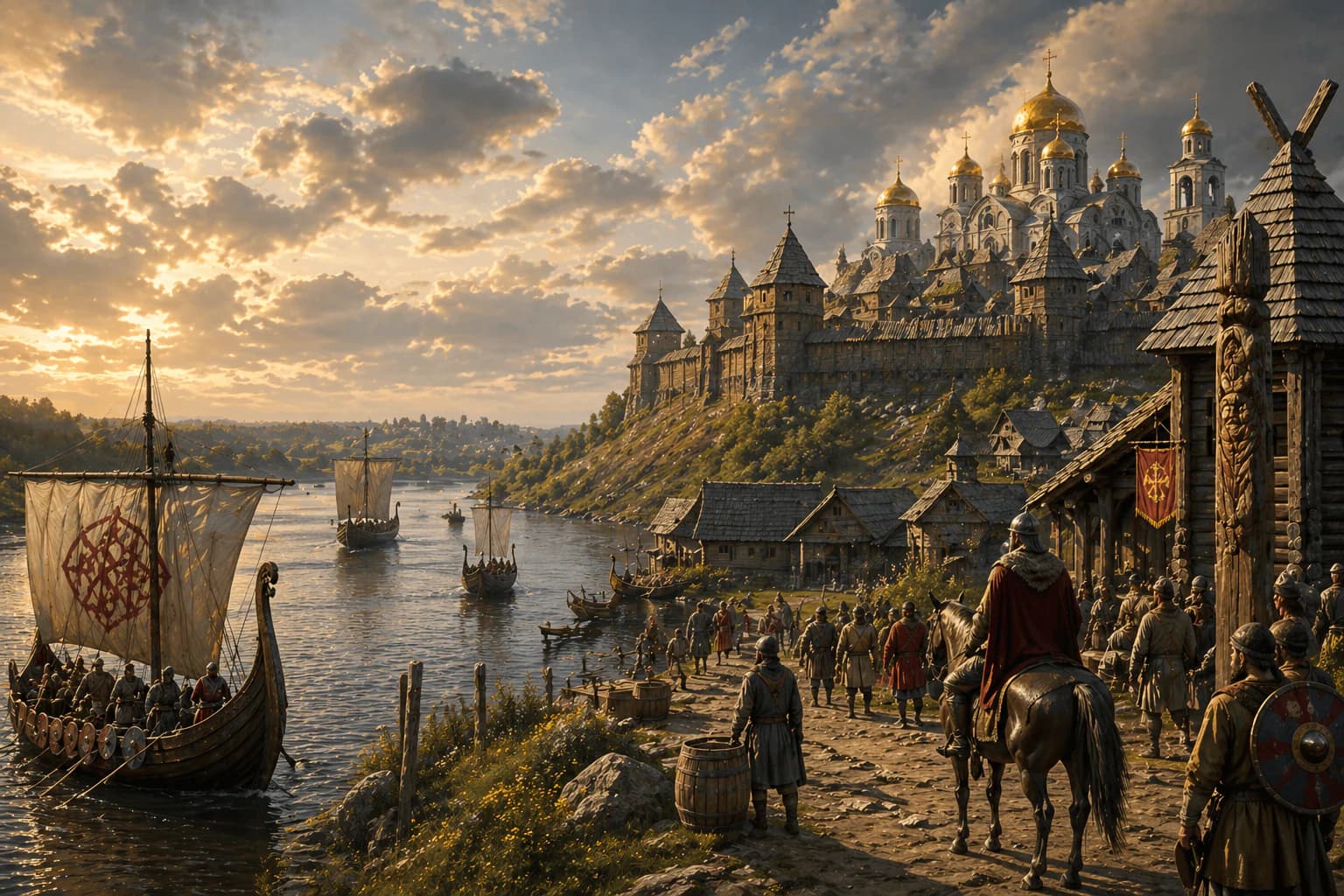
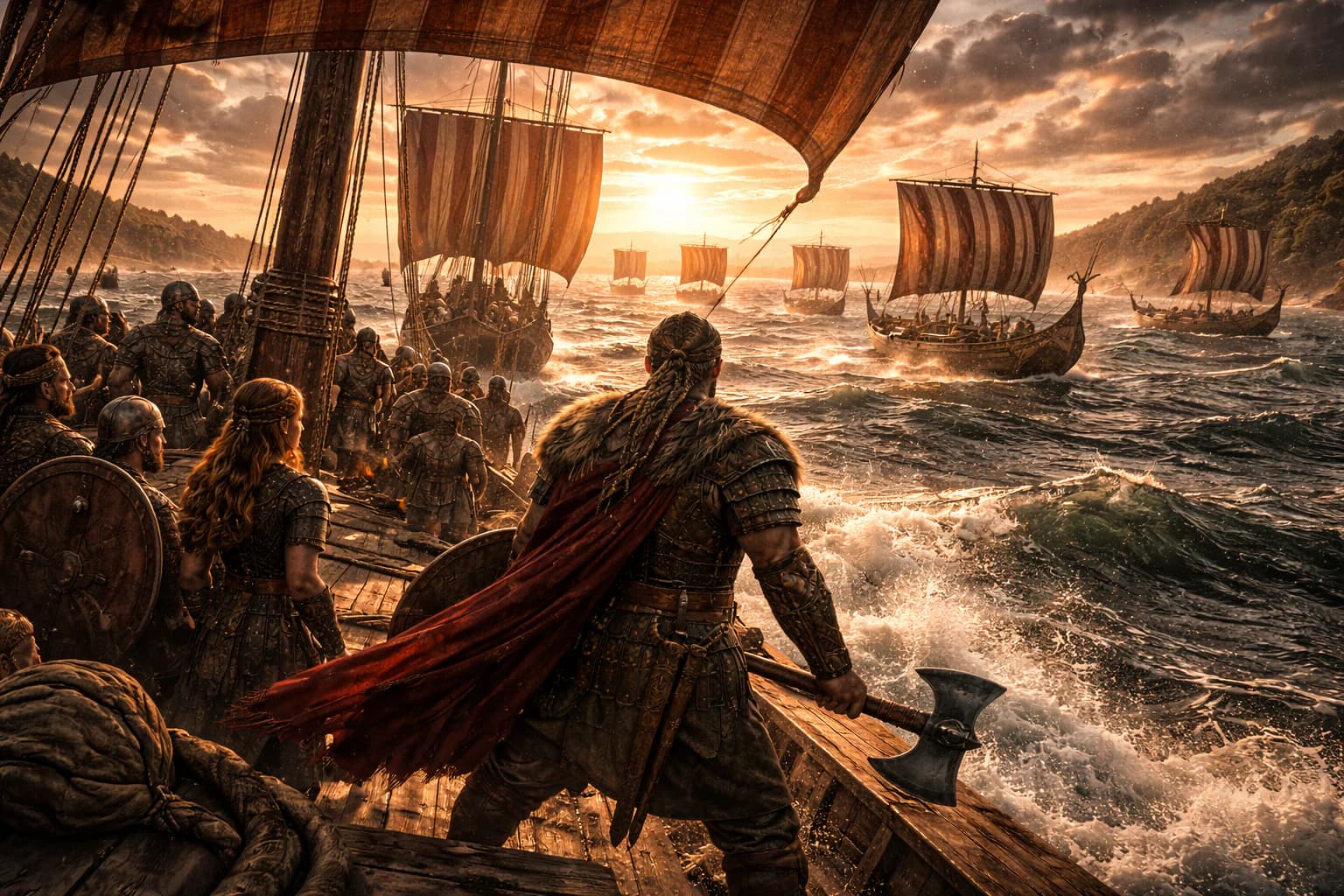
Sviatoslav's death around 972 set off a struggle among his sons. Yaropolk took Kiev, Oleg ruled among the Drevlians, and Vladimir held Novgorod before fleeing for Scandinavian support. He returned with Varangian forces, defeated his rivals, and took Kiev in 980. The rise was ruthless. The chronicle tradition includes episodes of political murder, coerced marriage, and the use of pagan cult to strengthen princely authority. Vladimir's early reign should not be softened into saintly biography. He was a successful warlord-prince before he became a Christian ruler. That contrast is central to his historical image: the same man who consolidated power through force later sponsored one of the most consequential religious changes in eastern European history.
Vladimir's conversion mattered partly because it redirected a ruler already strong enough to impose change.
980s
Pagan reform and rule
Vladimir's first religious policy was not Christian. He established or elevated a pantheon in Kiev, with Perun prominent among the gods, in what appears to have been an attempt to give the diverse Rus lands a shared sacred focus under princely authority. This effort shows that Vladimir understood religion as a tool of political integration before he accepted Christianity. He also campaigned against neighbouring peoples, fortified frontiers, and strengthened Kiev's reach across a landscape threatened by steppe raids and internal fragmentation. The pagan reform did not last, but it reveals the problem Vladimir was trying to solve: how to bind a large, varied, tribute-based realm into something more coherent than a collection of armed interests.
Vladimir's religious choices were also state-building choices.
988
Conversion of Rus
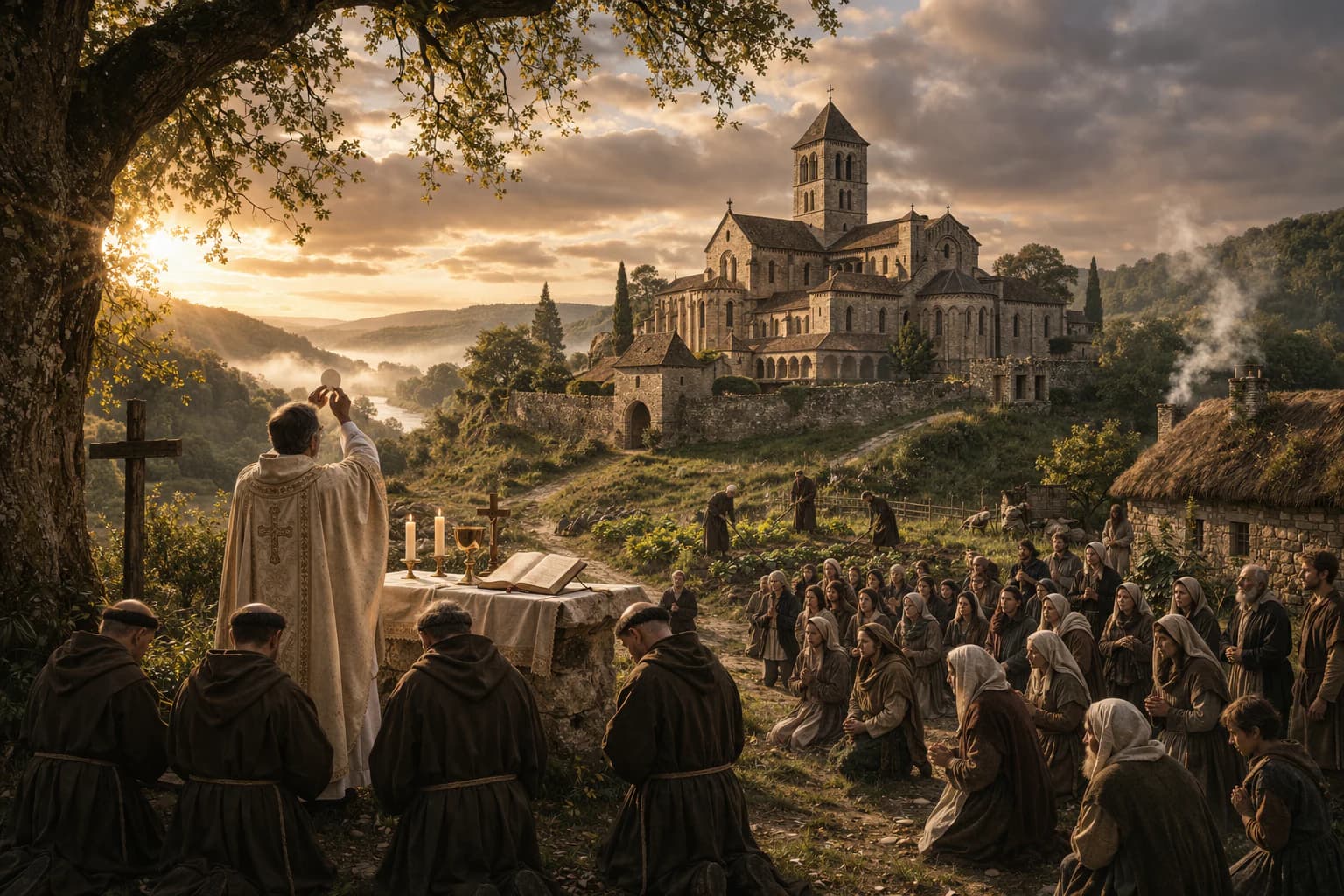
Vladimir's conversion around 988 is the defining event of his reign. The chronicle presents a famous search among religions, but the strongest historical context is diplomatic and political. Vladimir intervened in Byzantine affairs, took Chersonesus in Crimea according to tradition, and married Anna, sister of the Byzantine emperors Basil II and Constantine VIII. Such a marriage was extraordinary for a ruler outside the imperial family system, and baptism was the price and framework of alliance. In Kiev, Vladimir ordered idols destroyed and the people baptized in the Dnieper. The process was uneven and took generations beyond the capital, but the symbolic decision was irreversible. Rus entered the orbit of Byzantine Christianity, receiving clergy, liturgy, architecture, books, art, law, and a new language of sacred kingship.
The baptism of Kiev was both a spiritual event and a geopolitical realignment.
990s-1015
Christian prince
After conversion, Vladimir presented himself as a Christian prince. He sponsored the Church of the Tithes in Kiev, supported clergy, encouraged baptism, and became associated in later tradition with almsgiving and concern for the poor. Yet Christian rule did not remove the practical problems of power. He still governed through sons placed in regional centres, still faced Pecheneg pressure on the steppe frontier, and still had to manage a dynasty whose rivalries would explode after his death. His later reputation as Saint Vladimir rests on the conversion of Rus, but his historical importance also lies in the institutional consequences of that act. Christianity gave Kiev new cultural tools, new diplomatic language, and a sacred memory that outlived the political unity of Kievan Rus itself.
Vladimir's achievement was not instant Christianization but the creation of a Christian future for Rus politics.
1015
Death and legacy
Vladimir died in 1015 at Berestove near Kiev. His death opened a bitter succession struggle among his sons, including Sviatopolk, Yaroslav, Boris, and Gleb. The violence that followed shows that Christian kingship had not solved the Rurikid succession problem. Even so, Vladimir's legacy proved deeper than immediate politics. He became a saint in eastern Christian memory and a foundational ruler in Ukrainian, Russian, Belarusian, and wider Orthodox history. His choice of Byzantine Christianity shaped religious identity, writing, art, law, diplomacy, and historical imagination across eastern Europe. The question 'why was Vladimir the Great important?' has a clear answer: few rulers changed the cultural direction of so large a region with a single decision carried through by political will.
Vladimir's realm fractured, but the religious civilization he helped launch endured.