8th century BC
Assyria in crisis
Tiglath-Pileser III rose during a period when Assyria faced internal weakness, powerful nobles, and pressure from neighbouring states.
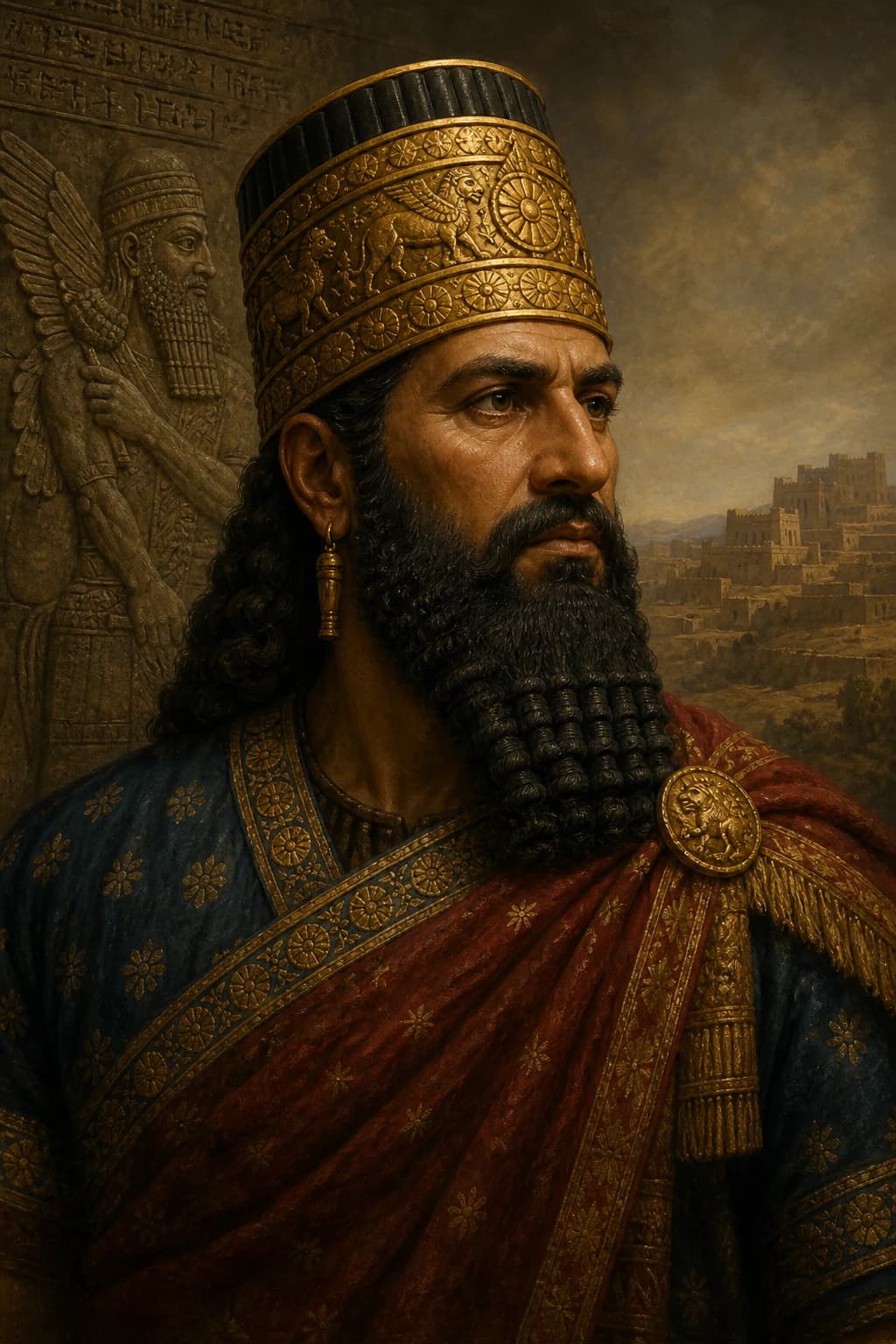
Tiglath-Pileser III was king of Assyria from 745 to 727 BC. His army reforms, provincial administration, deportation policies, and campaigns in Syria, Israel, and Babylonia created the foundations of the Neo-Assyrian Empire.
King of Assyria (745-727 BC)
Additional identity and tagging details that are not already covered in the introduction.
Selected specifics from this profile's life story.
Tiglath-Pileser III rose during a period when Assyria faced internal weakness, powerful nobles, and pressure from neighbouring states.
Tiglath-Pileser III strengthened Assyria's military with more permanent forces, specialised units, and logistics that allowed repeated campaigning across great distances.
Tiglath-Pileser III took the Babylonian throne as Pulu, binding Babylonia to Assyria through personal kingship rather than simple conquest.
Tiglath-Pileser III died in 727 BC, leaving a stronger, more centralised Assyrian Empire for his successors.
Follow the story in a more continuous narrative, with a reading mode that matches how much depth you want.
Tiglath-Pileser III rose during a period when Assyria faced internal weakness, powerful nobles, and pressure from neighbouring states.
He became king in 745 BC and quickly began reshaping the army, court, and provinces around direct royal control.
Tiglath-Pileser III strengthened Assyria's military with more permanent forces, specialised units, and logistics that allowed repeated campaigning across great distances.
His campaigns brought much of Syria and the Levant under Assyrian dominance, including major pressure on Damascus and the kingdoms of Israel and Judah.
Tiglath-Pileser III took the Babylonian throne as Pulu, binding Babylonia to Assyria through personal kingship rather than simple conquest.
Tiglath-Pileser III died in 727 BC, leaving a stronger, more centralised Assyrian Empire for his successors.
Move from the profile into the wider events and settings this figure belongs to.
This profile is written for educational use and connects to related Stories of History pages. Illustrations are original artistic interpretations.
Find out first about the latest published stories, feature notes and occasional Premium offers in one weekly email.