1478-1516
Scholar and lawyer
Thomas More rose through law, humanist learning and public service, becoming one of England's most admired intellectuals.
Sir Thomas More was an English humanist, author of Utopia and Lord Chancellor under Henry VIII. He opposed the break with Rome, refused the Oath of Supremacy, and was executed for treason in 1535.
Lord Chancellor and humanist (1478-1535)
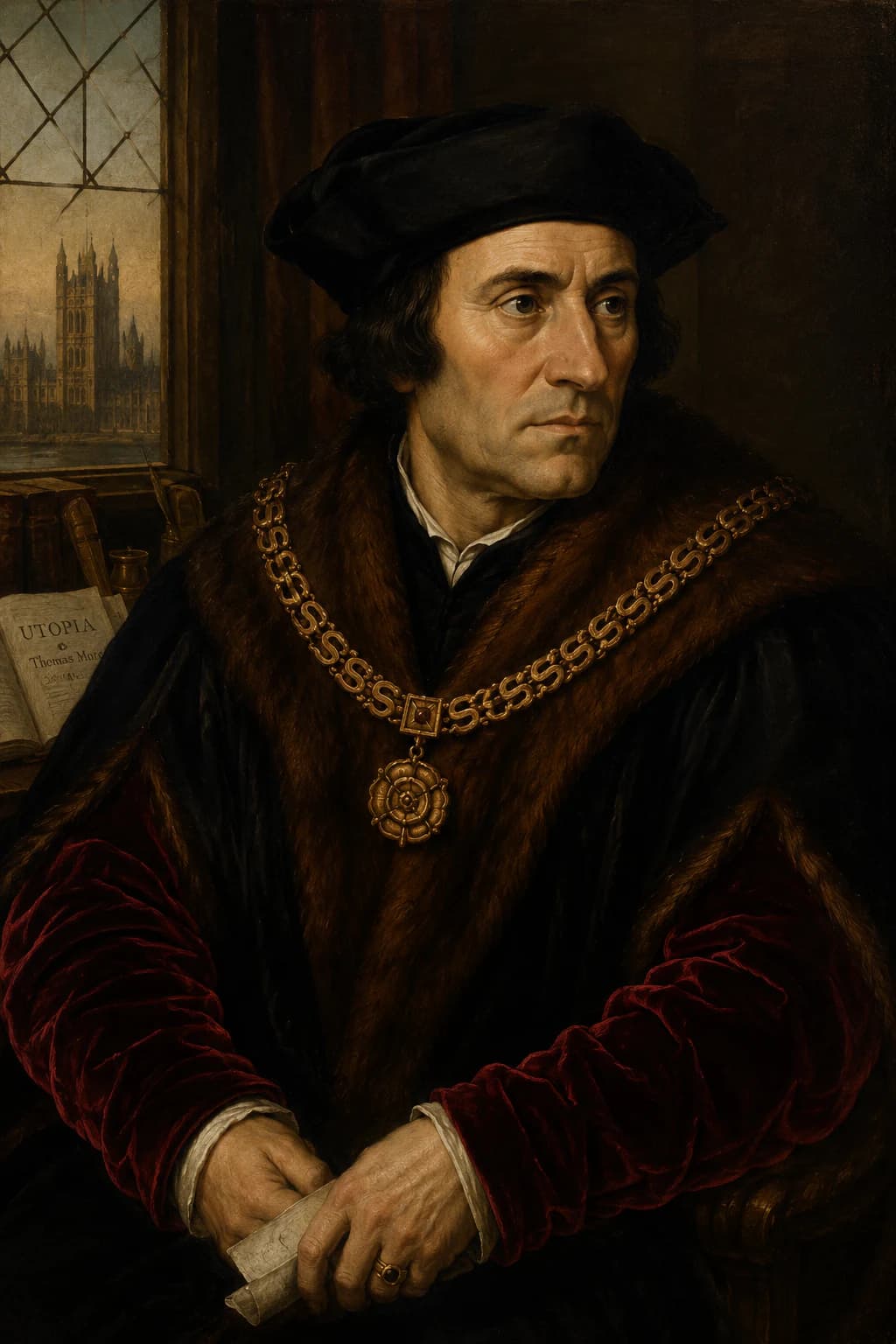
Additional identity and tagging details that are not already covered in the introduction.
Selected specifics from this profile's life story.
Thomas More rose through law, humanist learning and public service, becoming one of England's most admired intellectuals.
More entered Henry VIII's service and became Lord Chancellor after Cardinal Wolsey's fall.
More refused the oath tied to Henry's succession and supremacy, because it required accepting claims he could not in conscience affirm.
More was executed for treason in 1535 and later remembered as a martyr of conscience and Catholic loyalty.
Follow the story in a more continuous narrative, with a reading mode that matches how much depth you want.
Thomas More rose through law, humanist learning and public service, becoming one of England's most admired intellectuals.
More entered Henry VIII's service and became Lord Chancellor after Cardinal Wolsey's fall.
More resigned as Lord Chancellor as Henry's government moved closer to breaking with Rome.
More refused the oath tied to Henry's succession and supremacy, because it required accepting claims he could not in conscience affirm.
More was executed for treason in 1535 and later remembered as a martyr of conscience and Catholic loyalty.
Move from the profile into the wider events and settings this figure belongs to.
This profile is written for educational use and connects to related Stories of History pages. Illustrations are original artistic interpretations.
Find out first about the latest published stories, feature notes and occasional Premium offers in one weekly email.

