Complete chronology
Full overview and deeper context for every journey step.
1676
Rural Beginnings
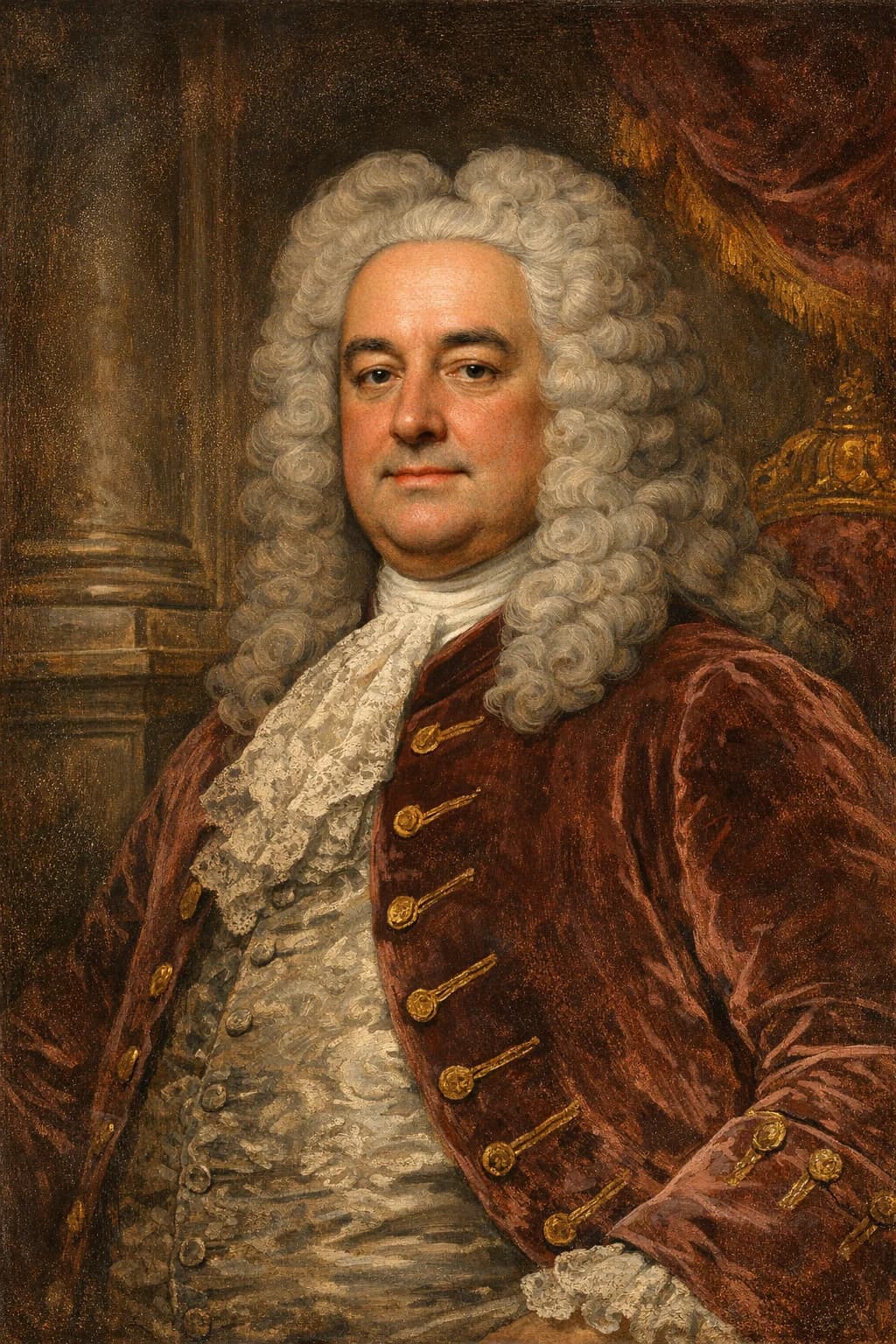
Robert Walpole came from the county gentry, not the highest aristocracy. That position gave him money, status, and local authority, but also taught him the everyday mechanics of influence. Norfolk politics depended on family, tenants, neighbours, hospitality, and calculation. Walpole absorbed that world deeply. He would later operate on a national scale with the same instinct: know who needs what, keep allies rewarded, avoid unnecessary ideological purity, and make power feel useful. His critics called this corruption. His defenders called it government.
His early environment taught him that power depends as much on relationships as on rank.
1690s
Education Interrupted
Walpole's formal education was cut short by inheritance. The death of his elder brother made him the family heir, drawing him away from King's College, Cambridge, and into estate responsibility. This was not wasted preparation. Managing property meant managing revenue, obligation, and reputation. It gave him a practical understanding of money that later mattered at the Treasury. Unlike politicians formed mainly by court culture or classical display, Walpole became a financial politician: suspicious of grand adventures, attentive to credit, and alert to the political power of economic calm.
Practical responsibility replaced formal education, shaping a leader grounded in experience rather than theory.
1701
Entering Parliament
Walpole entered a Parliament shaped by party conflict, religious tension, war finance, and succession anxiety. The Whigs generally supported the Protestant succession, commercial interests, and war against Louis XIV's France; Tories were more divided over war, church, and court power. Walpole proved diligent, numerate, and partisan. He learned that Parliament was not an ornamental body but the arena where taxation, credit, and legitimacy met. His rise showed a new kind of political importance: not battlefield command or noble birth, but mastery of business, numbers, and votes.
He learned early that survival in politics depends on reading people as much as policies.
1708–1715
Rising Administrator
Walpole's early offices put him close to the machinery that sustained war. Armies and fleets required money, contracts, supply, and parliamentary consent. He became known as a capable administrator, but capability did not protect him from partisan attack. In 1712, after Tory dominance, he was accused of corruption, expelled from the Commons, and imprisoned in the Tower. The episode was political as well as legal. It taught him that office was never secure unless protected by a durable majority and royal confidence. He would spend his later career building both.
Competence and consistency proved powerful, but only when backed by political protection.
1712–1715
Fall and Recovery
The accession of George I changed Walpole's fortunes. The new Hanoverian monarchy depended heavily on Whig support, partly because many Tories were suspected of sympathy for the exiled Stuarts. Walpole returned to power in this altered landscape, where loyalty to the Protestant succession could be converted into office. He understood that the early Hanoverian regime needed stability more than brilliance. The king was German-born, the Jacobite threat was real, and public finance was fragile. Walpole's gift was to make government less alarming.
Experiencing downfall firsthand made him prioritize stability over political drama.
1720
South Sea Crisis
The South Sea Bubble was a speculative disaster that threatened fortunes, reputations, and confidence in government credit. Company schemes tied to national debt had inflated expectations beyond reality; when the bubble burst, anger reached deep into Parliament and court. Walpole was not untouched by the world of speculation, but he emerged as the politician best able to manage the wreckage. He arranged financial measures, limited the political damage, and protected the Hanoverian system from wider collapse. The crisis made him indispensable. In 1721 he became First Lord of the Treasury and Chancellor of the Exchequer, the practical foundation of his long supremacy.
Crisis revealed that steady leadership can outweigh dramatic reform.
1721–1742
Prime Authority
Walpole did not hold a modern prime ministerial office in a fully defined constitutional sense. The title was often used as an insult. Yet he performed many of the functions later associated with the role: leading the Commons, managing cabinet business, controlling finance, advising the monarch, distributing patronage, and maintaining a governing majority. Under George I and George II, he made ministerial government more coherent. His policy was cautious: low taxes where possible, peace abroad, stable credit, and avoidance of ideological crusades. He knew war could ruin budgets and governments alike.
He turned informal influence into lasting authority by mastering balance rather than force.
1730s–1742
Losing Support
Long rule breeds enemies. Walpole's opponents accused him of bribery, corruption, cowardice abroad, and suffocating parliamentary independence. The 1733 excise crisis damaged him by making his financial methods look intrusive. Later pressure for war with Spain, amplified by imperial merchants and patriotic rhetoric, forced him into the War of Jenkins' Ear, a conflict he had tried to avoid. By 1742 electoral losses and parliamentary opposition made his position untenable. He resigned and was created Earl of Orford. The machine he built had lasted two decades, but even the best-managed majority could not survive forever.
Even the most stable systems eventually strain under long-term control.
1745
Enduring Legacy
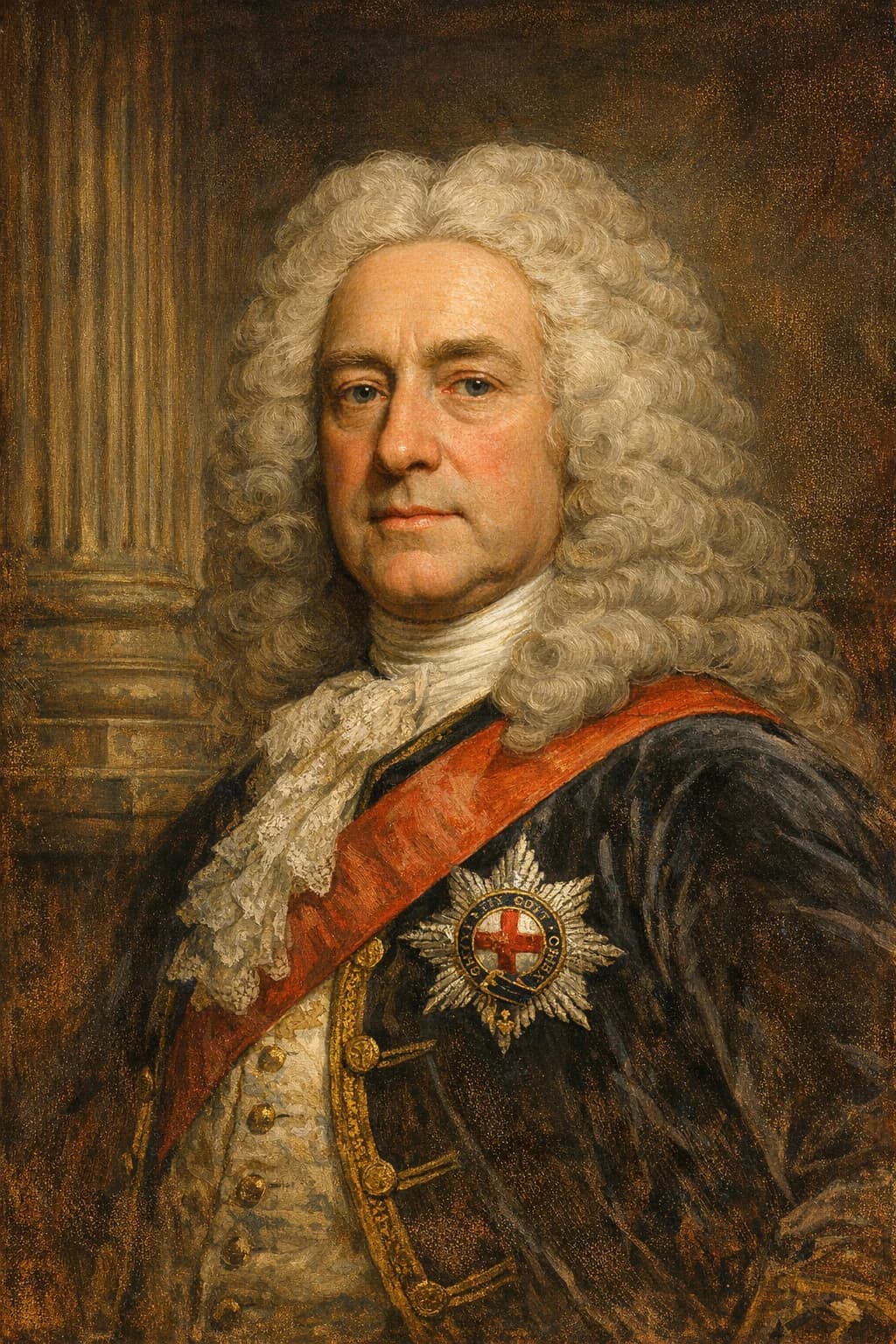
Walpole's legacy is constitutional rather than heroic. He did not write a founding document declaring the premiership into existence. He normalised it by doing the job for long enough that others had to reckon with the precedent. British government after Walpole increasingly depended on ministers who could command the House of Commons as well as serve the Crown. That shift did not make monarchy powerless overnight, and it did not create modern democracy. But it moved power toward parliamentary management and cabinet leadership. To ask why Robert Walpole was important is to ask how an unwritten constitution changes: through habit, survival, and the success of a system people keep using.
His greatest achievement was not a single act, but creating a model others would follow.