Complete chronology
Full overview and deeper context for every journey step.
1836
Scottish beginnings
Henry Campbell-Bannerman was born Henry Campbell in Glasgow in 1836, later adding Bannerman under the terms of a family inheritance. His background mattered. He came from wealth, but not from the landed world that supplied so much Victorian political leadership. Glasgow's commercial and industrial culture gave him a practical cast of mind, while his family's prosperity gave him education and independence. He was never a radical outsider, but he did not carry himself like a grandee. That helped shape a political style based on decency, patience, and suspicion of unnecessary imperial swagger.
His non-aristocratic roots helped him connect liberal ideas with practical governance rather than abstract theory.
1850s
University formation
Campbell-Bannerman studied at the University of Glasgow and Trinity College, Cambridge, entering the intellectual world of mid-Victorian liberalism. He was not the kind of politician who remade himself through dazzling theory. His strength lay in temperament: listening, absorbing, and judging where a coalition could hold. In an age of immense change - industrial growth, empire, Irish agitation, democratic reform - those qualities had value. He learned that government was rarely the art of pure conviction. It was often the slower task of keeping principle connected to what Parliament, party, and public opinion would bear.
His quiet development at university foreshadowed a career built on steadiness rather than sudden brilliance.
1868
Entering Parliament
Campbell-Bannerman entered Parliament in the great Liberal year of 1868, when William Gladstone came to power and the party tied reform to moral seriousness. He was not an immediate star. Instead, he became one of those durable parliamentary figures who acquire influence by reliability. He represented Stirling Burghs for the rest of his career, building local loyalty while learning national administration. His early years placed him inside Gladstonian Liberalism, with its concern for finance, religion, Ireland, and limits on arbitrary power. That inheritance later shaped his response to empire and war.
His gradual climb built a foundation of trust that later proved more valuable than early fame.
1870s–1890s
Government service
Much of Campbell-Bannerman's career was administrative. He served as Financial Secretary to the War Office, Chief Secretary for Ireland, and twice as Secretary of State for War. These were difficult posts. Ireland tested every Liberal government, while the War Office carried the burdens of imperial defence and military reform. He was not a visionary military reformer, but he gained a deep understanding of institutions and their limits. His competence made him useful across factions. In a party often divided between radicals, imperial liberals, nonconformists, and Whigs, usefulness was power.
Administrative competence gave him influence in a political culture that often rewarded visibility over substance.
1899
Party leadership
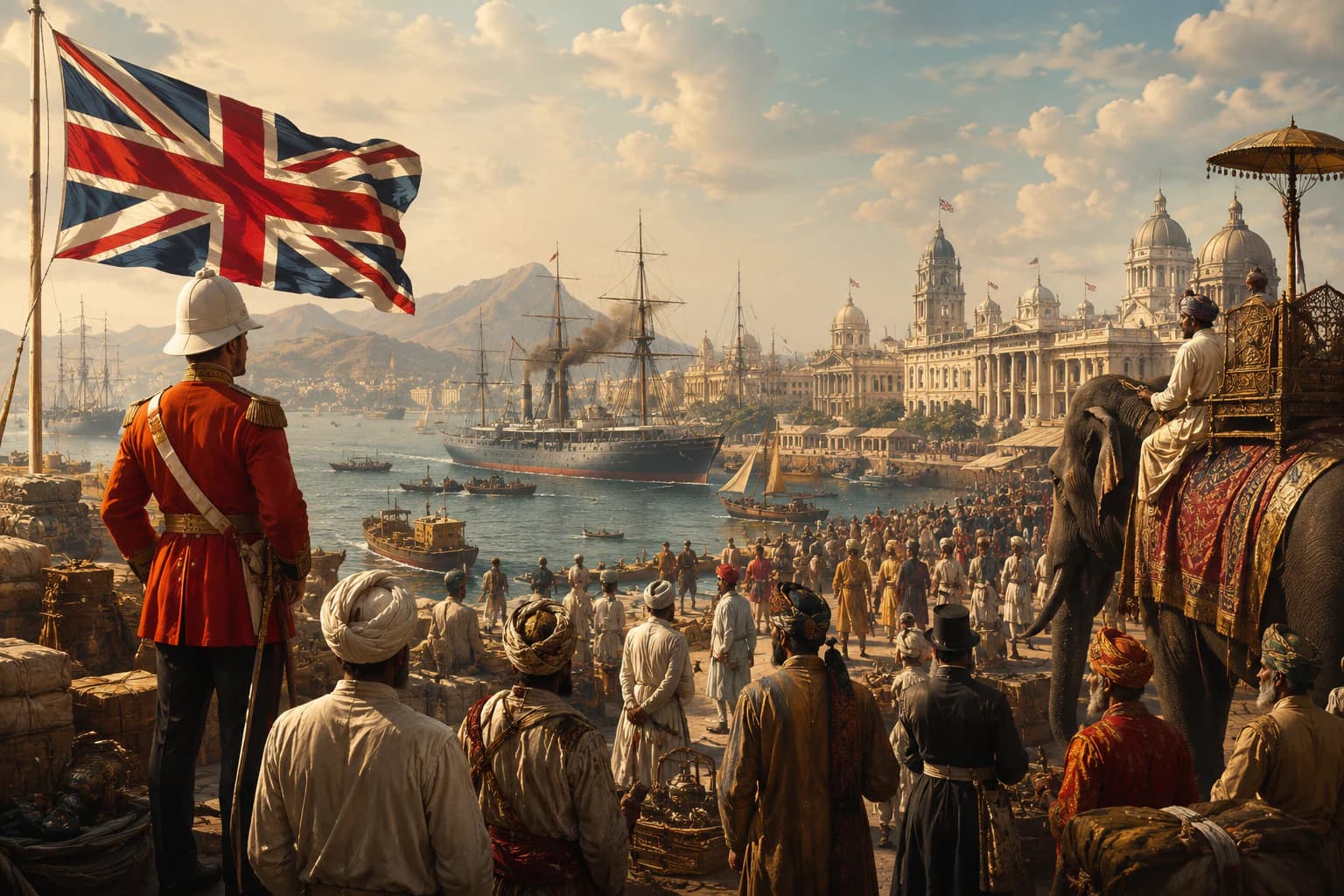
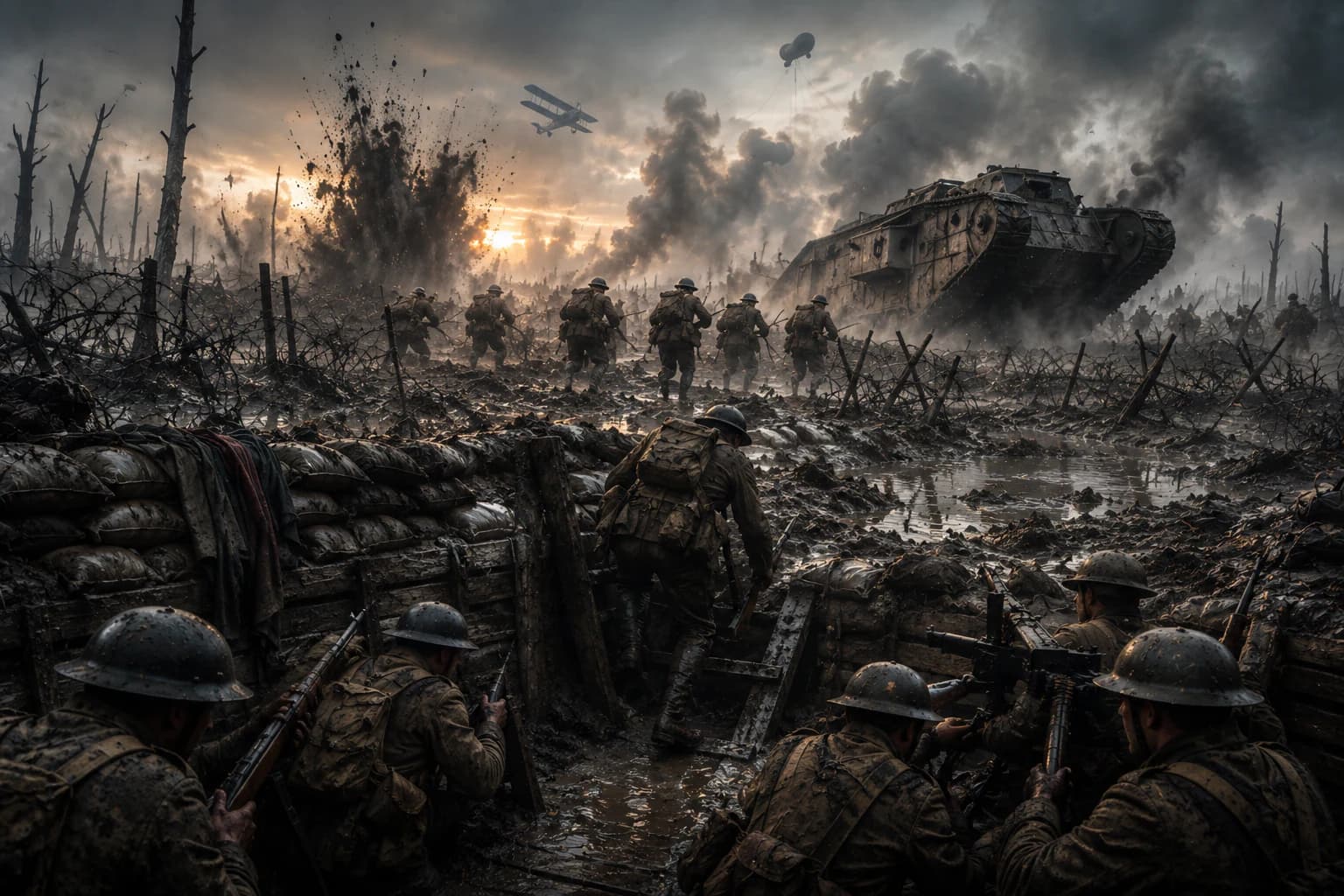
Campbell-Bannerman became Liberal leader in 1899, just as the South African War exposed deep tensions inside his party. Some Liberals supported the war as an imperial necessity; others condemned it as aggression. Campbell-Bannerman's phrase 'methods of barbarism', used in 1901 to criticise concentration camps and scorched-earth tactics, made him a target for patriotic fury. Yet the criticism mattered because it asserted that empire did not stand above moral judgement. He had to keep the party together while refusing to let imperial success excuse civilian suffering. That balancing act defined his leadership.
He succeeded not by overpowering divisions, but by making them manageable.
1906
Landslide victory
The 1906 Liberal landslide was one of the great electoral ruptures in British politics. Conservative tariff reform divided the right, nonconformist anger over education policy mobilised Liberal support, and the memory of the Boer War damaged imperial triumphalism. Campbell-Bannerman benefited from these forces, but he also made the Liberals look governable after years of division. The victory brought into Parliament a remarkable generation, including H. H. Asquith, David Lloyd George, and Winston Churchill. It gave Liberalism a mandate not only to oppose Conservative policy, but to rethink what the state owed citizens in an industrial society.
His quiet leadership style proved capable of delivering dramatic political outcomes.
1905–1908
Prime ministership
Campbell-Bannerman's premiership was brief but consequential. He defended free trade against tariff reform and moved British policy in South Africa away from coercive postwar imperialism, including steps against Chinese indentured labour in the Transvaal. At home, his government began the New Liberal turn that successors would expand: school meals, labour exchanges, pensions, and National Insurance belonged partly to the political world his victory created. He did not design the welfare state, but he helped make reform politically possible. His style was humane rather than theatrical, and that suited a moment when Liberalism needed breadth.
He showed that significant change could begin through moderation rather than bold declarations.
1908
Declining health
The physical strain of leadership caught up with Campbell-Bannerman quickly. His wife Charlotte had died in 1906, a personal blow from which he never fully recovered, and his own health declined while the government still had major work ahead. In April 1908 he resigned and was succeeded by H. H. Asquith. Less than three weeks later he died at 10 Downing Street, one of the few prime ministers to do so. His death encouraged the sense that he was a transitional figure, but transition can be a real historical achievement when it changes direction.
Even as his strength faded, the structures he built continued to guide political change.
Post-1908
Lasting influence
Campbell-Bannerman is often overshadowed by Asquith and Lloyd George, whose governments carried reform into sharper constitutional conflict. Yet his importance is not minor. He rescued Liberal unity after imperial division, won the majority that made reform possible, and gave British politics a language of restraint after the Boer War. His legacy is less a single law than a change in direction: Liberalism moved from Victorian economy and conscience toward Edwardian welfare and democratic pressure. To ask why Campbell-Bannerman mattered is to see the hinge between Gladstone's moral liberalism and the social liberalism that helped shape twentieth-century Britain.
His legacy rests in direction rather than drama, quietly shaping what came next.