Complete chronology
Full overview and deeper context for every journey step.
185 BCE
Born between great houses
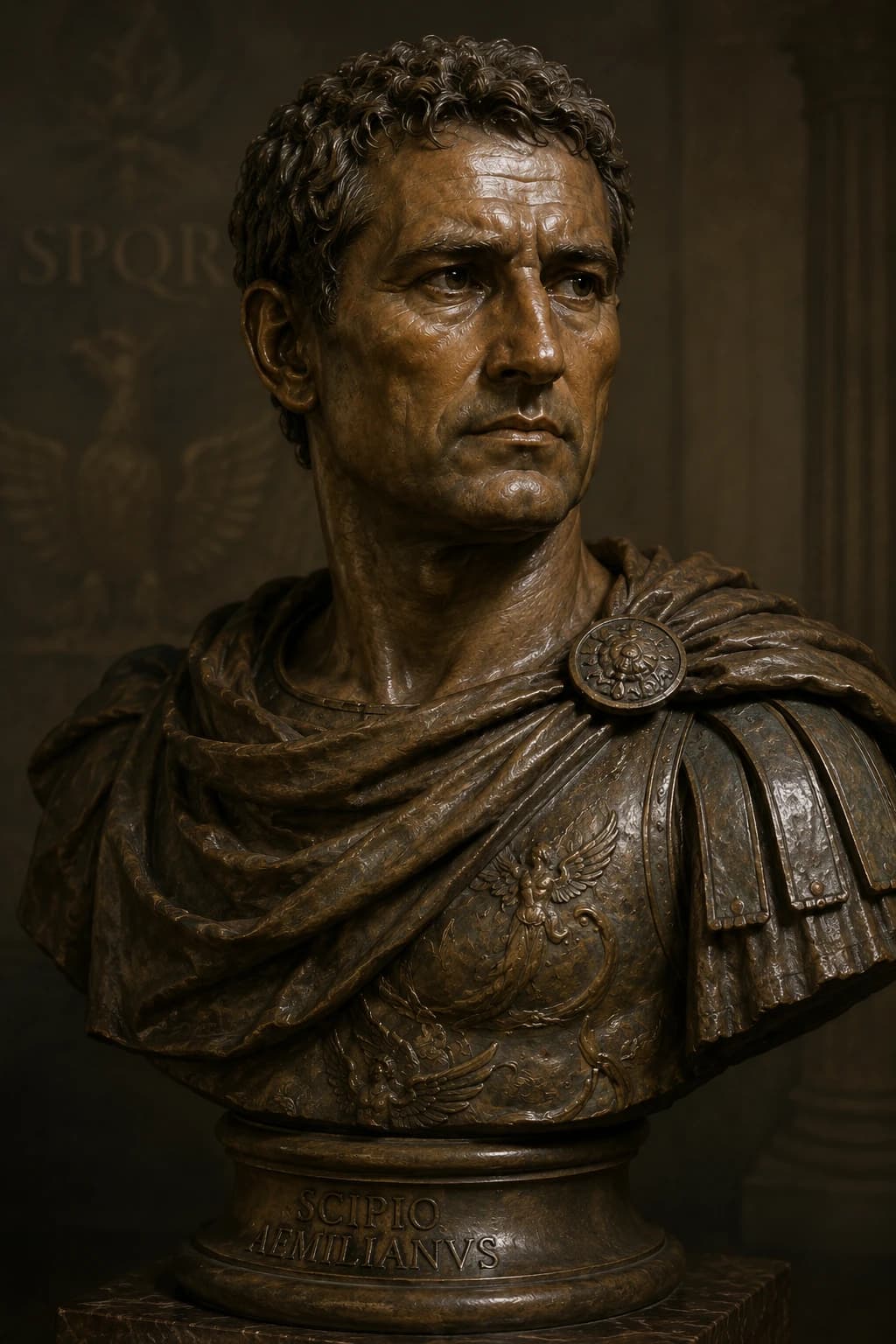
Scipio Aemilianus was born the son of Lucius Aemilius Paullus, the Roman victor over Macedon at Pydna, and was later adopted into the Cornelii Scipiones, the family of Scipio Africanus. Adoption in elite Rome was not a sentimental detail. It transferred name, inheritance, expectation, and political identity. Aemilianus grew up with the burden of two military legacies: Macedon conquered through his birth family and Hannibal defeated through his adoptive line. That inheritance shaped how Romans saw him long before he took command in his own right.
His public identity was built from family memory before it was built from his own victories.
160s-150s BCE
An aristocrat of discipline
Aemilianus belonged to a generation living with the consequences of Rome's victories. The Republic was richer, more powerful, and more strained than before. Elite commanders competed for honour in distant wars while social tensions grew at home. Ancient tradition presents Aemilianus as austere, disciplined, intellectually connected, and close to Greek culture without abandoning Roman severity. Whether the literary portrait is polished or not, his career shows a man trusted when Rome believed a war had become embarrassing, disorderly, or too slow. His value was not only courage. It was the promise of restoring order.
His authority rested on the Roman belief that discipline could rescue failing wars.
149-147 BCE
Carthage under siege
Rome entered the Third Punic War against a Carthage that was far weaker than the enemy Hannibal had once defended. Yet the city resisted fiercely. Roman demands pushed Carthage into desperation, and desperate cities can be hard to conquer. Early Roman commanders struggled with discipline, logistics, assaults, and the hard work of siege. Aemilianus first gained notice for competence and personal courage in this environment. By 147 BCE, Roman voters and leaders turned to him for command even though normal age and office expectations had to bend. The appointment showed both the crisis of confidence and the power of the Scipionic name.
Carthage was reduced, but it was not easy prey once its people chose resistance.
147 BCE
Command in Africa
Aemilianus approached the siege as a problem of control. He worked to restore Roman discipline, close gaps in the blockade, secure positions, and reduce the city's ability to receive supplies. Carthage's defenders fought from walls, harbours, streets, and workshops, turning the siege into an exhausting urban struggle. Aemilianus did not win by one clean stroke. He imposed pressure until resistance could be broken section by section. The process revealed a harsher Rome: patient, organized, and willing to turn strategic fear into total destruction.
His method was not theatrical brilliance, but disciplined pressure applied until the city could no longer breathe.
146 BCE
The fall of Carthage
The capture of Carthage was one of Rome's most consequential acts of destruction. After the final assault, fighting continued through streets and buildings. The city was burned and dismantled as an independent power. Survivors were enslaved, and the surrounding territory was reorganized under Roman authority as the province of Africa. Later stories about salt being sown into the soil are not reliable ancient fact, but they reflect a real historical meaning: Rome wanted finality. Aemilianus became the commander whose name was attached to that finality.
His victory marked the point where containment gave way to annihilation.
134-133 BCE
Numantia and Spain
Rome later turned to Aemilianus again in Spain, where the war against Numantia had become a symbol of frustration. As in Africa, he emphasized discipline, siege works, blockade, and the slow removal of hope. Numantia fell in 133 BCE after starvation and desperate resistance. The victory added to Aemilianus's reputation as the man Rome called when it wanted a hard war ended. It also showed the recurring pattern of Roman expansion: distant resistance was increasingly met not only with defeat, but with exemplary destruction.
Carthage was not an isolated episode; it belonged to a broader Roman habit of making resistance visibly costly.
129 BCE
Politics and death
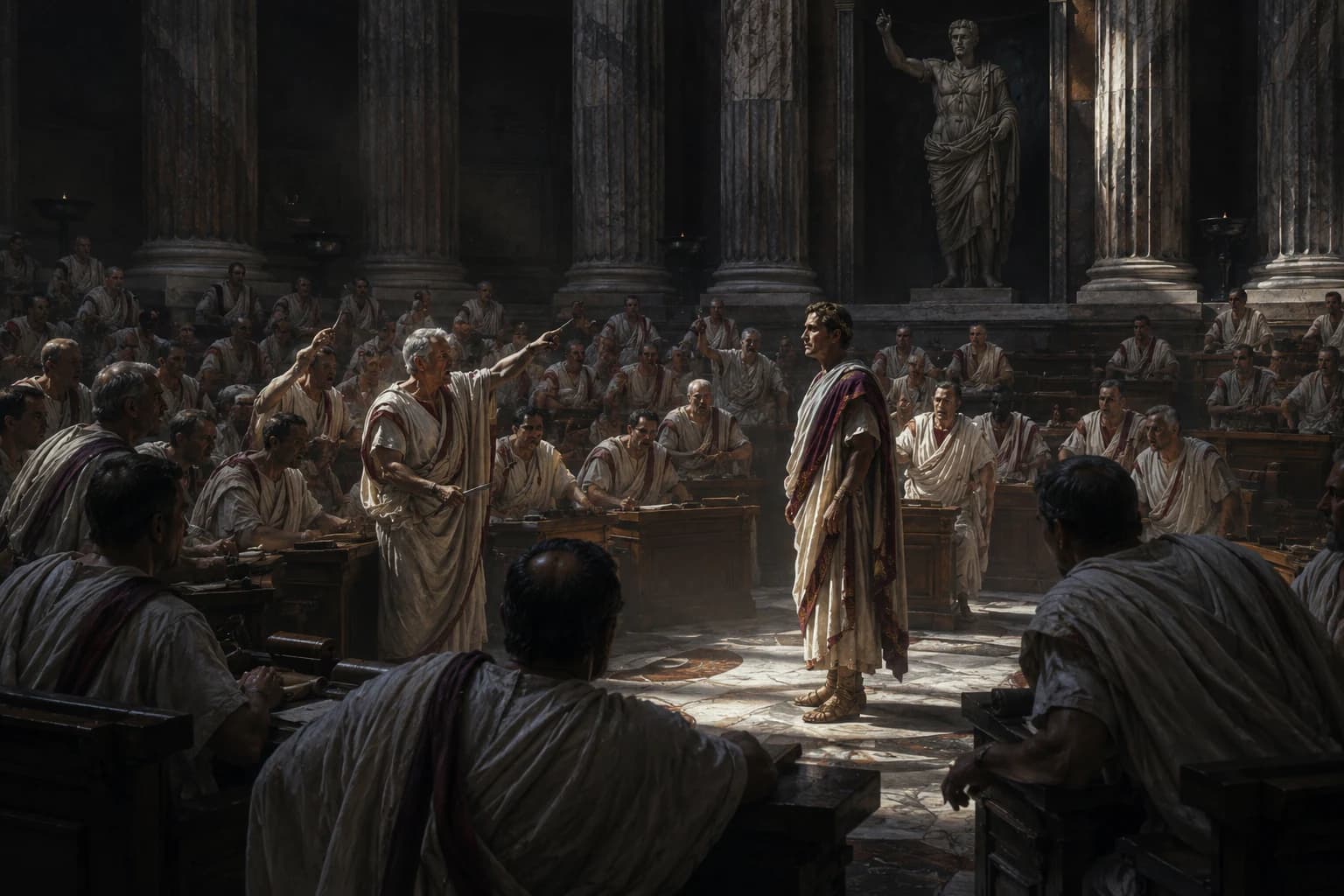
The world Aemilianus helped build was politically unstable. Rome's victories brought land, wealth, slaves, provinces, and arguments over who should benefit from empire. Tiberius Gracchus, Aemilianus's brother-in-law, tried to address landholding and citizen poverty through radical reform in 133 BCE and was killed in political violence. Aemilianus opposed aspects of the Gracchan movement and became a controversial figure in the bitter aftermath. He died suddenly in 129 BCE. Ancient suspicion surrounded the death, but certainty is impossible. What matters is the atmosphere: Rome's imperial success was now feeding conflict inside the Republic itself.
The conqueror of foreign cities died inside a Republic increasingly at war with its own future.
After 129 BCE
Legacy of finality
Scipio Aemilianus inherited the name of Rome's victory over Hannibal and gave it a darker second meaning. Scipio Africanus had defeated Carthage and left it alive. Aemilianus destroyed it. His career therefore sits at a hinge in Roman history. He represents military discipline, aristocratic prestige, and the capacity to finish wars that others could not finish. He also represents the violence of Roman supremacy: cities broken, populations enslaved, provinces created, and political consequences carried home. His legacy is inseparable from the Punic Wars' final lesson. Rome did not merely become powerful enough to win. It became powerful enough to decide that some rivals would not be allowed to exist.
His name marks the hard edge of Roman victory: not survival, but finality.