Complete chronology
Full overview and deeper context for every journey step.
1807–1825
Virginia upbringing
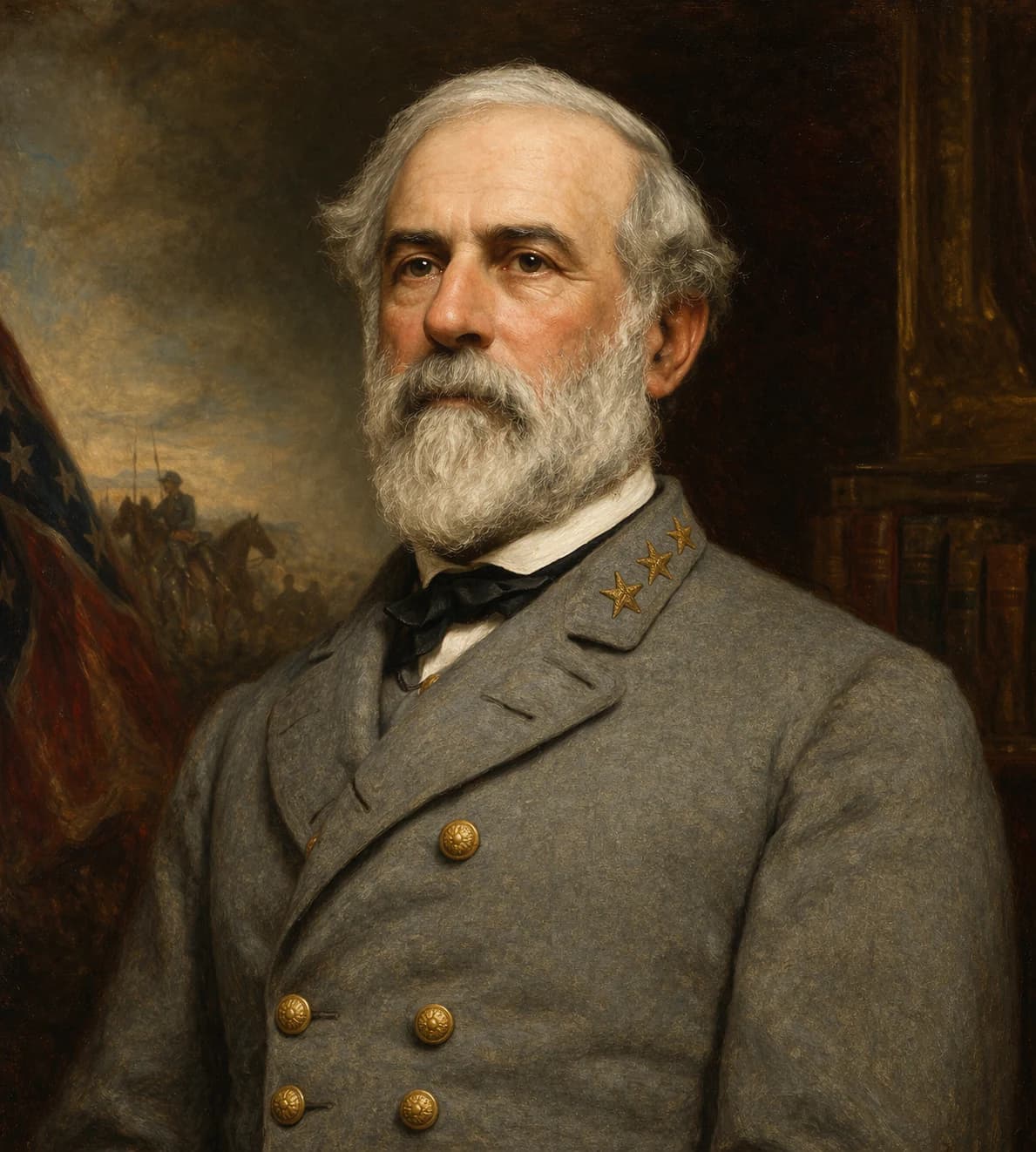
Robert E. Lee entered a Virginia world where family reputation was almost a form of currency. His father, Henry 'Light-Horse Harry' Lee, had been a Revolutionary War hero, but debt, imprisonment, and absence left the household diminished. Lee grew up with pride in a celebrated name and anxiety about restoring its dignity. That tension helped form his famous self-control. He learned to value discipline, restraint, courtesy, and public duty, but he also absorbed the assumptions of a slaveholding society that treated hierarchy as natural. Any serious Robert E. Lee biography has to hold those truths together: the polished officer and the man whose life was embedded in the social order that the Confederacy would fight to preserve.
Early expectations of honor pushed Lee toward a life defined more by duty than personal ambition.
1825–1829
West Point success
West Point rewarded exactly the qualities Lee cultivated: order, precision, endurance, and obedience to institutional rules. Graduating second in his class without a demerit became part of the Lee legend, but it was more than a charming anecdote. It signalled the kind of officer he intended to be. He entered the Corps of Engineers, the army's elite technical branch, where intelligence and patience mattered more than battlefield display. His early career involved fortifications, surveys, and infrastructure rather than glory. That technical foundation later shaped his military judgement. Lee understood terrain, movement, supply, and the value of position because he had spent years studying the physical realities behind strategy.
Lee’s early discipline showed that quiet consistency can be as powerful as dramatic talent.
1830s–1846
Engineer officer
Lee's prewar service was mostly the unglamorous work of a professional army officer in a young republic: improving defences, managing construction, assessing waterways, and serving wherever the War Department required. These assignments trained him to think spatially. He learned that rivers, roads, ridges, bridges, and supply lines could decide campaigns before armies met. He also married Mary Anna Randolph Custis, linking himself to the Washington-Custis family and to Arlington, a plantation household dependent on enslaved labour. Lee's life before the Civil War was therefore not a simple apprenticeship in military virtue. It was also a life within the social, economic, and moral contradictions of the antebellum United States.
Technical groundwork quietly prepared Lee for the strategic challenges he would later face.
1846–1848
Mexican War service
The Mexican-American War gave Lee the chance to show that his engineer's mind could operate under fire. Serving under General Winfield Scott, he carried out reconnaissance, identified routes, and helped make possible manoeuvres that brought the U.S. Army toward Mexico City. Scott later praised him highly, and officers who would eventually face one another in the Civil War saw Lee's ability up close. The war mattered for another reason: it trained a generation of American commanders in the same theatre, under the same professional assumptions, before slavery and secession split them apart. Lee emerged with a reputation for courage and judgement, but still as a servant of the United States Army.
Lee’s wartime experience revealed how informed decisions behind the scenes can shape visible victories.
1850s
Pre-war command
Lee's years before secession placed him near the fault lines of the republic. As superintendent of West Point, he shaped the institution that would supply officers to both armies. As a cavalry officer in Texas, he experienced the demands of frontier service. In 1859 he commanded the U.S. Marines sent to suppress John Brown's raid on the federal armoury at Harpers Ferry, an event that terrified the slaveholding South and electrified abolitionists. Lee still served the United States, but the political context around him was hardening. The question was no longer whether slavery created conflict; it was whether the Union could survive that conflict without breaking.
Lee’s pre-war roles placed him at the edge of a crisis he would soon be forced to confront directly.
1861
Choosing sides
Lee's defining choice came after Fort Sumter and Lincoln's call for troops. He opposed secession in the abstract and had served the United States for more than thirty years, but when Virginia left the Union he resigned his commission. The decision has often been framed as tragic loyalty to home. That is part of the truth, but not the whole of it. Virginia seceded to join a Confederacy built to defend slavery, and Lee chose to lend his talent to that project. He did not create the Confederate cause, but he became its most valuable military servant. The moral weight of that decision cannot be separated from his later fame.
Lee’s defining choice showed how personal loyalty can override broader political commitments.
1862–1863
Army leadership
Lee took command outside Richmond in 1862 and immediately changed the psychology of the eastern war. Where other Confederate commanders had been cautious, Lee attacked, manoeuvred, and accepted risk. With subordinates such as Thomas 'Stonewall' Jackson and James Longstreet, he repeatedly unsettled Union generals who possessed more men and resources. His victories gave the Confederacy hope, boosted morale, and prolonged the war by making Richmond difficult to capture. Yet brilliance had costs. Lee's style relied on aggressive movement and heavy casualties that the Confederacy could replace less easily than the Union. His generalship was real, but it did not solve the strategic imbalance beneath it.
Lee’s daring strategies brought success but also increased long-term risks for his army.
1863–1865
Turning setbacks
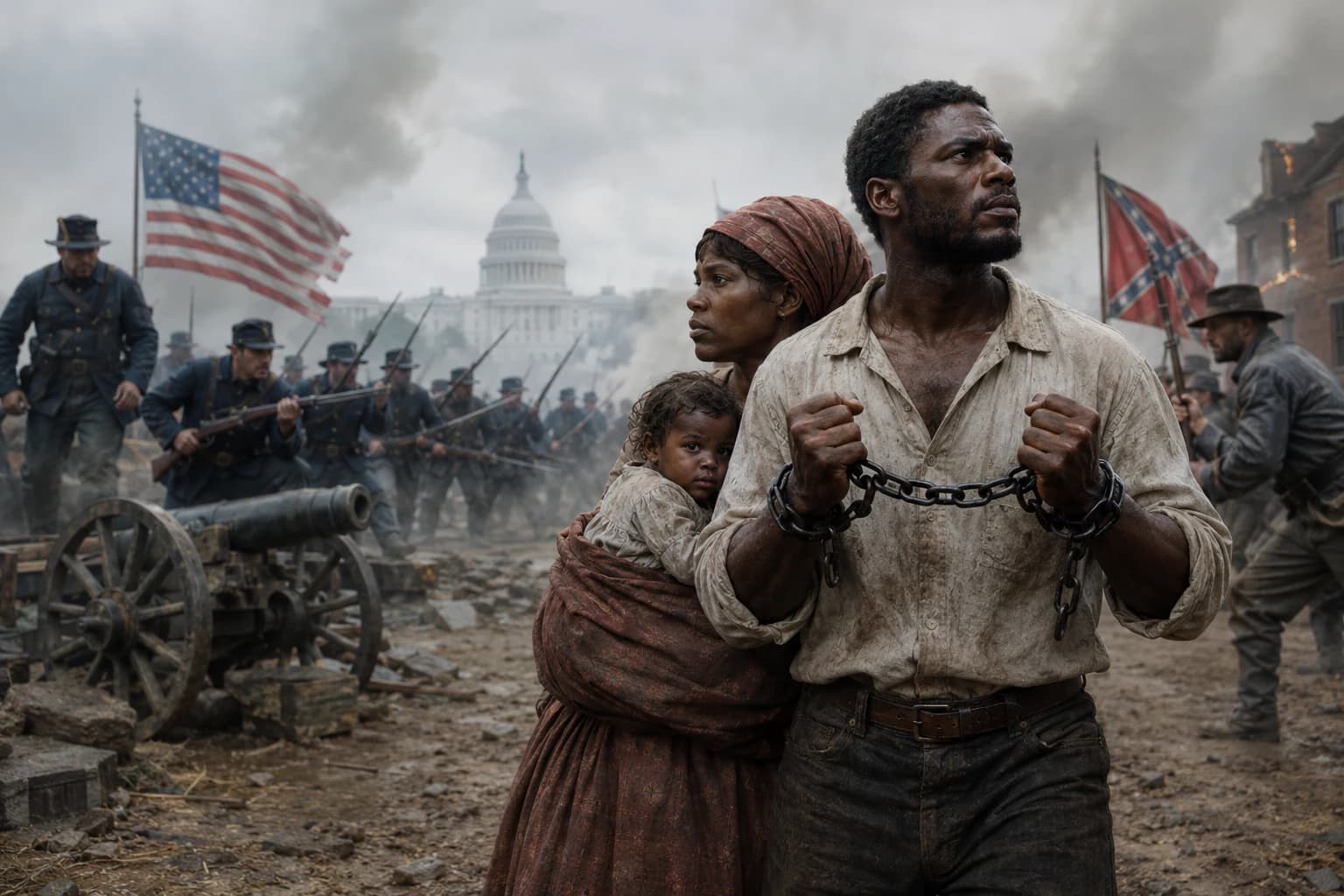
Lee's defeats were as consequential as his victories. Antietam in 1862 checked his first invasion of the North and gave Abraham Lincoln the moment to issue the preliminary Emancipation Proclamation. Gettysburg in July 1863 shattered his second invasion and exposed the danger of seeking decisive victory on enemy soil. From 1864, Grant understood that Lee's army was the centre of Confederate military power and kept pressure on it through the Wilderness, Spotsylvania, Cold Harbor, and the siege of Petersburg. Lee remained tactically formidable, but the war had become a contest of manpower, industry, logistics, and political endurance. In that contest the Confederacy was being steadily strangled.
Momentum in war can reverse quickly when resources and strategy fall out of balance.
1865–1870
Aftermath and memory
The surrender at Appomattox Court House on 9 April 1865 became one of the most symbolic scenes in American history: Lee, the Confederacy's great commander, accepting that further resistance would only destroy what remained of his army. After the war he urged obedience to restored federal authority and became president of Washington College, later Washington and Lee University. His postwar moderation helped his reputation, but the memory built around him often went much further, turning him into the noble centre of the Lost Cause narrative and softening the reality of slavery and Confederate defeat. Modern debate over Lee is therefore not only about one general's battlefield skill. It is about what societies choose to honour, what they choose to excuse, and how memory can make a defeated cause appear cleaner than it was.
Lee’s legacy shows how historical figures can be both respected and questioned at the same time.