Complete chronology
Full overview and deeper context for every journey step.
c. 1035
French origins
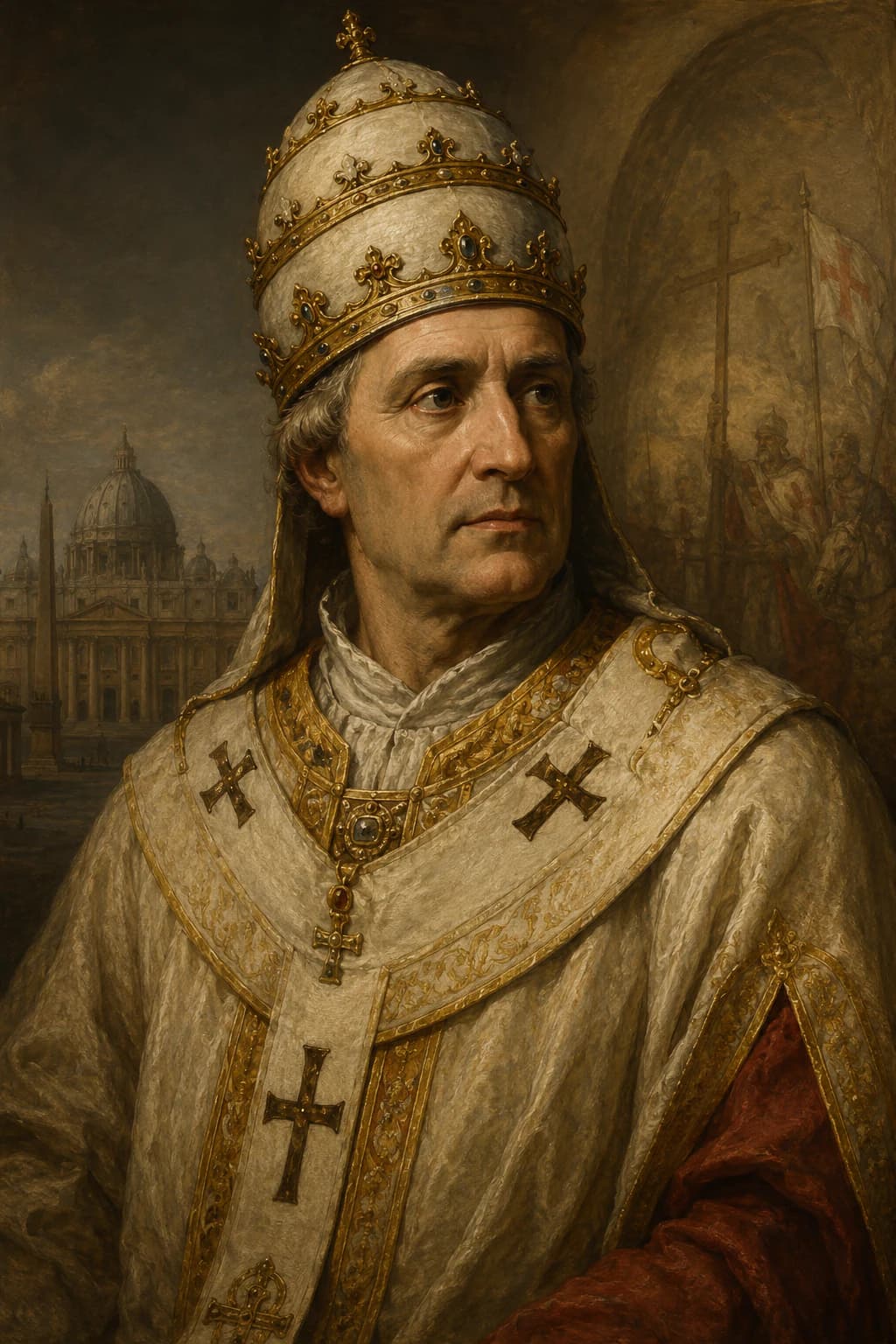
Pope Urban II was born around 1035 as Odo, probably in the Champagne region of France. He entered church life during a period of intense reform, when leading clerics sought to free the Church from lay control, clerical marriage and simony. His background connected him to the monastery of Cluny, one of the great centres of religious renewal. That formation mattered. Urban's later actions were not only about crusading; they grew from a wider movement that wanted to make the papacy more independent, disciplined and authoritative.
The pope who called the Crusade was first a product of the reform movement within the Church.
1070s
Reform churchman
Before becoming pope, Odo served within the circle of reformers shaped by Gregory VII. The Gregorian Reform movement claimed that the Church should govern its own offices and resist domination by secular rulers. This placed the papacy in direct conflict with kings and emperors, especially over investiture, the appointment of bishops and abbots. Odo's career developed inside that conflict. He learned that spiritual authority could not be separated from political power, and that the papacy needed allies, discipline and public legitimacy if it was to prevail.
Urban's papacy would combine religious reform with hard political strategy.
1088
Elected pope
Urban II was elected pope in 1088, inheriting a papacy still weakened by conflict with the Holy Roman Emperor and by the presence of an imperial-backed rival. His position was not secure. Rome itself was contested, and papal authority had to be rebuilt through travel, councils, alliances and persuasion. Urban worked patiently to restore support for the reform papacy across western Europe. He strengthened ties with bishops, monasteries and rulers who accepted his leadership. By the mid-1090s, he had regained enough authority to speak to Latin Christendom in a new and ambitious way.
His call for crusade came after years spent rebuilding papal credibility.
1095
Byzantine appeal
The eastern Mediterranean had changed dramatically before Urban's famous sermon. Seljuk Turkish advances had weakened Byzantine control in Anatolia, and Emperor Alexios I Komnenos sought western military assistance. Urban saw opportunity in the appeal. Aid to eastern Christians could serve reform papal aims, redirect knightly violence, strengthen papal leadership and perhaps improve relations between Latin and Greek churches after the schism of 1054. The project that emerged was more than a mercenary expedition. Urban framed armed pilgrimage as a penitential act tied to Jerusalem, Christian solidarity and the defence of sacred space.
Urban transformed a request for help into a movement with spiritual and political force.
1095
Council of Clermont
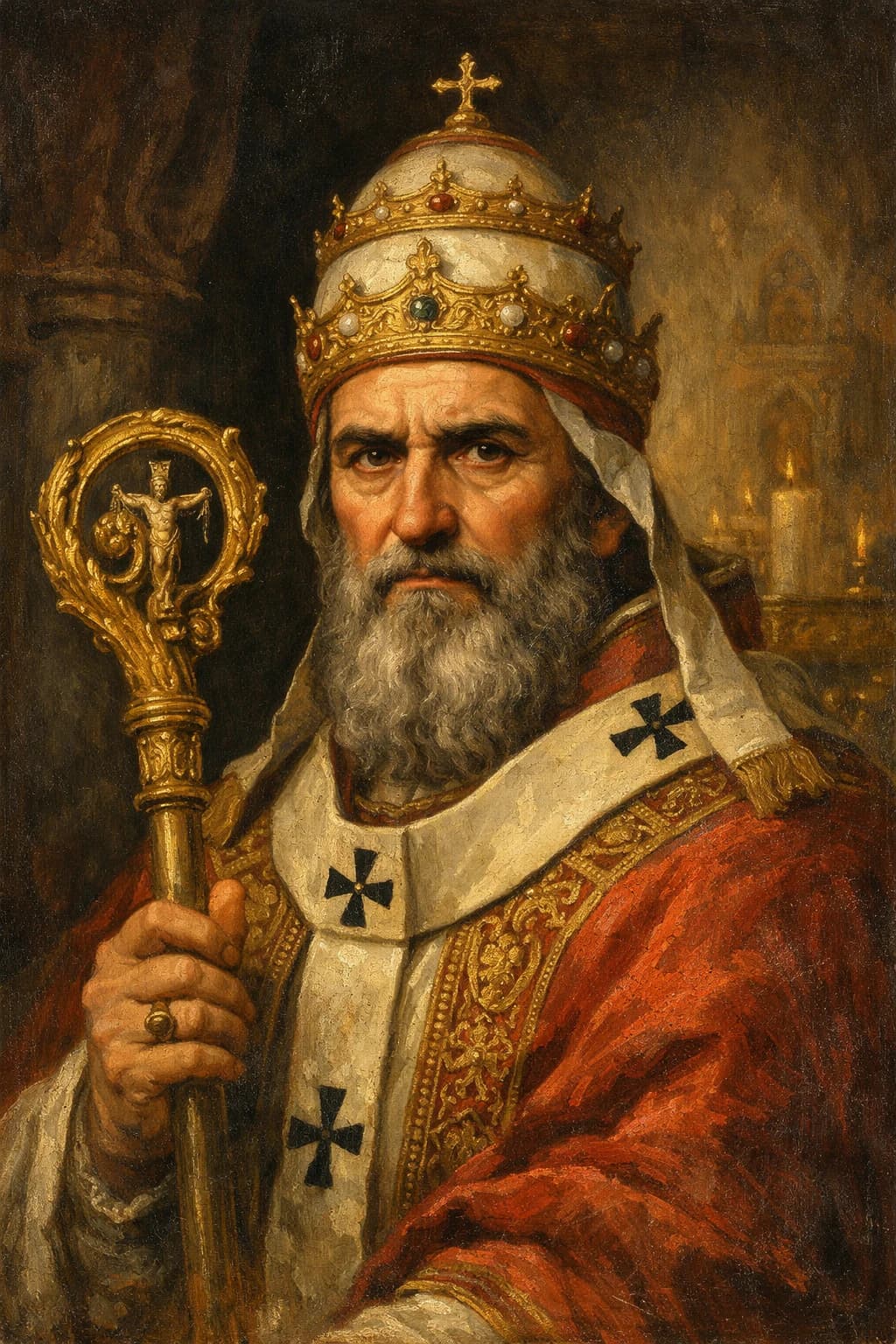
In November 1095, Urban presided over the Council of Clermont in central France. The council addressed church reform, but it became famous because Urban called for an armed expedition to the East. The exact words of his speech survive only in later versions, so historians treat the dramatic quotations cautiously. The effect, however, is clear. Urban offered spiritual reward to those who took up the journey, linking warfare, penance and pilgrimage in a powerful new way. His appeal travelled through preaching networks and popular enthusiasm, reaching knights, nobles and ordinary believers far beyond the council itself.
At Clermont, Urban gave religious meaning to armed movement on a continental scale.
1096
Crusade unleashed
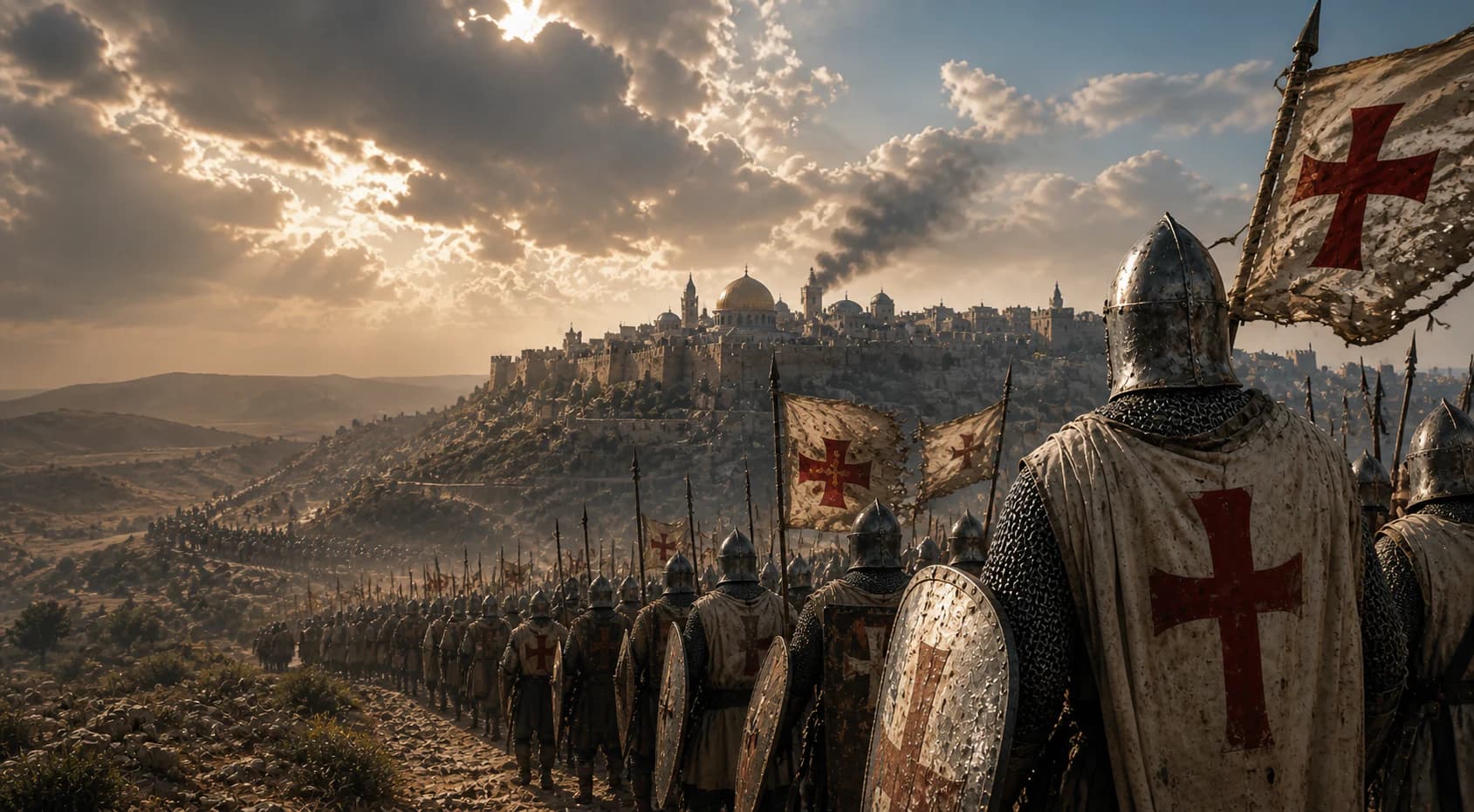
The First Crusade did not unfold as a single orderly army under papal command. Popular movements, including the People's Crusade, moved before the main noble-led expedition and brought violence, disorder and catastrophe, including attacks on Jewish communities in the Rhineland. The principal crusading armies that followed were led by figures such as Raymond of Toulouse, Godfrey of Bouillon, Bohemond of Taranto and others. Urban had launched a movement whose energy exceeded central control. That fact is essential to his legacy: the crusade was inspired by papal preaching, but once released it became a volatile mixture of devotion, ambition, violence and hope.
Urban created a language powerful enough to mobilise Europe, but not precise enough to control it.
1099
Jerusalem captured
In July 1099, the crusading armies captured Jerusalem after a brutal siege. The victory transformed the expedition from a near-impossible gamble into one of the defining events of medieval Christian history. Urban II did not live to hear the news. He died in Rome on 29 July 1099, shortly after the city fell but before confirmation reached the West. The timing is striking. The pope who had set the movement in motion died just before learning that his call had reshaped the map of the eastern Mediterranean and created new Latin Christian states in the Levant.
Urban launched the First Crusade, but died before knowing its most famous result.
Long-term
Crusading legacy
Urban II's historical significance is immense and contested. He strengthened the reform papacy, projected papal leadership beyond normal ecclesiastical politics and gave western knights a religious framework for warfare. The First Crusade opened a crusading age that affected the Levant, Byzantium, western Europe, Jewish communities, Islamic polities and later ideas of holy war. To medieval supporters, Urban was the pope who awakened Christian courage and recovered sacred places. To modern historians, his legacy also includes the violence, conquest and religious hostility that crusading intensified. He did not invent Christian warfare, but he gave it a new institutional and spiritual form.
Urban's call at Clermont became one of the most consequential speeches in medieval history.