Complete chronology
Full overview and deeper context for every journey step.
-106
Inherited Ambition
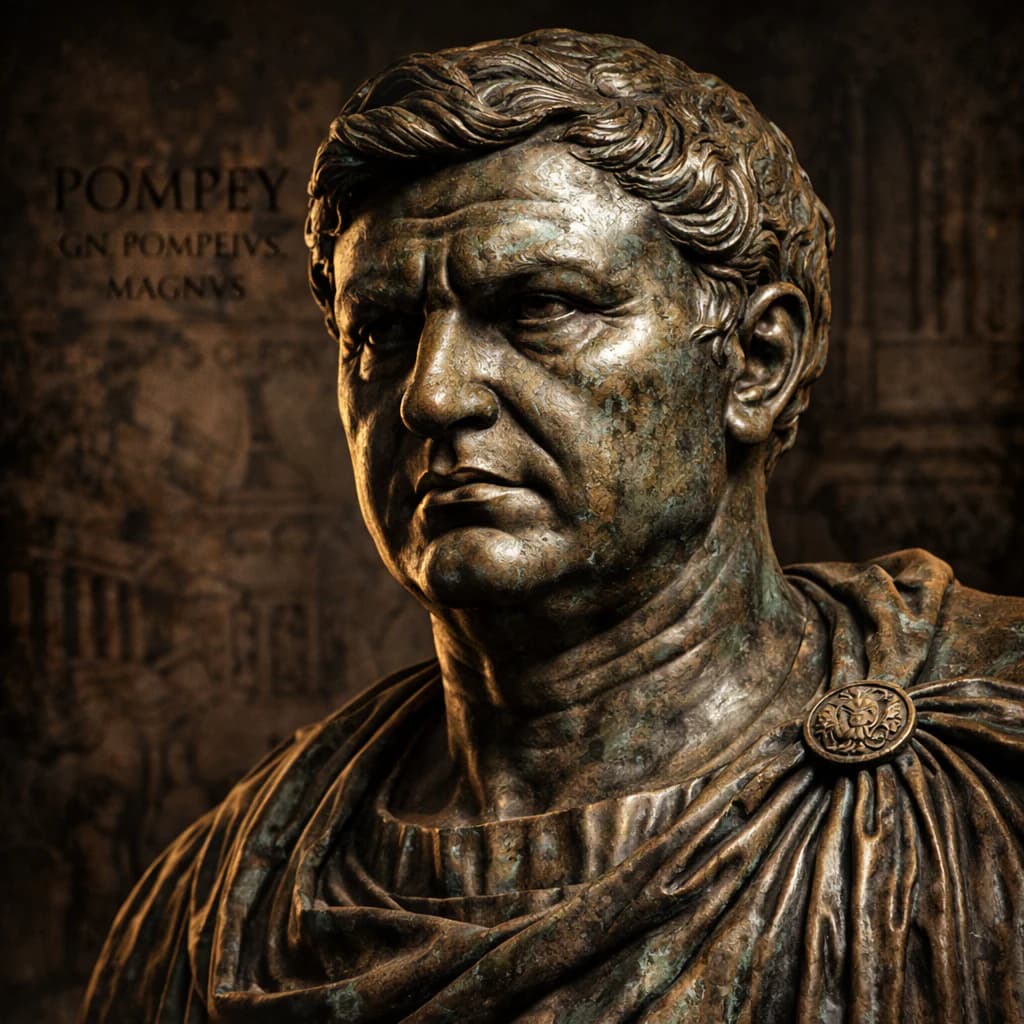
Gnaeus Pompeius Magnus was born in 106 BC, the same year as Cicero, into a wealthy family from Picenum in Italy. His father, Pompeius Strabo, was a capable but unpopular commander who showed how armies, local clients and personal wealth could propel a man through the late Republic's unstable politics. Pompey inherited not only money and connections, but a ready-made military following. That mattered in a Rome where civil war had weakened old rules and rewarded men who could raise troops before they had held the proper offices. Pompey was not an aristocratic insider of the oldest Roman houses, but he was no helpless outsider. He began with resources, confidence and the dangerous lesson that military usefulness could outrun constitutional sequence.
Starting with advantage can accelerate success, but it also raises expectations that shape every decision.
-80s
First Commands
Pompey's rise began in the violence of the 80s BC. Instead of waiting for the cursus honorum, he raised troops in Picenum and joined Lucius Cornelius Sulla against the Marian faction. He campaigned in Sicily and Africa, defeating opponents with enough speed and confidence that Sulla, half admiring and half mocking, allowed him the title Magnus, the Great. Pompey was still too young for the honours he demanded, but success bent the rules around him. His first triumph was granted before he had held a magistracy. From the beginning, his career exposed a weakness in the Republic: institutions designed for gradual aristocratic competition could not easily restrain a popular general with soldiers and victories.
Early success gained outside formal rules can redefine what seems possible in a rigid system.
-70s
Victories Abroad
Pompey's next major test came in Spain against Quintus Sertorius, a brilliant Marian commander who had built a resilient alternative Roman regime with local support. The war was hard and exposed Pompey's limits; Sertorius was not easily beaten in open contest. Yet after Sertorius was murdered by his own associates, Pompey helped finish the campaign and returned with enhanced prestige. Soon after, Crassus crushed Spartacus' slave revolt in Italy, but Pompey intercepted fleeing survivors and claimed part of the glory. This habit irritated rivals, but it also fed the public image of Pompey as Rome's emergency man. Wherever the Republic had an unsolved military problem, Pompey seemed to arrive, impose order and collect honours.
Military success can build influence that stretches far beyond the battlefield.
-67
War on Pirates
Piracy in the eastern Mediterranean had become a strategic crisis. Pirates disrupted grain supply, trade and coastal security, and Rome's piecemeal responses failed. The lex Gabinia gave Pompey extraordinary authority over the sea and coastal zones, with vast resources and subordinate commanders. Conservatives feared the precedent, but the public wanted results. Pompey divided the Mediterranean into sectors, coordinated operations and offered settlement to surrendered pirates, treating the problem as logistical and political rather than merely punitive. Within months, the sea lanes were secure. The victory made him look almost superhumanly efficient. It also normalised something dangerous: in emergencies, Rome increasingly handed near-monarchical powers to one man.
Exceptional powers granted in crisis can reshape expectations about leadership and control.
-66 to -62
Eastern Campaigns
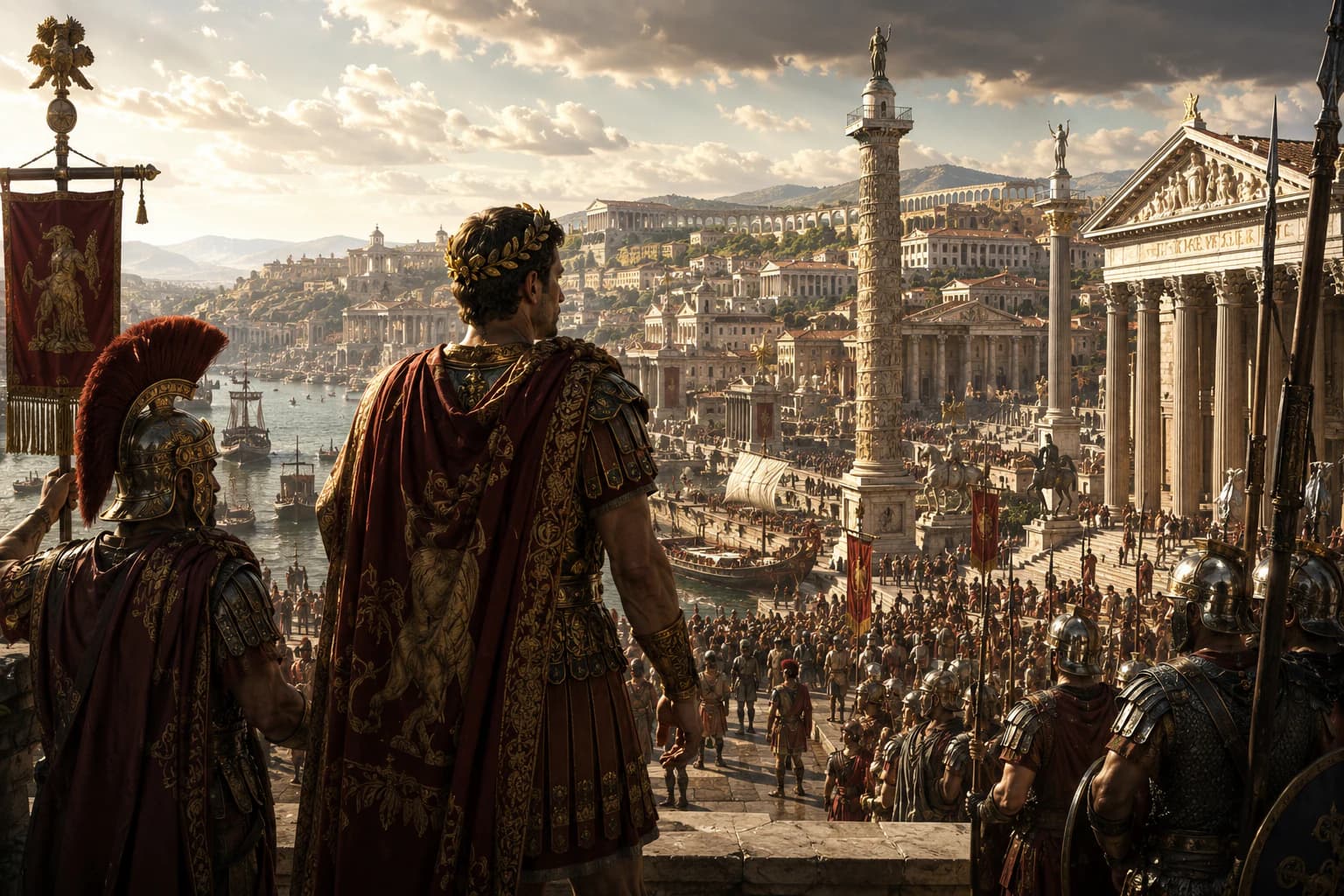
The lex Manilia in 66 BC transferred command against Mithridates VI to Pompey, displacing Lucullus and giving Pompey the eastern stage he wanted. He defeated Mithridates, forced Tigranes of Armenia into submission, annexed Syria, intervened in Judaea and created a ring of provinces, client kingdoms and diplomatic settlements that shaped Roman power for generations. In 63 BC he entered Jerusalem and the Temple, a moment remembered with horror in Jewish tradition and with pride by Roman expansionists. Pompey's eastern settlement was administrative as well as military. He understood that conquest had to be organised into taxes, borders, alliances and prestige. By the time he returned, he had become the most celebrated commander in the Roman world.
Lasting influence often comes from organizing what is won, not just winning it.
-60
Political Alliance
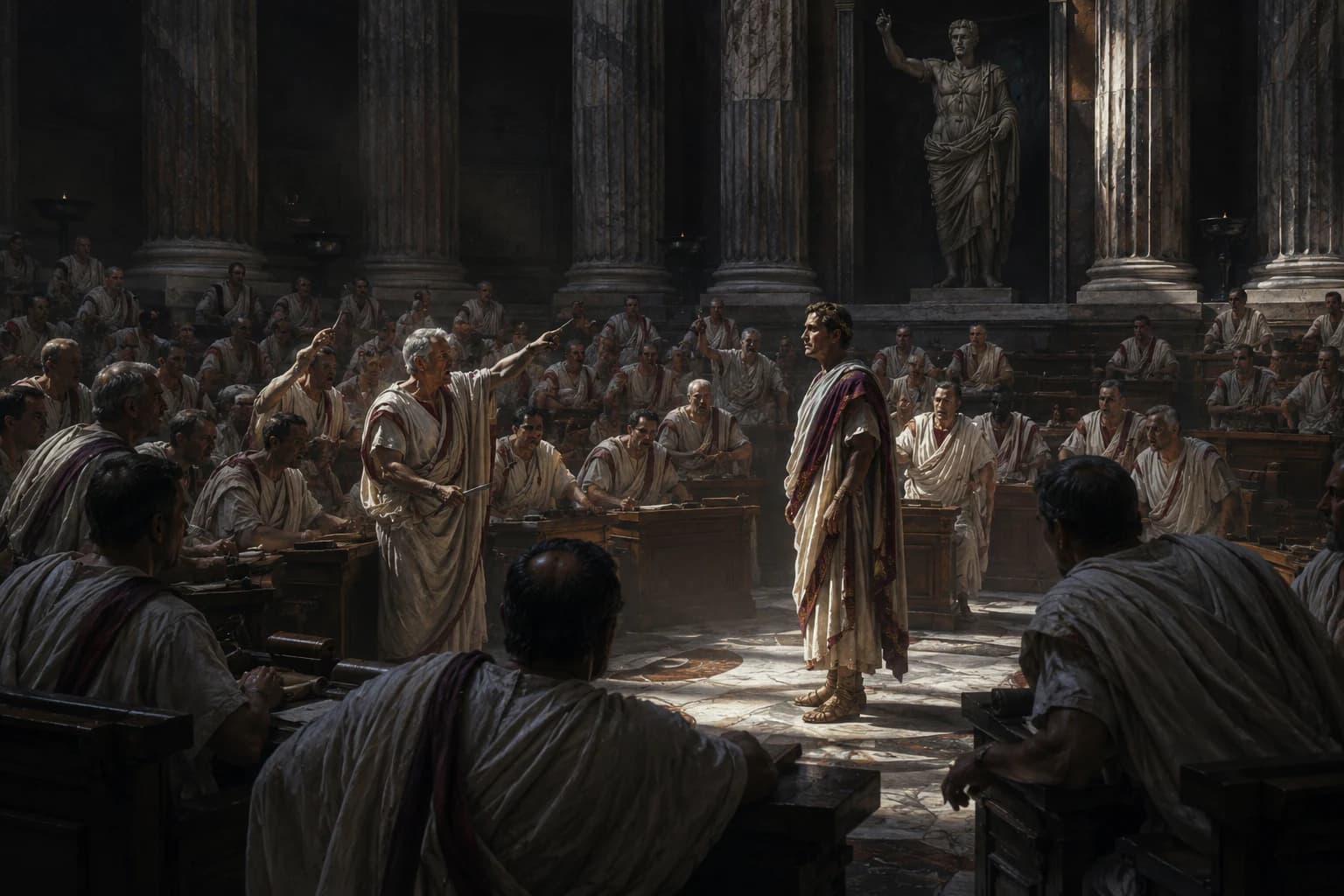
Pompey's problem after the east was political. He wanted land for his veterans and ratification of his eastern settlement, but senatorial opponents delayed and humiliated him. The solution was the informal alliance later called the First Triumvirate. Caesar needed support for his consulship and future command; Crassus wanted financial concessions for his allies; Pompey wanted respect and settlement. The alliance was sealed further by Pompey's marriage to Caesar's daughter Julia. For a time it worked, bending Roman politics around three private men. But it also showed how far the Republic had decayed. Public institutions still existed, but the decisive bargains were being made outside them by men with money, armies and clients.
Alliances built on convenience can achieve quick results but often lack durability.
-50s
Rising Tensions
The alliance frayed because its human and political glue disappeared. Julia died in 54 BC, breaking the family bond between Pompey and Caesar. Crassus was killed by the Parthians at Carrhae in 53, removing the third force that had balanced the other two. Meanwhile Caesar's conquest of Gaul gave him wealth, veterans and glory that rivalled Pompey's own. Pompey drifted toward the senatorial conservatives, partly from conviction, partly from fear, partly because they now treated him as their necessary shield against Caesar. Rome descended into street violence, emergency politics and legal manoeuvres over Caesar's command. Both sides claimed to defend the Republic. Both had helped make ordinary republican politics impossible.
When shared goals disappear, former allies can quickly become determined rivals.
-49 to -48
Civil War
Caesar's crossing of the Rubicon in 49 BC turned constitutional crisis into civil war. Pompey and the Senate abandoned Italy, judging that they could build strength in the east where Pompey's prestige remained immense. Strategically, this was not absurd. Pompey had fleets, eastern clients, senatorial legitimacy and the possibility of wearing Caesar down. But Caesar moved with terrifying speed. After campaigns in Spain and Greece, the rivals met at Pharsalus in 48 BC. Pompey's forces were larger, but Caesar's veterans were more flexible and disciplined. Under pressure from aristocratic allies eager for battle, Pompey fought and lost decisively. The defeat did not merely ruin one general. It removed the last man whose name could plausibly match Caesar's.
Experience and resources do not guarantee victory when strategy and timing turn against you.
-48
Final Flight
After Pharsalus, Pompey fled to Egypt, where he had once been connected to the Ptolemaic court through Roman diplomacy. Egypt was itself divided between the young Ptolemy XIII and Cleopatra VII. Advisers around Ptolemy decided that killing Pompey would please Caesar and remove a dangerous complication. As Pompey stepped from his boat, he was murdered in front of his wife Cornelia. Caesar reportedly wept when presented with Pompey's head, whether from genuine grief, political theatre or disgust at the indignity. Pompey's death was a brutal compression of late Republican reality. The man who had celebrated triumphs over three continents died as a refugee, killed by clients trying to guess which Roman master would rule next.
In unstable political landscapes, even the most powerful figures can become expendable overnight.