Complete chronology
Full overview and deeper context for every journey step.
1847
Prussian beginnings
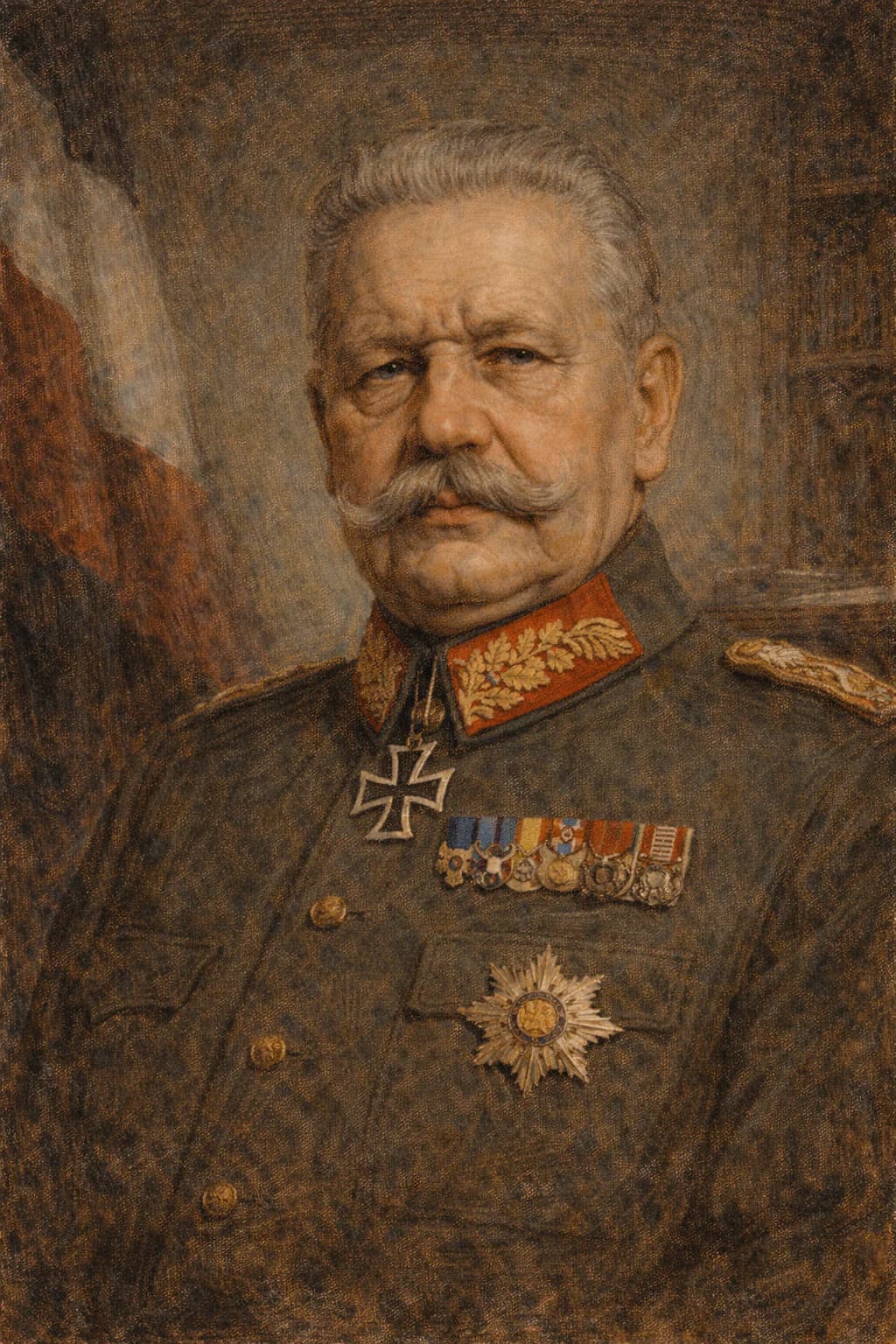
Paul Ludwig Hans Anton von Beneckendorff und von Hindenburg was born in Posen in 1847 into the conservative Prussian landed and military elite. His identity was formed before Germany existed as a unified nation. He belonged to a world of monarchy, Protestant duty, officer honour and suspicion of parliamentary politics. That formation mattered long after the empire fell. Hindenburg did not think like a democrat who happened to have worn a uniform. He thought like a royal servant asked, late in life, to preside over a republic he never loved. His personal virtues were real: discipline, endurance, calm and a reputation for incorruptibility. His political imagination was far narrower.
His early environment instilled a lifelong preference for stability, even at the cost of political flexibility.
1860s–1870s
Military formation
Hindenburg entered the Prussian cadet system as a boy and served in the Austro-Prussian War of 1866 and the Franco-Prussian War of 1870-1871. He witnessed the proclamation of the German Empire at Versailles, a moment that fused military victory with national foundation. His career afterward was steady rather than dazzling. He advanced through staff and command positions, respected as solid, dutiful and conventionally competent. The lessons he absorbed were those of the old Prussian army: hierarchy works, politics is suspect, discipline defeats disorder and national unity comes through command. These assumptions would later be badly mismatched to Weimar Germany, where legitimacy depended on mass politics, compromise and social trust.
Early victories encouraged a belief that firm control, rather than compromise, was the key to national success.
1911
Quiet retirement
By 1911 Hindenburg had retired from the army. There was no obvious reason to think he would become one of the most famous Germans alive. He had served honourably, but he was not the empire's leading strategist. Retirement suited the image later Germans would cherish: an old field marshal, above party, waiting in reserve for the nation. That image was largely created by events after 1914. The First World War turned Hindenburg's ordinariness into an asset. In a crisis, Germany wanted symbols of steadiness. The retired officer could be recalled, paired with more dynamic subordinates, and transformed by victory into a national myth.
His unremarkable retirement made his later rise appear almost accidental, shaped by circumstance rather than ambition.
1914
War-time recall
In August 1914 Hindenburg was recalled and sent east with Erich Ludendorff. The victory over Russia at Tannenberg became one of Germany's great wartime legends, avenging older memories of Teutonic defeat and offering triumph while the western front descended into stalemate. Hindenburg's personal role was important but not solitary; operational planning owed much to Max Hoffmann and others, while Ludendorff supplied energy and aggression. Public memory simplified the partnership. Hindenburg became the calm fatherly victor, the wooden titan who could save Germany. The myth soon mattered more than the details. It made him a symbol of national endurance, and symbols can outlive the realities that created them.
His reputation grew as much from public perception as from battlefield reality.
1916–1918
Supreme command
In 1916 Hindenburg and Ludendorff became the dominant figures in the German war effort. The Third Supreme Command pushed the Hindenburg Programme, unrestricted submarine warfare and a system of mobilisation that subordinated civilian life to military need. In practice, Germany moved toward a military dictatorship under imperial cover. Hindenburg's authority gave the system legitimacy; Ludendorff supplied much of its drive. Their choices intensified the war and helped bring the United States fully into the conflict. By 1918, the spring offensives failed, the army was exhausted and defeat was unavoidable. Yet the generals sought an armistice through a new civilian government, creating conditions for later evasion of responsibility.
Holding ultimate authority did not translate into accountability, allowing his reputation to survive defeat.
1918–1925
After defeat
The German army had been beaten in the field, but Hindenburg's prestige survived. In 1919 he told a parliamentary inquiry that the army had been stabbed in the back, lending enormous authority to a lie that shifted blame onto revolutionaries, democrats, socialists and Jews. The myth poisoned Weimar politics. It allowed conservatives and nationalists to honour the army while despising the republic that signed the Treaty of Versailles. Hindenburg was not the only source of this narrative, but his name made it respectable to millions. He became a living bridge between imperial nostalgia and republican crisis: the man who embodied the old order while the new one struggled for legitimacy.
His silence and positioning helped shape a narrative that weakened trust in democratic leadership.
1925
Elected president
Hindenburg was elected President of the Weimar Republic in 1925 after Friedrich Ebert's death. His victory was paradoxical: a monarchist field marshal became head of a democratic republic. Many voters saw him as a stabilising father figure above party conflict. For the right, he offered continuity with imperial honour; for some moderates, his acceptance of office seemed to reconcile conservatives to the republic. But Hindenburg's loyalty was constitutional more than emotional. He performed the presidency with dignity, yet relied heavily on advisers and old elite networks. The office's emergency powers, designed as a safeguard, would become the route through which parliamentary government was hollowed out.
He was chosen for stability, yet his cautious leadership struggled to adapt to rapid political change.
1930–1933
Political breakdown
The Great Depression shattered Weimar's fragile recovery. Unemployment soared, extremist parties grew and parliamentary coalitions broke down. Hindenburg responded by appointing chancellors who governed through presidential decree under Article 48 rather than stable Reichstag majorities. Heinrich Bruning, Franz von Papen and Kurt von Schleicher each relied on the president's signature more than democratic consent. Hindenburg believed he was preserving order. In reality, emergency government normalised rule without parliament and made authoritarian solutions seem practical. His inner circle, including Papen and his son Oskar, narrowed the choices placed before him. By 1932, Hindenburg had defeated Hitler in a presidential election, but the republic had already been weakened by the methods used to save it.
Efforts to preserve order through exceptional measures can unintentionally dismantle the structures they aim to protect.
1933–1934
Fateful appointment
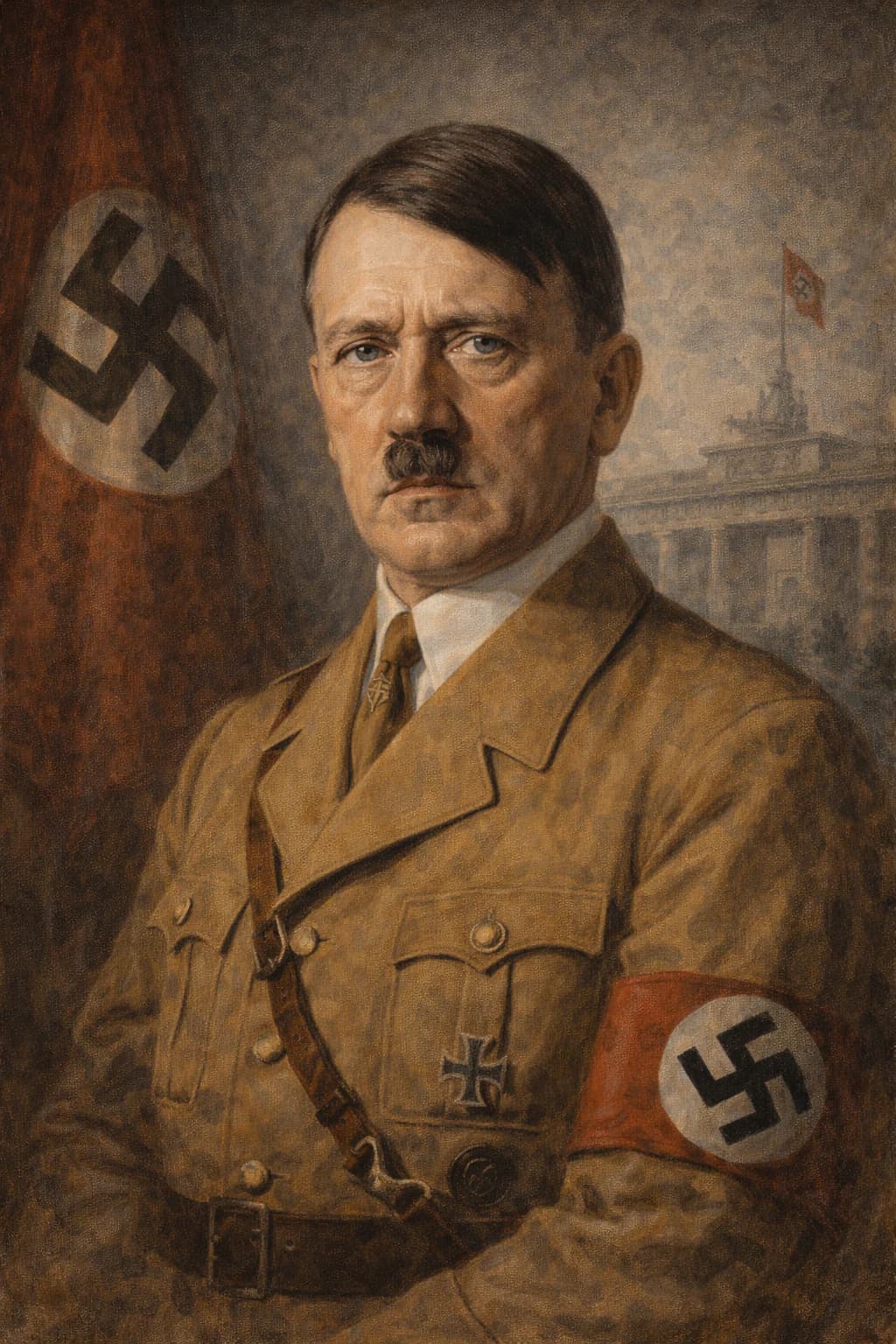
Hindenburg disliked Hitler personally, regarding him as vulgar and socially inferior, but politics cornered him into the fatal appointment. Papen and other conservatives argued that Hitler could be boxed in by a cabinet dominated by non-Nazis. They were disastrously wrong. After 30 January 1933, the Reichstag Fire, emergency decrees, terror against opponents and the Enabling Act rapidly dismantled democracy. Hindenburg remained president, but age, illness and deference to authoritarian order made him a weak barrier. When he died on 2 August 1934, Hitler merged the presidency with the chancellorship and required the army to swear loyalty to him personally. Hindenburg's final legacy is therefore tragic and severe: the old marshal opened the constitutional door through which the Nazi dictatorship entered.
A single decision made under pressure can redirect the course of an entire nation.