Complete chronology
Full overview and deeper context for every journey step.
Early 10th century
Origins and marriage
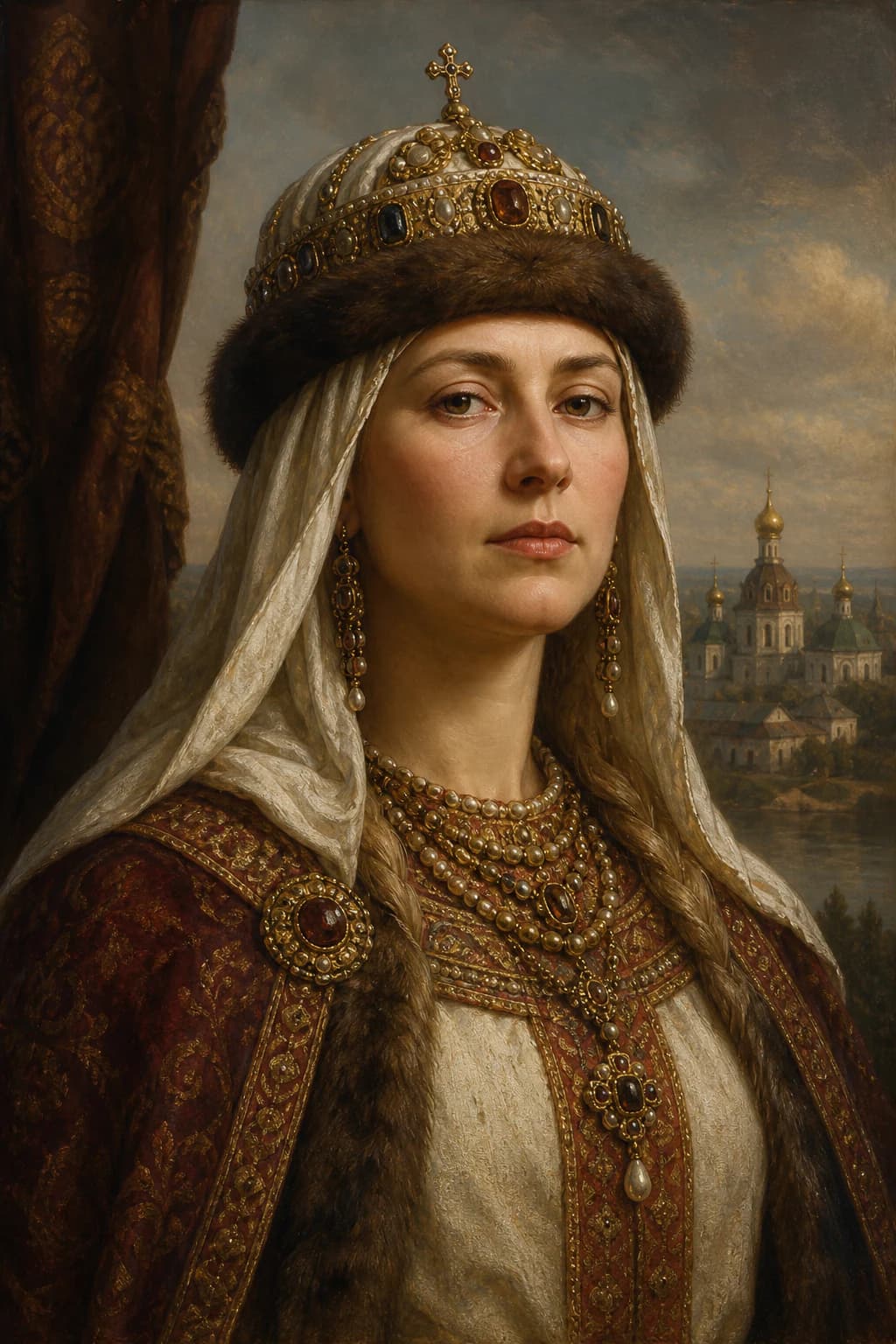
Olga of Kiev, also known as Olha of Kyiv and later Saint Olga, stands among the most formidable rulers of early Rus. Her origins are uncertain. Later traditions associate her with Pskov, but the evidence is limited and should be treated cautiously. What is clear is that she became the wife of Igor of Kiev, the Rurikid prince who succeeded Oleg's generation of rule. Through that marriage she entered a political world built on tribute, river routes, war bands, and fragile loyalty among subject peoples. Olga is often remembered through dramatic stories of revenge, but reducing her to those tales misses her wider importance. She became regent, administrator, diplomat, and the first major Christian figure in the ruling family before the official conversion of Rus.
Olga's power grew from a dynastic crisis, but her importance went far beyond survival.
945
Igor's death
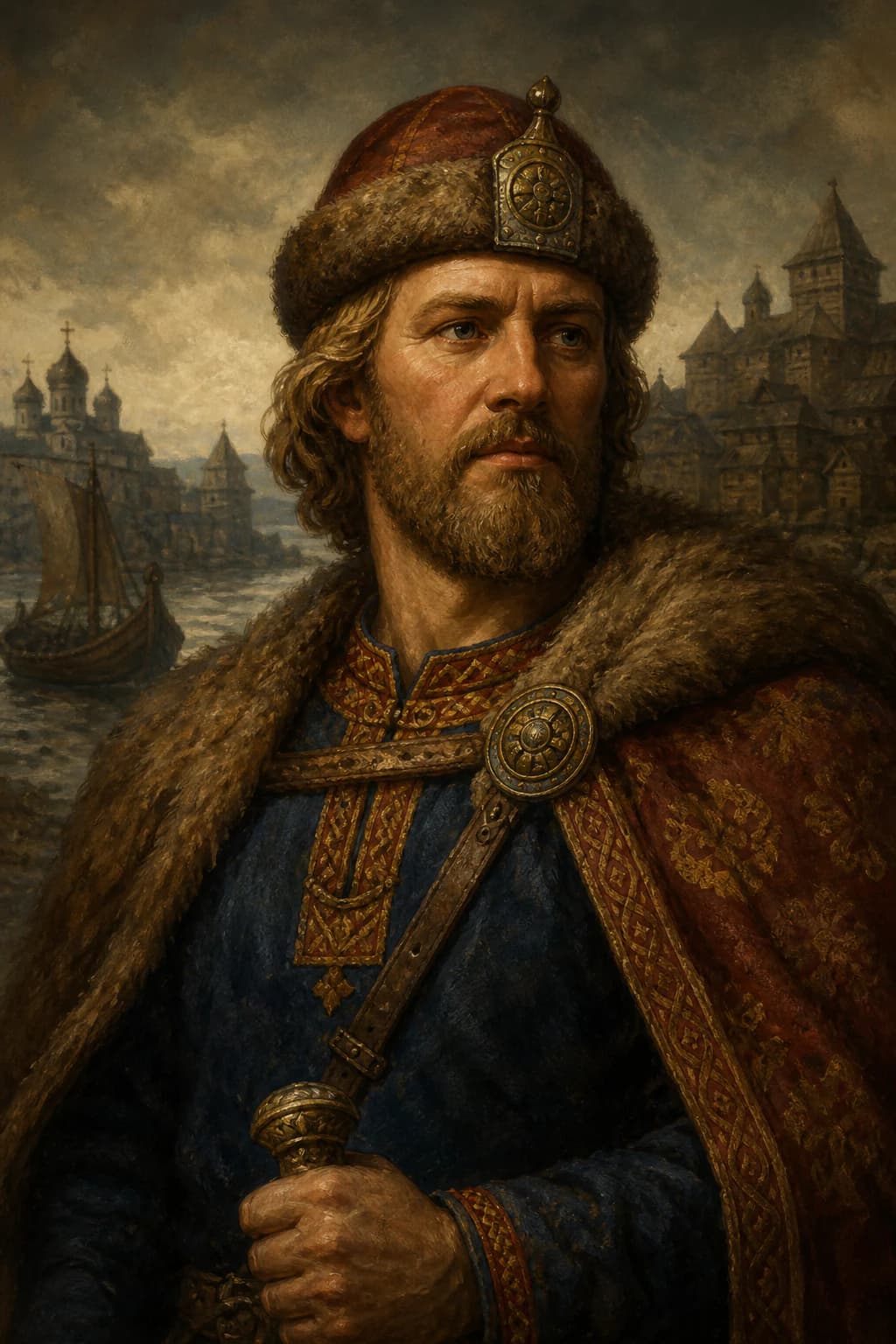
Igor's death in 945 exposed the danger at the heart of early Rus rule. The Drevlians, a Slavic people subject to tribute, killed him after he attempted to collect more than they were willing to pay. The chronicle describes a brutal execution, a warning that princely authority could fail if tribute demands overreached local tolerance. Olga was left with a young son, Sviatoslav, and a realm whose enemies might have expected weakness. Instead, she became regent. Her authority had to answer two urgent questions: how to punish rebellion decisively enough to deter imitation, and how to reform the system that had made Igor's death possible. Her response combined terror, calculation, and administrative intelligence.
Olga's regency began where personal grief and state survival became the same problem.
945-946
Revenge against the Drevlians
The Primary Chronicle gives Olga one of the most famous revenge narratives in medieval history. Drevlian envoys are buried alive, another delegation is burned in a bathhouse, mourners are slaughtered at a funeral feast, and the Drevlian centre of Iskorosten is destroyed after birds allegedly carry fire back to the city. These episodes should not be read uncritically as documentary fact. They are shaped as moral and political literature, presenting Olga as a ruler whose intelligence outmatched male opponents who underestimated her. Even if embroidered, the tradition points to a real outcome: the Drevlian challenge was crushed, and Olga's authority was secured. Her reputation for ruthlessness became part of the memory of how Kievan power survived a dangerous rebellion.
The revenge stories may be legendary in detail, but they preserve a political truth: Olga made weakness impossible to assume.
940s-950s
Tribute reform
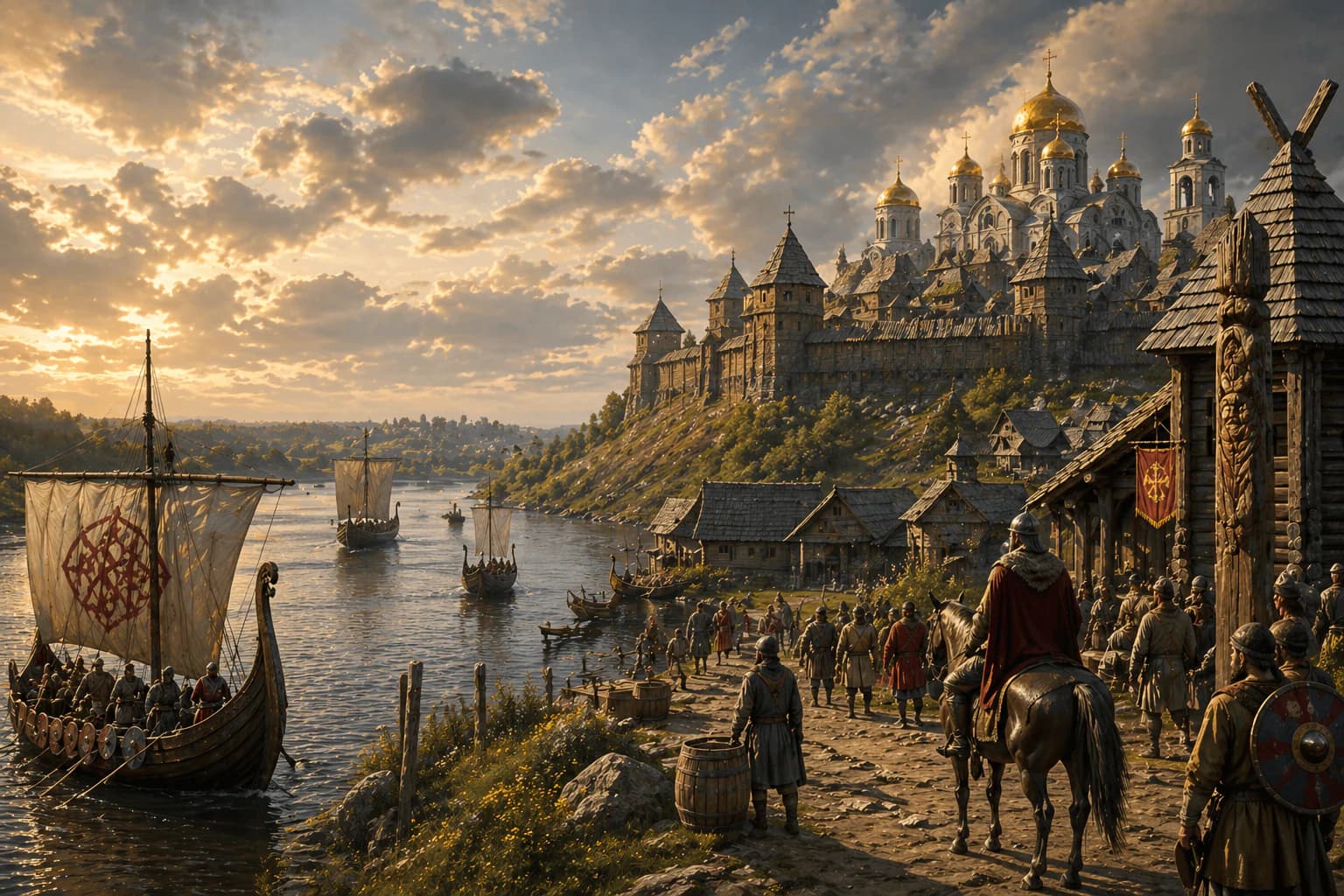
Olga's most historically important domestic achievement may be less dramatic than the revenge tales but far more constructive. She is credited with establishing fixed tribute stations, routes, and obligations, often described through pogosts and assessed dues. This reform mattered because early Rus rule depended on extracting resources from communities across a wide territory. If collection was arbitrary, it provoked resistance; if too weak, princely power collapsed. Olga's measures suggest a move from opportunistic exaction toward more regular administration. She did not create a bureaucratic state, but she made tribute more predictable and therefore more governable. In the history of Kievan Rus, that is a major step toward durable rule.
Olga's reforms show that state-building often begins with making taxation less chaotic.
950s
Conversion and diplomacy
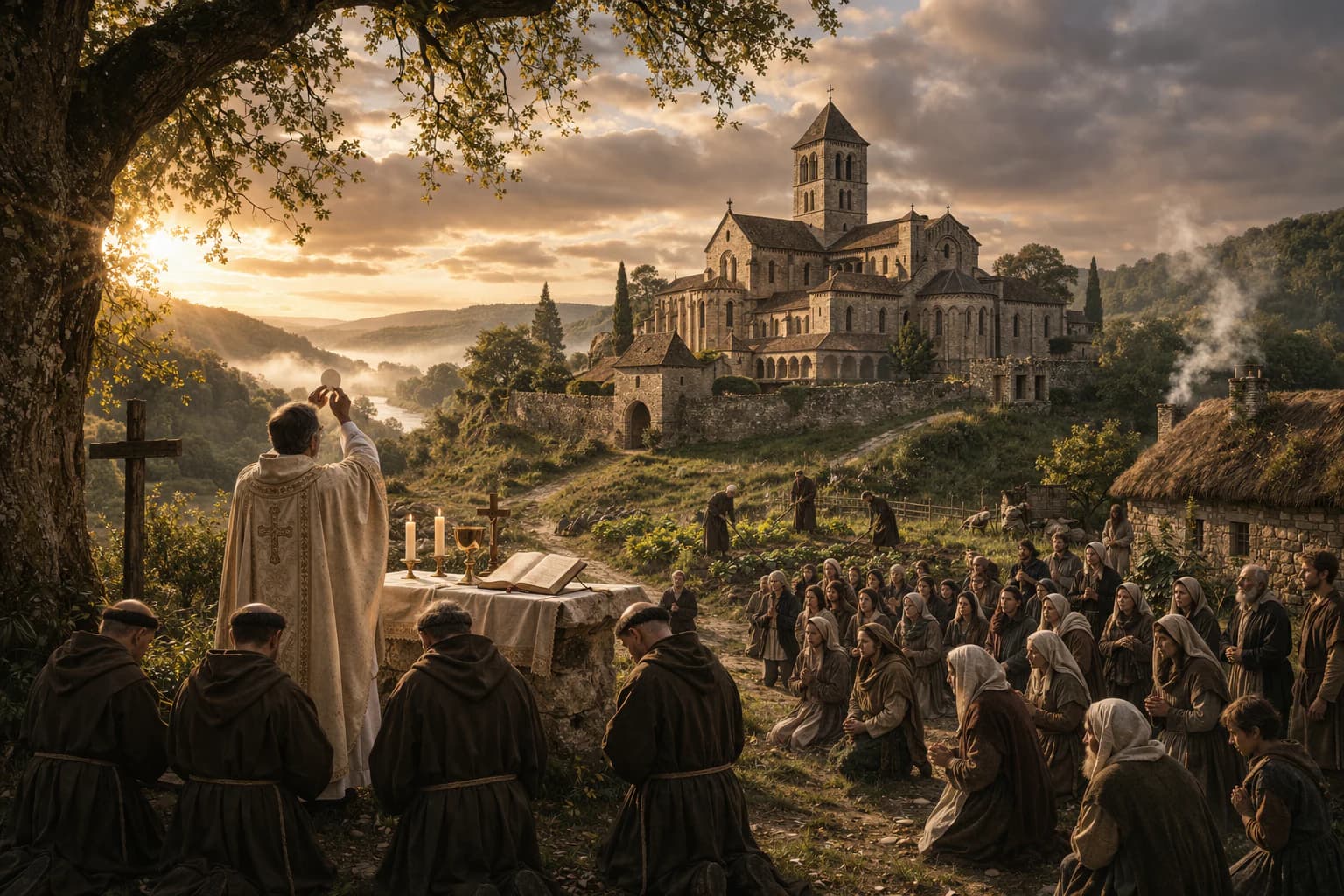
Olga's conversion to Christianity is one of the great turning points before Vladimir the Great. Byzantine sources record her visit to Constantinople in the mid-tenth century, commonly dated to 957, where she was received with high ceremony by Emperor Constantine VII. The exact circumstances of her baptism are debated, including whether she had already been baptized before arrival, but her Christian identity is secure. She took the baptismal name Helena, linking herself to the mother of Constantine the Great. Her conversion did not immediately Christianize Rus. Her son Sviatoslav remained attached to the warrior culture of the old order. Yet Olga's baptism created a precedent inside the dynasty, opened diplomatic channels with Byzantium and the Latin West, and gave later Christian memory a revered ancestor before Vladimir.
Olga did not convert Rus, but she made Christianity a dynastic possibility.
969
Final years and legacy
In her later years, Olga remained a stabilizing figure while Sviatoslav pursued campaigns far from Kiev. During the Pecheneg siege of Kiev in 968, she was in the city with her grandsons, a reminder that her political role did not vanish when her son came of age. She died in 969 and was later venerated as a saint, especially for her place as a forerunner of the Christianization completed under her grandson Vladimir. Her legacy is unusually layered. To political historians, she is a regent who preserved the Rurikid house and regularized tribute. To church tradition, she is the first great Christian of the Rus ruling family. To readers drawn by narrative, she is the woman whose enemies misread widowhood as weakness. All three memories point to the same conclusion: Olga was one of the essential founders of Kievan Rus power.
Olga's life links vengeance, administration, diplomacy, and conversion in a way few medieval rulers can match.