Complete chronology
Full overview and deeper context for every journey step.
1869
Political family roots
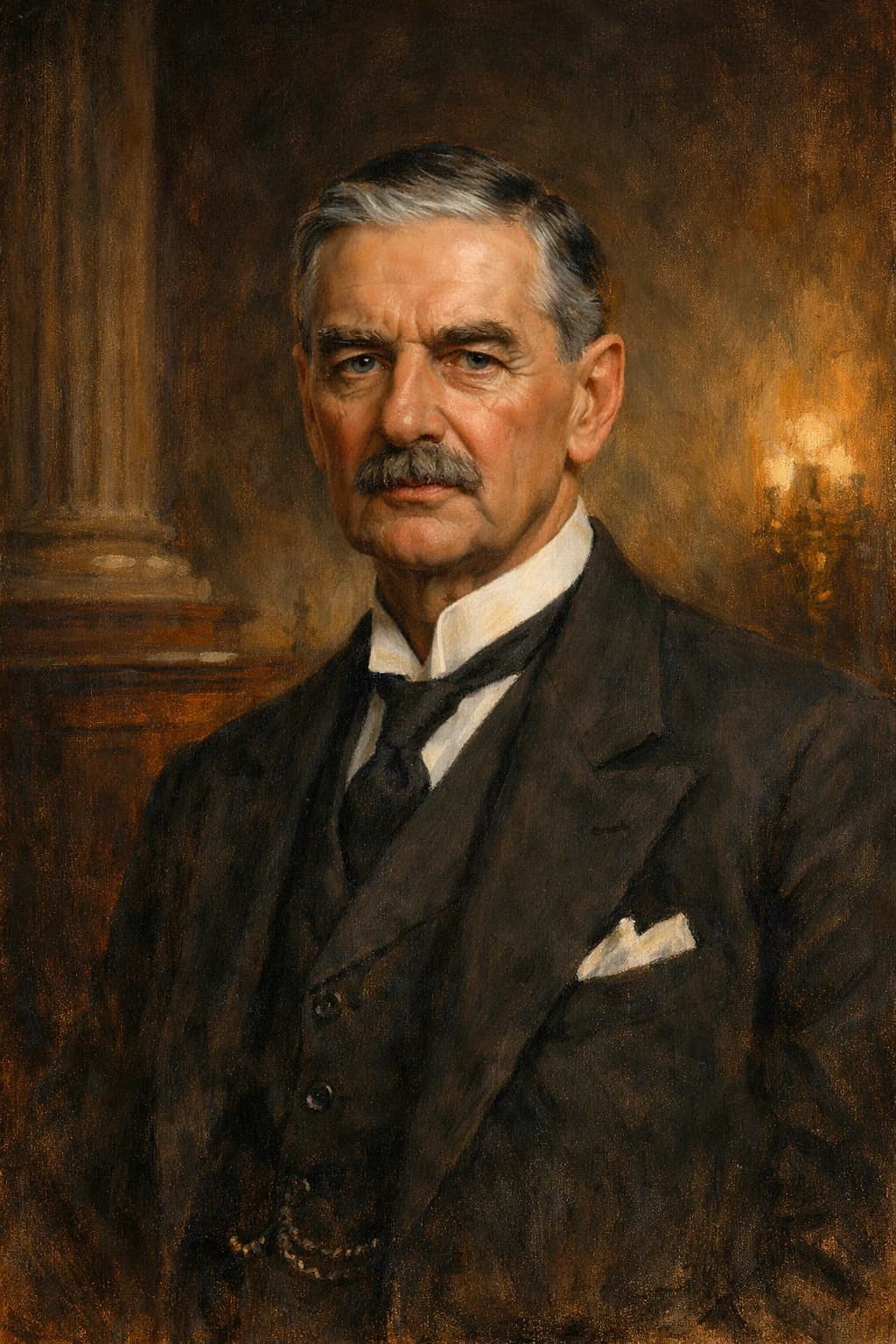
Arthur Neville Chamberlain was born in Birmingham in 1869, son of Joseph Chamberlain, the radical municipal reformer, imperial politician and dominant figure in the city's civic life. His half-brother Austen also became a major statesman. Neville's path was slower and less glamorous. He spent years managing a failed sisal plantation in the Bahamas before returning to Birmingham, an experience that left him with habits of calculation, economy and self-reliance. The Chamberlain inheritance mattered: belief in efficiency, municipal improvement, empire and businesslike reform. Neville did not begin as the man of Munich. He began as a local administrator who thought public problems could be solved by close attention, disciplined finance and practical will.
His measured, managerial outlook was formed long before he ever faced the pressures of national leadership.
1910s
Local leadership rise
Chamberlain's political apprenticeship came in Birmingham, where municipal government was treated as serious statecraft. As councillor and Lord Mayor, he focused on housing, town planning and public services, pursuing reform through inspection, committees and administrative pressure. He was not theatrical, but he could be formidable in detail. During the First World War he briefly directed national service, though the post ended unhappily and reinforced his dislike of poorly organised machinery. Local government gave him confidence that complexity could be mastered by intelligent management. That belief served him well in domestic policy. It became more dangerous when applied to Hitler, whose politics did not behave like a municipal problem waiting for rational settlement.
Success in controlled local settings reinforced his belief that rational planning could solve even the most complex problems.
1918
Entry to Parliament
Chamberlain entered Parliament at forty-nine, late by the standards of future prime ministers, but rose quickly because Conservatives valued competence. As Minister of Health he worked on housing, local government and social policy, helping shape practical reforms between the wars. As Chancellor of the Exchequer in the National Government, he managed budgets during the Depression and supported rearmament while trying to preserve financial stability. He was serious, hardworking and often impatient with colleagues he considered vague. By the mid-1930s, he looked like the natural successor to Stanley Baldwin: a domestic reformer and fiscal manager, not a romantic warrior. His tragedy was that foreign policy would define him.
He advanced not through charisma, but through a reputation for competence and control.
1937
Becoming prime minister
When Chamberlain became prime minister in May 1937, Britain's choices were grim. The public remembered the slaughter of 1914-1918, the armed forces were still rearming, the empire had global commitments, and France was politically fragile. Germany had remilitarised the Rhineland and was openly revising the Versailles settlement. Chamberlain believed war might destroy European civilisation and Britain's imperial position even if Britain won. He therefore took personal control of foreign policy, favouring direct negotiation with dictators over slower diplomatic channels. Appeasement was not simply cowardice. It combined fear of war, limited military readiness, sympathy for some German grievances, anti-communism and a catastrophic underestimation of Hitler's appetite.
He entered office convinced that careful negotiation could hold back forces already gathering momentum.
1937–1938
Policy of appeasement
Chamberlain's appeasement rested on a hard calculation that later moral shorthand can obscure. Britain was rearming, especially in air defence, but was not yet ready for a major European war. The Dominions were uncertain, the United States was isolationist, and Soviet cooperation looked politically and militarily difficult. Chamberlain hoped that revising the harshest parts of Versailles and drawing Germany into agreements might stabilise Europe. The flaw was Hitler. Nazi foreign policy was not a normal complaint about borders alone; it was tied to racial empire, violence and domination. Critics such as Winston Churchill, Anthony Eden and Duff Cooper warned that concessions without credible resistance would feed aggression. Chamberlain saw them as risking the very war he was trying to prevent.
Appeasement was not born of naivety alone, but of a deep fear of repeating recent catastrophe.
1938
Munich Agreement
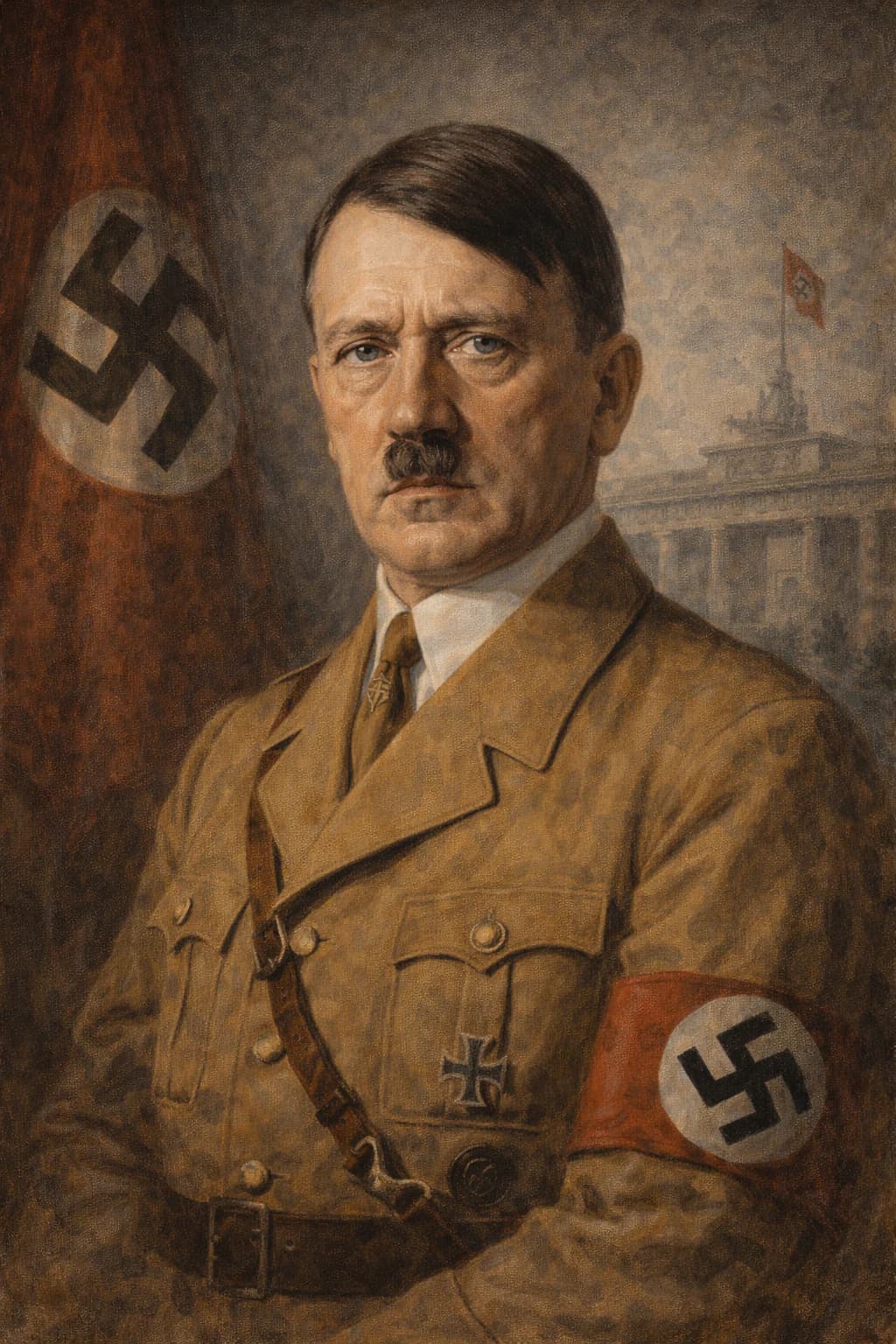
The Munich crisis centred on the Sudetenland, the border region of Czechoslovakia with a large German-speaking population and crucial defences. Chamberlain flew to meet Hitler three times, believing personal diplomacy could prevent war. The final Munich Agreement, signed by Britain, France, Germany and Italy, allowed Germany to take the Sudetenland. Czechoslovakia, the state being dismembered, was not part of the decisive negotiation. Chamberlain returned to Britain waving the Anglo-German declaration and speaking of peace for our time, a phrase later used against him with devastating force. In the moment, many Britons felt relief. In strategic terms, Munich weakened Czechoslovakia, strengthened Hitler and made British honour depend on a promise from a dictator who had already normalised broken promises.
The moment that seemed like his greatest success quickly became the symbol of his greatest misjudgment.
1939
War begins
Hitler destroyed the logic of Munich in March 1939 by occupying Prague and turning the rest of Czech lands into a protectorate. This was not self-determination for Germans; it was naked conquest. Chamberlain shifted policy, guaranteeing Poland with France. When Germany invaded Poland on 1 September 1939, Britain issued an ultimatum and then declared war on 3 September. Chamberlain's broadcast was sombre because he knew his life's central objective had failed. Yet the months that followed, the so-called Phoney War, did little to restore confidence. Britain was at war, but not yet acting with the urgency many critics expected. Chamberlain had crossed from appeasement into resistance, but his public image had not crossed with him.
His shift from peacemaker to wartime leader came too late to reshape public trust.
1940
Loss of confidence
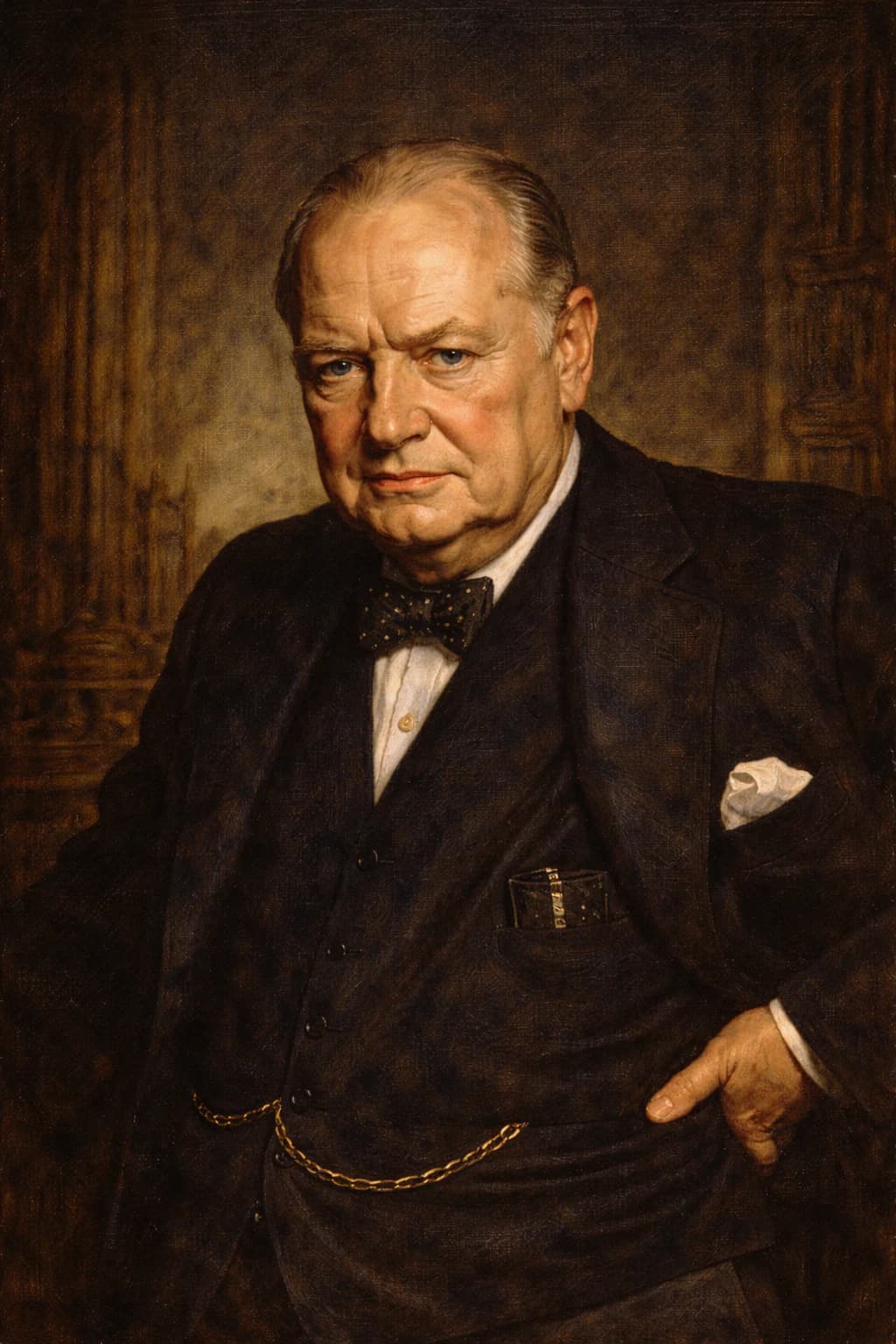
Chamberlain's fall came after the Norway campaign, where British operations failed to prevent German success and exposed weaknesses in command. The House of Commons debate that followed became a trial of confidence. Leo Amery, quoting Cromwell, told the government to depart. Chamberlain technically survived the vote, but the reduced majority showed that he could not command a genuinely national coalition. Labour would not serve under him. With Germany attacking the Low Countries and France, Britain needed a leader with broader authority. Chamberlain resigned on 10 May 1940, and Winston Churchill became prime minister. The replacement was not inevitable until the last moment, but once made it recast Chamberlain forever as the man before Churchill.
Leadership in crisis depends as much on perception of strength as on actual decisions.
1940
End and legacy
Chamberlain remained in Churchill's war cabinet as Lord President of the Council and initially retained significant Conservative support, but illness forced his resignation. He died of cancer on 9 November 1940, during the Battle of Britain period he had helped prepare for through rearmament. His legacy remains one of the most contested in modern British history. The harsh verdict is powerful: he misread Hitler, sacrificed Czechoslovakia, and confused negotiation with security. The revisionist caution also matters: Britain was militarily and psychologically unready in 1938, and the extra year aided air defence and rearmament. Neither view fully acquits or condemns him. Chamberlain's story is the tragedy of a capable domestic statesman whose tools failed against ideological aggression.
His story endures as a reminder that intentions alone cannot secure peace when confronted by unchecked ambition.