Complete chronology
Full overview and deeper context for every journey step.
c. 3150 BCE
Narmer's Origins in Upper Egypt
Narmer belongs to the difficult edge between archaeology and history. Before Egypt became a unified kingdom, the Nile Valley contained regional centres whose rulers competed over farmland, trade, ritual prestige and river routes. Upper Egypt, in the south, appears to have developed strong political institutions before full unification, with important centres at Hierakonpolis, Naqada and Abydos. Narmer likely emerged from this world of expanding chiefdoms and early kingship. We cannot reconstruct his childhood or personality, but the material evidence points to a ruler operating in a landscape already moving toward central authority. His importance lies in that transition: local power becoming state power, and state power learning to speak through symbols.
His rise shows how local power bases can become the starting point for far larger political transformations.
c. 3140 BCE
How Narmer Unified Upper Egypt
The unification of Egypt was probably not a single battle won in a day. It was a process: consolidation of Upper Egypt, pressure northward, control of trade routes, development of royal display and the formation of administrative habits. Narmer's name appears on objects found beyond one local centre, suggesting authority that moved through networks of exchange and command. Royal burials at Abydos show a growing ideology of kingship, with the ruler set apart from ordinary elites. This matters because conquest alone could not create Egypt. The future kingdom required ways to collect goods, command labour, mark ownership and make distant communities recognise the same royal name.
Lasting expansion often depends first on stabilizing and organizing what is already under control.
c. 3135 BCE
Narmer's Campaign into Lower Egypt
Lower Egypt, the Delta region in the north, mattered for reasons no ambitious southern ruler could ignore. It opened routes toward the eastern Mediterranean and the Levant, controlled rich agricultural zones and connected river traffic with sea trade. Archaeology suggests increasing Upper Egyptian influence in the north before and around Narmer's time. Whether this came through conquest, elite replacement, diplomacy, trade domination or all of these at once remains debated. The later Egyptian image of the Two Lands made unification look clean and inevitable. In reality, it was almost certainly uneven and contested. Narmer's achievement was to stand at the moment when southern kingship could claim the Delta as part of one political imagination.
Strategic targets are chosen not just for size, but for the advantages they bring once secured.
c. 3125 BCE
The Narmer Palette and the Unification of Egypt
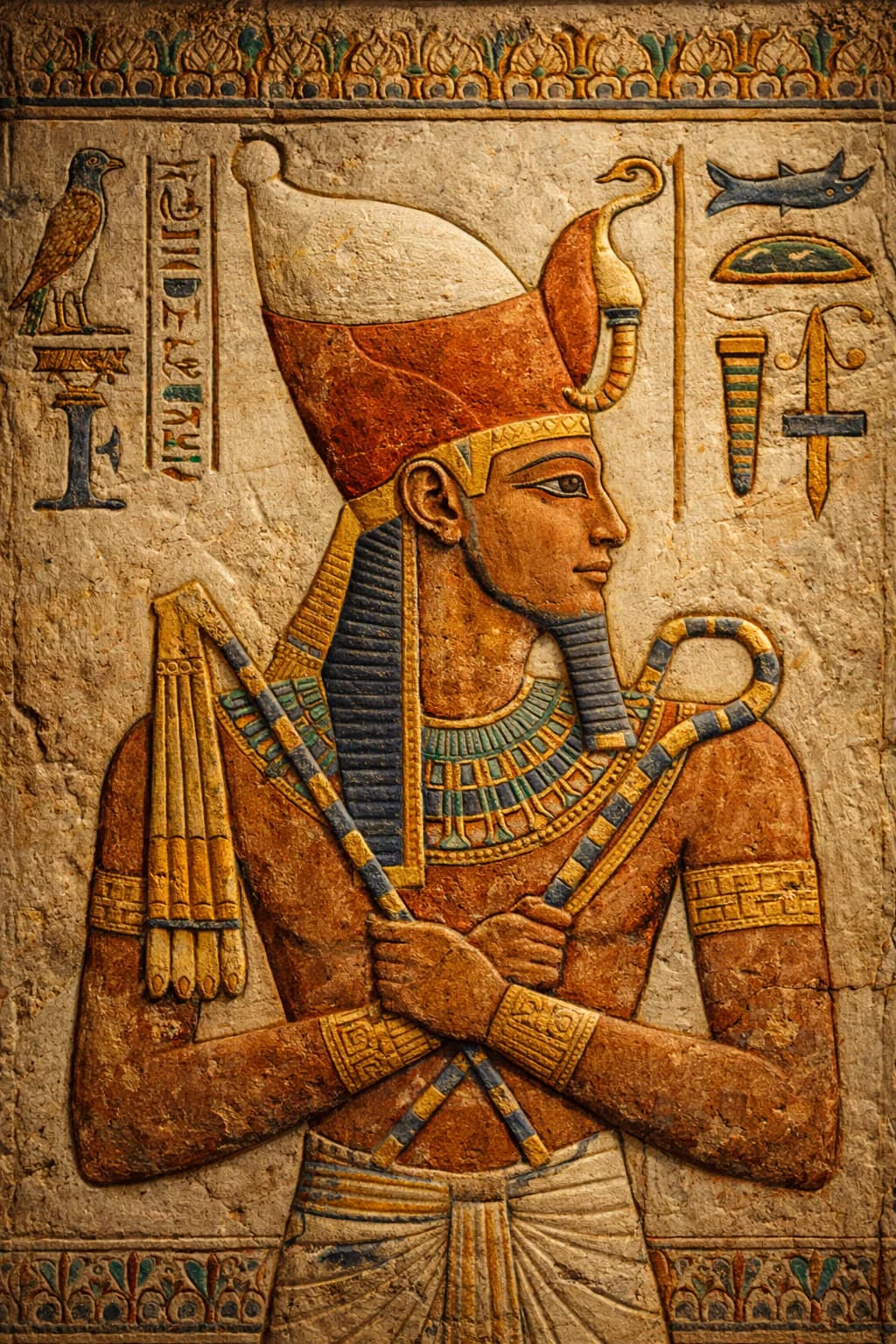
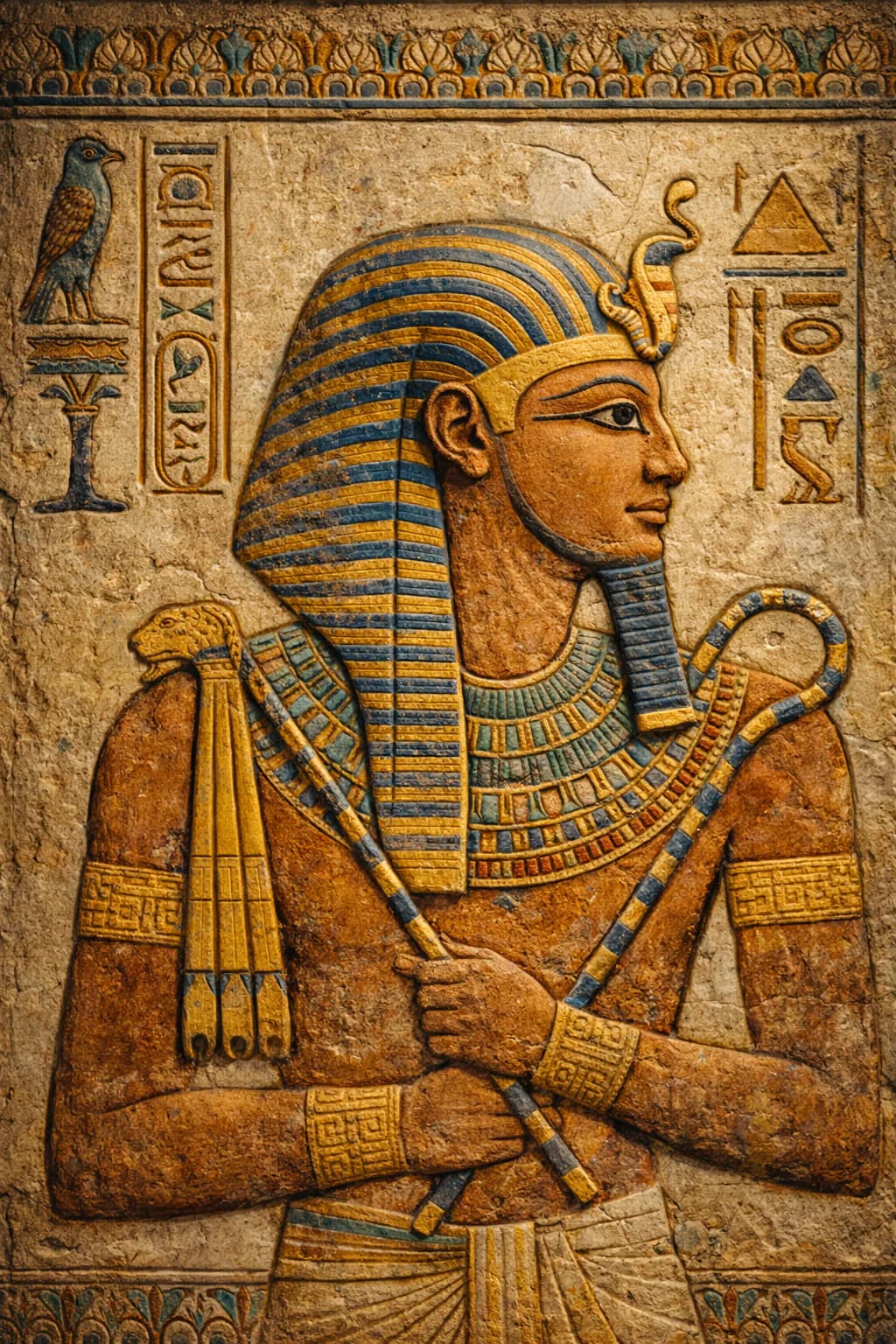
The Narmer Palette, discovered at Hierakonpolis, is the central object in any biography of Narmer because it is less a document than a royal statement in stone. One side shows the king wearing the White Crown of Upper Egypt as he strikes an enemy; the other shows him wearing the Red Crown associated with Lower Egypt, inspecting defeated bodies and standing above intertwined long-necked beasts that may symbolise controlled union. The palette does not read like a newspaper report. It is ceremonial art, ritual object and political theology at once. It presents the king as conqueror, organiser and agent of divine order. Later pharaonic imagery would repeat many of these ideas for three thousand years.
Power becomes more secure when it is reinforced through shared symbols and narratives.
c. 3120 BCE
Did Narmer Unite Egypt?
Ancient Egyptian tradition remembered a first unifier called Menes, while the earliest archaeological evidence gives Narmer a central place at the beginning of dynastic kingship. Some scholars identify Narmer with Menes; others argue Menes may refer to Narmer's successor Hor-Aha or to a later memory of several unifying rulers compressed into one founder. The uncertainty is important. It reminds us that early Egypt did not leave narrative histories explaining itself in modern terms. What survives are names, seals, tombs, palettes, maceheads and later king lists shaped by ideology. Narmer may have completed unification, symbolised it, inherited it or pushed it decisively forward. Any careful account must leave room for that ambiguity while still recognising his extraordinary historical weight.
Unification transforms scattered strength into a force capable of lasting impact.
c. 3115 BCE
Narmer and the Beginning of Dynastic Egypt
Unifying Egypt required more than victory imagery. The early state needed to move grain, goods, labour and information along hundreds of miles of river. Seal impressions, labels and administrative objects from Narmer's era show a world learning to record ownership, destination and royal authority. Abydos became a key royal burial centre, while Memphis, traditionally associated with early dynastic organisation, occupied a strategic position between Upper Egypt and the Delta. The king's name itself became an administrative tool, stamped onto objects and carried across territory. Narmer's reign therefore marks the emergence of a governing system, not just a royal legend. Egypt's durability began when power became routine enough to be collected, stored and repeated.
True success lies not just in conquest, but in creating systems that outlast the conqueror.
c. 3110 BCE
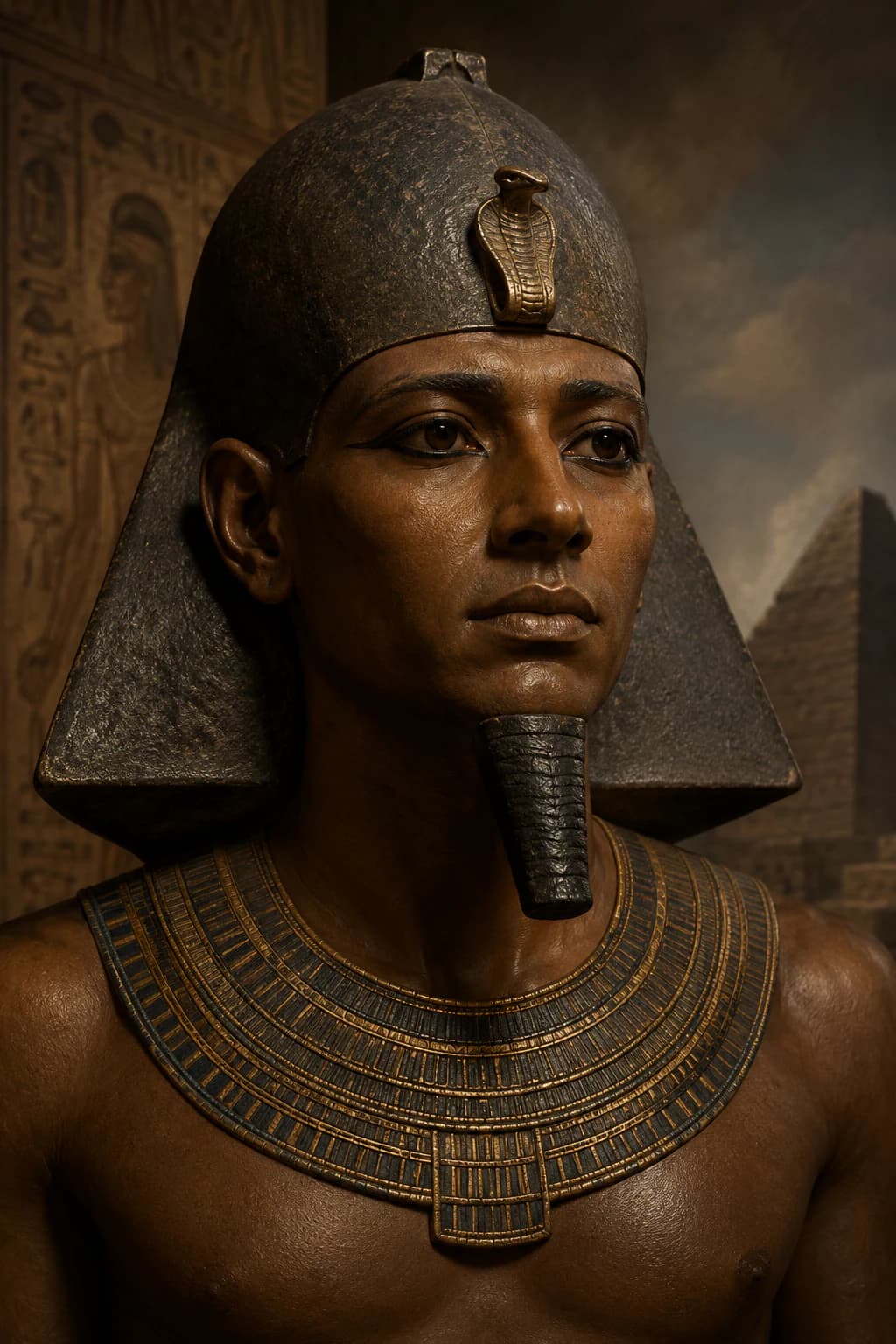
Narmer and the Rise of Pharaohs
The later Egyptian pharaoh was not merely a ruler with soldiers. He was the guarantor of maat, the ordered balance of the world against chaos. In Narmer's imagery we see that concept taking early form. Enemies are subdued, bodies are counted, animals are controlled and the king appears larger than everyone else. Divine symbols frame his violence as order-making rather than ordinary brutality. This royal language would endure because it solved a political problem. A long, narrow country with regional differences needed a shared explanation for why one ruler should command both north and south. Narmer's visual world helped create that explanation. The king was the hinge between human society, sacred order and territorial unity.
Leadership becomes enduring when it is tied to deeper beliefs about how the world should function.
c. 3105 BCE
Final Years
We know very little about Narmer's death or final years, and any confident personal story would go beyond the evidence. What can be said is that early dynastic kingship continued after him, with Hor-Aha often identified as his successor. That continuity matters. Many early states rise through conquest and collapse when the founder dies. Egypt did not. The royal cemetery, administrative marks and expanding state culture suggest that Narmer's achievement, whether personal or part of a wider process, became inheritable. The Two Lands were not merely joined in art; they were made governable enough for successors to claim the same order. In that sense, the silence around Narmer's last years is itself revealing. The system became bigger than the man.
The durability of a legacy often depends on how well its transition is prepared.
After 3100 BCE
Why Narmer Matters in Egyptian History
Narmer's legacy is enormous precisely because it is partly mysterious. He stands near the start of one of history's most durable political and cultural traditions: a unified Egyptian state ruled by kings who claimed authority over the Two Lands. The Narmer Palette remains one of the earliest and most powerful statements of that idea, showing conquest, ritual, dual crowns and royal scale in a visual language later Egyptians would understand instantly. Historians still debate whether Narmer personally unified Egypt, whether he was Menes, and how gradual the process really was. Those debates do not diminish him. They make him the right kind of founder for early history: visible through objects, names and symbols at the moment when power first learned to become memory.
Some leaders shape not just their era, but the entire trajectory of a civilization.