Complete chronology
Full overview and deeper context for every journey step.
-138
Patrician roots
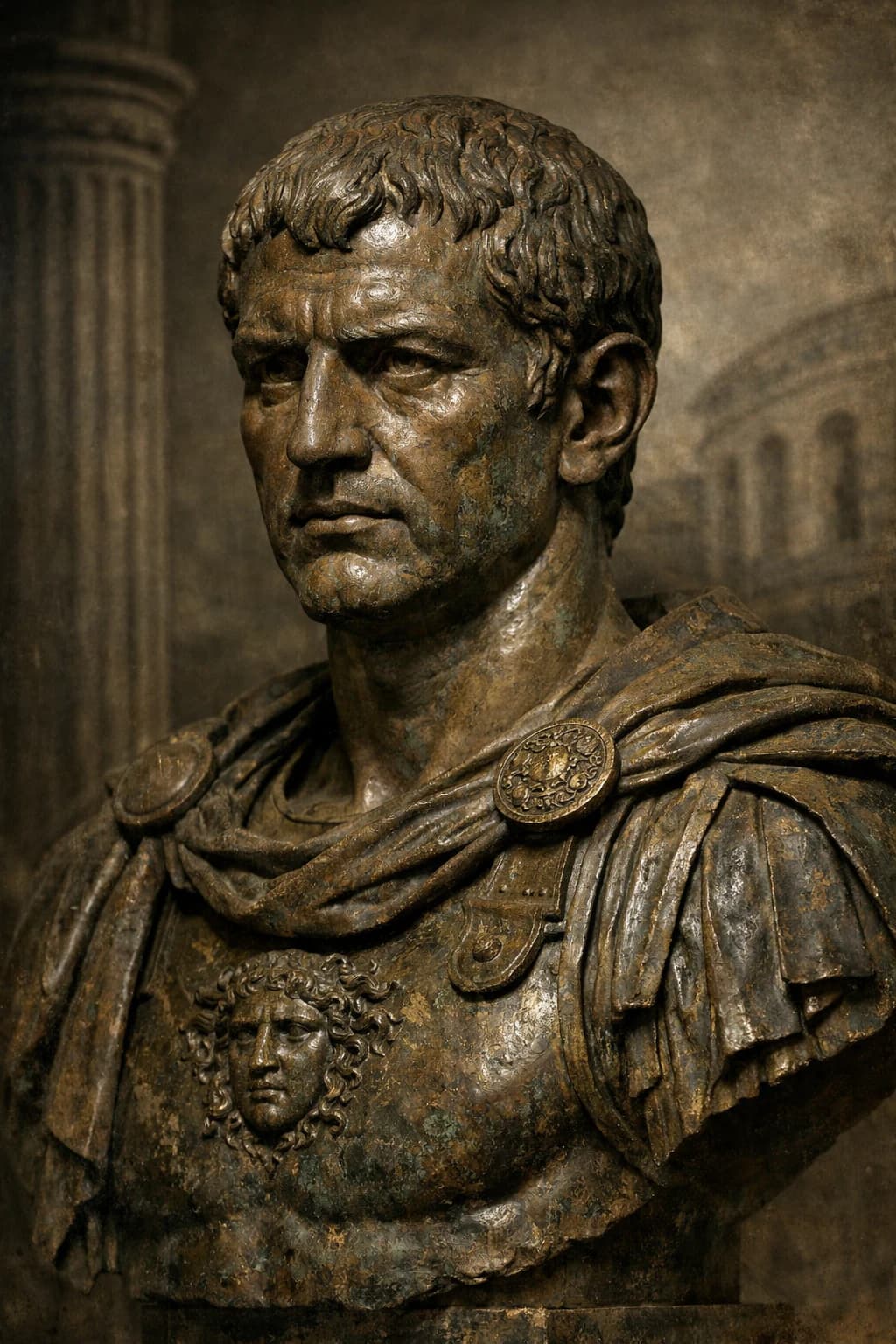
Lucius Cornelius Sulla was born in 138 BC into the Cornelii, one of Rome's oldest patrician clans, but his own branch had slipped far from commanding wealth. That mismatch mattered. Sulla grew up with the manners and pride of the ruling class, yet without the financial security that made public careers easy for other aristocrats. Later writers remembered him as cultured, sharp, pleasure-loving and coldly ambitious. The details of his youth are filtered through hostile and admiring traditions, but the outline is clear enough: he entered Roman politics as a nobleman who had to rebuild his position through talent, patronage, military service and nerve.
A sense of lost status can be a powerful force, pushing individuals toward extreme paths to reclaim it.
-107 to -105
Jugurthine War
Sulla's first major breakthrough came in North Africa during the war against Jugurtha of Numidia. Serving as quaestor under Gaius Marius, he negotiated with Bocchus of Mauretania and helped arrange Jugurtha's betrayal and capture in 105 BC. The achievement ended a frustrating war and gave Sulla a reputation for diplomatic boldness as well as military usefulness. It also poisoned relations with Marius. Marius was the senior commander and claimed the victory's glory; Sulla and his supporters later emphasized Sulla's decisive role. That dispute foreshadowed the late Republic's central danger: military success could no longer be separated from personal prestige and political rivalry.
Early success in high-stakes situations can elevate a career, but it often brings rivalry as well as recognition.
-91 to -88
Social War command
The Social War of 91-88 BC was fought against Rome's own Italian allies, communities that had supplied soldiers for generations while lacking full Roman citizenship. Sulla served with distinction in this bitter conflict, especially in Campania and Samnium, and emerged with a command reputation strong enough to propel him to the consulship for 88 BC. The war also changed the political landscape. Rome eventually had to concede citizenship widely across Italy, but only after violence had revealed how brittle the old system had become. For Sulla personally, the war gave him something more potent than office: soldiers who knew his competence and were prepared to follow him.
Strong personal loyalty between leader and followers can reshape established systems of authority.
-88
First march on Rome
The crisis of 88 BC made Sulla a turning-point figure. As consul, he had been assigned the lucrative and prestigious war against Mithridates VI of Pontus. The tribune Publius Sulpicius Rufus, allied with Marius, pushed through legislation transferring that command to Marius instead. Sulla refused to accept the decision. He went to the army still stationed near Nola and persuaded the legions to march against Rome, a breach of political custom so severe that most of his officers abandoned him. The soldiers did not. Armed entry into the capital shattered the assumption that Roman disputes, however ugly, remained bounded by civilian procedure. Sulla recovered his command, but Rome had crossed a line it could not uncross.
Once a boundary is broken by success, it becomes far easier for others to ignore it in the future.
-87 to -84
Eastern campaigns
Sulla then left Italy to fight Mithridates, whose forces had swept through Roman Asia and Greece amid resentment against Roman power. While Sulla besieged Athens, won at Chaeronea and Orchomenus, and forced a settlement with Mithridates, his enemies dominated Rome. Marius returned, violence followed, and Sulla was declared a public enemy. Sulla did not abandon the eastern war in panic. By completing his campaign, extracting money, and keeping his army intact, he transformed himself from outlaw into victorious commander. The eastern settlement was controversial because Mithridates survived, but it served Sulla's immediate purpose: he could return to Italy with prestige, resources and a hardened army.
Strategic patience can turn temporary setbacks into long-term advantages when timing is carefully controlled.
-83 to -82
Civil war victory
Sulla landed at Brundisium in 83 BC and began the Republic's first full-scale civil war. He was joined by ambitious younger men, including Pompey and Marcus Licinius Crassus, while the Marian and Cinnan regime gathered forces to resist him. The fighting cut across Italy, exposing old regional resentments and the unresolved anger of the Social War. Sulla's final victory came in 82 BC near Rome at the Colline Gate, where Samnite and Marian forces were defeated after desperate fighting. The result was not a normal change of government. It was military conquest of the Roman state by a Roman army, followed by vengeance presented as restoration.
In deeply divided systems, decisive force can end conflict, but it often leaves lasting scars.
-82 to -81
Dictatorship and purges
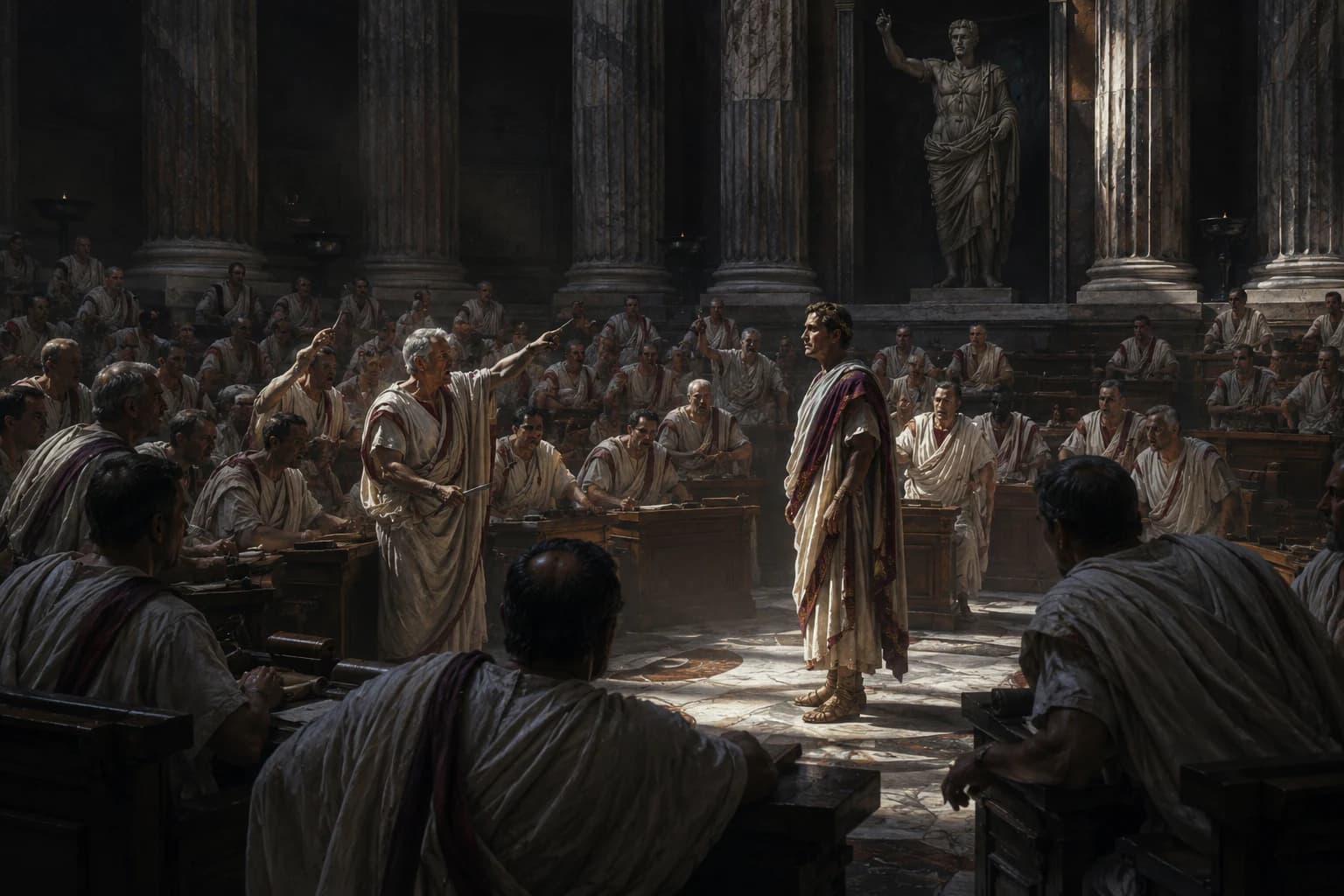
After victory, Sulla became dictator for making laws and settling the state, an extraordinary office revived with unprecedented scope. His most infamous tool was the proscription list: named enemies could be killed, their property confiscated, and their families ruined. The policy destroyed opponents, rewarded supporters and made fear part of government. Sulla also pursued a coherent constitutional programme. He enlarged the Senate, restored senatorial control over courts, restricted tribunes of the plebs, regulated office-holding and tried to bind ambition inside aristocratic rules. His stated aim was to save the Republic from demagogues and disorder. The contradiction was fatal: he tried to restore law through terror and military supremacy.
Reforms imposed through fear may achieve order quickly, but they rarely build lasting trust.
-79
Unexpected resignation
Sulla's retirement remains one of the strangest endings in Roman political history. In 79 BC, after carrying through his reforms, he laid down the dictatorship and withdrew to private life near Puteoli. Ancient writers shaped the scene into a performance of confidence: the man who had ruled by fear walking unguarded among citizens. Whether it was arrogance, calculation, illness, or genuine belief in his settlement, the act mattered. Sulla had no intention of founding a monarchy. He wanted an aristocratic Republic disciplined by his example. Yet resignation could not undo the lesson his career had taught: a general with loyal troops could break the rules and survive.
Voluntary withdrawal from power can redefine a leader’s legacy, but it does not undo the precedents they set.
-78 and beyond
Enduring precedent
Sulla died in 78 BC, only a year after leaving power, and his settlement began to fray almost immediately. Later politicians reversed parts of his programme, especially the restrictions on the tribunate. His deeper legacy was harder to undo. He had shown that Rome's armies could become instruments of domestic politics, that proscription could turn law into licensed murder, and that a victorious commander could claim to restore the Republic while dominating it. Sulla was not simply a rehearsal for Caesar; his goals were different, and he did eventually step aside. But he changed what Roman ambition could imagine. After him, the Republic still existed, yet its old restraints had lost much of their authority.
A single leader’s choices can redefine what is considered possible, influencing generations that follow.