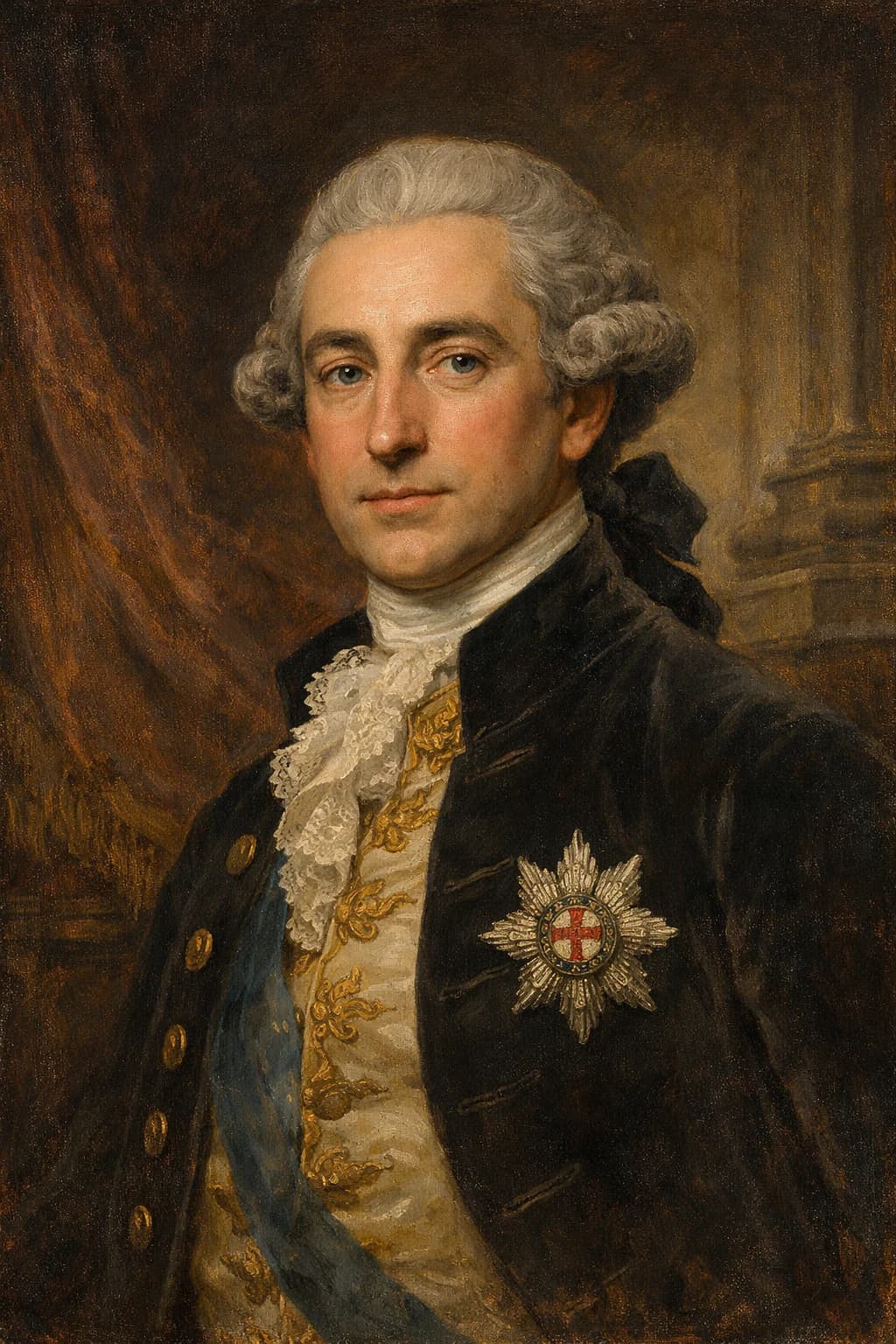
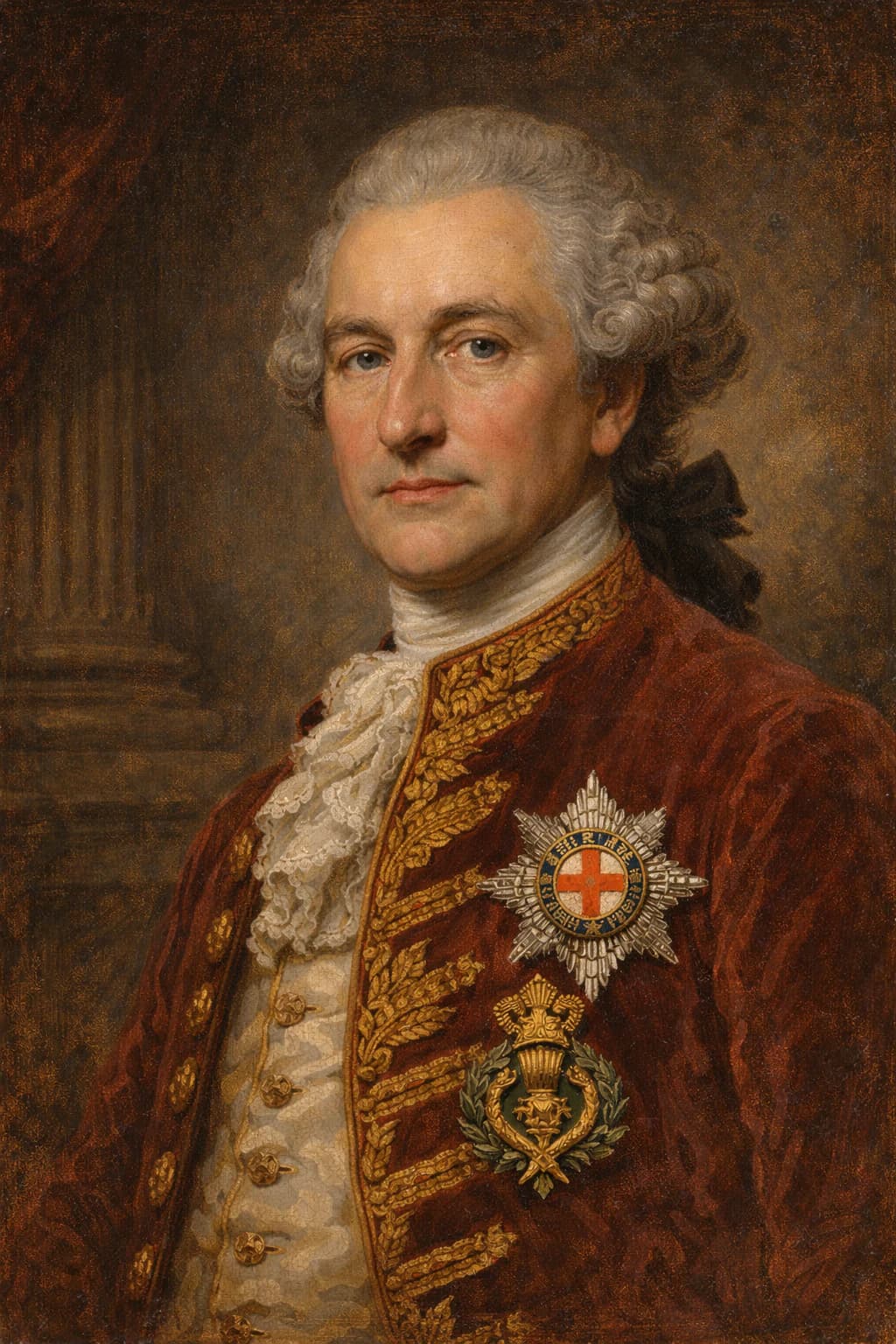
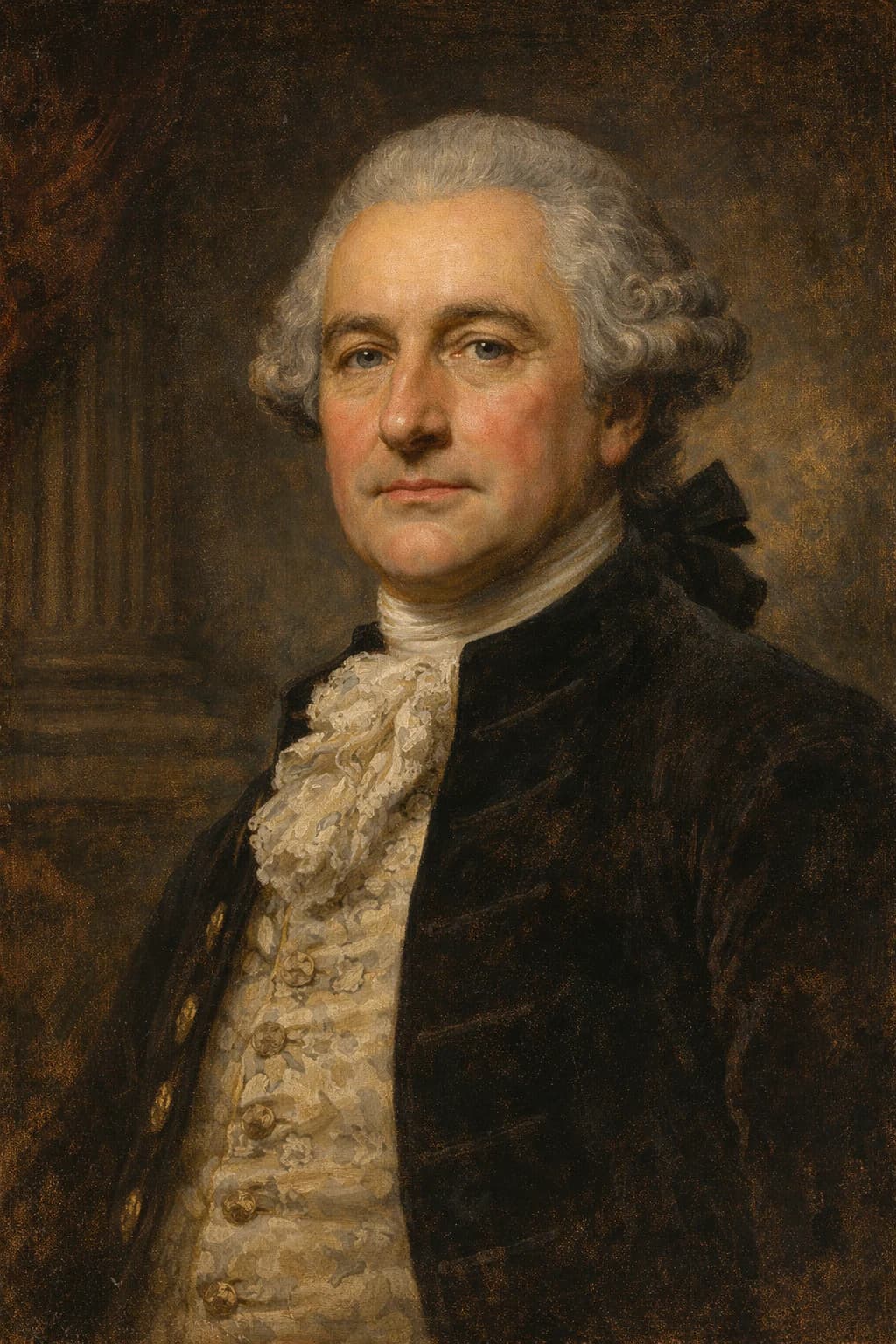
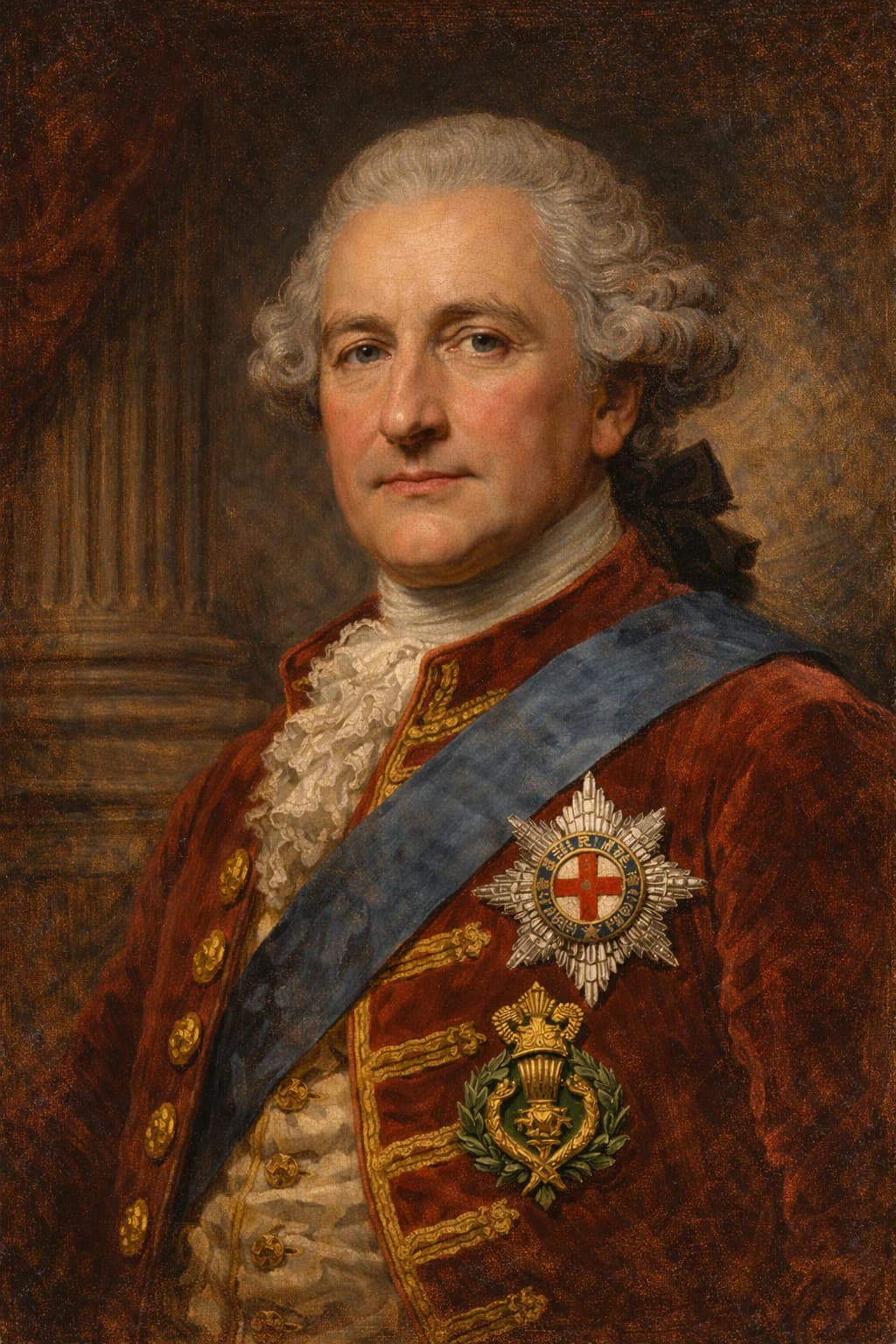
Complete chronology
Full overview and deeper context for every journey step.
1732
Privileged Beginnings
Frederick North, later known as Lord North, was born in London in 1732 into a family embedded in aristocratic politics. Educated at Eton and Trinity College, Oxford, he grew into a witty, intelligent and socially assured figure, less fiery than many contemporaries but highly capable in finance and parliamentary management. Georgian politics ran through family ties, royal favour, borough influence and personal reputation. North did not rise as an outsider. He belonged to the world that assumed government should be handled by gentlemen trained for it. That background helped him reach power; it also shaped the imperial assumptions that would later prove disastrous in America.
His rise began not with struggle, but with access, showing how power often flows through inherited networks.
1754
Entry Into Parliament
North became MP for Banbury in 1754 and spent his early career learning the habits of government from the inside. He was not a romantic reformer or a battlefield hero. His strengths were arithmetic, patience, humour and the ability to steer business through a difficult House of Commons. Britain after the Seven Years' War faced a familiar imperial problem: victory had produced debt, and debt demanded revenue. North's financial experience made him useful as governments searched for ways to make empire pay for itself. That problem, more than personal cruelty or stupidity, would become the trap of his career.
His strength lay in managing systems, not reshaping them.
1760s
Climbing Government
North's rise came through office rather than manifesto. As Chancellor of the Exchequer from 1767, he inherited the fiscal and constitutional disputes created by earlier attempts to tax the American colonies. The Stamp Act had been repealed, but Parliament had not abandoned its claim to legislate for the colonies. North was not initially the architect of every imperial grievance, yet he accepted the central principle that Parliament's authority had to stand. He also had the confidence of George III, whose desire for stable government after years of ministerial churn made North an attractive choice. By 1770, he seemed steady, manageable and experienced.
He rose not by ambition alone, but by being the safest choice in unstable times.
1770
Becoming Prime Minister
When North became prime minister, the American crisis was already advanced. Colonial resistance had been shaped by the Stamp Act, Townshend duties, arguments over virtual representation, and resentment toward imperial enforcement. North tried partial retreat by repealing most Townshend duties, but he retained the tax on tea as a symbol of parliamentary right. That distinction made sense to ministers who separated revenue from sovereignty; it made far less sense to colonists who saw taxation without representation as the core issue. From the start, North's premiership rested on a dangerous compromise: reduce friction, but never concede the principle at the centre of the quarrel.
He inherited a problem that had already begun slipping beyond control.
1770–1775
Managing Empire
The Tea Act of 1773 was meant partly to rescue the East India Company and channel tea through legal imperial trade, but in America it became another test of consent and control. The Boston Tea Party, in which colonists destroyed tea in Boston harbour, convinced North's government that authority had to be visibly restored. The Coercive Acts, known to opponents as the Intolerable Acts, punished Massachusetts and tightened imperial control. North did not think he was choosing war. He thought discipline in one colony might prevent wider disobedience. Instead, punishment helped unite colonial resistance and made moderates choose sides.
Trying to be both firm and flexible can satisfy neither side in a deep conflict.
1775
War Breaks Out
Once shots were fired in Massachusetts in 1775, North faced a crisis that was military, constitutional and political at once. He supported the war effort while also offering conciliation, including proposals that came too late to satisfy the Continental Congress. The Declaration of Independence in 1776 changed the stakes, and British commanders found that taking cities did not equal restoring obedience. North's government underestimated the depth of colonial mobilisation, the difficulty of war across the Atlantic, and the way coercion could create the very unity Britain hoped to prevent. At home, critics such as Edmund Burke and Charles James Fox attacked the policy as both unjust and impractical.
Once conflict turns violent, political solutions become harder to recover.
1781
Losing the Colonies
The war widened dangerously after France allied with the Americans in 1778, followed by further international pressures that stretched British resources across the Atlantic, Caribbean, Mediterranean and beyond. Britain was no longer fighting only rebellious colonists; it was fighting a global war among imperial powers. The surrender of Lord Cornwallis at Yorktown in October 1781 shattered confidence in victory. North reportedly understood the scale of the disaster. The government still had armies and ships, but the political case for continuing the American war collapsed. His premiership had been built on preserving authority; Yorktown made that authority look unrecoverable.
Major outcomes often emerge from accumulated choices rather than one decisive error.
1782
Resignation
North resigned in March 1782 after losing the confidence necessary to govern. He had repeatedly tried to leave office earlier, but George III valued him and feared alternative ministries. His departure did not mean he had been a simple puppet of the king; North had his own judgement, limitations and responsibility. But the closeness of his relationship with George III made critics see the war as a royal-ministerial project imposed against wiser advice. After office, North remained politically active and controversially joined Fox in the Fox-North coalition of 1783, an alliance that suggested Georgian politics could be more fluid than later party labels imply.
Leadership can endure pressure for years, yet collapse quickly after a single undeniable failure.
1792
Enduring Reputation
Lord North's legacy is dominated by the American Revolution, but reducing him to a comic failure misses the harder lesson. He was intelligent, experienced and often personally moderate. The disaster came from a larger imperial misreading: ministers insisted that parliamentary sovereignty could be preserved by symbolic taxes and coercive punishment, while many colonists had come to see those symbols as proof of subordination. North's concessions were often real but late; his firmness was often understandable but counterproductive. The loss of the thirteen colonies forced Britain to rethink empire, trade and governance. To ask why Lord North was important is to ask how a powerful state can lose control when it mistakes obedience for loyalty.
A leader’s reputation is often defined less by intentions than by the outcomes they leave behind.