Complete chronology
Full overview and deeper context for every journey step.
1759
Political Family Roots
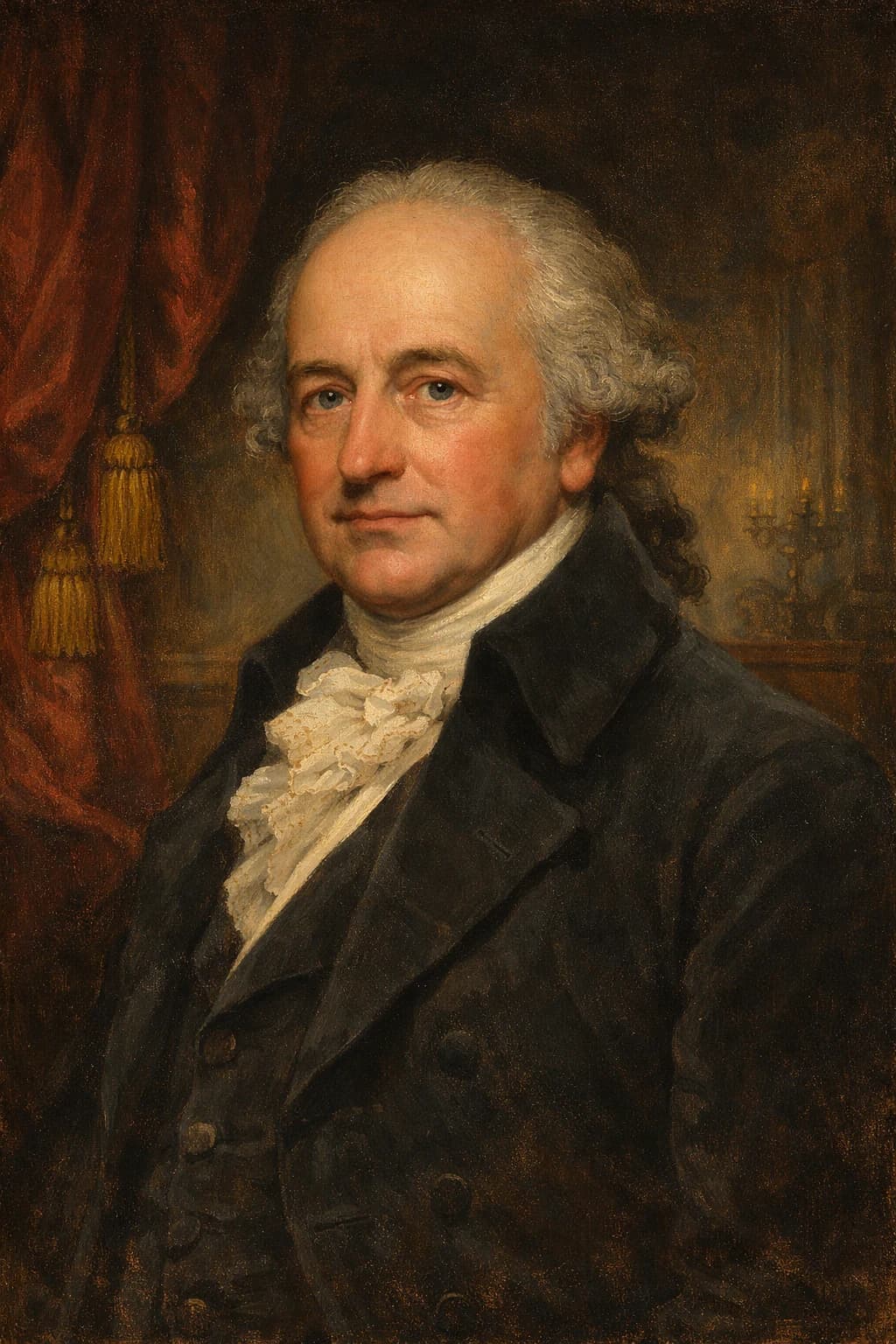
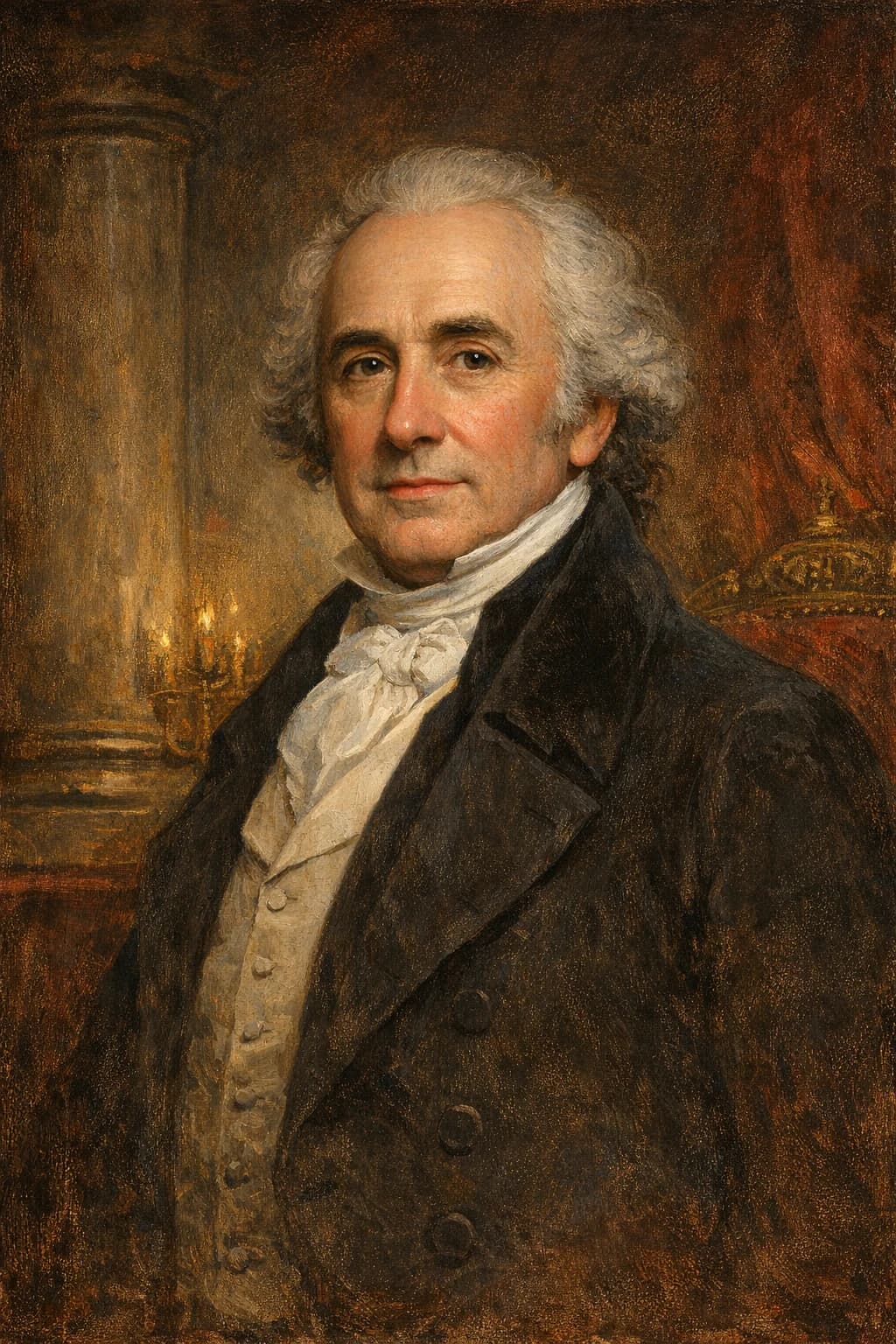
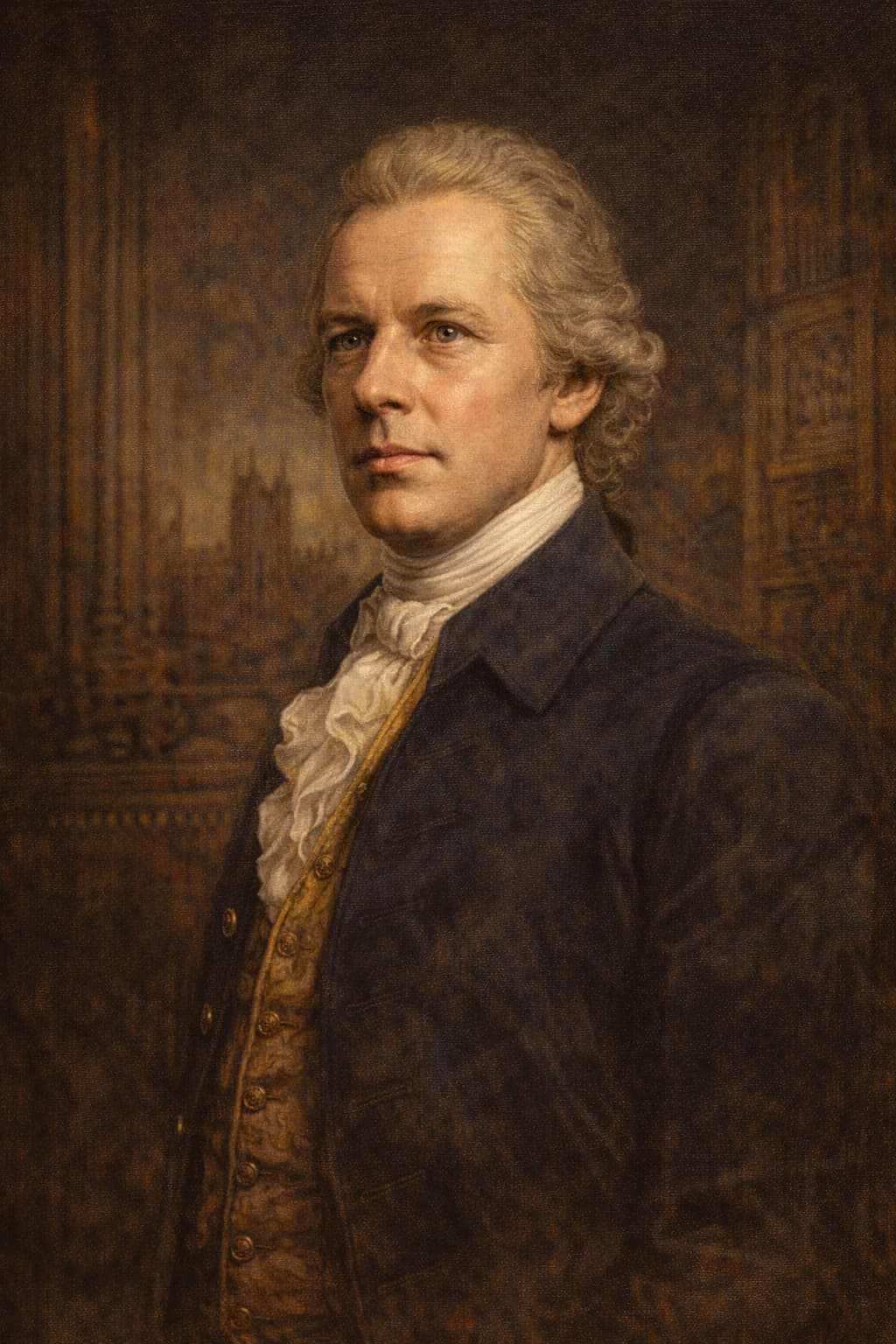
William Wyndham Grenville was born in 1759 into the Grenville family, one of the networks that linked land, Parliament and government in eighteenth-century Britain. His father, George Grenville, had been prime minister; his cousin William Pitt the Younger became one of the defining statesmen of the age. That inheritance opened doors, but it also placed Grenville inside a political culture where family reputation had to be converted into ability. He grew up as Britain was adjusting to imperial crisis, fiscal pressure and the consequences of war. Unlike more flamboyant politicians, Grenville developed a style built on seriousness, legal precision and administrative confidence. His career would show both the advantages and limits of aristocratic politics: he could reach the centre quickly, but lasting authority required judgement in moments when family name alone meant little.
Privilege gave him access, but discipline allowed him to turn that access into lasting authority.
1770s
Education and Preparation
Grenville's education at Eton and Christ Church, Oxford, placed him inside the intellectual pathway of Britain's ruling class. Classical learning, law, rhetoric and social connection all mattered. He later trained for the law, a discipline that suited his cast of mind: careful, structured and exact. This background made him especially effective in offices where detail counted, from parliamentary management to foreign policy. Grenville was not a mass politician, because Georgian Britain was not a mass democracy. His political world was Parliament, court, cabinet and correspondence. Yet within that world he was formidable. He could master documents, sustain arguments and translate moral or strategic positions into legislation. The same qualities that made him seem stiff to some contemporaries also made him a reliable figure in an age of revolutionary volatility.
His strength was not spectacle but steady intellectual control over complex problems.
1782
Entering Parliament
Grenville entered the House of Commons in 1782, just as Britain's defeat in the American War of Independence forced a reckoning with empire, finance and ministerial authority. His advancement was rapid. He served in posts connected to Ireland, the Treasury and the speakership before moving to the House of Lords as Baron Grenville in 1790. The speed of his rise owed much to connection with Pitt, but it would be misleading to reduce him to patronage. Pitt relied on Grenville because he was disciplined, loyal and capable of handling hard business. The two men shared a belief in strong executive government, fiscal seriousness and resistance to revolutionary France. Grenville's early career therefore placed him at the intersection of family politics and national crisis, where competence could turn inherited access into real influence.
He advanced not by noise, but by becoming indispensable in the background.
1791
Foreign Policy Role
Grenville became Foreign Secretary in 1791, on the eve of the French Revolutionary Wars. The French Revolution had begun as a constitutional crisis in another monarchy, but it quickly became a European earthquake. Monarchs feared contagion, reformers saw possibility, and diplomats struggled to interpret a France whose politics changed faster than conventional statecraft could absorb. Grenville was instinctively cautious toward revolutionary France. He did not rush Britain into war in 1789, but as violence escalated and France challenged the European balance, he became a central architect of resistance. His foreign policy sought alliances, subsidies and diplomatic pressure, though coalitions against France were repeatedly fragile. Grenville's importance lies in helping define Britain's long strategic posture: France's revolutionary and then Napoleonic expansion could not be treated as ordinary rivalry.
In unstable times, he trusted structure more than improvisation.
1790s–1800s
Napoleonic Conflict
The wars against France were not fought by Britain alone. They required coalitions of powers with different fears, ambitions and breaking points. Grenville understood this, and his work as foreign secretary helped coordinate the early anti-French coalitions, even when battlefield outcomes disappointed. Britain supplied money, naval pressure and diplomatic organisation; continental allies supplied armies but often suffered defeat or changed course. The result was frustrating, expensive and morally complex, especially as fear of revolution could align Britain with conservative regimes that had little interest in liberal reform. Grenville's approach was shaped by endurance rather than fantasy. He did not expect a single campaign to settle the conflict. He saw that Britain's strength lay in staying solvent, keeping sea power intact and returning again and again to coalition-building until France could be contained.
Endurance, rather than quick victory, defined his approach to war.
1806
Becoming Prime Minister
Pitt's death in January 1806 created an opening for a broad ministry that brought together Grenville's followers, Foxite Whigs and other reform-minded or anti-Pittite figures. The result was nicknamed the Ministry of All the Talents, partly admiringly and partly with an edge. Grenville became prime minister at a difficult moment: Napoleon dominated much of Europe, Britain's allies were battered, and domestic politics remained constrained by the king's views. Holding the coalition together required tact because its members agreed on some priorities while differing on many others. Charles James Fox, long Pitt's rival, served as foreign secretary until his own death later that year. Grenville's premiership was brief, but it was not empty. It showed that a coalition of elite factions could still enact a major moral reform when leadership, public campaigning and parliamentary timing aligned.
His leadership relied on holding together differences rather than eliminating them.
1807
Abolishing Slave Trade
The abolition of the British slave trade in 1807 was Grenville's greatest achievement. It did not come from nowhere. Abolitionists such as William Wilberforce, Thomas Clarkson, Granville Sharp, Olaudah Equiano and many Black and white campaigners had spent decades gathering evidence, shifting opinion and exposing the brutality of the trade. Enslaved and formerly enslaved people resisted the system directly across the Atlantic world. Grenville's role was to use government power and parliamentary authority at the decisive moment. He introduced the bill in the Lords and made the case that Britain could no longer defend a trade built on human suffering. The Act ended British participation in the transatlantic slave trade, though slavery itself continued in British colonies until the 1830s. The distinction matters. Grenville did not end slavery, but he helped strike down one of its central engines and changed the moral direction of British policy.
He used political power not just to govern, but to redirect the nation’s moral course.
1807
Government Collapse
The same ministry that abolished the slave trade collapsed over Catholic relief. Grenville and colleagues wished to make limited concessions that would allow Catholics, especially in Ireland, to serve more fully in the armed forces and state. George III regarded such measures as a violation of his coronation oath to defend the Protestant constitution. The dispute became a constitutional and political trap. When the king demanded pledges that ministers would not raise the issue again, Grenville refused to accept a restriction he considered incompatible with responsible government. The ministry was dismissed in 1807. The episode shows how far Britain still was from modern cabinet government. Parliament mattered, but the monarch could still shape ministries, and religious exclusion remained a central fault line in the United Kingdom created only a few years earlier.
Even strong leadership could be constrained by forces beyond Parliament.
1834
Lasting Influence
Grenville lived until 1834, long enough to see Britain defeat Napoleon, pass Catholic emancipation and abolish slavery in most of the British Empire. He never returned to the premiership, partly because politics moved on and partly because his temperament was better suited to principle and administration than popular manoeuvre. His legacy has two main pillars. As foreign secretary, he helped shape Britain's long resistance to revolutionary and Napoleonic France. As prime minister, he gave official force to the abolitionist campaign against the slave trade. He was not a democratic reformer in the later Victorian sense, and his world remained aristocratic, imperial and exclusionary. Yet his career demonstrates how elite politics could still produce decisions with vast human consequences. Grenville's time at the top was short; the 1807 Act ensured that it mattered.
His greatest impact came not from how long he led, but from what he chose to change.