Complete chronology
Full overview and deeper context for every journey step.
1215–1230
Born into empire
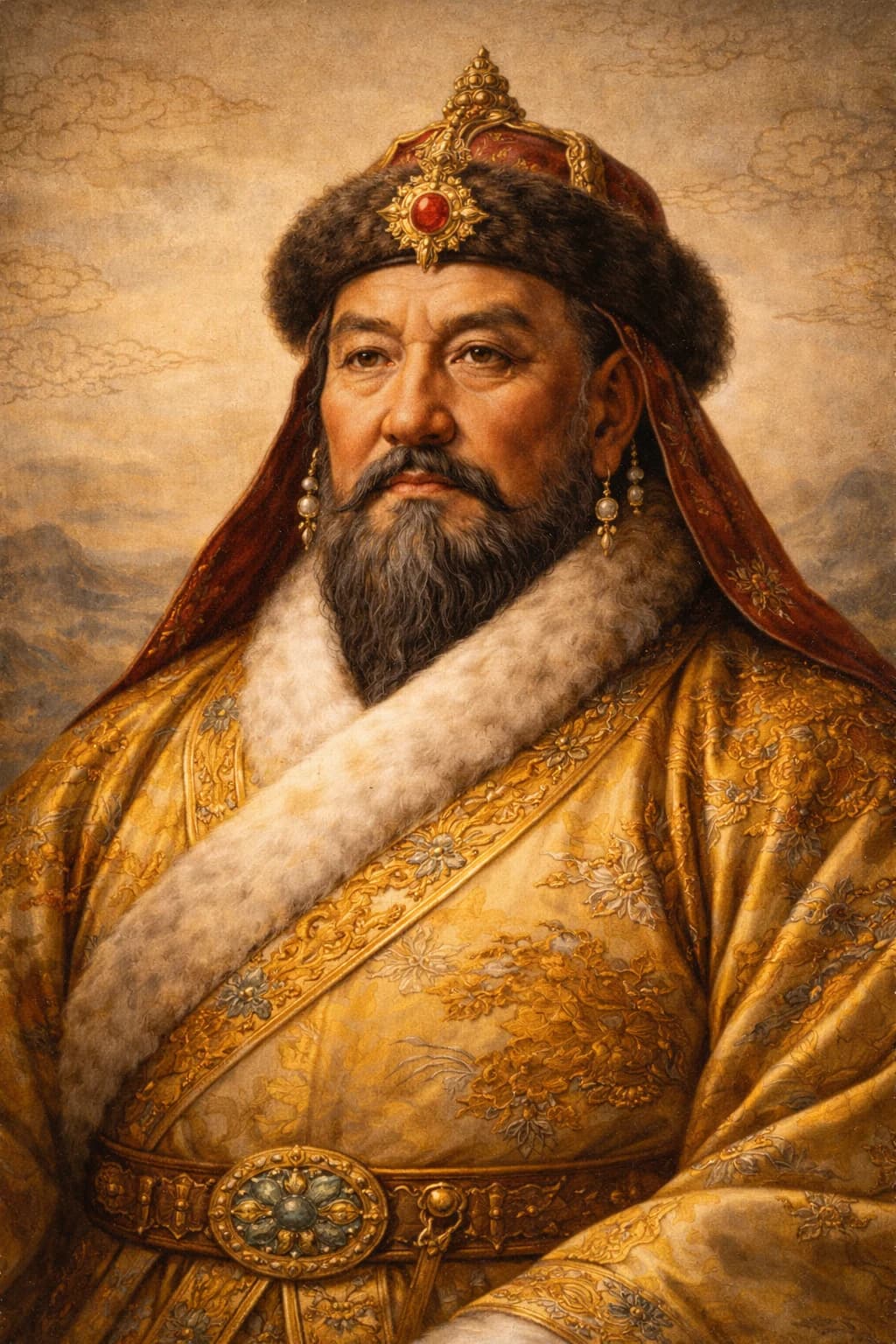
Kublai was the son of Tolui and Sorghaghtani Beki, and the grandson of Genghis Khan. That ancestry placed him inside the most successful conquest family of the thirteenth century, but his path was not simply a repeat of his grandfather's. He grew up as the Mongol Empire moved from raiding and conquest toward the harder question of rule. His mother, Sorghaghtani, was a formidable political figure who advanced the careers of her sons and understood the value of administrators, scholars and religious flexibility. Kublai inherited steppe prestige, but he also learned that China, Iran, Central Asia and the steppe could not be governed by cavalry charisma alone. His life would be defined by that tension: Mongol conqueror, Chinese emperor, world ruler, and manager of an empire too large for any single tradition.
Growing up during expansion can encourage leaders to think beyond traditional boundaries.
1230–1250
Early responsibilities
Kublai's early responsibilities in north China shaped his mature rule. Unlike some Mongol leaders who treated conquered agricultural regions mainly as sources of revenue, Kublai became interested in administration, taxation, religious patronage and Chinese political symbolism. He gathered advisers from many backgrounds, including Confucian scholars, Buddhist figures, Muslim administrators and Central Asian specialists. This did not make him a Chinese ruler in any simple sense. He remained a Mongol prince with Mongol priorities. But he saw that durable power over China required grain, census work, river management, court ritual, legal compromise and cooperation with local elites. His administrative curiosity distinguished him from rivals who held more tightly to older steppe patterns.
Exposure to different systems can expand a leader’s approach beyond inherited traditions.
1250–1260
Struggle for leadership
The Mongol Empire's unity depended on family politics as much as battlefield success. When Great Khan Mongke died during campaigns against the Southern Song, the succession opened dangerously. Kublai claimed leadership in 1260, but his younger brother Ariq Boke, supported by important steppe factions, also claimed the title. Their civil war ended with Kublai's victory in 1264, but the damage was lasting. The western khanates increasingly acted independently, and Kublai's authority as Great Khan became more symbolic outside his own domains. This is essential to understanding his reign. He ruled an enormous realm, but not a neatly centralized world empire. His strongest power lay in China and Mongolia, where he could build the Yuan state.
Leadership often requires winning not just battles, but the confidence of key supporters.
1260
Claiming the throne
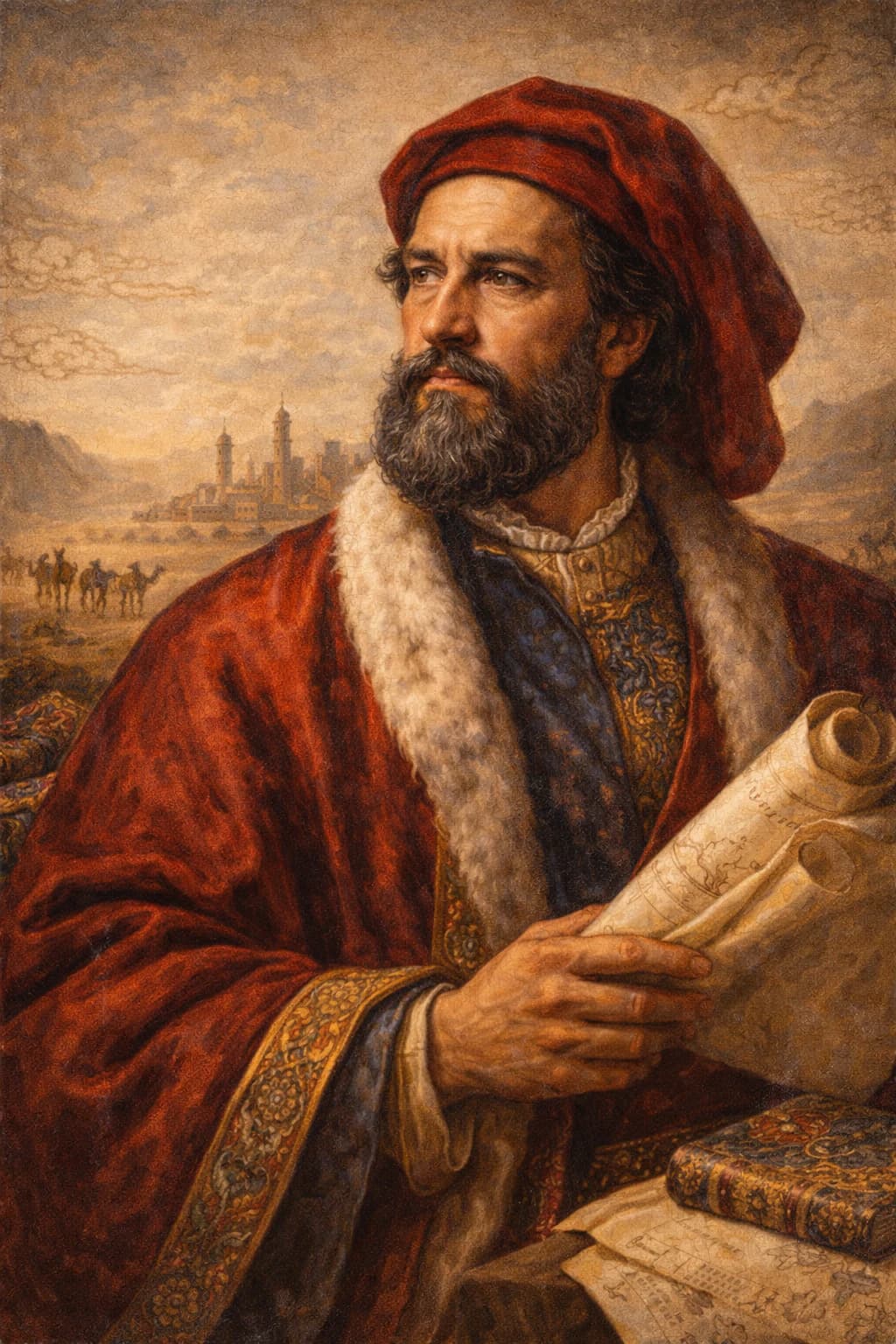
Kublai's choice of capital was a declaration of identity. By building Dadu and ruling from north China, he made himself a sedentary emperor as well as a Mongol khan. This alarmed traditionalists who feared the court was becoming too Chinese, but it allowed Kublai to command one of the richest agrarian societies on earth. He also used Tibetan Buddhism, especially through his relationship with the Sakya lama Phagpa, to strengthen imperial legitimacy. His court became cosmopolitan: Mongols, Chinese, Central Asians, Tibetans, Persians, Europeans and others moved through its networks. The famous account of Marco Polo, however embellished, reflects a real truth: Kublai's court sat at the center of a connected Eurasian world.
Taking power can also be an opportunity to redefine how it is used.
1260–1279
Conquest of China
The conquest of the Southern Song was Kublai's greatest military achievement and one of the hardest Mongol victories. Southern China was wealthy, populous, riverine and defended by fortified cities, naval forces and a sophisticated bureaucracy. The campaign required siegecraft, defectors, Chinese and Central Asian engineers, river fleets and patient pressure. Xiangyang's fall after a long siege opened the way, and the final Song defeat came in 1279 at the naval battle of Yamen. Kublai's victory ended one of China's most culturally brilliant dynasties and placed the entire country under Mongol rule. It also changed the Mongols. Conquest gave Kublai vast resources, but it forced him to govern a society whose administrative weight could absorb conquerors as much as serve them.
Enduring success in conquest often depends on adaptability as much as strength.
1271
Founding a dynasty
The founding of the Yuan dynasty was Kublai's attempt to turn conquest into legitimacy. By taking a Chinese dynastic title, he presented himself as the rightful emperor within China's political tradition. Yet the Yuan was not simply another Chinese dynasty. Mongols occupied the highest social and military positions, and the state classified populations in ways that privileged Mongols and many Central and West Asians over northern and southern Chinese subjects. Kublai used Chinese institutions where useful, but he did not dissolve Mongol dominance into Confucian rule. This hybrid quality made the Yuan innovative and unstable. It could draw on many traditions, but it also kept visible hierarchies that bred resentment.
Lasting rule often requires building systems that extend beyond individual authority.
1270s–1280s
Administrative reforms
Kublai's reign was not only war and hierarchy. He invested in systems that connected territory: courier routes, granaries, canals, roads, tax administration and paper currency. The Mongol peace across much of Eurasia made long-distance exchange easier, helping merchants, envoys, monks, artisans and information move between China, Central Asia, Iran and beyond. Kublai patronized Tibetan Buddhism, tolerated many religions, and drew technical specialists from across the empire. Yet these policies carried risks. Paper money could be overissued. Court expenditure was enormous. Ethnic ranking weakened trust. Some Confucian officials resented exclusion from full power. Kublai's government was impressive because it was adaptive, but it was also expensive, unequal and dependent on the founder's authority.
Effective governance often depends on integrating, rather than replacing, existing systems.
1280s–1294
Later challenges
Kublai's failures are as important as his successes. He launched two invasions of Japan, in 1274 and 1281, both defeated by Japanese resistance, logistical problems and storms later remembered as kamikaze, divine winds. Campaigns in Vietnam, Burma and Java also showed that naval warfare, tropical environments, distance and local resistance could blunt Mongol power. At court, Kublai suffered personal losses, including the death of his beloved wife Chabi and his chosen heir Zhenjin. His health declined, and his government struggled with corruption, expense and currency problems. The ruler who had completed the conquest of China could not make expansion infinite. His later years reveal the imperial pivot from momentum to maintenance.
Maintaining an empire can be more difficult than creating one.
1294 onward
Enduring influence
Kublai died in 1294, leaving a dynasty that endured until 1368 in China and a memory far larger than its lifespan. To Mongol history, he was the grandson who gave conquest an imperial capital and administrative form. To Chinese history, he was the foreign founder of the Yuan dynasty, a ruler who both adopted and disrupted the patterns of Chinese statecraft. To world history, he represents the height of Mongol-Eurasian connection, when envoys, merchants and ideas could cross distances that had once seemed separate worlds. His legacy should not be softened into cosmopolitan romance. Yuan rule involved hierarchy, conquest and coercion. But it also made China part of a wider Mongol world in unprecedented ways. Kublai's achievement was to govern across difference; his failure was that difference never became easy to govern.
A leader’s greatest impact may lie in how they connect different worlds into a single system.