Complete chronology
Full overview and deeper context for every journey step.
1486
Basque beginnings
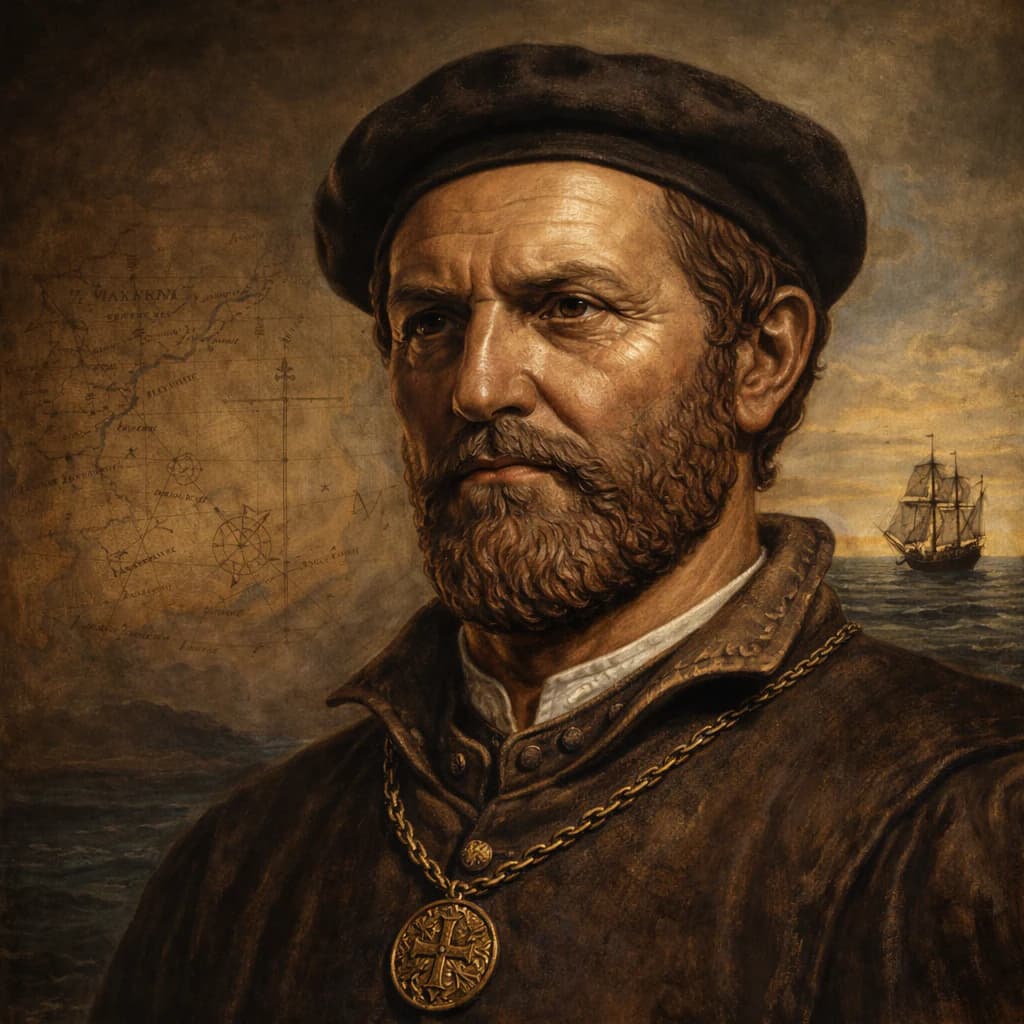
Juan Sebastián Elcano was born around 1486 in Getaria, a Basque port on the Bay of Biscay. His world was maritime before it was imperial. Fishing, shipbuilding, coastal trade and Atlantic seamanship were part of daily life, and Basque sailors had a reputation for toughness and practical skill. Elcano did not begin as a courtly explorer with a grand theory of the globe. He came from the working seafaring world that made oceanic empire possible: men who knew hulls, weather, discipline, hunger and risk. That background would matter when the Magellan expedition lost its commander and needed survival more than vision.
A life surrounded by the sea can quietly build the resilience needed for extraordinary journeys.
1500–1518
Early maritime work
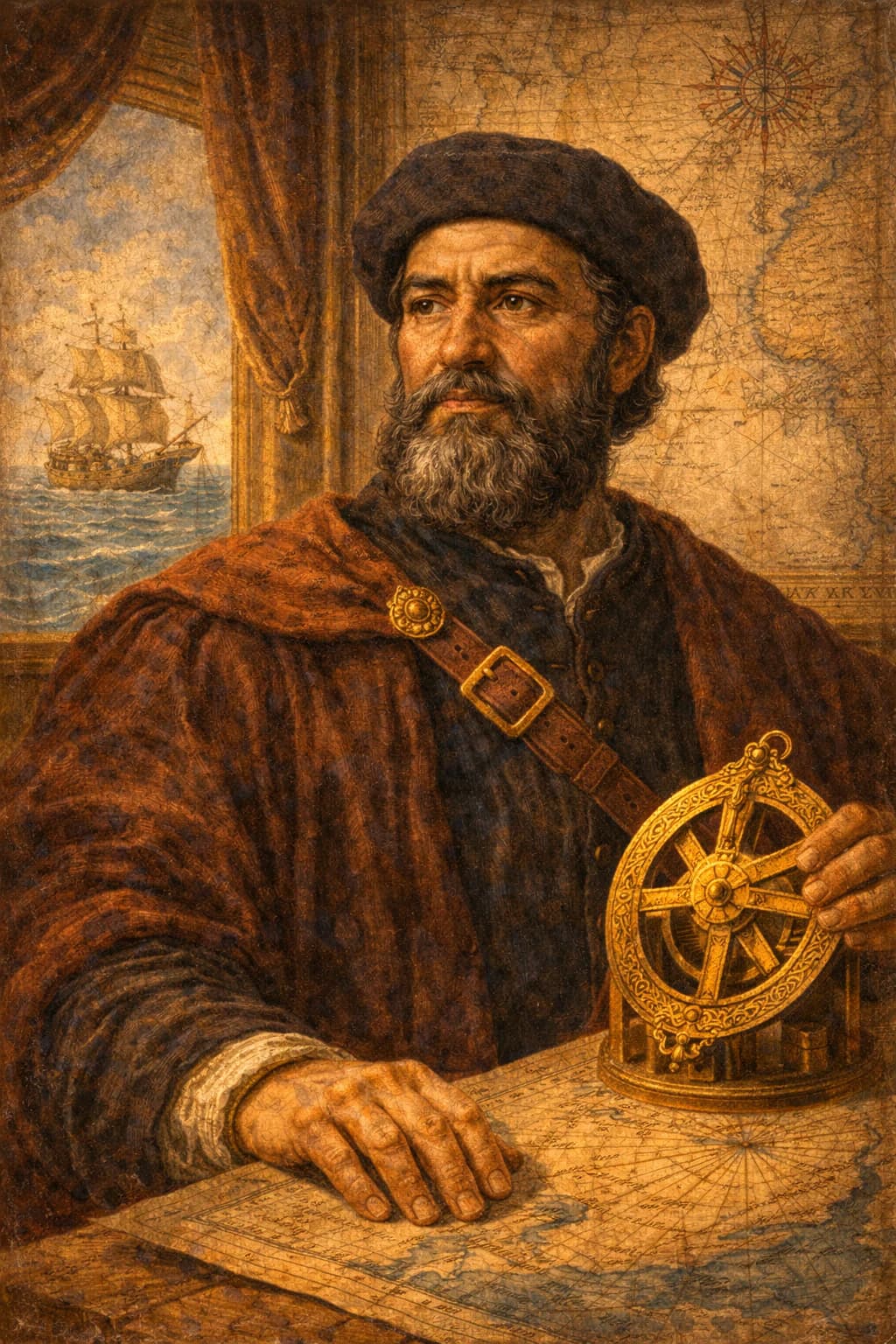
Before joining Magellan, Elcano served in commercial and military maritime ventures, including Mediterranean campaigns. He owned or commanded a ship, but debt forced him to sell it to foreign creditors, an act that violated Castilian rules and left him in legal difficulty. Joining a royal expedition offered both opportunity and possible rehabilitation. His experience was practical rather than glamorous. He knew crews could mutiny, supplies could fail and command at sea depended on credibility earned under pressure. Those lessons were more useful than heroic rhetoric when the expedition entered unknown oceans.
Hard-earned experience in ordinary work often prepares people for moments of historic consequence.
1519
Joining Magellan
Ferdinand Magellan, a Portuguese captain sailing for the Spanish crown, proposed reaching the Moluccas by sailing west around the Americas. The prize was spice: cloves, nutmeg and access to Asian trade without using Portuguese-controlled eastern routes. Elcano joined the expedition in 1519 as part of a fleet of five ships: Trinidad, San Antonio, Concepcion, Victoria and Santiago. The crews were multinational and tense, with Spanish officers uneasy under Magellan's Portuguese leadership. Elcano was not the expedition's architect. He was one of the skilled professionals whose importance grew as the voyage became more desperate.
Great ventures often begin with unclear paths and uncertain trust among those involved.
1520
Crossing the unknown
The voyage nearly broke before reaching the Pacific. At Port St Julian in Patagonia, officers mutinied against Magellan; Elcano was involved on the rebel side and was spared after the revolt failed. The fleet lost Santiago, endured a brutal winter and then found the passage now called the Strait of Magellan. San Antonio deserted and returned to Spain. When the remaining ships entered the Pacific, the name suggested calm seas but not mercy. The ocean was far larger than expected. Hunger, scurvy and exhaustion revealed that the world was not just round in theory; it was immense in practice.
Discovery often reveals not just new routes, but the limits of previous understanding.
1521
Magellan’s death
Magellan reached the Philippines in 1521 and became entangled in local politics and conversion efforts. At the Battle of Mactan, fighting forces led by Lapulapu, he was killed. His death changed the expedition's meaning. What had been Magellan's commanded search for a western route became a survival problem for men far from home with too few ships and no obvious authority. Leadership shifted repeatedly, and the remaining crew eventually reached the spice islands. Elcano's rise came from competence in crisis. He did not discover the strait or lead the fleet from Spain, but he became crucial when completion replaced exploration as the central task.
Moments of crisis often elevate those who can act calmly when direction disappears.
1521
Command of Victoria
By the time the expedition prepared to leave the Moluccas, only Victoria and Trinidad remained usable, and Trinidad soon failed. Elcano commanded Victoria on the westward route across the Indian Ocean, avoiding Portuguese ports where capture was likely. This was a ruthless navigation choice: open ocean meant hunger and disease, but landfall could mean imprisonment. The ship leaked, supplies ran low and men died. Elcano's achievement lay in practical command under extreme uncertainty. He chose a path no one had completed and held together enough crew, discipline and seamanship to keep the ship moving.
Leadership is often defined not by bold declarations, but by steady choices under pressure.
1522
Return to Spain
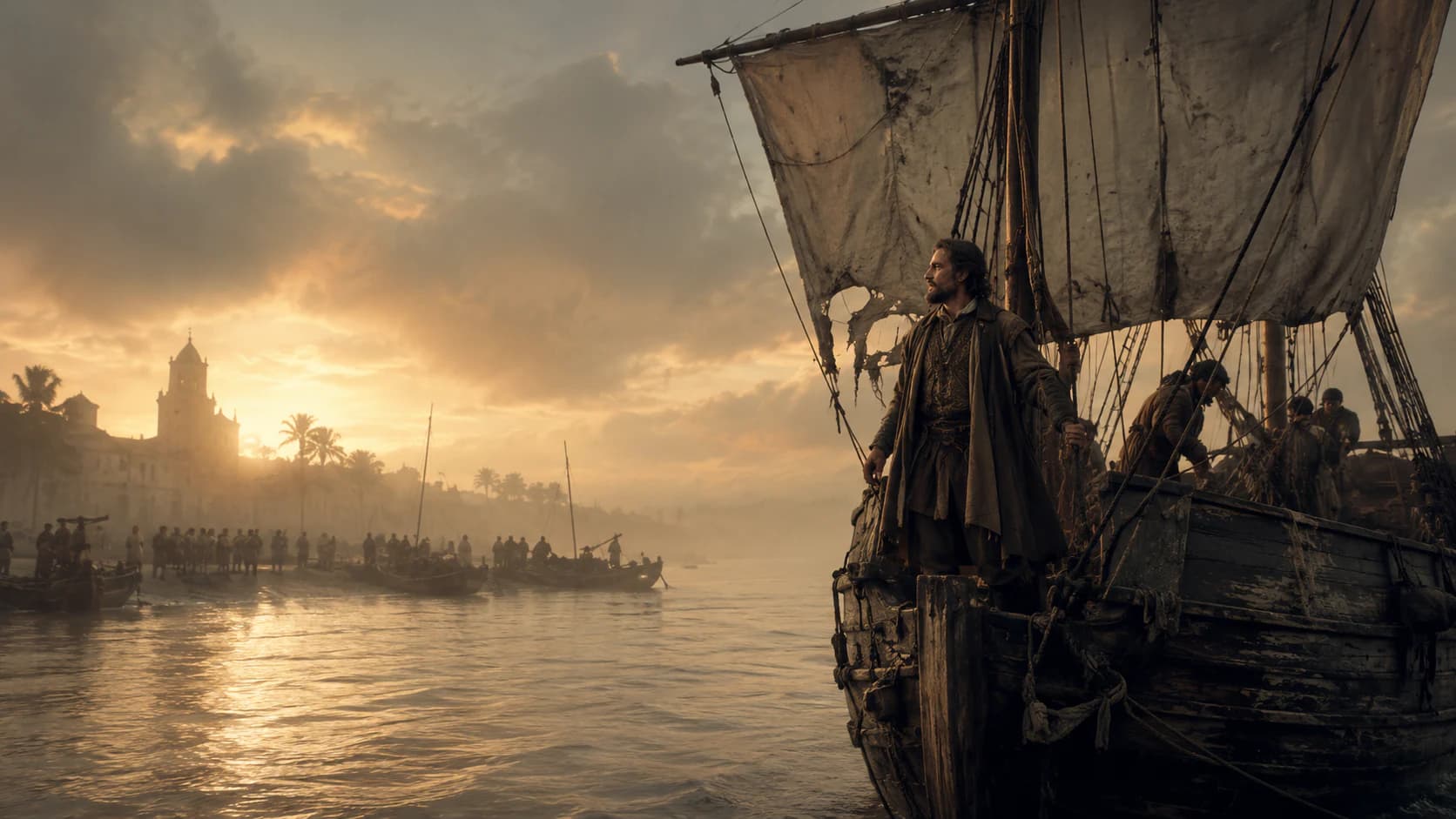
Victoria reached Sanlucar de Barrameda on 6 September 1522 and Seville soon after. Only eighteen European survivors returned on the ship from the roughly 240 men who had departed with the fleet; a small number of other survivors came home later by different routes. The voyage proved, in lived and measured form, that the oceans connected around the globe and that the Earth was larger than many Europeans had imagined. It also exposed the staggering human cost of early global exploration. Elcano's name deserves its place beside Magellan's because the historical achievement was not only opening a route, but bringing the route full circle.
Completion, not just ambition, is what turns a bold idea into a lasting achievement.
1522–1525
Recognition and reward
Emperor Charles V rewarded Elcano with a pension and a coat of arms showing spices, a globe and the Latin motto Primus circumdedisti me, commonly rendered as You were the first to circle me. The honor recognized both navigation and imperial value. The cargo of cloves helped prove that the voyage could be economically meaningful, even after catastrophic losses. Yet Elcano's reward did not turn him into a comfortable courtier. The Pacific and the spice trade still called, and Spain still wanted a secure route to Asian wealth. His experience made him too valuable to leave ashore.
Recognition may mark success, but it rarely ends the drive to continue exploring.
1525–1526
Final expedition
Elcano sailed again in 1525 with the Loaisa expedition, another attempt to reach and secure Spain's position in the Moluccas. The voyage was grimly familiar: storms, sickness, navigational danger and attrition. Elcano died in the Pacific on 4 August 1526, far from the Basque coast where his maritime life had begun. His legacy is sometimes overshadowed by Magellan, and the claim that he was the first person ever to circumnavigate can be complicated by debates about enslaved Malay interpreter Enrique and others' routes. The safest and still extraordinary statement is this: Elcano captained the ship that completed the first recorded circumnavigation of the globe. To ask why Juan Sebastián Elcano was important is to see that history often remembers the visionary who begins, but survival may depend on the commander who finishes.
Even unfinished final chapters cannot diminish a life that has already changed how the world is understood.