Complete chronology
Full overview and deeper context for every journey step.
1166–1185
Youngest son
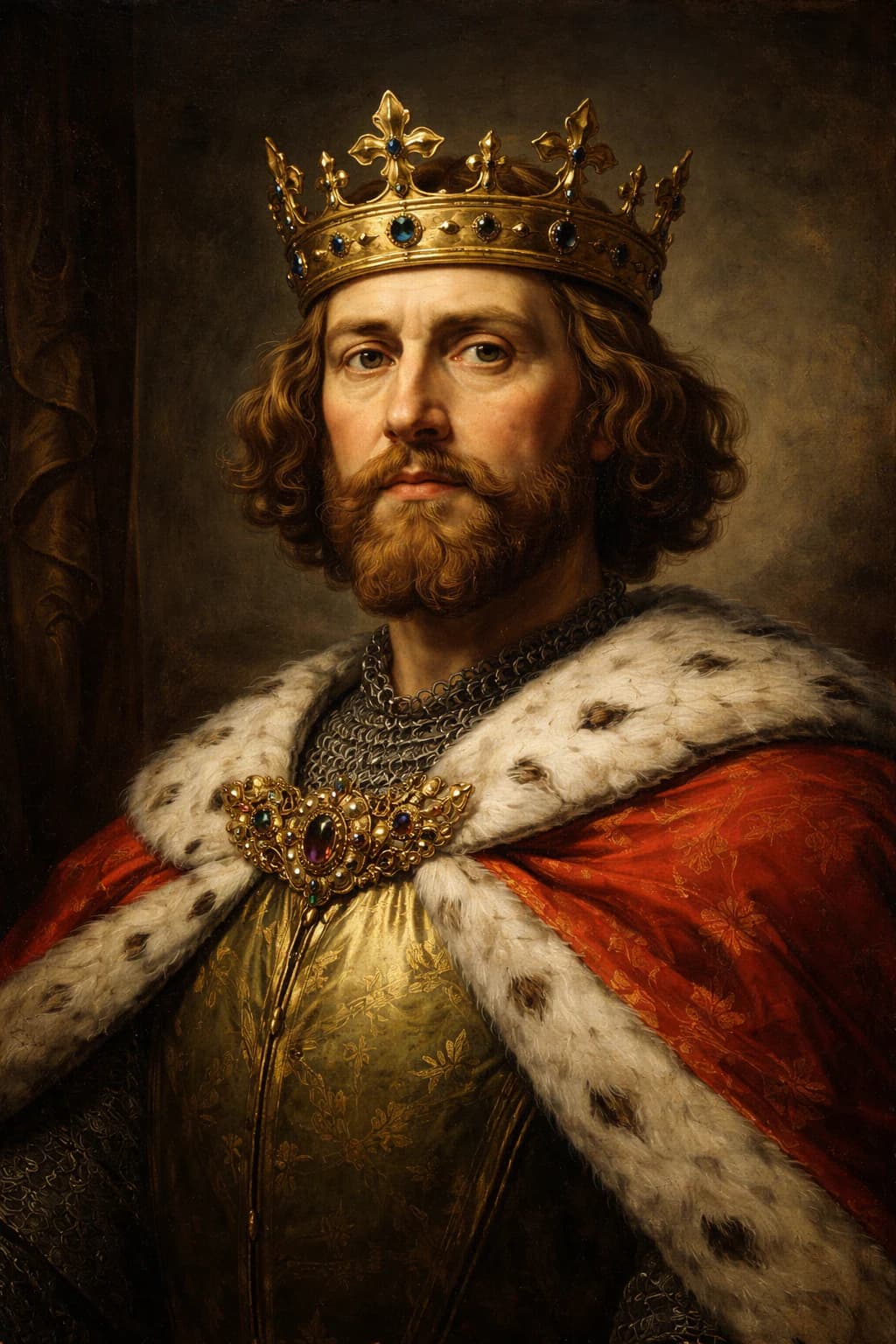
John was born on 24 December 1166, the youngest son of Henry II of England and Eleanor of Aquitaine. His family ruled a vast Angevin collection of lands stretching from England into western France, but John was not expected to inherit the central prize. His nickname Lackland captured the problem of a royal son with ambition but limited prospects. He grew up in one of Europe's most formidable and destructive families, watching his father, mother and brothers fight over territory, authority and inheritance. That atmosphere taught him political calculation early, but it also left him with a reputation for insecurity, opportunism and betrayal.
Those raised outside the line of power may develop a sharper, sometimes uneasy drive to secure it.
1185–1199
Struggles for position
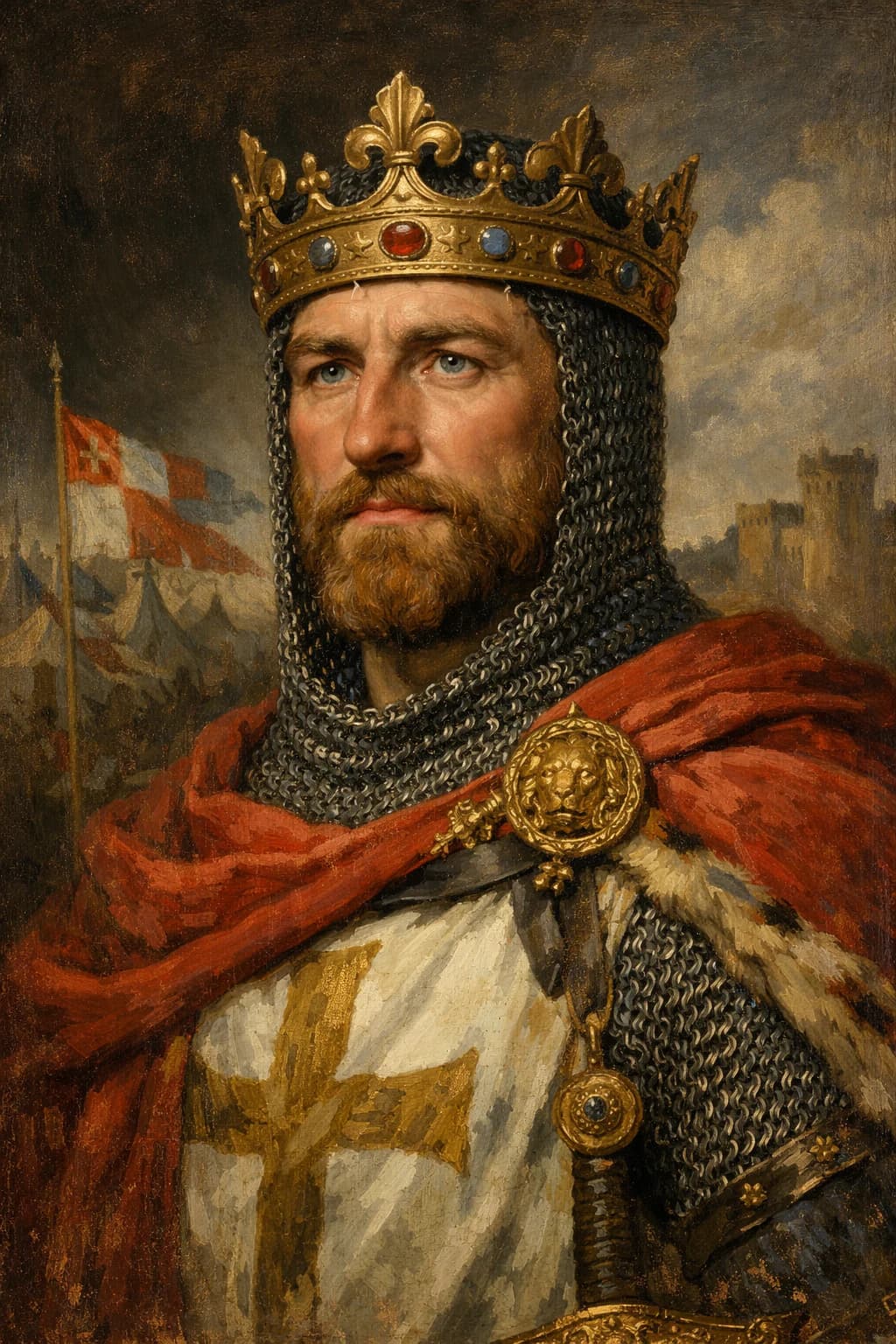
John's early career did little to inspire trust. Henry II tried to provide for him through marriage and lordship, including an attempted role in Ireland that ended poorly. During the family wars of Henry's final years, John shifted loyalties in ways that made him seem unreliable even by Angevin standards. Under Richard I, he was granted lands and influence but conspired during Richard's captivity after the Third Crusade. Richard eventually forgave him, but the pattern was set. John was clever, energetic and politically aware, yet he repeatedly damaged the confidence of those whose support he needed.
Early instability in power struggles can leave lasting marks on a leader’s style and reputation.
1199
Becoming king
Richard I died in 1199, and John became king, but the succession was not simple. Arthur of Brittany, son of John's deceased elder brother Geoffrey, had a plausible claim in parts of the Angevin world, especially Anjou, Maine and Brittany. John needed to hold together cross-Channel lordships that depended on military credibility, feudal loyalty and careful diplomacy with Philip II of France. Instead, his early reign quickly generated suspicion. His marriage to Isabella of Angouleme disrupted powerful interests, and his treatment of Arthur after capturing him in 1202 became politically disastrous. Arthur disappeared, widely believed murdered on John's orders or with his knowledge. Whether every detail is recoverable or not, the damage to John's legitimacy was severe.
Inheriting power is easier than securing it.
1200–1204
Loss of territories
John's greatest strategic failure was the loss of Normandy in 1204. Philip II of France exploited John's political weakness, military mistakes and alienated vassals to dismantle the Angevin position north of the Loire. Normandy had been central to English royal power since 1066; losing it was more than a territorial setback. It severed aristocratic cross-Channel interests, reduced royal prestige and forced English politics to become more insular and financially pressured. John spent the next decade trying to gather money and alliances to recover what he had lost. The effort would help provoke the crisis that destroyed his authority at home.
Military failure can quickly translate into political vulnerability.
1205–1214
Rising tensions
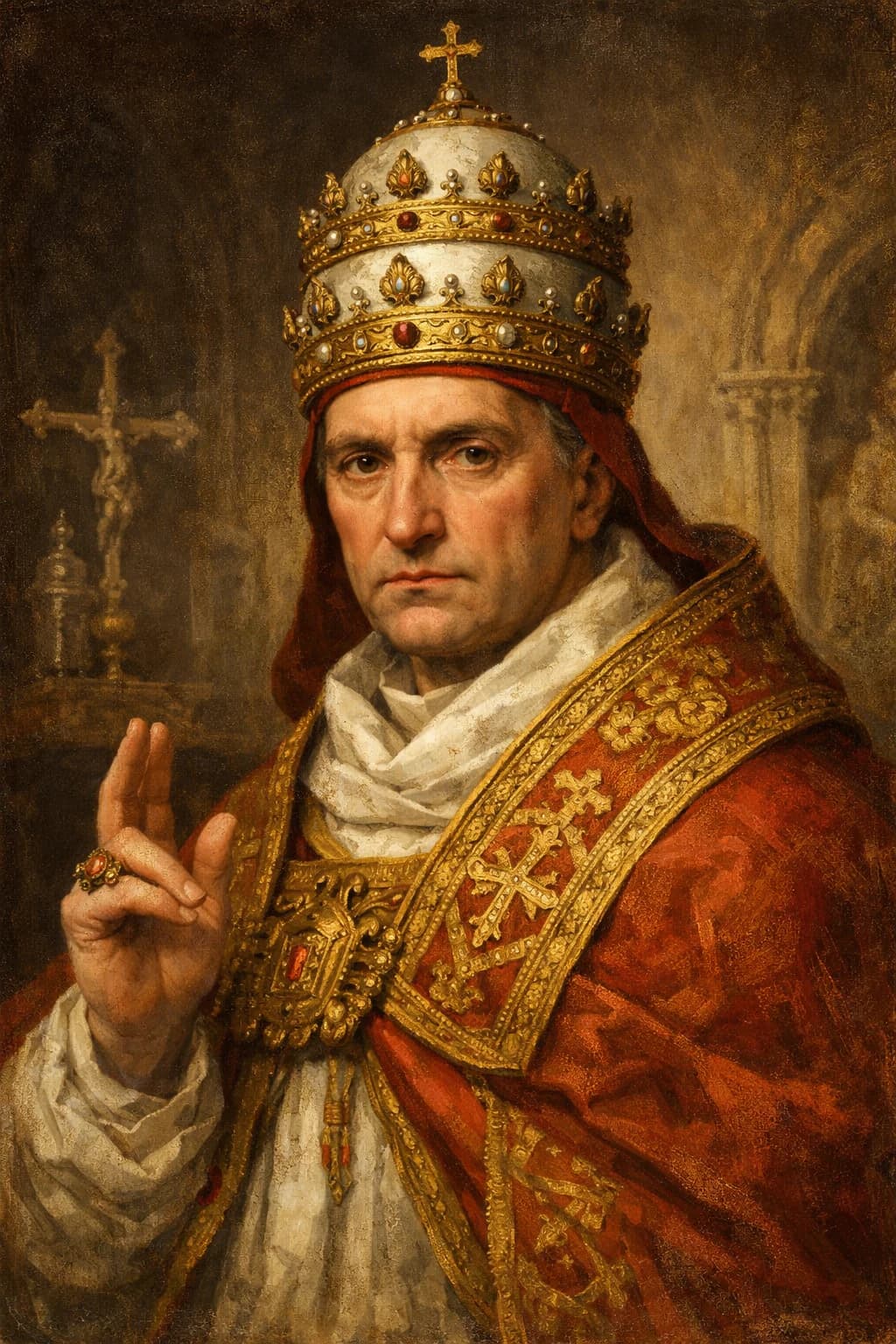
John's problems were not only military. His dispute with Pope Innocent III over the appointment of Stephen Langton as Archbishop of Canterbury led to an interdict on England in 1208 and John's excommunication in 1209. John eventually submitted in 1213, accepting England as a papal fief, a move that helped him diplomatically but humiliated him politically. Meanwhile, his government extracted scutage, fines, reliefs and arbitrary payments with unusual intensity. John was an able administrator in the narrow sense: he knew how to make royal government produce money. But ability without trust became tyranny in the eyes of many barons. When his grand coalition against France failed at Bouvines in 1214, opposition hardened.
Efforts to regain strength can backfire if they erode trust among key supporters.
1215
Baronial revolt
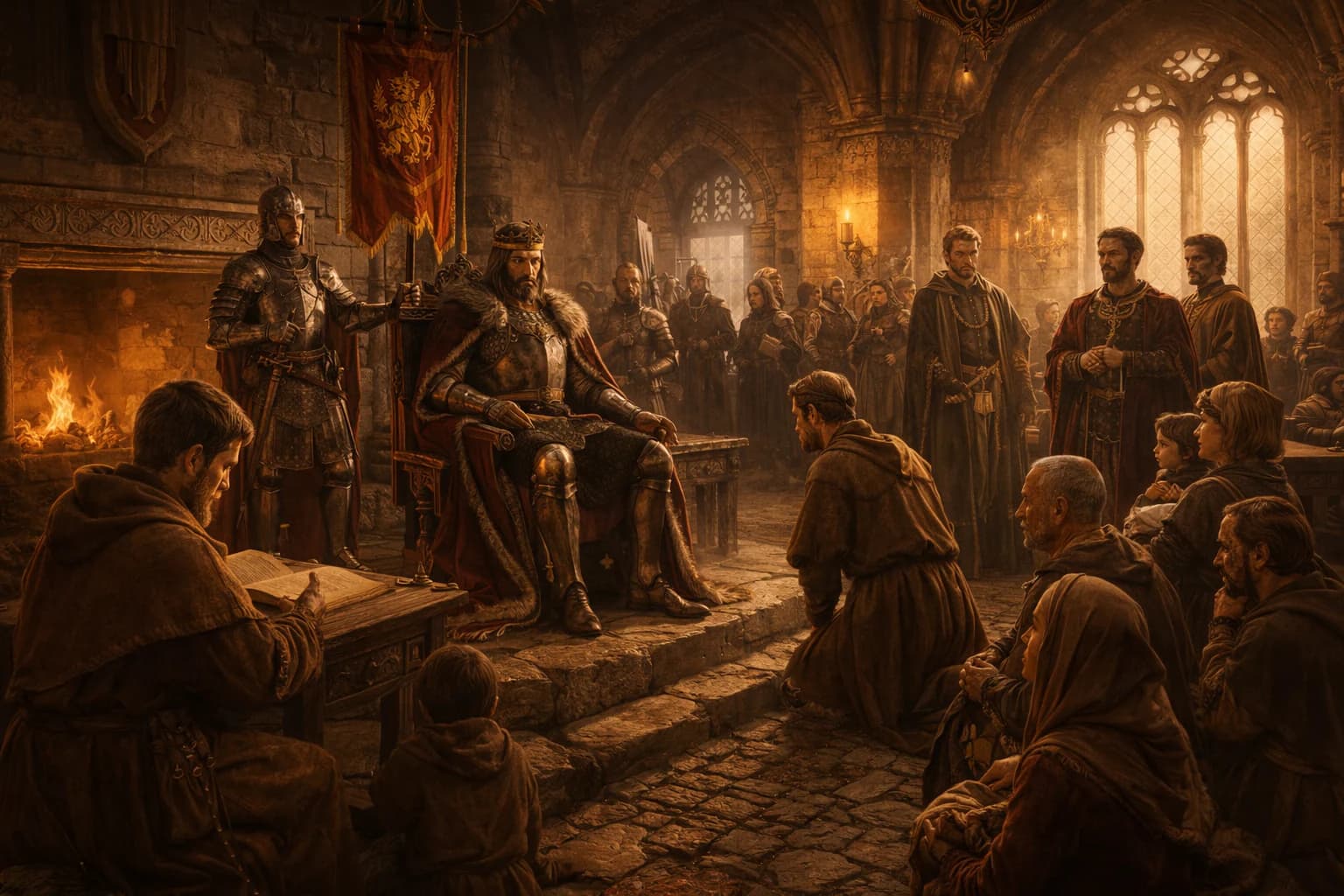
The rebellion against John was not a modern democratic uprising. It was led by barons defending aristocratic liberties, property and custom. Yet their grievances touched broader questions about lawful rule. They objected to arbitrary fines, abusive feudal incidents, interference with inheritance, mercenary violence and a king who seemed to punish enemies without restraint. London opened its gates to the rebels in 1215, giving them leverage John could not ignore. Negotiation became unavoidable because the king had lost the confidence of a critical part of the political nation. Magna Carta emerged from this immediate crisis, not from abstract constitutional theory.
When opposition unites, even strong authority must adapt or yield.
1215
Magna Carta
Magna Carta was sealed at Runnymede in June 1215. It was a peace settlement, not a finished constitution, and many clauses dealt with technical feudal grievances. Its later fame rests especially on broader principles: the king should not levy certain payments without common counsel, justice should not be sold or delayed, and free men should not be punished except by lawful judgment or the law of the land. The famous language did not apply equally to everyone in 1215, and most people in England were not free barons. Still, the document planted a powerful idea in political memory: royal authority could be written down, limited and judged.
Compromise under pressure can create ideas that outlast the conflict itself.
1215–1216
Renewed conflict
John had no intention of living under Magna Carta if he could escape it. Pope Innocent III annulled the charter, calling it imposed by force, and civil war resumed. The rebels invited Prince Louis of France, the future Louis VIII, to claim the English throne, turning baronial revolt into an international crisis. John fought with energy and some military skill, but his authority was already poisoned. In 1216, while campaigning in eastern England, he lost baggage and treasure in the Wash, a detail that became symbolic even if later retellings embellished it. His reign was collapsing into war, invasion and distrust.
Agreements lose power quickly when trust behind them collapses.
1216
End and legacy
John died at Newark Castle on 19 October 1216, leaving the throne to his nine-year-old son Henry III. The minority government reissued Magna Carta to win support against Louis and the rebel barons, transforming John's failed peace into a tool of royal survival. Over time, reissues and reinterpretations made the charter a touchstone for arguments about due process, taxation by consent and limits on arbitrary power. The mythology sometimes outruns the medieval reality, but the legacy is real. To ask why King John was important is to see how a disastrous reign produced one of the most durable political symbols in history. John did not believe in constitutional liberty. His failure helped make it imaginable.
Even troubled leadership can leave behind foundations for lasting change.