Complete chronology
Full overview and deeper context for every journey step.
1808
Frontier beginnings
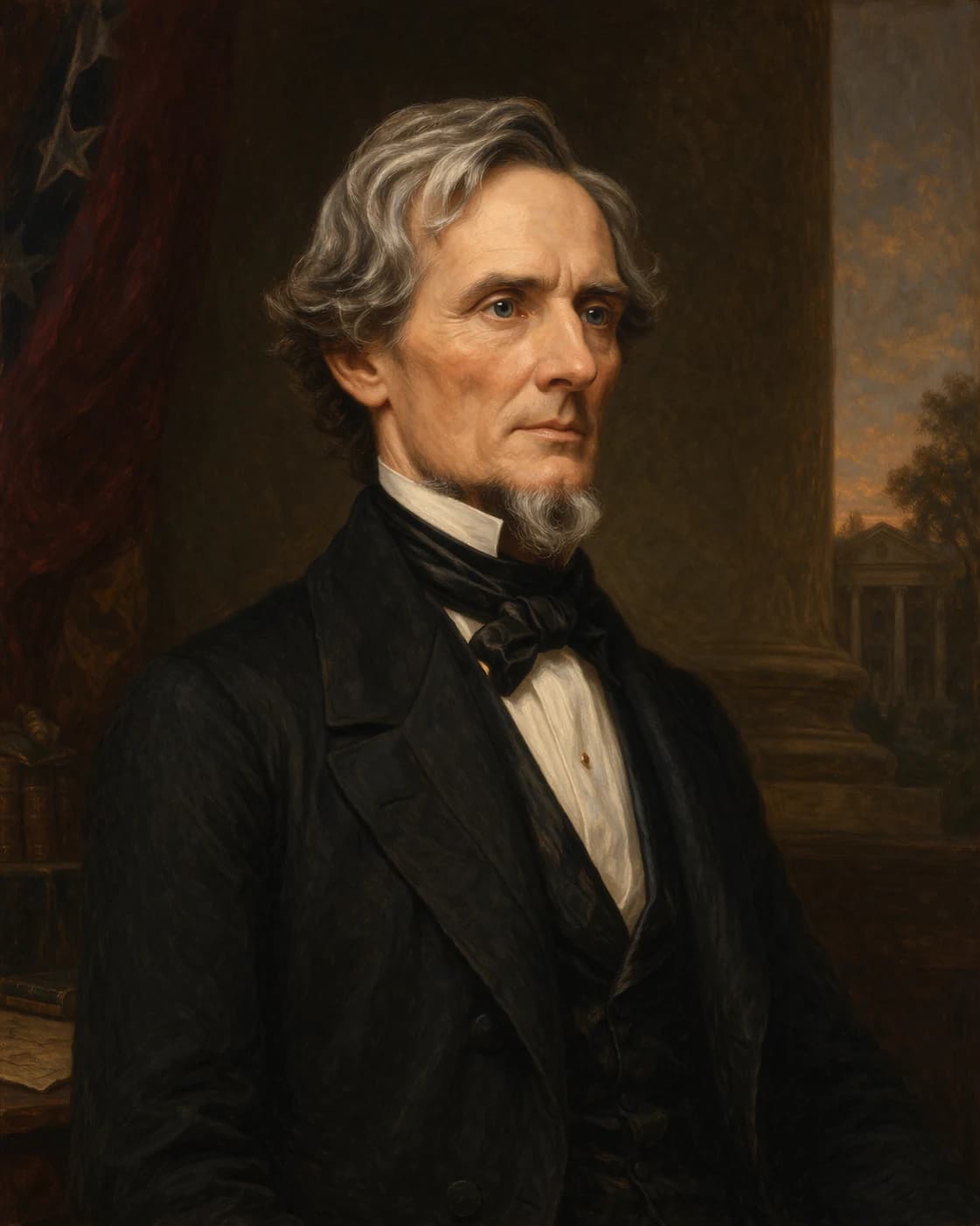
Jefferson Davis was born on 3 June 1808 in Kentucky, not far in time or place from Abraham Lincoln's birth, but his life carried him into a very different political world. His family moved to Mississippi, where cotton wealth, plantation hierarchy and enslaved labor shaped the society around him. Davis grew up absorbing the assumptions of the slaveholding South: that property rights included human ownership, that honor demanded resistance to outside interference, and that a state or region could command deeper loyalty than the nation. Those beliefs did not make his later choices inevitable, but they made them intelligible. Davis would become a national officer, senator and cabinet secretary before choosing a breakaway republic built to preserve slavery.
His early environment quietly laid the foundation for a worldview that prioritized regional loyalty over national unity.
1824–1828
Military education
At the United States Military Academy, Davis entered the machinery of national service. He was not a brilliant cadet, but West Point gave him discipline, technical training and a network of officers who would later divide between Union and Confederate commands. The academy also taught him the importance of organization, logistics and hierarchy. Yet national military education did not dissolve regional attachment. Davis left West Point with a soldier's respect for command and a Mississippian's commitment to the social order that had formed him. That combination would later make him a forceful but difficult wartime president.
His formal training equipped him for leadership, but it never displaced his attachment to regional identity.
1830s–1840s
Soldier and planter
Davis resigned from the army in 1835 and entered plantation life in Mississippi, supported by his brother Joseph and by the labor of enslaved people. His first marriage, to Sarah Knox Taylor, daughter of future president Zachary Taylor, ended when she died of malaria only months after the wedding. Davis later married Varina Howell, whose intelligence and political awareness would matter throughout his public life. The Mexican-American War gave him national fame. Commanding the Mississippi Rifles, he fought with distinction at Buena Vista in 1847 and was wounded. The war confirmed his belief in martial honor and expansion, while also advancing the territorial questions that would soon tear the United States apart.
Success in battle helped transform him from a regional figure into a nationally recognized leader.
1845–1857
Entering politics
Davis entered national politics as a Mississippi Democrat, serving briefly in the House, then in the Senate, and from 1853 to 1857 as Secretary of War under Franklin Pierce. He was capable in office. He improved military administration, supported surveys for a transcontinental railroad and backed expansionist policies suited to the ambitions of the age. But his nationalism was conditional. He defended states' rights most fiercely when the institution at stake was slavery, and he argued that slaveholders had constitutional protection in the territories. Davis was not a marginal agitator shouting from outside government. He was an insider using national office to defend a sectional system.
His political career deepened his belief that national power should be limited when it conflicted with regional systems.
1861
Break from Union
The election of Abraham Lincoln in 1860 convinced many white southerners that slavery's political future was threatened. Mississippi seceded in January 1861, and Davis delivered a farewell speech to the Senate that framed secession as a constitutional right rather than rebellion. He insisted he was following his state, not seeking disunion for its own sake. Yet the secession documents of Mississippi and other states made the central issue plain: the protection of slavery and white supremacy. Davis's departure from the Senate was therefore not just a personal act of loyalty. It marked his passage from the United States government into a new regime designed to preserve the power of enslavers.
His departure from the Senate symbolized a complete shift from national service to regional allegiance.
1861–1862
Leading the Confederacy
Davis was chosen as provisional president of the Confederate States in February 1861 and later elected to a six-year term. He preferred military command and did not seek the presidency with obvious enthusiasm, but he accepted it as duty. The job was almost impossible from the start. The Confederacy needed central authority to raise armies, tax, conscript, control railroads and supply soldiers, while its ideology celebrated state sovereignty and resistance to central power. Davis worked intensely and often intelligently, but he was prickly, defensive and slow to forgive criticism. He involved himself deeply in strategy, sometimes usefully, sometimes intrusively. The Confederacy needed unity; Davis often generated loyalty and resentment at the same time.
Leadership in crisis revealed both his strengths in resolve and his difficulty in managing competing interests.
1863–1865
Mounting pressures
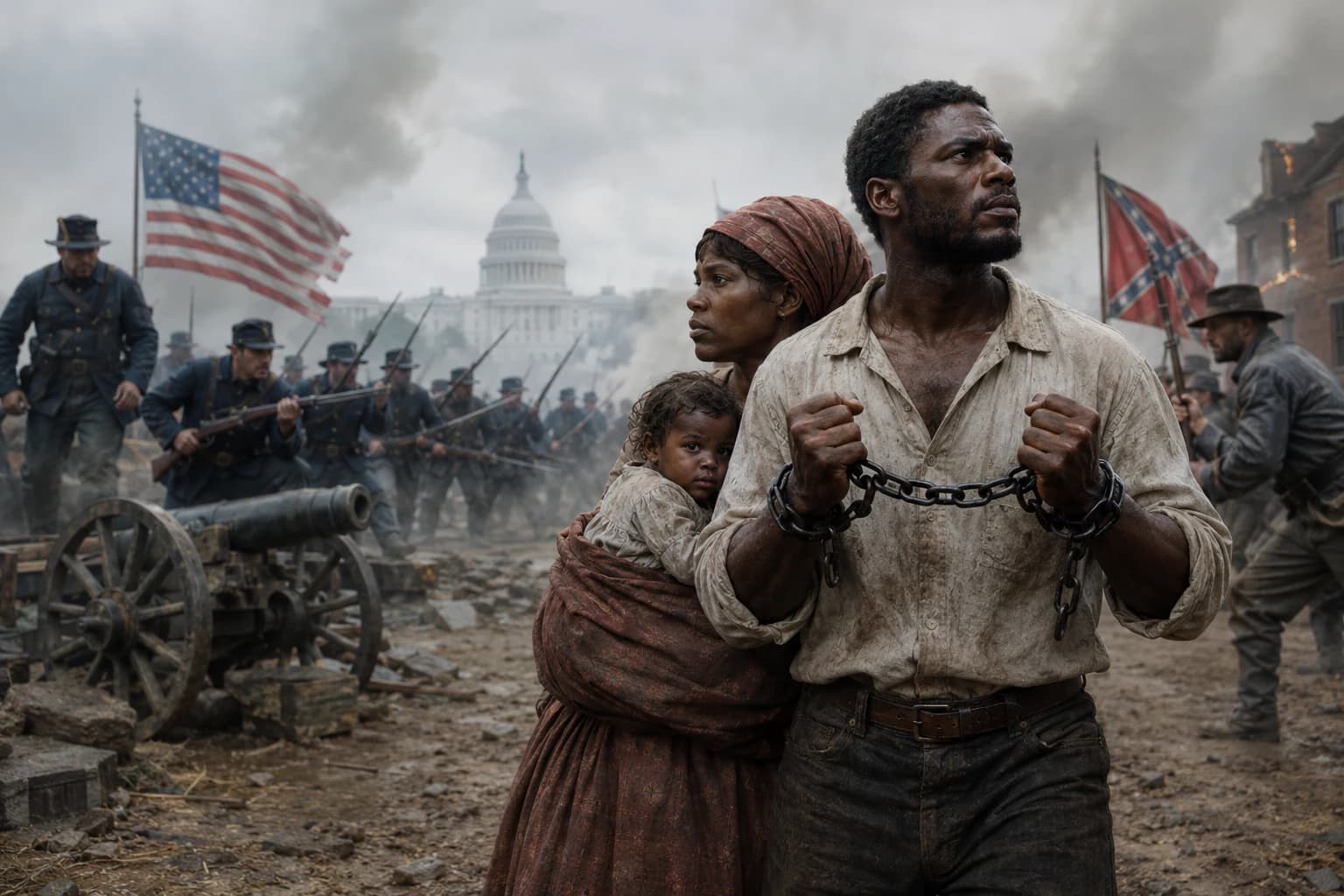
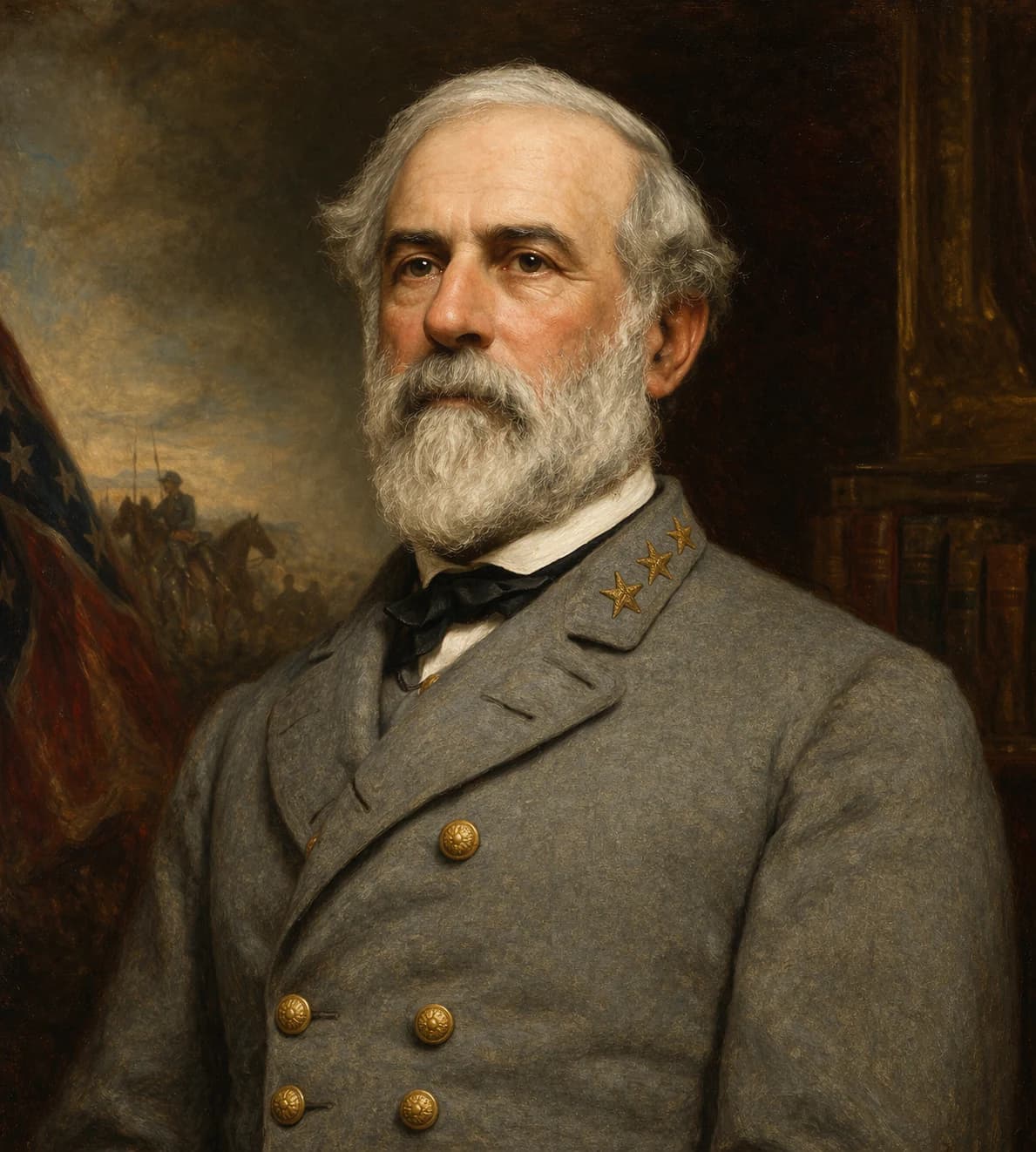
The war revealed how fragile the Confederate project was. Victories in Virginia could not overcome Union advantages in population, industry, naval power and finance. After Gettysburg and Vicksburg in 1863, the strategic balance worsened. Davis faced food shortages, inflation, desertion, state governors resisting central demands and critics who accused him of favoritism or incompetence. His relationship with generals was uneven: he backed Robert E. Lee strongly, clashed with Joseph E. Johnston and struggled to coordinate far-flung theaters. The Confederacy claimed to defend liberty while conscripting men, suspending rights and relying on enslaved labor. Davis was trapped by the needs of modern war and the ideology of the state he led.
The pressures of war highlighted the tension between ideological principles and practical governance.
1865
Defeat and capture
Richmond fell in April 1865, and Davis fled with members of his government as Confederate armies collapsed. Even after Lee surrendered at Appomattox, Davis considered continuing resistance from the Trans-Mississippi or beyond, but the practical basis for Confederate independence had disappeared. Union cavalry captured him near Irwinville, Georgia, on 10 May 1865. He was imprisoned at Fort Monroe and indicted for treason, though he was never tried. His capture became a symbolic closing of the rebellion. The government he had led vanished, slavery was destroyed by war and constitutional amendment, and the United States faced Reconstruction rather than negotiated separation.
His capture marked the moment when the Confederate vision definitively gave way to a restored Union.
1865–1889
Later years and memory
Davis was released on bail in 1867 and spent his later life defending secession and the Confederate cause. His book The Rise and Fall of the Confederate Government argued constitutional theory at great length while minimizing slavery's centrality. That insistence became part of the Lost Cause tradition, which recast Confederate defeat as noble resistance rather than a failed war to preserve human bondage. Davis died in 1889, still unreconciled in principle to the verdict of the war. His historical importance is therefore severe and uncomfortable. To ask who Jefferson Davis was is to confront the political intelligence, administrative capacity and personal determination placed in service of a republic founded to protect slavery. His legacy is not merely that he lost, but that he helped give an ideological afterlife to the cause that lost with him.
His legacy endures not as a single story but as a reflection of competing interpretations of the past.