Complete chronology
Full overview and deeper context for every journey step.
1633–1649
Younger Stuart prince
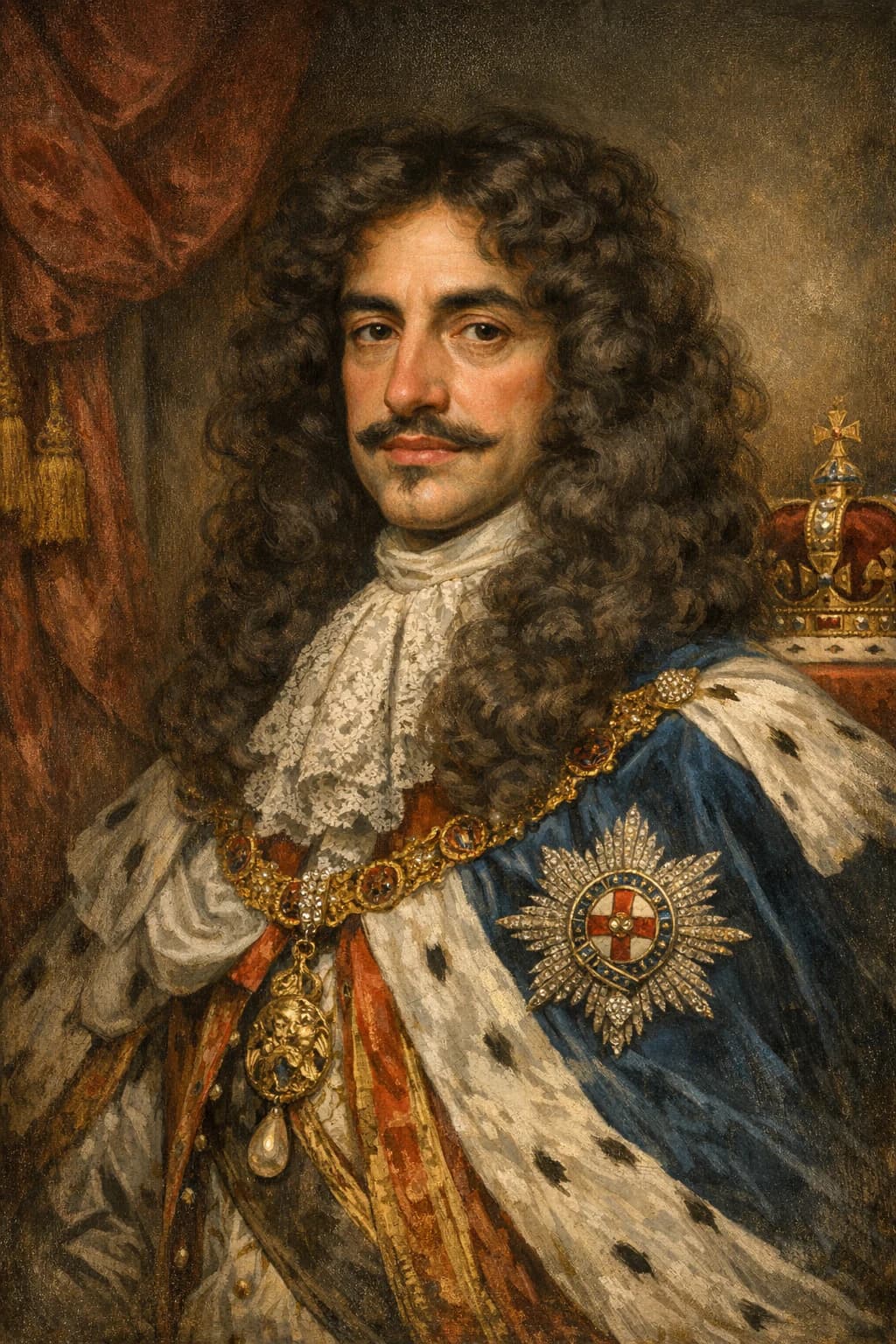
James Stuart was born on 14 October 1633, the second surviving son of Charles I and Henrietta Maria. His childhood was broken open by the Wars of the Three Kingdoms. He was held by Parliament at St James's Palace before escaping to the continent in 1648, and his father's execution in January 1649 became the defining trauma of his political imagination. His elder brother Charles learned flexibility from disaster; James learned suspicion, discipline and the need for authority. His later conversion to Catholicism, probably in the late 1660s or early 1670s, gave him private coherence but made him politically explosive in kingdoms where Protestant identity was tied to national security.
The same catastrophic experiences can produce very different characters depending on the temperament they meet.
1650s–1660s
Military commander
James's military reputation was not imaginary. During exile he served in French and Spanish armies, gaining practical experience and a taste for command. After the Restoration in 1660, he became Lord High Admiral and played a major role in naval administration and war against the Dutch. He showed personal courage at Lowestoft in 1665 and Solebay in 1672, and he took naval reform seriously. Supporters could plausibly present him as a competent, disciplined alternative to Charles II's more theatrical court style. But the habits that serve a commander can mislead a monarch. James valued obedience, clarity and direct action in a political culture that required ambiguity and consent.
Military courage and governing competence are distinct qualities that are often and dangerously confused.
1678–1681
Surviving exclusion
The Exclusion Crisis of 1679 to 1681 made James's Catholicism the central problem of English politics. Whig leaders argued that a Catholic king would threaten Protestant liberty, parliamentary rights and independence from France. Tory opponents defended hereditary monarchy, fearing that changing the succession would reopen civil-war chaos. Charles II dissolved successive Parliaments before exclusion could become law, then governed his final years without one after Whig strength collapsed. James survived, but he drew the wrong lesson. He saw providence and hereditary right vindicated. Many others saw a Catholic heir saved only by his brother's political skill.
Being saved by someone else's courage can create an illusion of personal invulnerability.
1685
Accession
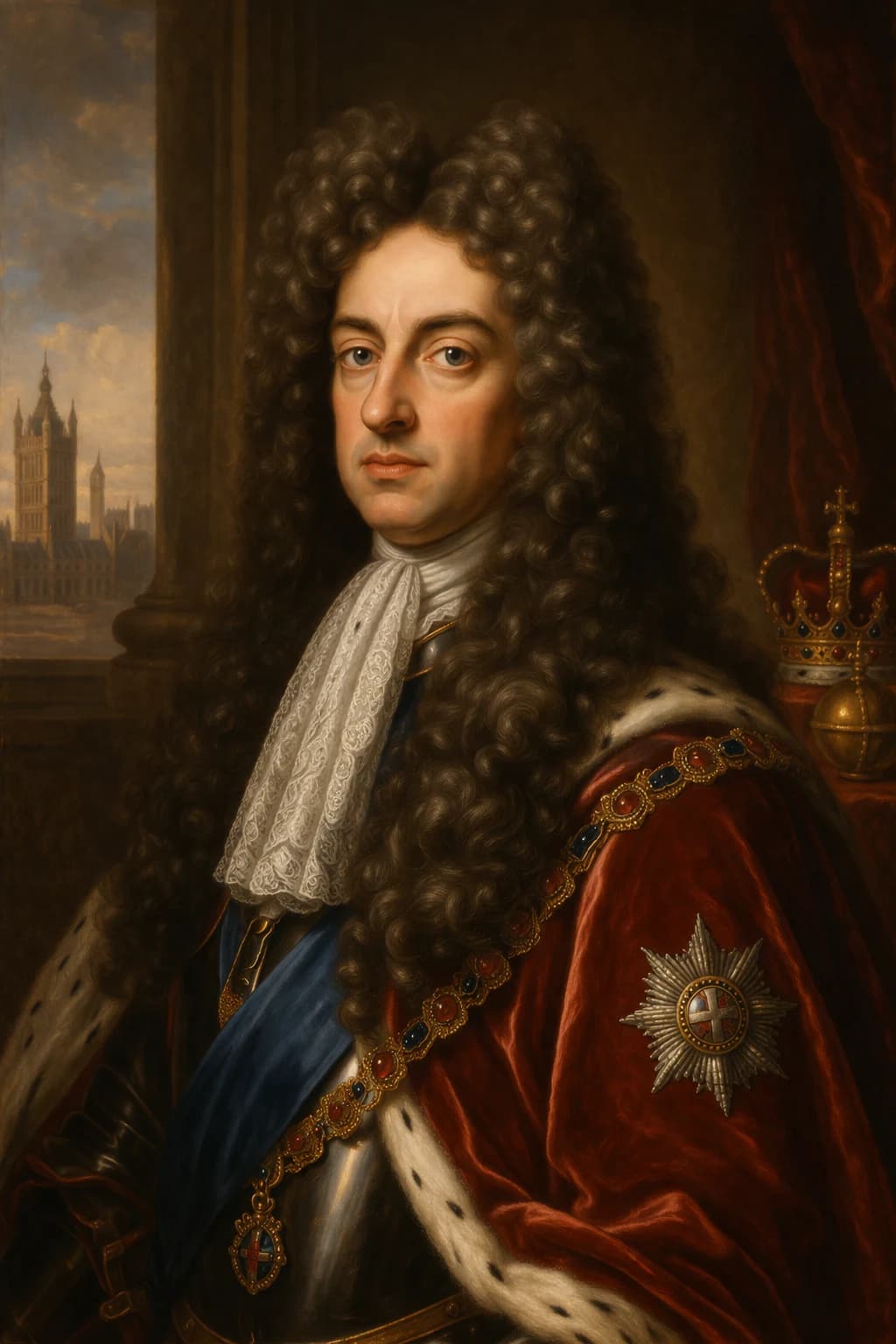
James II's accession in February 1685 was far smoother than later memory can suggest. The Tory gentry supported hereditary succession, many people were tired of Whig agitation, and James's seriousness looked reassuring after Charles II's charm and evasions. His first Parliament was strongly loyal. The Monmouth Rebellion, led by Charles's illegitimate Protestant son, was defeated at Sedgemoor in July 1685, the last pitched battle fought on English soil. James then allowed punishment to become spectacle. The Bloody Assizes under Judge Jeffreys sentenced many rebels to death or transportation, convincing observers that the new king's justice could look like revenge.
Beginning a reign with genuine popular goodwill is an extraordinary advantage that can be squandered with remarkable speed.
1685–1687
Catholic promotion
James's religious policy had a genuine principle at its core: he wanted liberty for Catholics and Protestant dissenters excluded by the penal laws and Test Acts. The political method made it explosive. He used dispensing and suspending powers to bypass statutes, appointed Catholics to civil and military office, expanded a standing army and tried to remodel local government and Parliament to secure compliance. His Declaration of Indulgence in 1687 offered toleration, but many Anglicans saw it as arbitrary rule disguised as liberty. James was pursuing a cause that later generations would recognize as religious freedom through methods his own political nation associated with absolutism.
Moving faster than the political environment can absorb change can destroy the coalition that made the movement possible.
1688
Seven Bishops trial
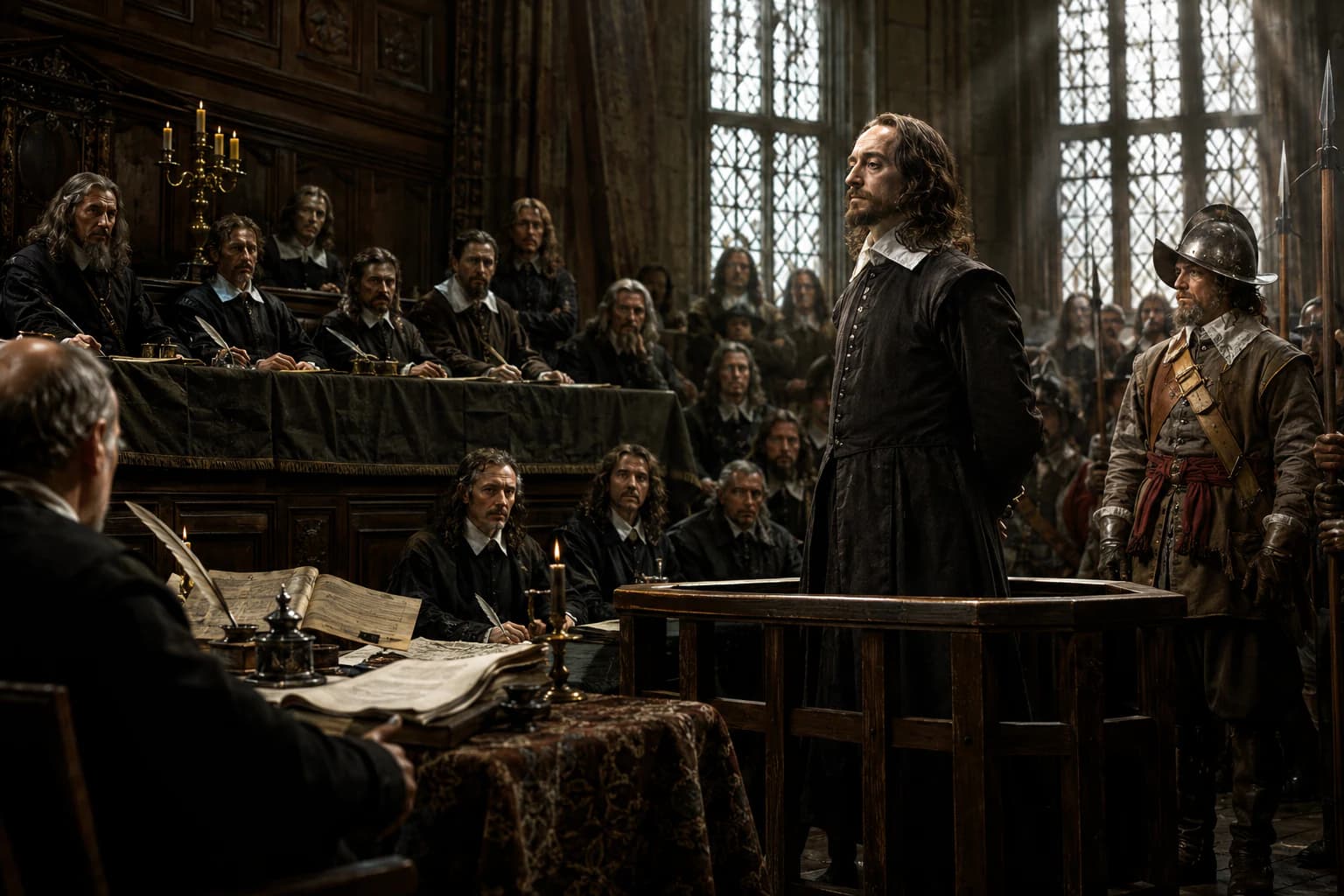
In 1688 James ordered his Declaration of Indulgence to be read from Anglican pulpits. Seven bishops, including Archbishop William Sancroft, petitioned against the order, arguing that the king's suspension of law by prerogative was illegal. James had them prosecuted for seditious libel. Their acquittal on 30 June was greeted with public celebration and even cheers in the army. On the same day, a group of Protestant nobles and bishops sent an invitation to William of Orange, James's Dutch son-in-law and the husband of Mary, James's Protestant daughter. The sequence was devastating. The church party that had defended monarchy was now resisting the king.
A ruler who prosecutes the bishops of his own established church for legal petitions has fundamentally misread his own position.
November–December 1688
Glorious Revolution
William landed at Torbay on 5 November 1688 with a major Dutch force and a carefully framed promise to defend English liberties. James still had an army, but its loyalty dissolved as officers and nobles defected. Even John Churchill, later Duke of Marlborough, abandoned him. James tried negotiation, then sent his queen and infant son to France, then fled himself on 11 December. Captured briefly, he was allowed to escape, since William preferred a vacant throne to a royal prisoner. The revolution was called Glorious by its supporters because it succeeded with little bloodshed in England, though its consequences in Scotland and Ireland would be far more violent.
A regime that has lost the loyalty of those who enforce it can collapse without a single major confrontation.
1689–1701
Exile and last attempts
James made one serious attempt to recover his kingdoms, landing in Ireland in 1689 with French support and strong backing from Irish Catholics hoping to reverse Protestant land and political dominance. The Williamite-Jacobite war culminated in the Battle of the Boyne on 1 July 1690, where William III defeated James's forces. James left Ireland for France soon after, damaging his reputation among supporters who had fought on. He lived at Saint-Germain-en-Laye under Louis XIV's protection, maintaining a court and a claim but not a realistic route back to power. He died in September 1701. Jacobitism, the movement to restore his line, survived him for decades.
A king who flees battle twice is remembered for the fleeing rather than the fighting.
Post-1701
The revolution's meaning
James II's fall produced one of the decisive constitutional settlements in British history. The Bill of Rights of 1689 condemned suspending and dispensing with laws by royal authority, required parliamentary consent for taxation and standing armies, and asserted parliamentary speech and election principles. The settlement also confirmed that the monarch had to be Protestant, a requirement later reinforced by the Act of Settlement. James's defenders saw usurpation and betrayal; his opponents saw deliverance from arbitrary Catholic monarchy. Both reactions mattered, because Jacobite loyalty remained a real political force. To ask why James II was important is to see how a failed king helped define the limits of kingship. His reign made modern constitutional monarchy more likely by demonstrating what the political nation would no longer tolerate.
A ruler's most significant political act can be the catastrophic failure that forces a better system into existence.