Complete chronology
Full overview and deeper context for every journey step.
1884–1905
Military upbringing
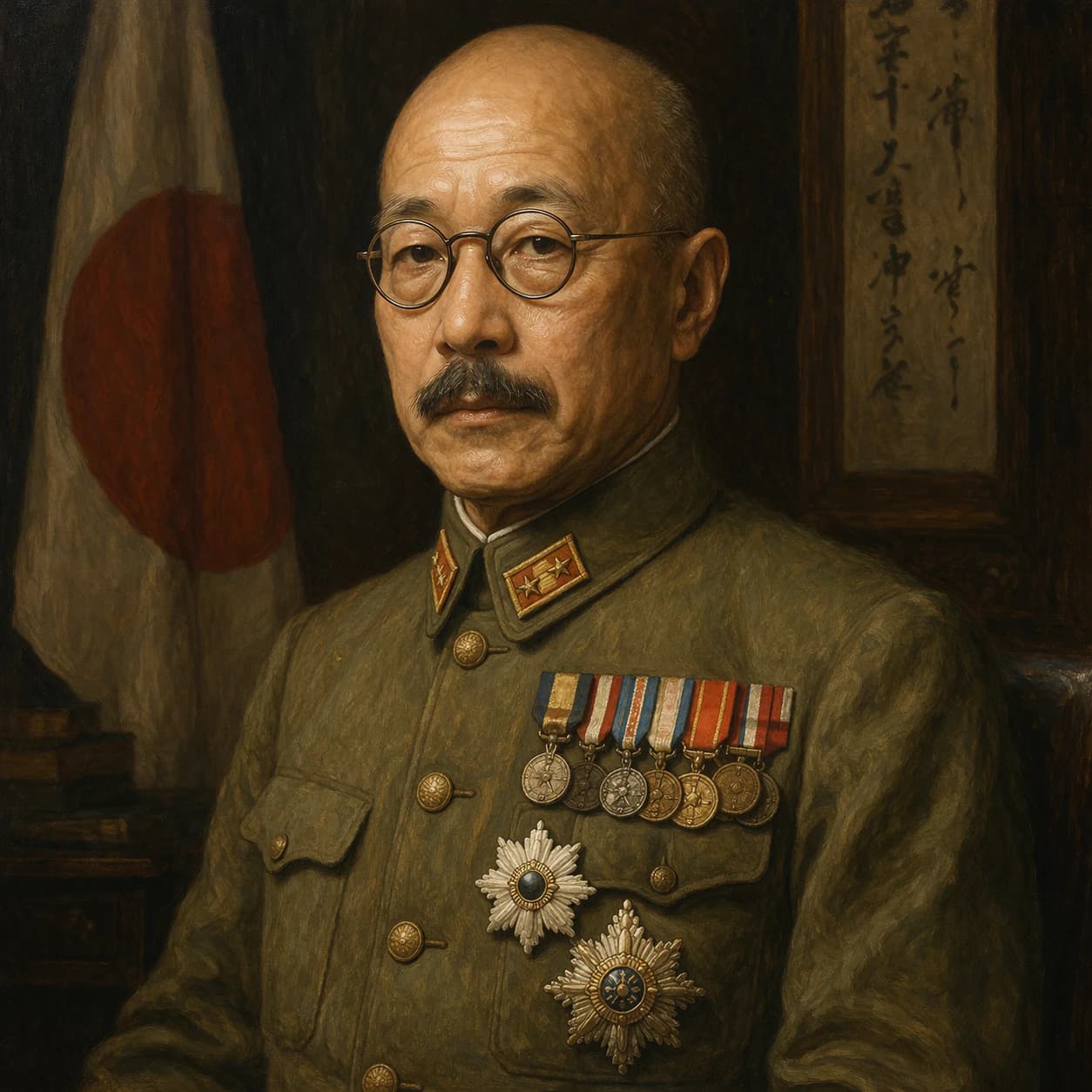
Tojo grew up in the shadow of the Meiji state's military rise. His father was an army officer, and the household valued duty, discipline, hierarchy, and loyalty to the emperor. Tojo was not remembered as a dazzling cadet. His strengths were endurance, administrative seriousness, and strict obedience to institutional norms. Those traits carried him through the military academy and into a career shaped by staff work rather than battlefield glamour. He belonged to a generation that saw Japan's security and prestige as inseparable from military strength. The danger was that discipline became, for him, not a tool of service but a way of narrowing political imagination.
A rigid early environment can produce leaders who equate control with stability, even in complex situations.
1905–1930
Steady advancement
Tojo's path upward ran through the machinery of command: personnel, military police, planning, and staff discipline. He became associated with the Kempeitai, Japan's military police, and with a style of enforcement that prized order over flexibility. In an army increasingly willing to pressure civilian government, such men mattered enormously. They made militarism work day to day. Tojo's colleagues saw him as hardworking and uncompromising, a man who would implement policy with little tolerance for dissent. His career shows how aggressive national strategy depends not only on charismatic ideologues but on administrators who make coercion routine.
Power can be built not only through dramatic achievements but through mastery of systems behind the scenes.
1931–1937
Manchuria involvement
The occupation of Manchuria after 1931 marked a decisive step in Japan's drift toward military-dominated policy. Tojo served in the Kwantung Army's world, where officers often acted first and forced politicians to accept the consequences later. Manchuria offered resources, strategic depth, and ideological fantasy: a supposedly ordered imperial space under Japanese leadership. Tojo absorbed the lesson that bold army action could reshape national policy. He also became associated with the Control Faction, which favoured disciplined military dominance over chaotic junior-officer revolt. The method differed from radical mutiny, but the direction was still expansionist and authoritarian.
Early participation in expansionist ventures can normalize risk-taking on a national scale.
1937–1940
Rise to power
The full-scale war with China pulled Japan deeper into occupation, atrocity, resource strain, and diplomatic isolation. Tojo's rise reflected the dominance of men who believed retreat would endanger the empire and dishonour the army. As War Minister from 1940, he supported the Tripartite Pact with Germany and Italy and took a hard line against concessions that might weaken Japan's position in China. Yet Japan's strategic situation was worsening. The United States, Britain, and the Netherlands controlled resources Japan needed, especially oil. Tojo's answer was not to reconsider expansion, but to demand unity and readiness for wider conflict if diplomacy failed.
Moments of prolonged conflict often elevate leaders who promise certainty over those who advocate caution.
1941
Becoming prime minister
Tojo's appointment did not make him a dictator in the European fascist mould; Japan's wartime system still involved the emperor, court figures, navy leaders, army factions, and civilian ministers. But he became the central political face of the decision for war. The U.S. oil embargo and demands for Japanese withdrawal from China and Indochina created a crisis that Tokyo framed as existential. Tojo initially continued negotiations, but he also accepted military planning for simultaneous strikes across the Pacific and Southeast Asia. His leadership combined bureaucratic control with fatalism: if Japan could not obtain resources through diplomacy on acceptable terms, it would seize them through war.
Centralized power can speed decision-making while reducing the chance for dissenting voices to alter the course.
1941–1942
Pacific war begins
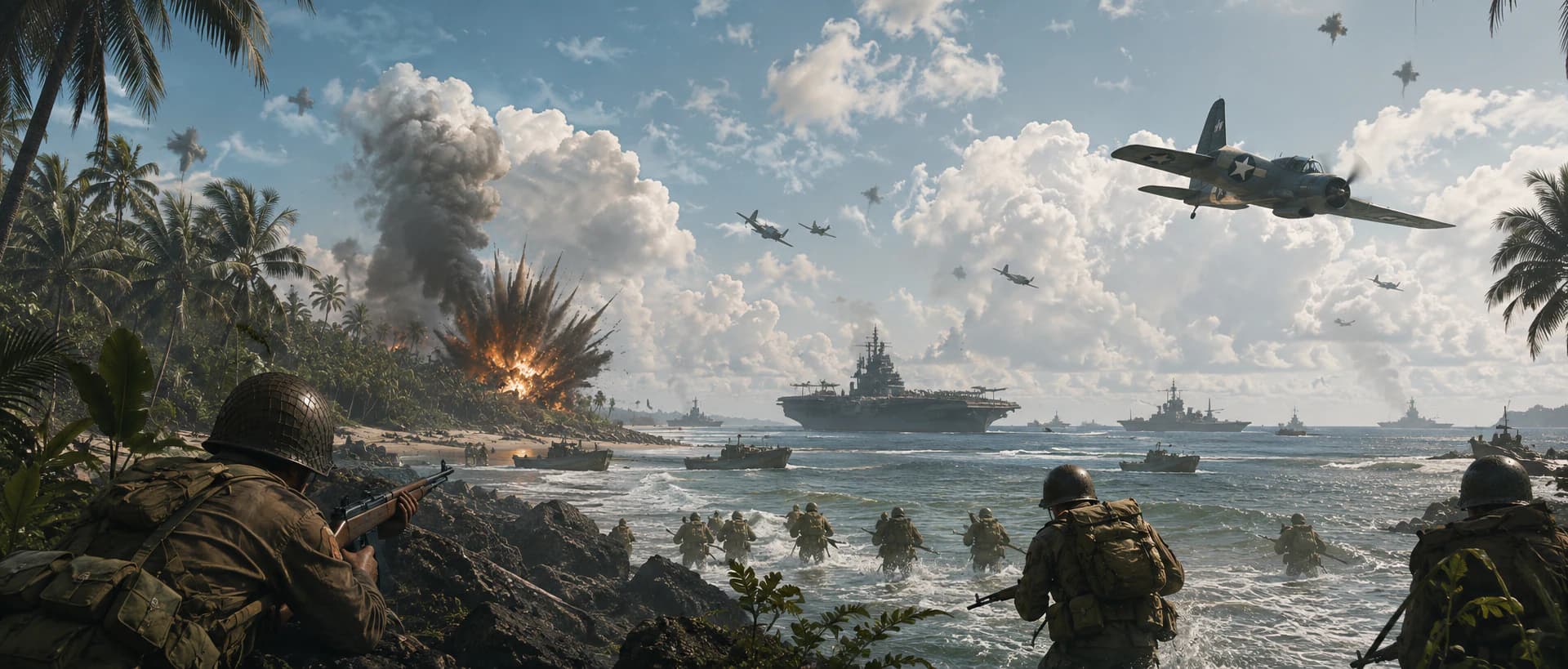
The opening months of the Pacific War seemed to vindicate Japan's gamble. Pearl Harbor damaged the U.S. Pacific Fleet, while Japanese forces took Hong Kong, Malaya, Singapore, the Philippines, the Dutch East Indies, and other territories with astonishing speed. Tojo's government presented the war as liberation of Asia from Western imperialism under the banner of the Greater East Asia Co-Prosperity Sphere. In practice, Japanese occupation often brought exploitation, forced labour, famine, and brutal repression. The early victories also concealed a strategic problem. Japan had widened the war against powers with far greater industrial capacity, and its own logistical base was too fragile for the conflict it had chosen.
Early success in a bold strategy can obscure the long-term costs embedded within it.
1943–1944
Turning tide
The tide turned faster than Japanese leaders admitted publicly. Midway in 1942 damaged Japan's carrier strength; Guadalcanal became a grinding defeat; submarine warfare and air attacks strangled shipping; and the United States began moving across the Pacific with growing material superiority. Tojo accumulated offices in an attempt to tighten control, even serving as army chief of staff while prime minister, but concentration of authority could not create oil, ships, pilots, or strategic flexibility. The fall of Saipan in 1944 brought American bombers within range of the Japanese home islands and shattered confidence in his leadership. The disciplined administrator had no answer for industrial war on this scale.
Leadership built on certainty can falter when circumstances demand adaptation and acknowledgment of failure.
1944–1945
Fall and arrest
Tojo left office in July 1944, but his association with the war could not be shed. After the atomic bombings, Soviet entry into the war, and Japan's surrender in August 1945, Allied occupation authorities moved to arrest leading wartime figures. Tojo shot himself when American personnel came for him in September, but the wound was not fatal. His survival ensured that he would become the most prominent defendant at the International Military Tribunal for the Far East. Other leaders had also shaped Japan's war, and the emperor's responsibility remained politically sensitive, but Tojo's offices made him the clearest visible symbol of the wartime state.
Those who hold the greatest authority in crisis often bear the heaviest responsibility once it ends.
1946–1948
Trial and legacy
At the Tokyo trial, Tojo faced charges over aggressive war and responsibility for the conduct of Japanese forces. He defended his actions through the language of national survival and imperial duty, but the tribunal convicted him. He was hanged in December 1948. His legacy remains difficult not because his policies were ambiguous, but because responsibility in wartime Japan was distributed through institutions, emperor-centred ideology, military factions, and bureaucratic obedience. Tojo was not the sole cause of Japan's war, but he was one of its central organisers and public faces. His career warns how disciplined administration can serve catastrophic aggression when loyalty is severed from moral judgement.
History often remembers leaders not just for what they intended, but for the outcomes their choices produced.