Complete chronology
Full overview and deeper context for every journey step.
1893-1918
War hero
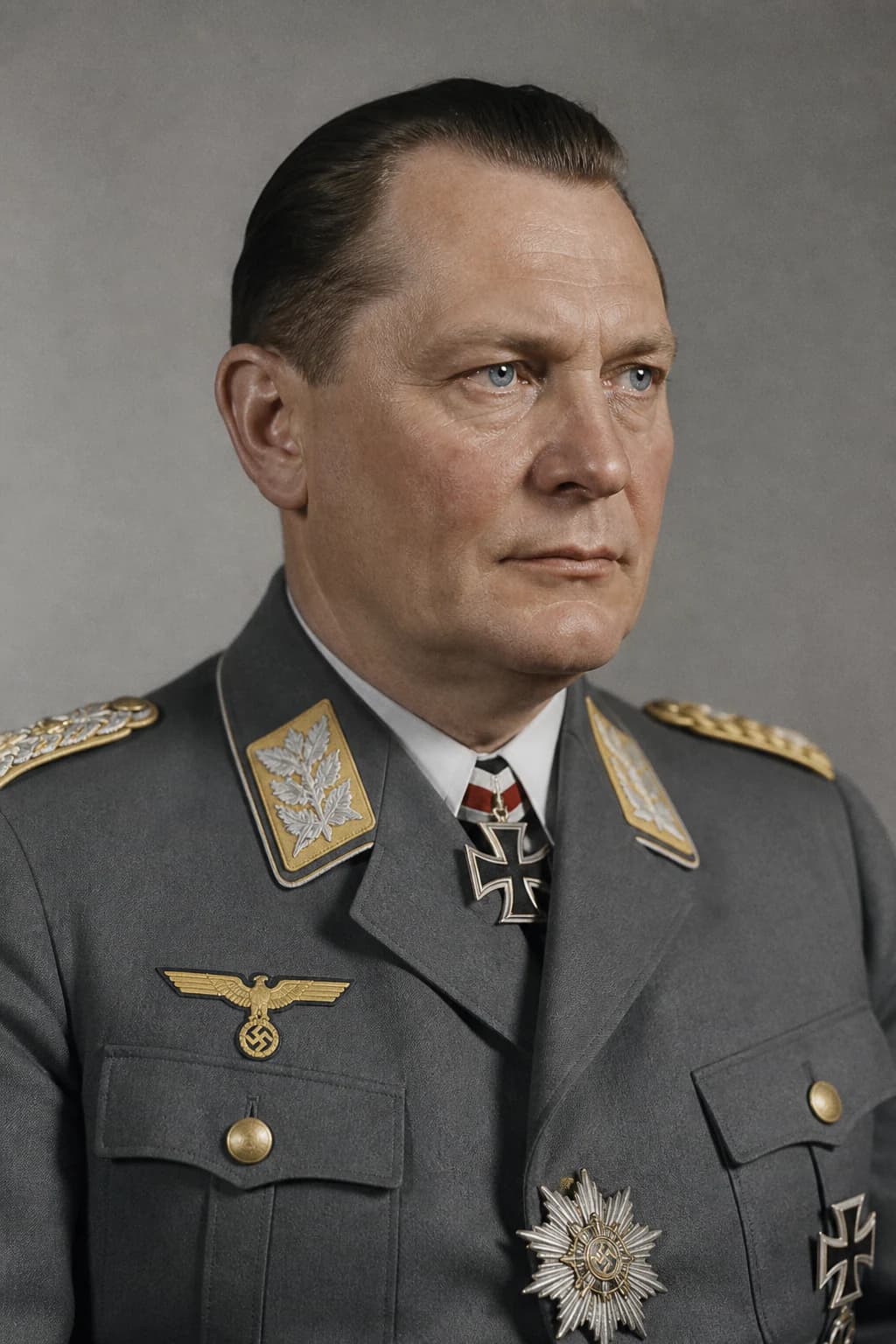
Hermann Wilhelm Goering was born on 12 January 1893 in Rosenheim, Bavaria. He came from a family connected to imperial service and grew up with a taste for status, uniforms, and display. During World War I he became a fighter pilot and, after Manfred von Richthofen's death, eventually commanded Jagdgeschwader 1, the famous Richthofen squadron. He received the Pour le Merite, Germany's highest military honour. The war gave him fame, confidence, and a heroic identity that survived Germany's defeat. Like many veterans, he entered the postwar world unwilling to accept the collapse of the old order. His later Nazi career drew heavily on that aura. Goering was never merely a functionary. He arrived in politics as a decorated combat celebrity, and that prestige made him useful to Adolf Hitler's movement.
Goering's early authority came from the glamour and grievance of the defeated veteran.
1922-1933
Hitler's ally
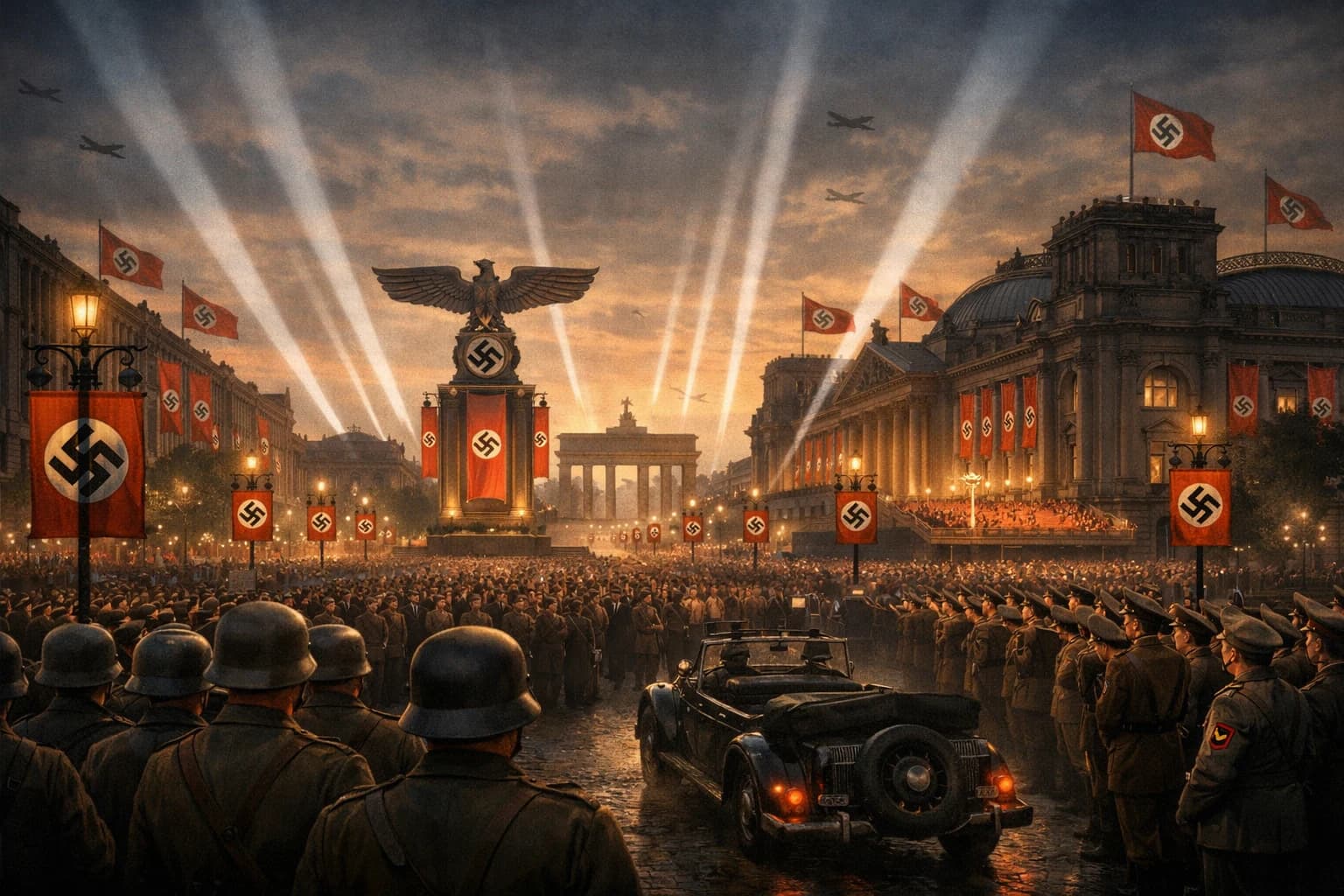
Goering joined the Nazi Party in 1922 and became commander of the SA, the movement's paramilitary wing. He took part in the failed Beer Hall Putsch in Munich in November 1923 and was badly wounded. After the coup collapsed, he fled abroad, developed a morphine addiction linked to his treatment, and lived in exile before returning to Germany under amnesty. In the late Weimar years he used his social polish, war record, and political skill to make Nazism more acceptable to conservative elites. He was elected to the Reichstag and became its president in 1932. When Hitler became chancellor in January 1933, Goering was already positioned to turn party victory into state power. He helped bridge the worlds of street violence, parliamentary manoeuvre, and elite accommodation.
Goering was valuable because he could make Nazi radicalism look respectable to powerful conservatives.
1933-1938
Repression and offices
Goering's power expanded rapidly after the Nazi seizure of power. As Prussian interior minister, he controlled police forces and founded the Gestapo in 1933 before it later passed under Heinrich Himmler's control. He helped create the climate of terror that destroyed opposition, especially after the Reichstag Fire. Goering also became commander-in-chief of the Luftwaffe, publicly unveiled in 1935, and head of the Four Year Plan in 1936, making him central to rearmament and economic mobilisation. His offices overlapped wildly, reflecting the competitive chaos of the Nazi state. He loved splendour, titles, uniforms, hunting estates, and art collections, but the theatrical excess should not obscure his political seriousness. Goering was a maker of institutions, coercion, and war capacity.
Goering's flamboyance concealed a central role in repression, rearmament, and plunder.
1939-1945
War and plunder
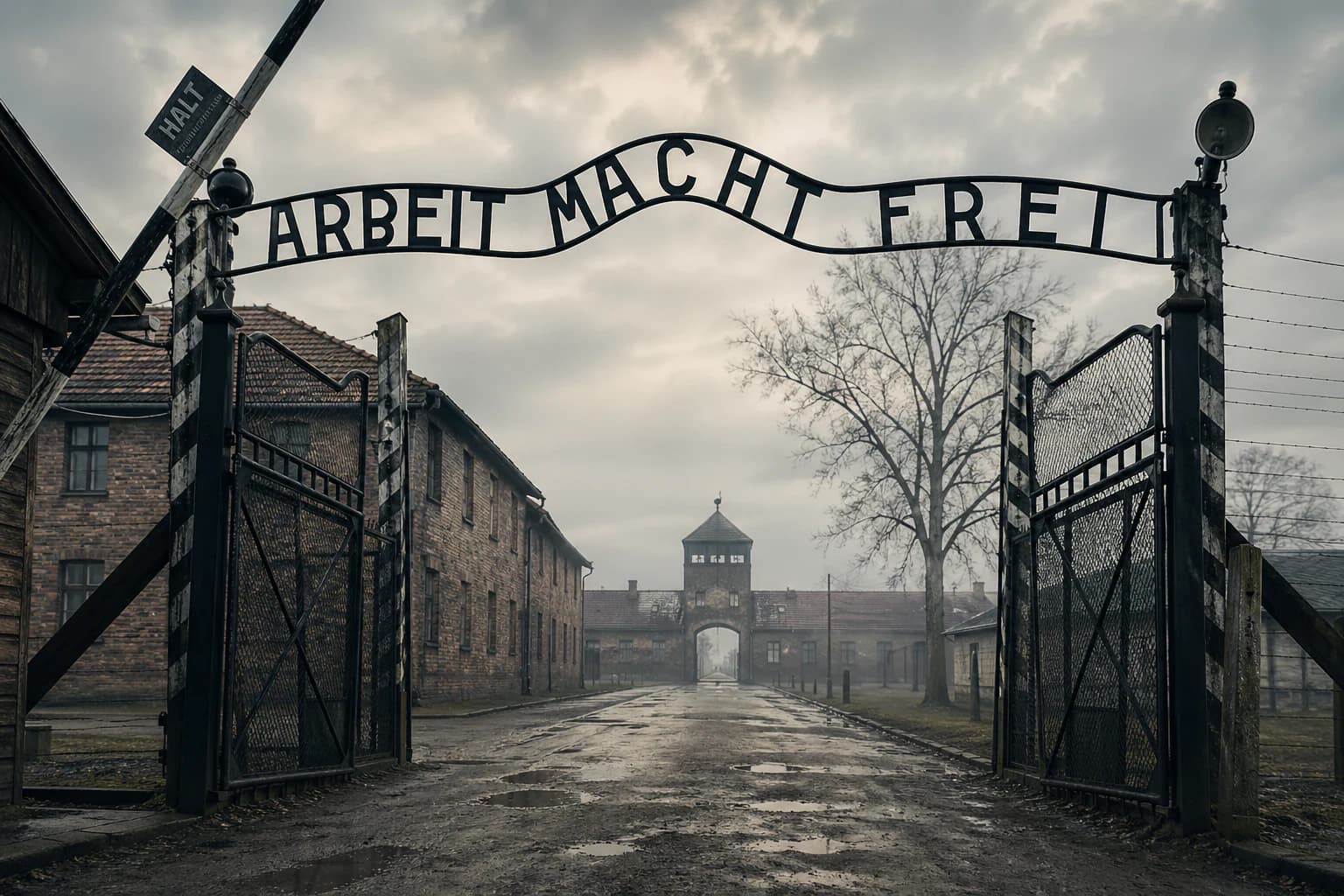
During World War II, Goering stood near the summit of Nazi power. Hitler named him Reichsmarschall in 1940 and designated him successor. The Luftwaffe contributed to early victories in Poland, Norway, the Low Countries, and France, but its failure to defeat Britain in the Battle of Britain damaged Goering's reputation. Later promises, including the claim that the Luftwaffe could supply the encircled Sixth Army at Stalingrad, proved disastrous. As Allied bombing intensified, his inability to defend German cities further weakened him. At the same time, Goering was deeply implicated in exploitation and looting, especially the seizure of art across occupied Europe. He also signed the July 1941 authorisation instructing Reinhard Heydrich to prepare plans for the Final Solution of the Jewish question.
Goering's decline as a commander did not lessen his responsibility for Nazi aggression and crimes.
1945-1946
Nuremberg
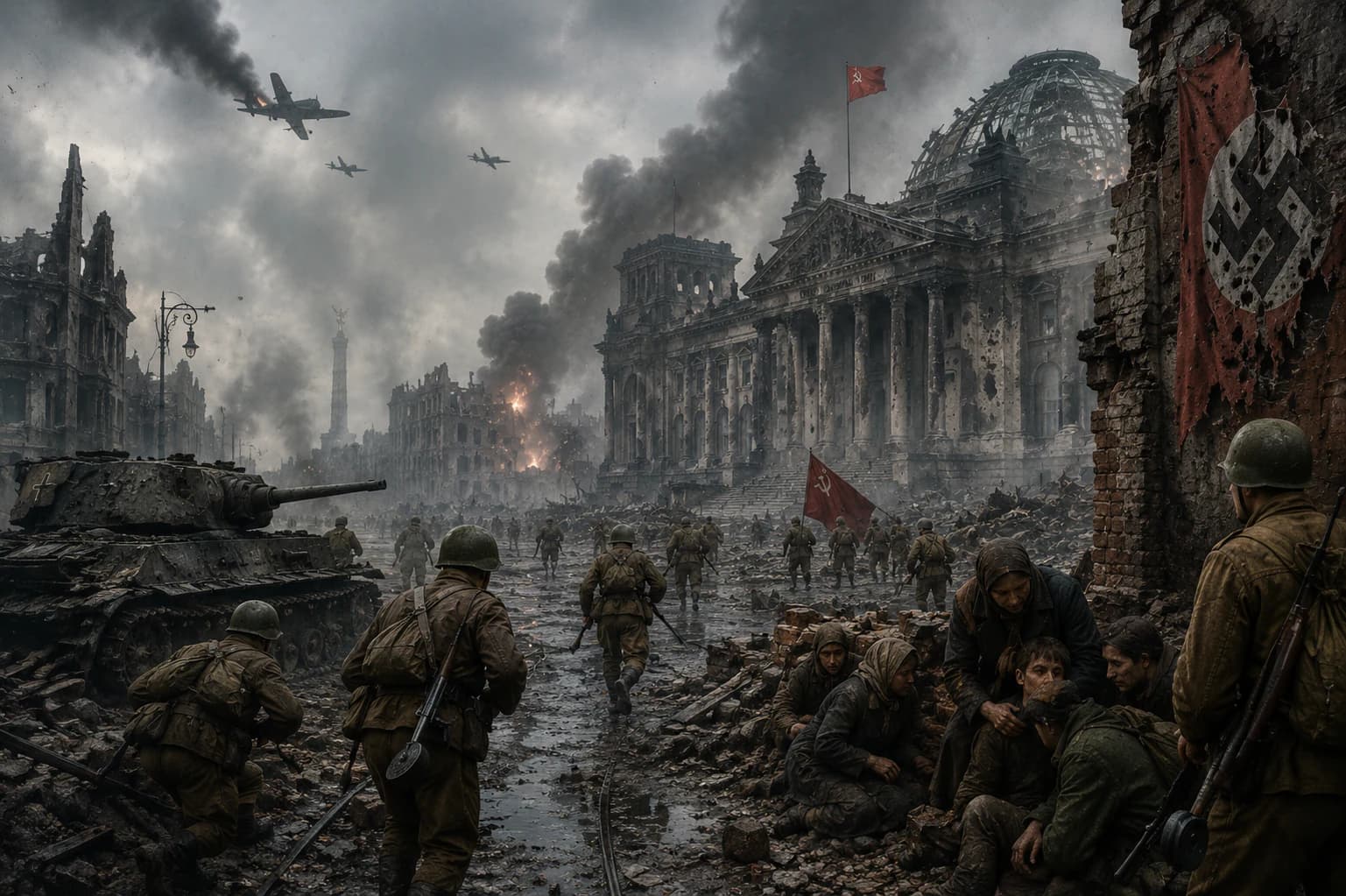
In the final days of the Third Reich, Goering tried to assume authority when Hitler was trapped in Berlin, but Hitler denounced him as a traitor. Captured by American forces, he became the most prominent surviving Nazi leader tried before the International Military Tribunal at Nuremberg. In court he was intelligent, combative, and evasive, attempting to defend the regime while denying or minimising responsibility. The tribunal convicted him of crimes against peace, war crimes, and crimes against humanity, and sentenced him to death. On 15 October 1946, the night before he was due to be hanged, Goering killed himself with cyanide. His legacy is one of vanity joined to immense destructive power: a decorated pilot who became a principal architect of Nazi dictatorship, militarism, theft, and mass criminality.
Goering's trial helped define personal responsibility for leaders who turn states into instruments of aggression and crime.