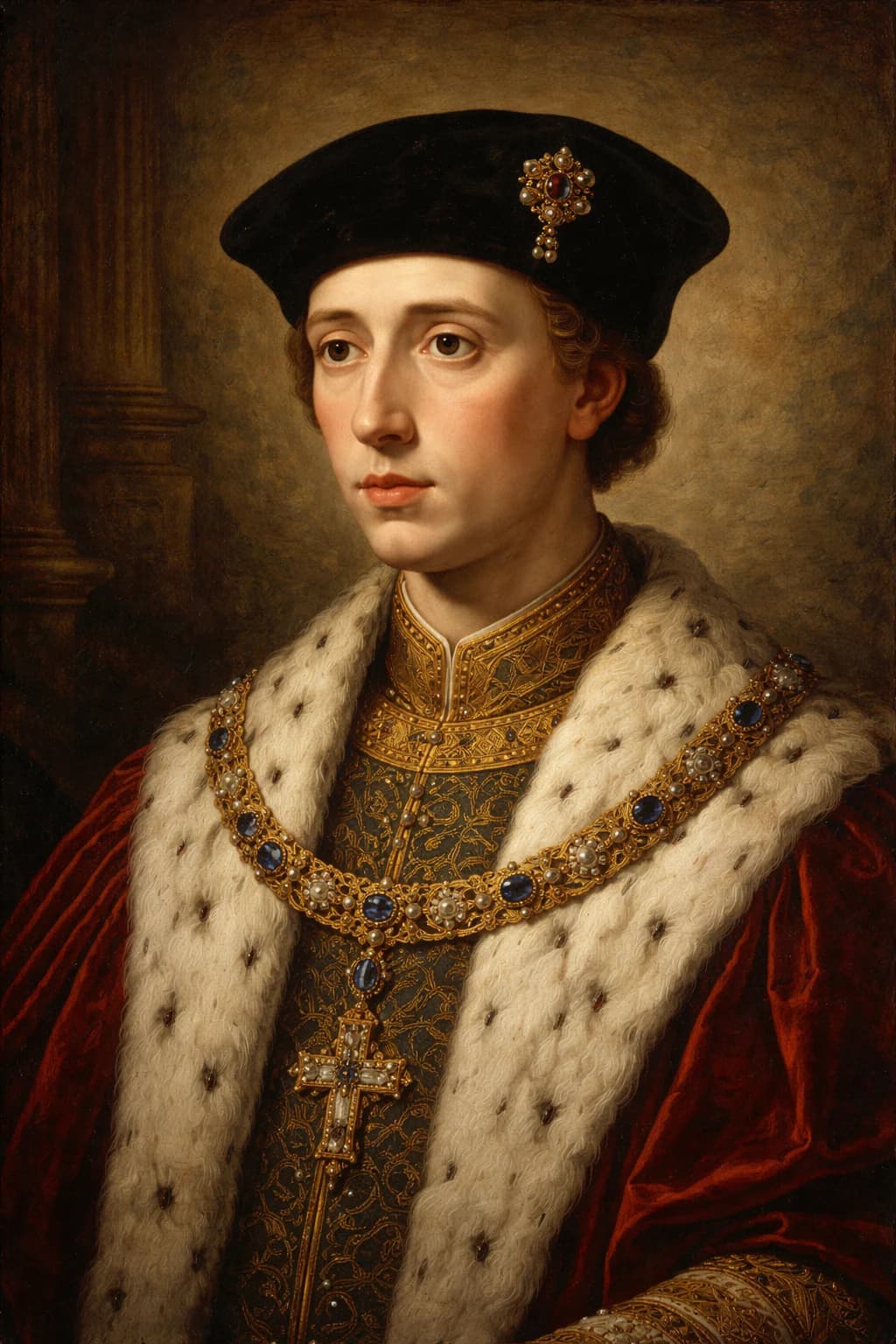
Complete chronology
Full overview and deeper context for every journey step.
1367
Born to high rank
Henry of Bolingbroke entered the highest tier of English aristocracy. His father, John of Gaunt, Duke of Lancaster, was one of the richest and most influential men in Europe, while his grandfather Edward III gave Henry a royal lineage few nobles could match. That inheritance brought castles, lands, followers, and expectations of public service. It also placed him close to a throne occupied by his cousin Richard II, whose kingship became increasingly tense and personal. Henry's early life was not a straightforward march toward usurpation. He was a great lord in a political world where kinship, honour, military reputation, and royal favour could elevate a man quickly or turn him into a threat.
High birth gave him opportunity, but it also drew him into dangerous struggles over power.
1370s–1380s
Training for lordship
As a young man Henry learned lordship in the practical sense: commanding retainers, managing estates, cultivating affinity, and displaying courage in public. He was involved with the Lords Appellant, the aristocratic group that challenged Richard II's favourites in the late 1380s, though he later returned to royal favour. He also travelled to Prussia and the eastern Baltic on crusading expeditions with the Teutonic Knights, experiences that enhanced his chivalric reputation. These details matter because Henry was not an obscure rebel who stumbled into power. He was already recognised as wealthy, pious, martial, and politically serious. When crisis came, men could imagine him as an alternative centre of authority.
Reputation earned in youth can become political capital in times of crisis.
1390s
Conflict with Richard
Richard II's later rule was marked by vengeance against old opponents, heavy use of favourites, and a heightened language of royal majesty. Henry's position became precarious not because he openly sought the throne at first, but because he possessed the ingredients of a rival: noble support, Lancastrian wealth, Plantagenet blood, and a reputation for honour. The immediate quarrel came through Henry's dispute with Thomas Mowbray, Duke of Norfolk, which Richard handled by exiling both men in 1398. For Henry, exile was severe but survivable. The deeper rupture came when John of Gaunt died and Richard seized the Lancastrian inheritance instead of allowing Henry to receive it. That act transformed mistrust into a cause.
When trust collapses at the top of government, even kinship can turn into rivalry.
1398–1399
Exile and return
Henry landed at Ravenspur in 1399 with a carefully limited public claim: he wanted his inheritance restored. The timing was devastating for Richard, who was campaigning in Ireland and had alienated enough of the political nation to leave his regime brittle. Support gathered around Henry with remarkable speed, including men who had grievances against Richard and others who judged the king's conduct unlawful. The return became a rolling political collapse. Henry's genius lay in allowing the movement to widen without immediately declaring its full destination. By the time Richard returned, the issue was no longer only Lancastrian property. It was whether Richard could still command obedience as king.
A struggle that begins over personal rights can become a revolution when wider resentment is waiting.
1399
Taking the crown
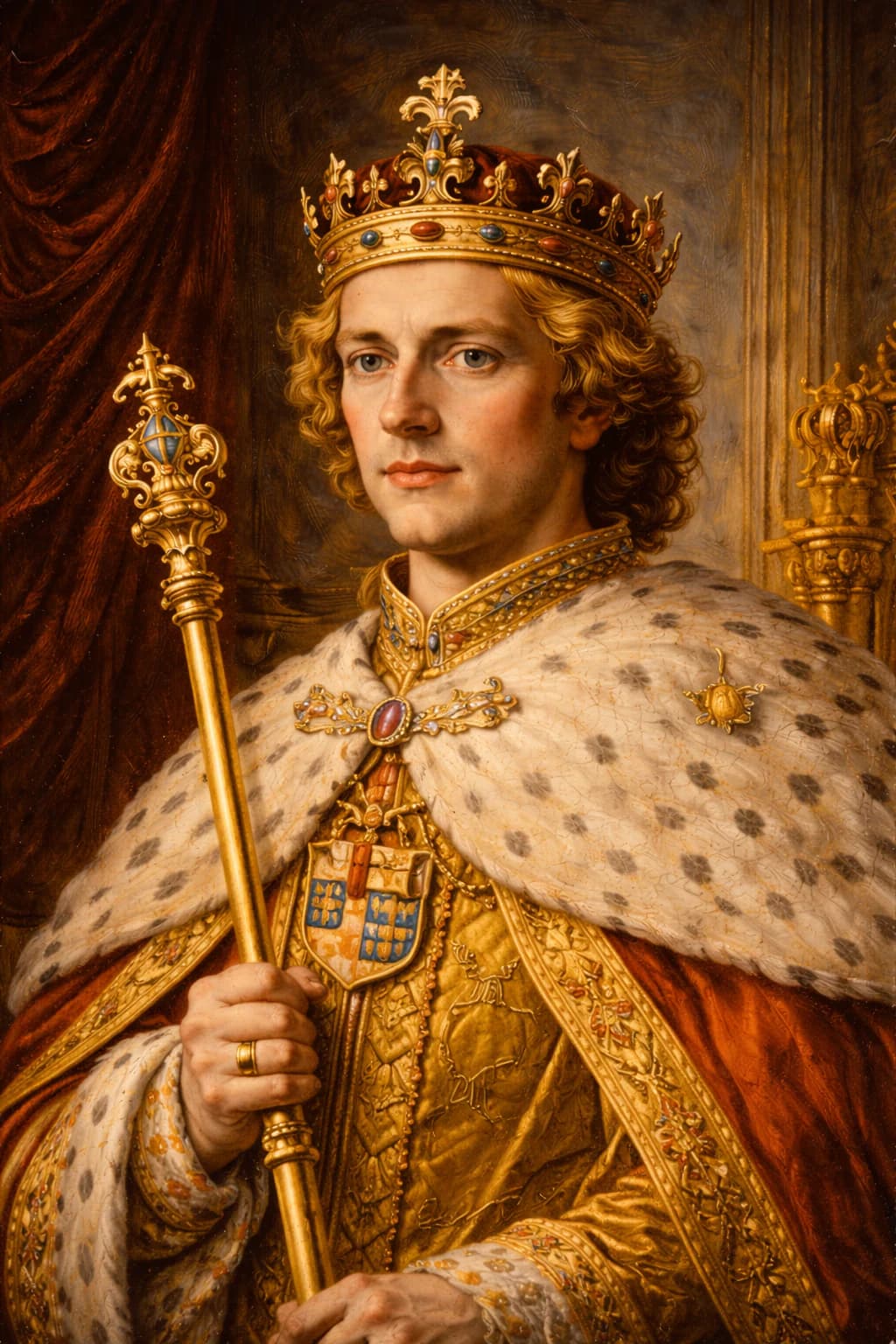
Richard II was forced to abdicate, and Henry claimed the throne through a mixture of Lancastrian descent, public grievance, and parliamentary acceptance. The legal arguments were never completely comfortable. Other descendants of Edward III had claims that could be presented as stronger by strict primogeniture, especially through the Mortimer line. Henry therefore needed performance as much as paperwork: coronation, parliamentary recognition, promises of good rule, and visible restoration after Richard's perceived tyranny. His kingship was immediately real, but it was never innocent. By replacing an anointed king, Henry opened questions that later generations would sharpen during the Wars of the Roses.
Winning a crown by extraordinary means can secure power in the moment while weakening it in principle.
1400s
Rebellions erupt
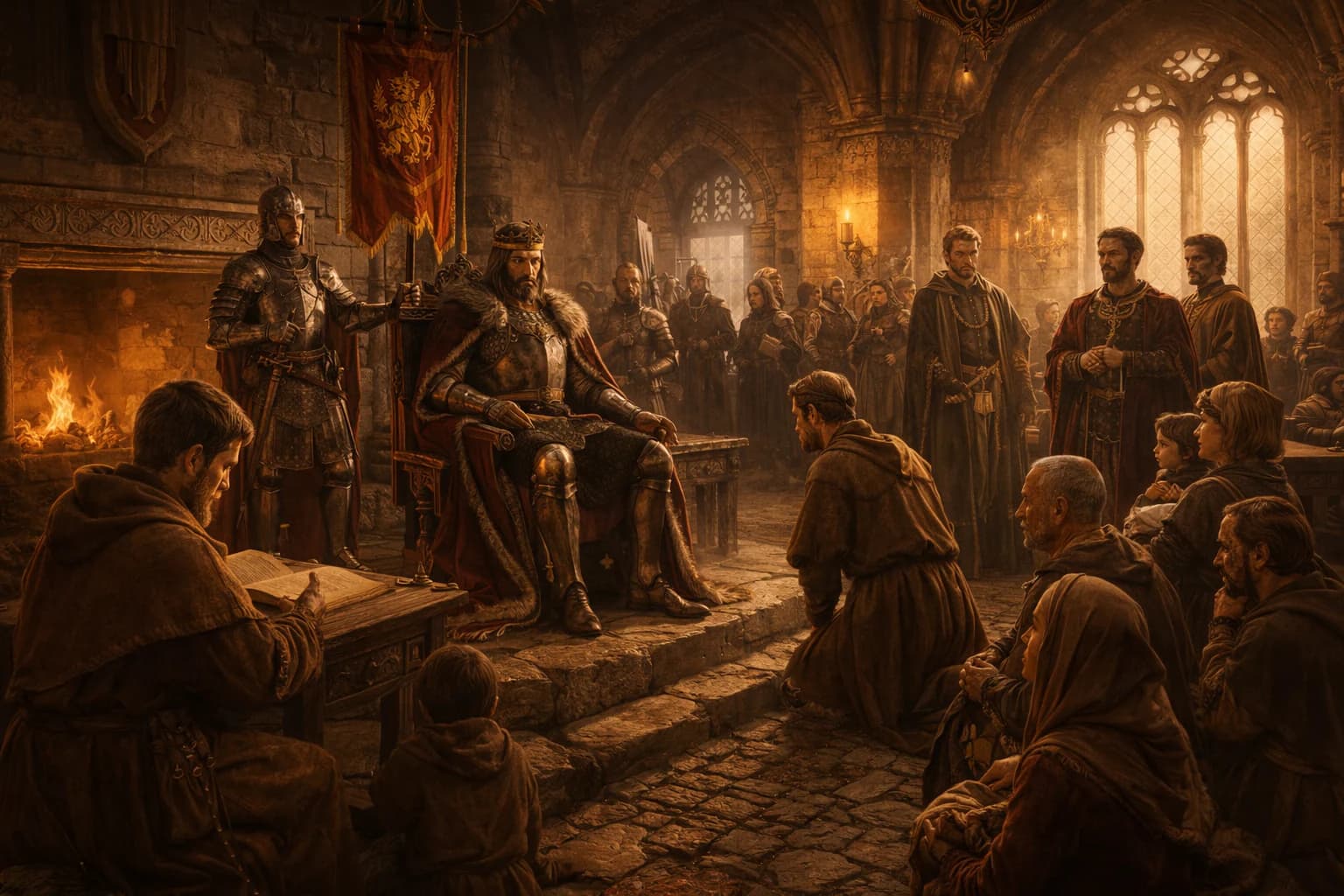
Henry's reign began under pressure. The Epiphany Rising of 1400 tried to restore Richard II, whose subsequent death in captivity removed one danger while deepening suspicion. In Wales, Owain Glyndwr led a rebellion that became one of the most serious threats to English authority in the region, drawing on local grievances and moments of French support. Henry also had to manage parliament, taxation, church politics, and the expectations of men who believed their support in 1399 deserved reward. Usurpation created a permanent political debt. The king had to be strong enough to command, generous enough to retain allies, and legitimate enough to survive every rumour of Richard's return.
A contested ruler often spends more energy surviving than governing freely.
1403
Battle and survival
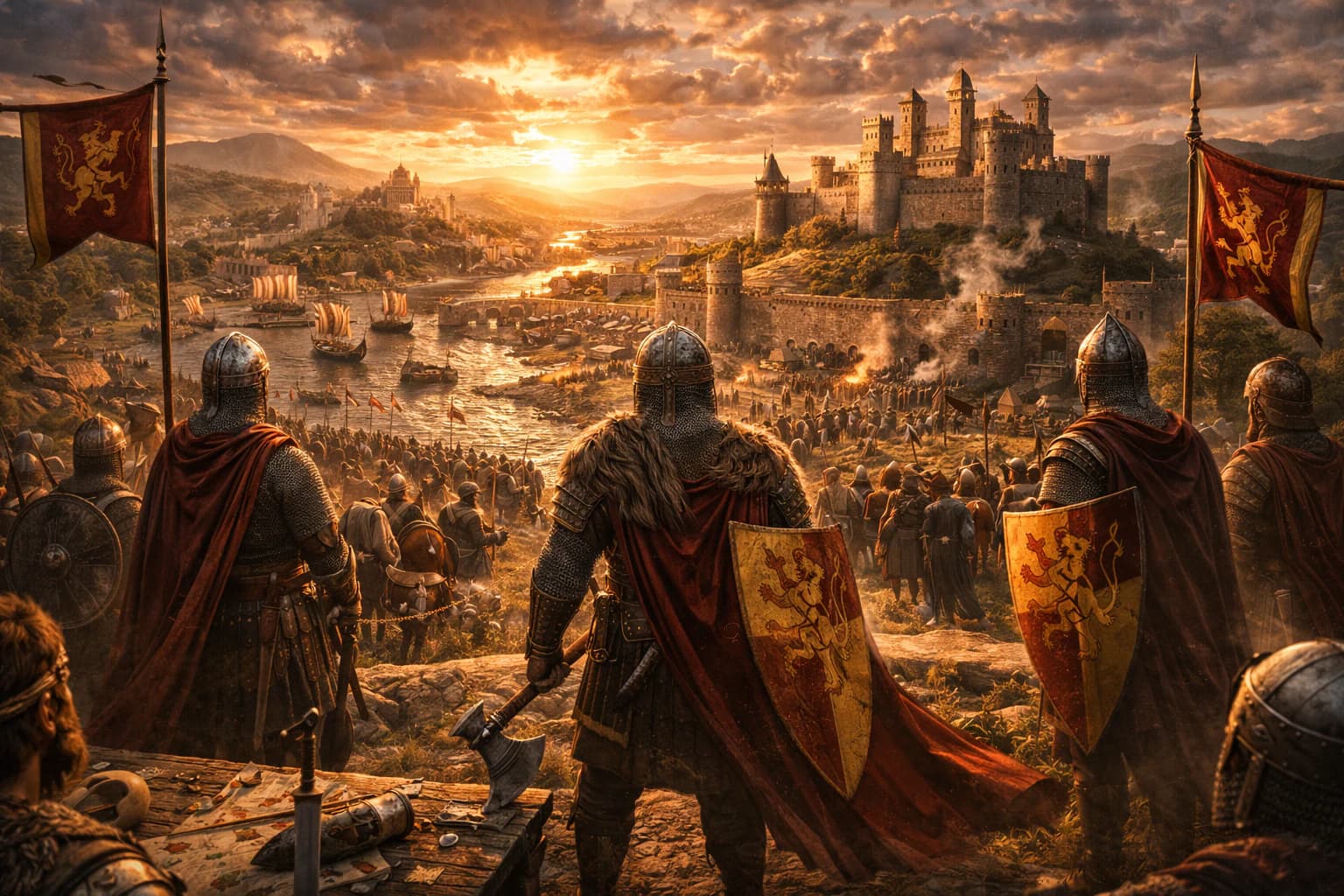
The Percy family had helped Henry take the crown, but by 1403 they had turned against him, frustrated by money, policy, and influence. Henry Percy, known as Hotspur, joined a rebellion that threatened to combine northern discontent with Welsh resistance. At Shrewsbury, Henry fought for his crown in brutal conditions. Hotspur was killed, the rebels were defeated, and the king survived a crisis that could have ended the Lancastrian experiment almost before it settled. Yet victory did not erase the lesson. If former kingmakers could become rebels, Henry's support was conditional. The battle saved him militarily while confirming the political insecurity at the heart of his reign.
Survival in battle can save a reign without ever making it truly secure.
1406–1413
Illness and strain
After Shrewsbury, Henry continued to face rebellion, including the rising associated with Archbishop Scrope in 1405 and further Percy resistance. His health deteriorated, possibly through a chronic skin disease or another recurring illness that contemporaries interpreted through moral and religious language. Financial pressure remained severe because rebellion and defence were expensive, and parliament became an essential partner in supply. Meanwhile his son, the future Henry V, gained military experience in Wales and increasing prominence in council politics. Later Shakespearean legend turned father and son into a drama of wayward youth and royal anxiety, but the political reality was sharper: the Lancastrian monarchy needed a successor strong enough to make usurpation look like continuity.
A monarchy under pressure becomes even more fragile when the ruler can no longer carry its weight alone.
post-1413
A precarious inheritance
Henry IV's achievement was survival. He had returned as a dispossessed exile, become king, defeated rebellions, contained Wales, and passed the crown peacefully to his son. That orderly succession to Henry V gave the Lancastrian regime a triumphal next chapter, especially after Agincourt. But the deeper legacy remained unsettled. Henry had proved that a king could be removed if enough political force and moral argument gathered against him. His own claim, never wholly immune to challenge, left later rivals with material to use when Lancastrian authority weakened. He was neither a mere opportunist nor a secure hereditary monarch. He was a founder under pressure: capable, devout, resilient, and permanently marked by the act that made him king.
He stabilized the monarchy in practice while leaving its moral and dynastic foundations open to future challenge.