Complete chronology
Full overview and deeper context for every journey step.
1015
Royal beginnings
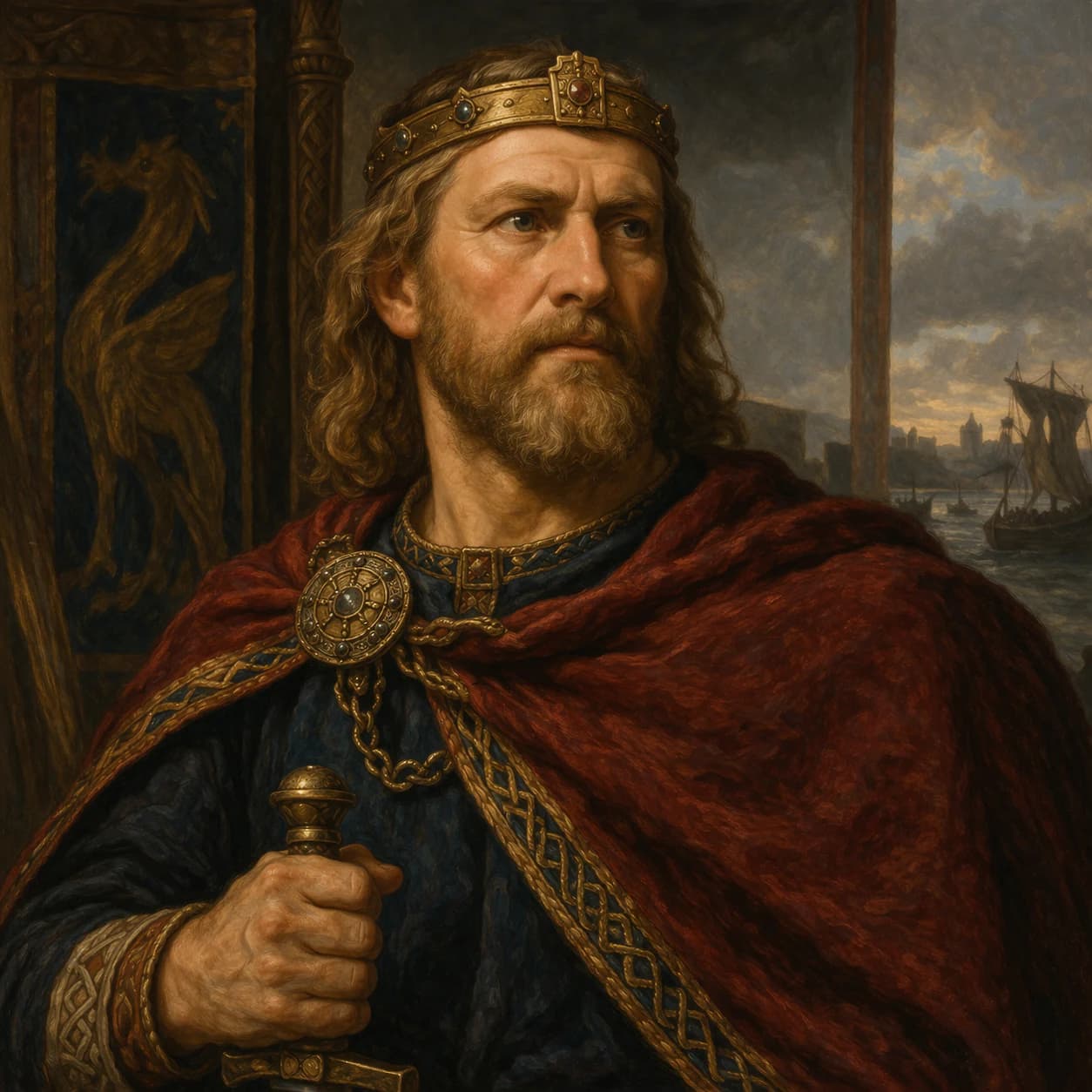
Harald Sigurdsson, later known as Hardrada or 'hard ruler', was born into a Scandinavian political world where kingship was personal, contested, and dangerous. He was the half-brother of Olaf Haraldsson, the Christian king of Norway who became Saint Olaf after death. That family connection gave Harald status, but not security. Eleventh-century Norway was still being drawn into stronger royal structures, and loyalty depended on kinship, wealth, force, faith, and the ability to reward followers. Harald's early world was not a settled monarchy with clear rules of succession. It was a competitive arena in which royal blood opened a claim, but a claim needed warriors, ships, treasure, and reputation. His later life makes sense as the career of a man who learned early that power belonged to those able to gather and keep armed loyalty.
Early exposure to instability can shape a lifelong hunger for control and authority.
1030
Battle of Stiklestad
The Battle of Stiklestad was the first great turning point of Harald's life. Olaf was killed fighting opponents who resisted his rule, and Harald, still very young, escaped wounded from the disaster. Later tradition wrapped Stiklestad in the memory of Olaf's sanctity, but for Harald it was also a brutal political lesson. A king could die, a cause could collapse, and a royal kinsman could become a fugitive overnight. Exile forced him east, first through the Norse-connected lands of Kievan Rus. There he entered the orbit of Grand Prince Yaroslav the Wise, whose court linked Scandinavia, Byzantium, and eastern Europe. Defeat did not end Harald's ambitions. It widened them. Norway had expelled him; the wider world would train him.
Defeat can become the catalyst that pushes ambition beyond familiar boundaries.
1030–1034
Warrior in the east
Harald's eastern years made him one of the most widely travelled rulers of medieval Scandinavia. Kievan Rus was not a backwater stop on his way elsewhere; it was a major power whose rivers, trade, dynastic marriages, and military networks tied the Baltic to the Black Sea. Harald served, learned, and gathered followers in that world before moving toward Byzantium, the richest Christian empire of the age. These years exposed him to siege warfare, imperial ceremony, Mediterranean politics, and the value of portable wealth. They also placed him among Norse warriors whose ambitions stretched far beyond Scandinavia. The later sagas may exaggerate some adventures, but the broad picture is secure: exile transformed Harald from a defeated Norwegian prince into a professional warrior with international experience and a treasury to match his ambitions.
Experience gained far from home can redefine both skill and identity.
1034–1042
Byzantine service
Harald's Byzantine service is central to his biography, though saga stories about his exploits need caution. He likely served with the Varangian Guard, the elite force of northern warriors who guarded emperors and campaigned for Byzantium. He fought in imperial wars that may have taken him through the Mediterranean and Near Eastern worlds, acquiring money, prestige, and a sharpened sense of command. Byzantium taught lessons that Norway could not: how a great state used ceremony, bureaucracy, fortresses, paid troops, intelligence, and diplomacy to project authority over many peoples. Harald also learned the danger of imperial politics, where favour could turn quickly. By the time he left, he had wealth stored through eastern connections and a reputation strong enough to make return possible. He came home not as an exile asking for restoration, but as a contender.
Serving within a powerful system can teach lessons that shape future leadership.
1045
Return to Norway
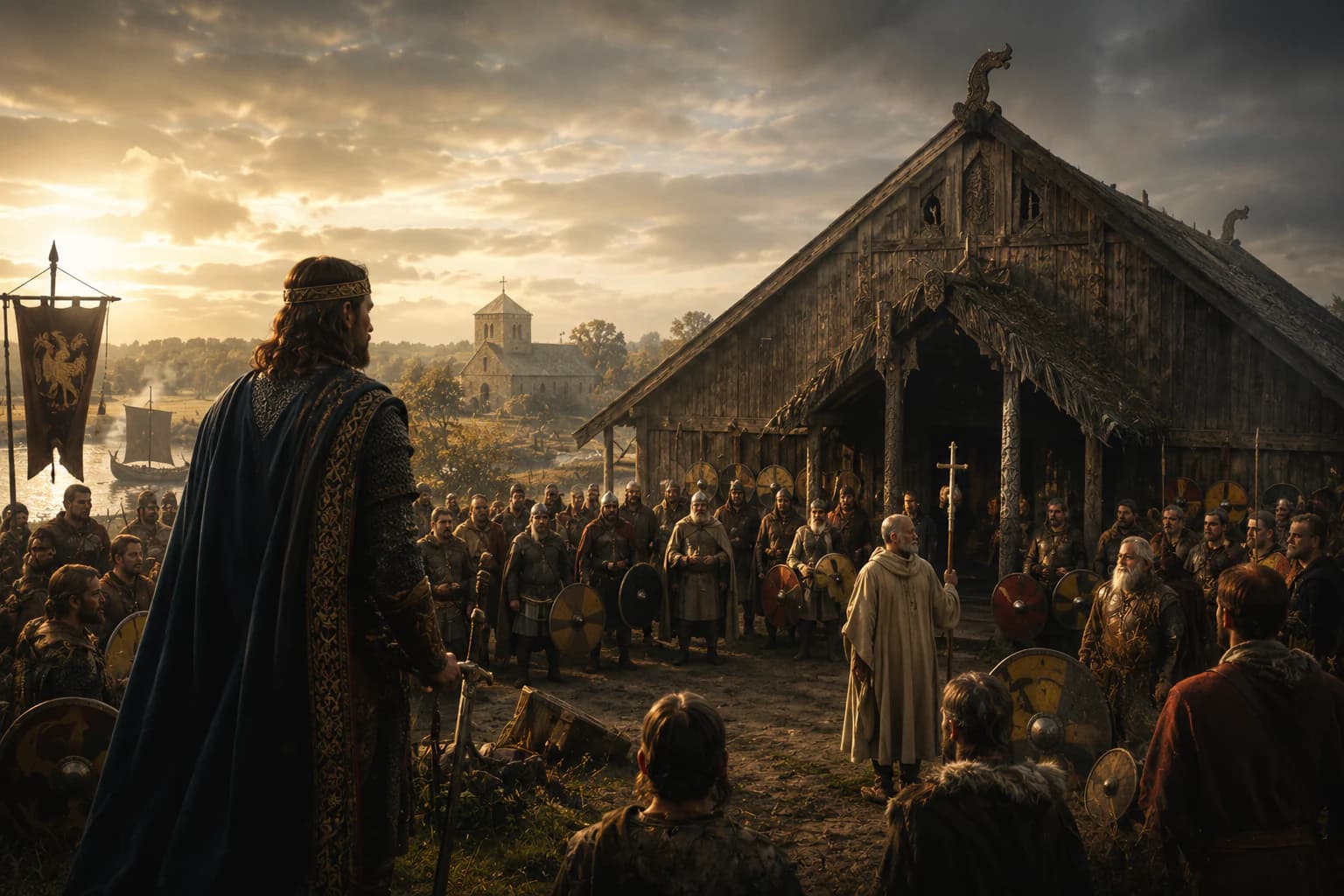
Harald's return was carefully judged. Norway was ruled by Magnus the Good, Olaf's son, whose claim was strong but whose position had to account for Harald's royal blood, money, and military following. The two men reached a settlement and shared rule for a short period. When Magnus died in 1047, Harald became king of Norway. He also pursued claims in Denmark, fighting a long rivalry with Sweyn Estridsson that consumed resources without giving him lasting Danish rule. These struggles show the scale of Harald's ambition. He did not want merely to survive as a restored prince. He wanted Scandinavian dominance. His foreign treasure had bought him an entry back into power; keeping that power required the harsher skills that earned his nickname.
Preparation and timing can turn a return into a decisive takeover.
1047–1066
Strong rule established
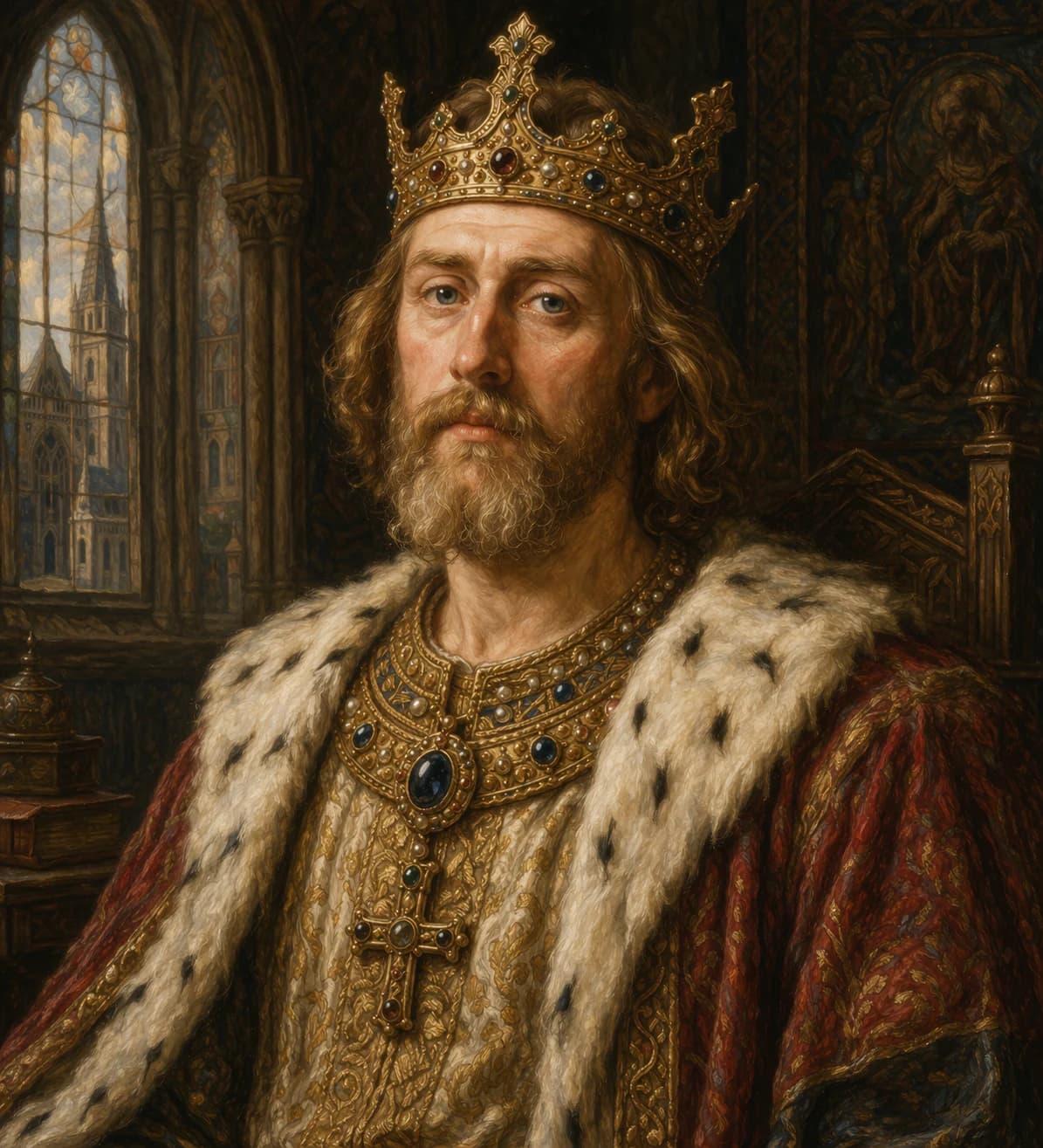
Harald's rule in Norway was remembered as hard, and the reputation is plausible. He worked to make royal authority more direct, drawing resources from a society where local chieftains and landholders guarded their independence. He supported the church, developed Oslo as an important royal site, issued coinage, and used military pressure against opponents. His kingship belongs to the transition from Viking-age raiding politics to more centralised medieval monarchy. That transition was not polite. Royal government meant taxation, discipline, and fewer spaces for regional autonomy. Harald's achievement was to make Norway a stronger kingdom under a ruler whose authority could be felt across the land. His limitation was that ambition kept pulling him outward, first toward Denmark and finally toward England.
Firm control can bring stability, but it often depends on constant vigilance.
1066
Claim on England
The death of Edward the Confessor in January 1066 opened England to competing claims. Harald's claim drew on earlier arrangements connected to Scandinavian kingship, especially traditions involving Magnus the Good and Harthacnut. It was not the strongest claim by English custom, but in a world where armies could make law, it was usable. Tostig Godwinson, the exiled brother of King Harold Godwinson, gave Harald a valuable ally with local knowledge and a reason for revenge. The invasion was bold but not irrational. Northern England had Scandinavian connections, and Harald had spent a lifetime turning opportunity into power. Yet the gamble was enormous. He was older, far from Norway, dependent on ships and speed, and entering a succession crisis in which William of Normandy was also preparing to strike.
Great ambition often pushes leaders toward high-stakes decisions late in their careers.
1066
Battle of Stamford Bridge
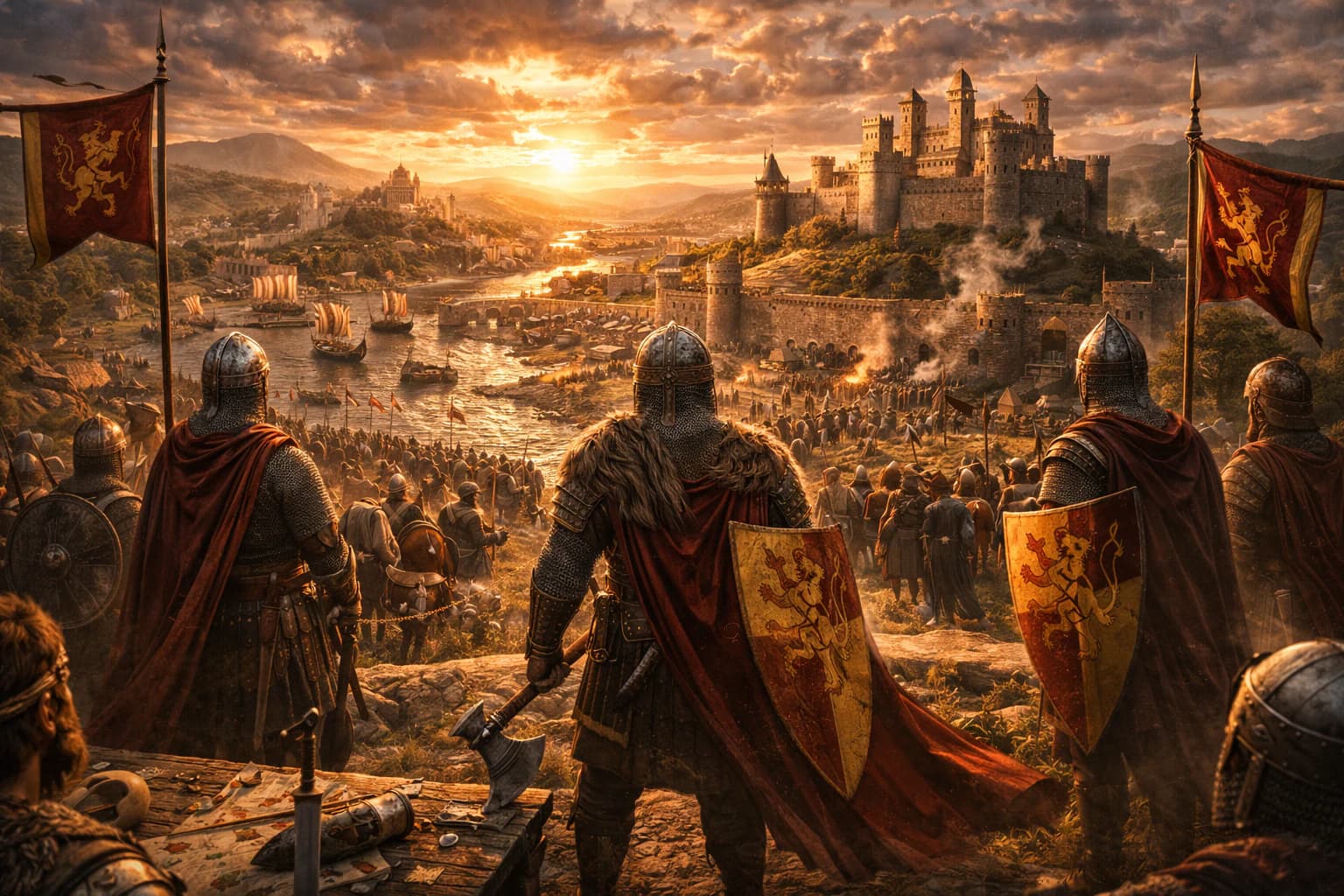
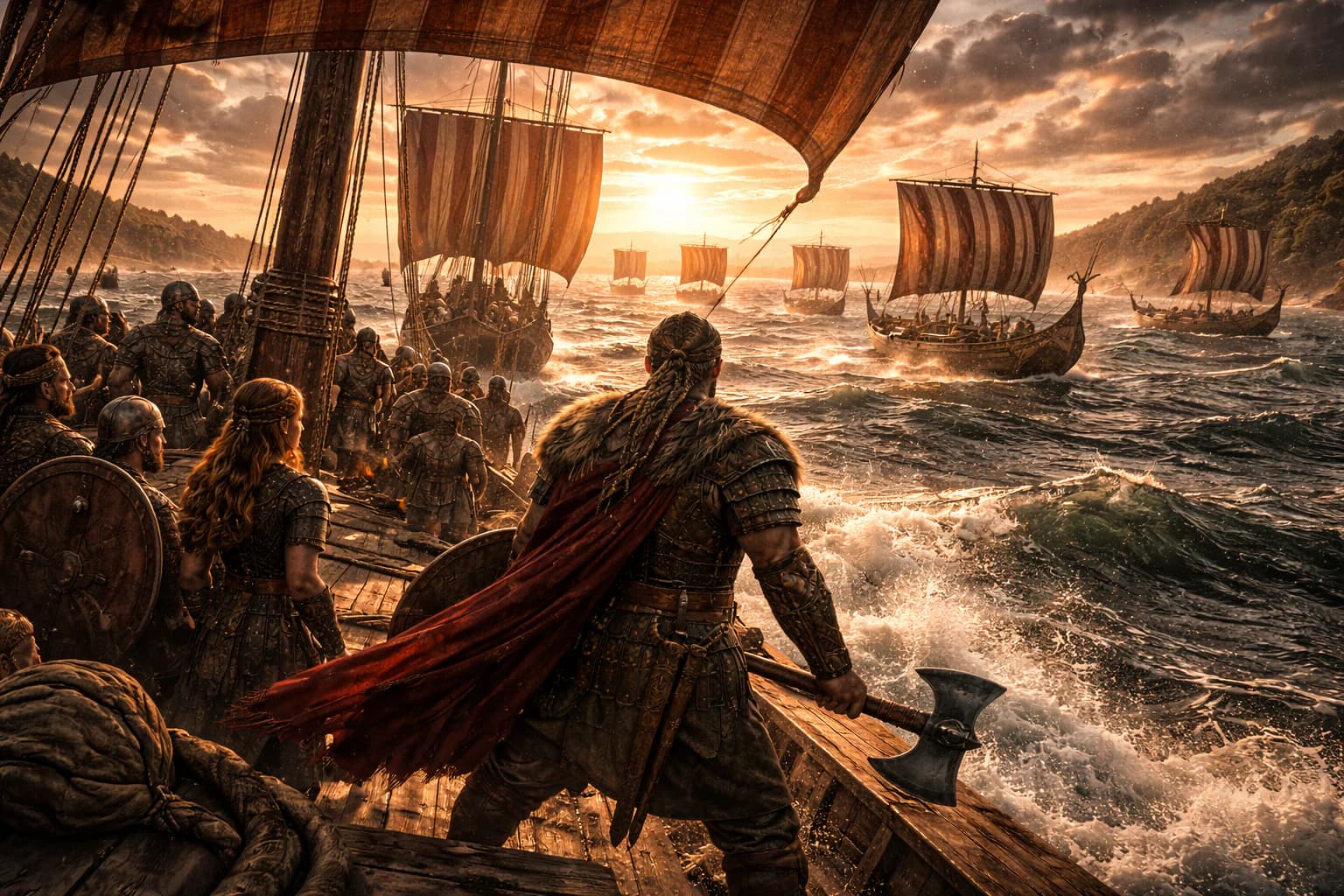
Harald's campaign began well. His army, alongside Tostig, defeated northern English forces at Fulford near York. Then Harold Godwinson made one of the most remarkable marches of the year, moving rapidly north from southern England and catching the Norwegians near Stamford Bridge. Many of Harald's men appear to have been away from full armour in the expectation of receiving hostages, not fighting a pitched battle. The result was ferocious and decisive. Harald was killed, traditionally by an arrow to the throat, and Tostig died with him. The Norwegian army was shattered so badly that only a fraction of the invasion fleet was needed to carry survivors home. Stamford Bridge ended Harald's life and removed one claimant from the English crisis, but it also exhausted Harold Godwinson just before William landed in the south.
Even the strongest leaders can fall when circumstances shift faster than they can respond.
Post-1066
End of Viking age
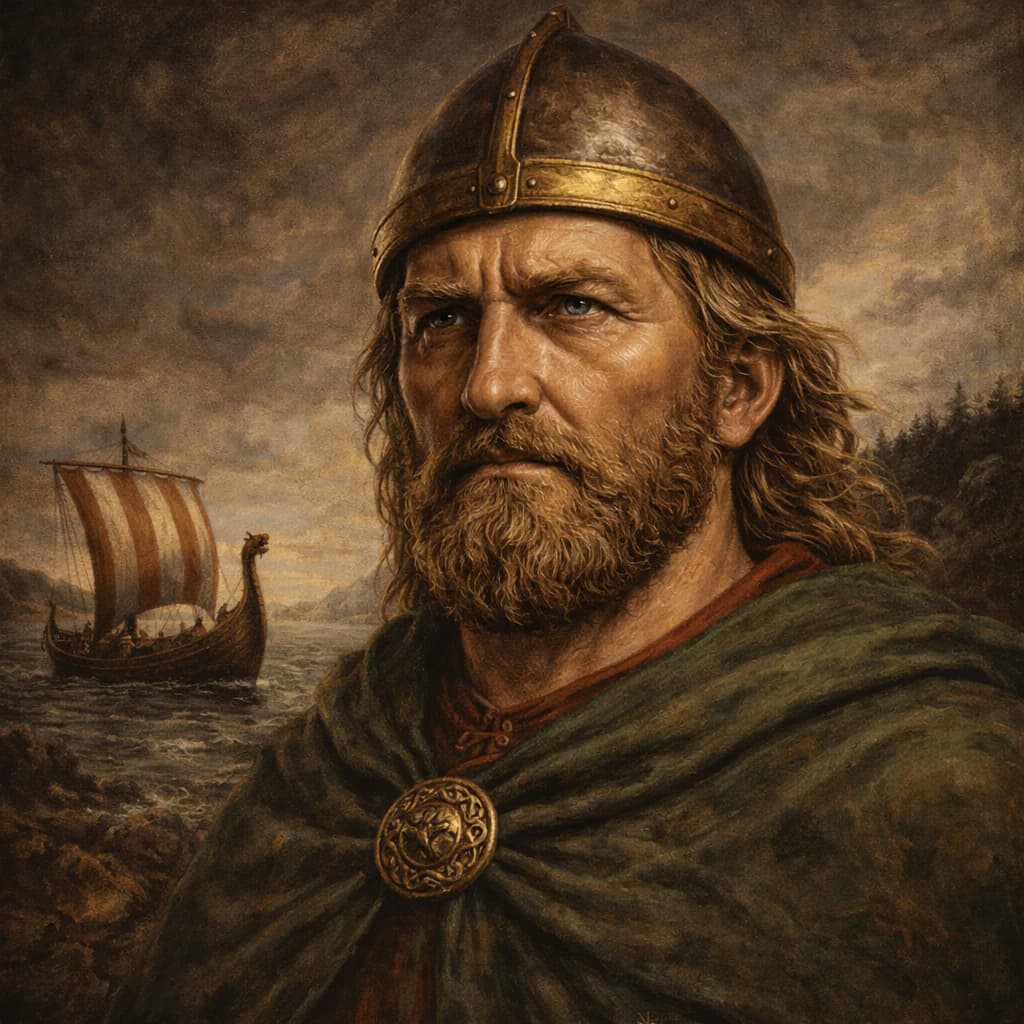
Harald Hardrada's legacy is larger than the phrase 'last Viking', though that phrase explains why he is remembered. He lived across the whole Viking world: Norway, Rus, Byzantium, the Mediterranean, Denmark, and England. He was a raider, mercenary, royal claimant, Christian king, state-builder, and battlefield gambler. His death at Stamford Bridge is often used as a closing marker for the Viking Age because it ended the last great Scandinavian attempt to conquer England by invasion. But history did not switch eras in a single afternoon. Scandinavian monarchies continued to trade, fight, convert, legislate, and marry into European politics. Harald's importance is that his life gathers the old and new together. He was a Viking adventurer who became a medieval king, and his final gamble showed both the lingering power and the fading viability of the old expansionary model.
Some lives come to represent the closing chapter of an entire era.