Complete chronology
Full overview and deeper context for every journey step.
540–573
Aristocratic beginnings
The Rome of Gregory's birth was no longer the commanding capital of an empire. It was a battered city, politically reduced, economically strained, and repeatedly exposed to war, plague, and Lombard pressure. Yet Roman aristocratic culture had not vanished, and Gregory's family belonged to its surviving elite. He received the classical Latin education expected of a man who might govern: rhetoric, law, administration, and the moral vocabulary of Roman public life. His rise to Prefect of Rome placed him at the highest level of civic authority still available in the city. Before he became a monk or pope, Gregory learned how fragile government worked when institutions were tired, resources thin, and responsibility unavoidable.
The world that shapes a future reformer often carries within it the very contradictions that will drive the reform.
574–579
Withdrawal to monastery
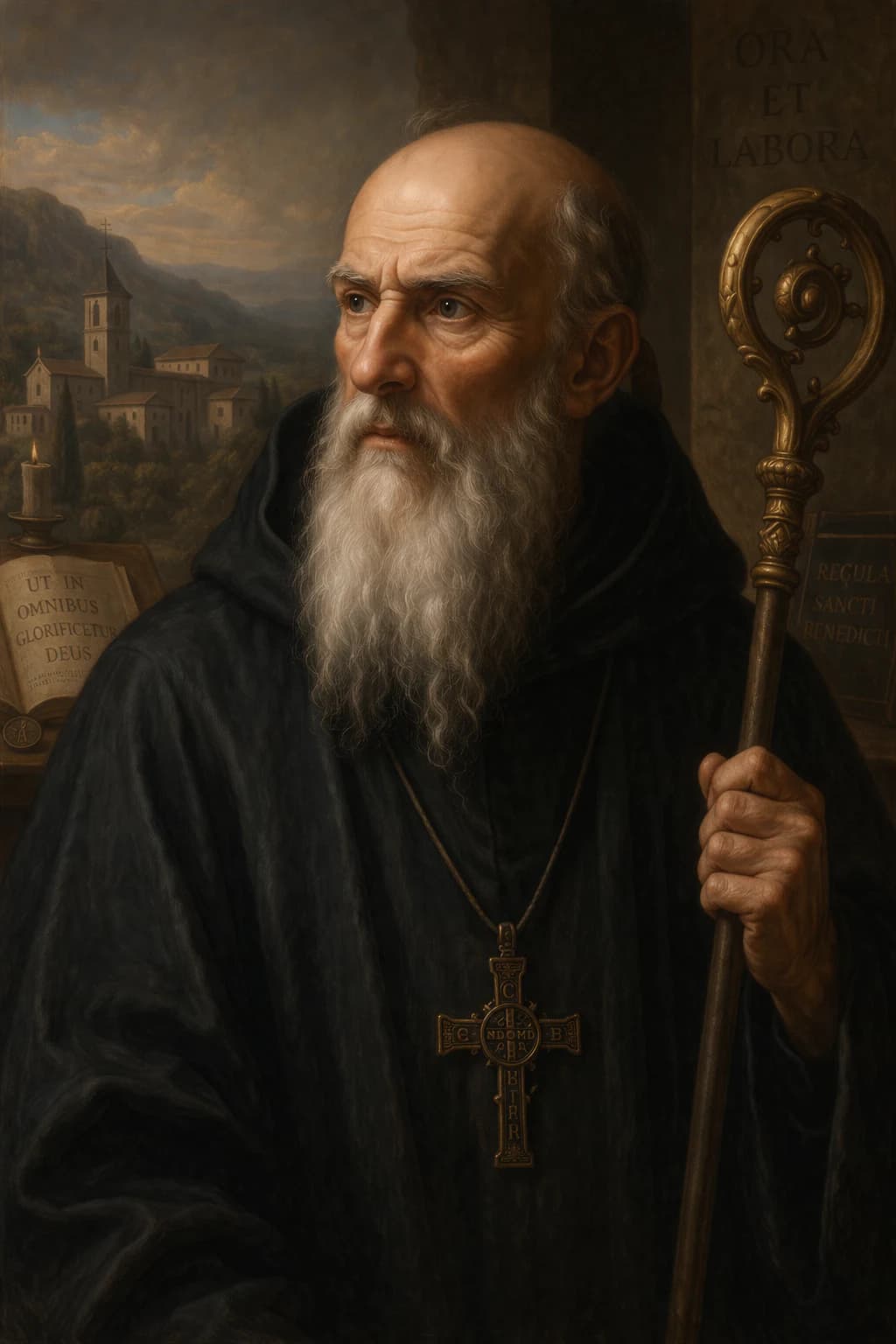
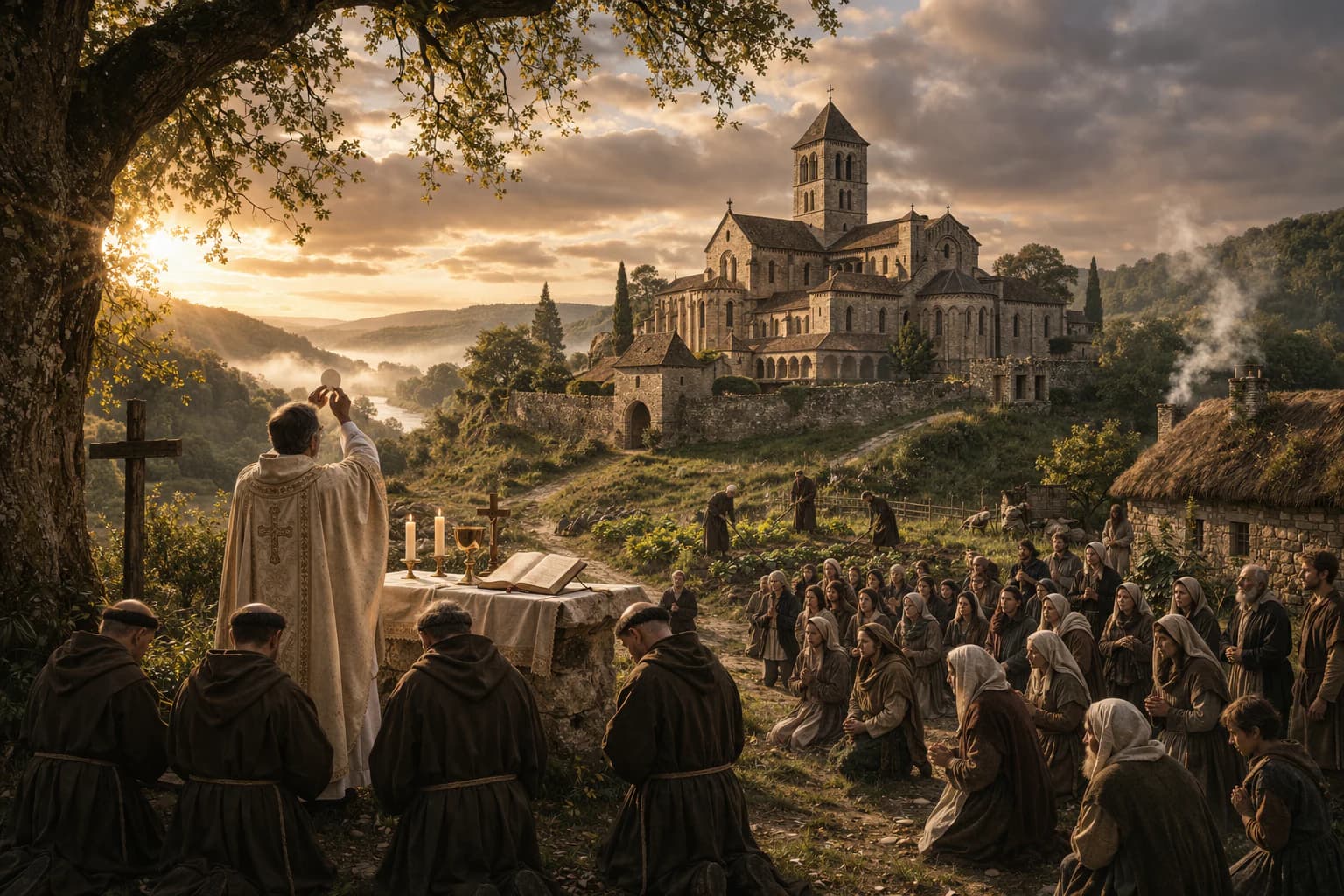
Gregory's turn away from public life was abrupt and sincere. The death of his father coincided with a deepening religious conviction that the administrative career he had pursued — however distinguished — was not where his energies belonged. He converted the family estate on the Caelian Hill in Rome into a monastery dedicated to Saint Andrew, adopted the monastic habit, and entered a community whose rhythms he found deeply restorative. The Benedictine tradition, still young at this point, shaped his practice. These years appear to have been among the happiest of his life — a period of scholarship, prayer, and community that he would later describe with genuine nostalgia from the demands of his papacy.
Voluntary withdrawal can build the inner resources that later, unwanted responsibilities will heavily draw upon.
579–585
Papal ambassador
Pope Pelagius II sent Gregory to Constantinople as a papal apocrisiarius — a representative — a role that placed him at the heart of the Byzantine court. Gregory spent years in the eastern capital, lobbying for military assistance against the Lombard threat that was pressing hard on Italy. He was not successful in extracting the military help Rome needed: Constantinople's attention was drawn elsewhere, and the western provinces were a secondary concern. What Gregory gained instead was a clear-eyed understanding of Byzantine imperial priorities, the limits of what Rome could expect from the east, and the necessity of developing independent resources and authority. He returned to Rome with no troops but with invaluable political education.
Failed diplomacy often teaches more durable lessons than successful diplomacy.
590
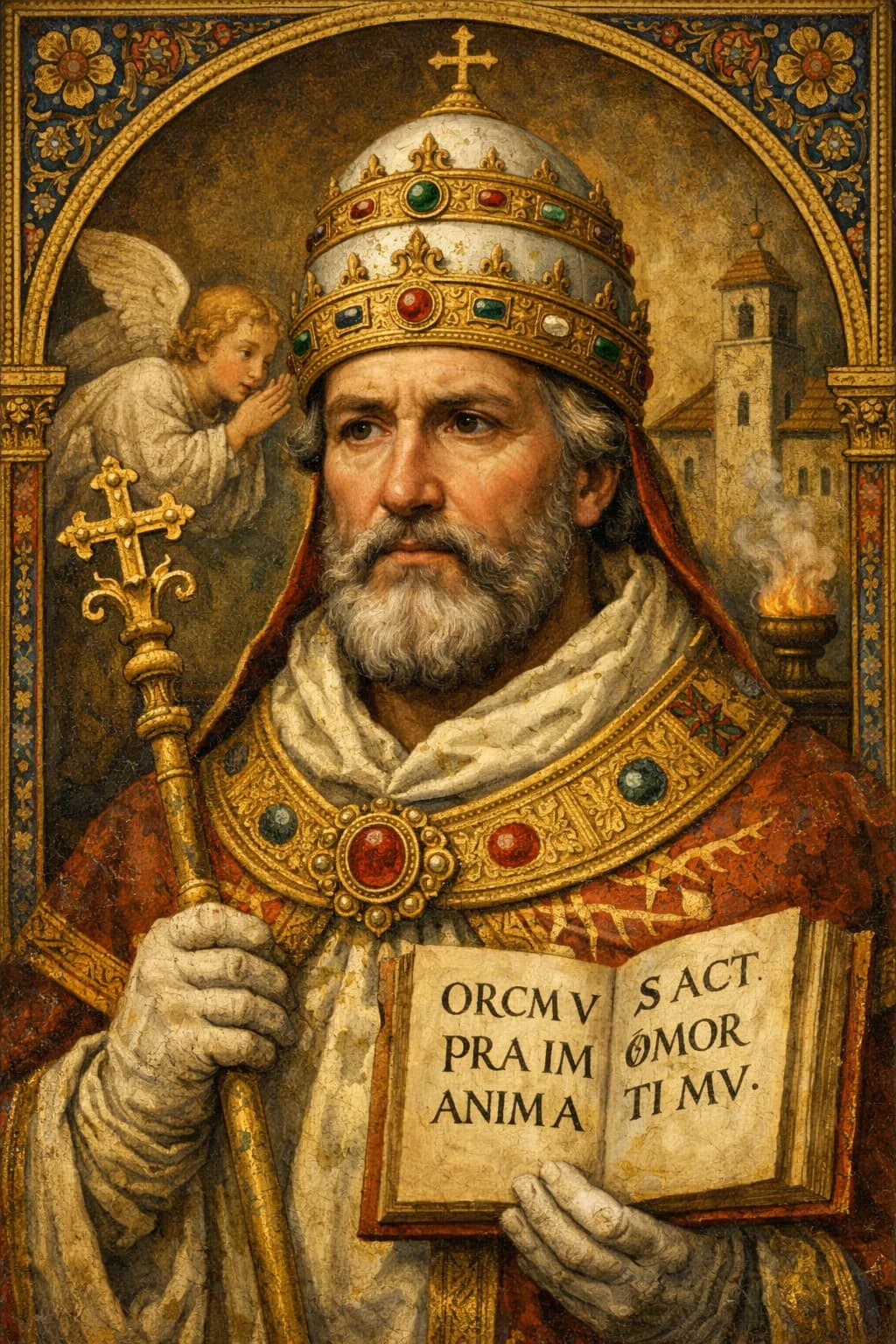
Elected Pope
The plague that killed Pope Pelagius II in 590 also created the crisis that thrust Gregory into leadership. Rome was in a desperate state: the Lombards were pressing from the north, plague was moving through the population, and the civic institutions of the city were barely functioning. Gregory reportedly tried to evade the appointment — according to later accounts he arranged for his escape from Rome in a basket, but was found and brought back. Whether the story is literal or symbolic, his reluctance was likely genuine: he had loved his monastic life and knew what its opposite would demand. He accepted, and the weight of what he accepted would define the rest of his life.
The most effective leaders are sometimes those who take responsibility they never sought.
590–595
Governing Rome
The practical demands of Gregory's papacy extended far beyond theology. Rome faced famine, military threat, refugee pressure, and an imperial administration in Ravenna that was too distant and under-resourced to provide reliable protection. Gregory turned the church's properties — the Patrimony of Peter — into an administrative system. He managed grain distribution, organised fortifications, negotiated with Lombard leaders, ransomed captives, and provided welfare for the vulnerable. His letters reveal a pope absorbed in detail: estate management, episcopal discipline, legal disputes, local abuses, diplomatic messages, and pastoral anxieties all crossed his desk. In Gregory's hands the papacy became not only a spiritual office but a working government for a city imperial power could no longer fully sustain.
When formal authority collapses, moral and institutional authority can fill the gap — if those who hold it are willing to act.
596–601
Mission to England
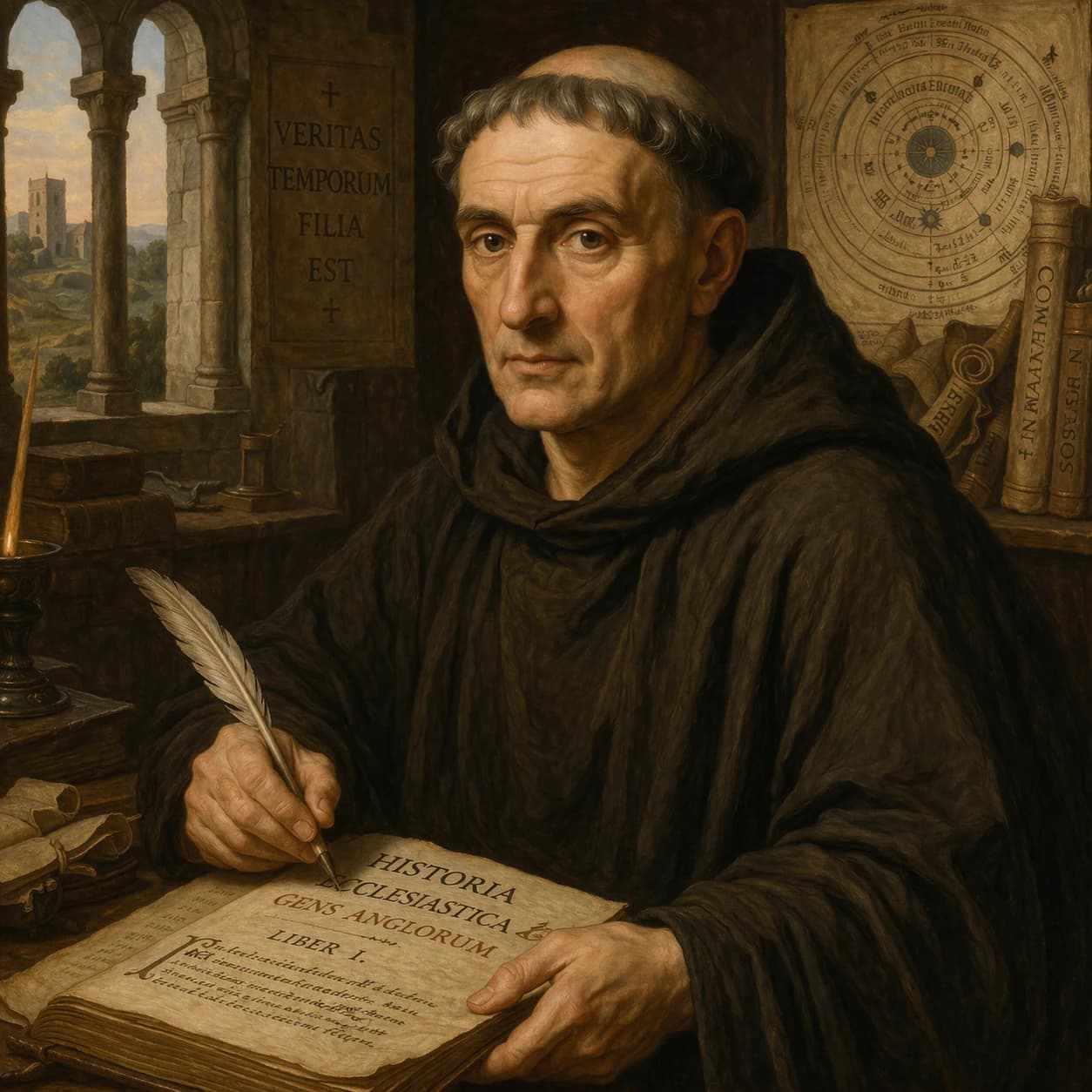
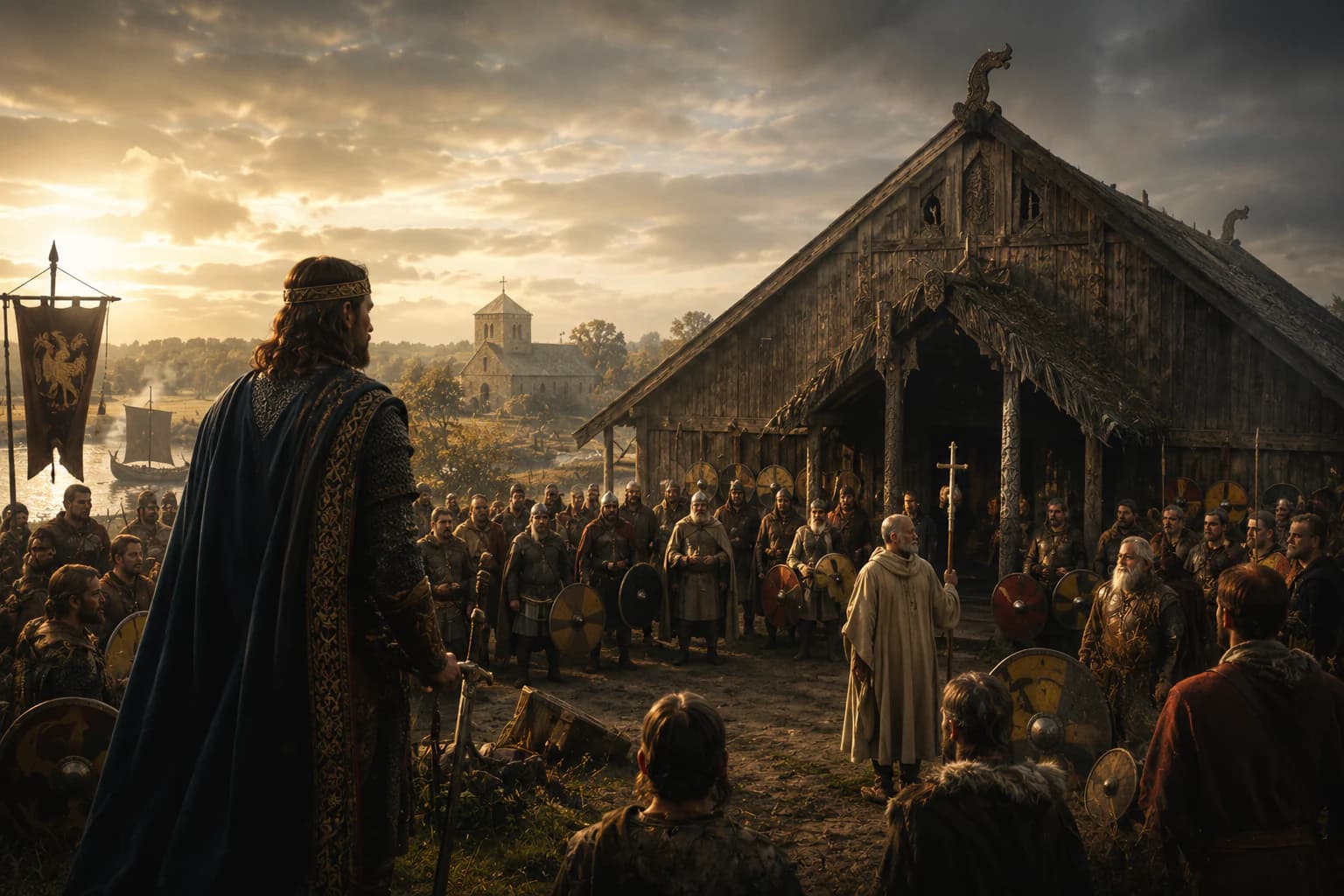
Gregory's decision to send a mission to the Anglo-Saxons of Britain was driven by a long-standing personal concern. Tradition records that he had encountered Anglo-Saxon slaves in a Roman market and been struck by their appearance — the story of the 'Angles not angels' pun attributed to him may be legendary, but it reflects a genuine pastoral interest. The mission he dispatched under Augustine reached Kent in 597 and was received by the Kentish king Æthelberht, whose Frankish Christian wife may have eased the welcome. Over the following years the mission achieved real conversions, established sees, and planted institutional roots. Gregory maintained close correspondence with Augustine throughout, advising on the practical and pastoral challenges of evangelising a pagan people.
A strategic pastoral vision, backed by sustained institutional support, can transform a society across generations.
590–604
Theological legacy
Alongside his administrative burdens, Gregory produced a body of writing that shaped western Christian thought for hundreds of years. His Regula Pastoralis — a guide to the duties and character of a bishop — was translated into English by Alfred the Great and was still being read in the high medieval period. His Moralia in Job, a lengthy commentary on the biblical book, became a foundational text of monastic spirituality. His homilies on the Gospels and Ezekiel were preached and copied widely. He also played a central role in developing the liturgical forms of the western church, and the tradition of Gregorian chant — though its direct connection to Gregory is debated by scholars — bears his name as recognition of his influence on church music.
Administrative and intellectual legacies reinforce one another: the institutions Gregory built carried the ideas he wrote, and vice versa.
601–604
Final years
Gregory suffered from recurring illness throughout his papacy — gout was a persistent affliction, and in his later years his physical condition deteriorated significantly. His letters from the final period describe a man who could barely rise from his bed but who nevertheless continued to manage correspondence, adjudicate disputes, and maintain the administrative functions of the papacy. He died in March 604. The church he left was materially different from the one he had inherited: more organisationally coherent, more theologically defined in the west, and more politically active than it had been before him. He had served as pope for nearly fourteen years — years he had not sought and which had cost him the tranquillity he craved.
The sustained performance of demanding duty, over a long period, in conditions of physical suffering, is its own form of moral testimony.
After 604
Gregory the Great
The posthumous recognition Gregory received was rapid and broad. He was canonised almost immediately after his death, venerated across the western church, and eventually declared a Doctor of the Church. The title 'the Great' reflects the historical consensus that his papacy was genuinely transformative. He had taken an institution whose temporal authority was fragile and uncertain and given it administrative, pastoral, missionary, and theological foundations for centuries of medieval development. Later popes would make claims Gregory himself did not formulate in their high medieval form, but they operated in a world he helped create: a western church able to govern, correspond, send missions, manage property, discipline clergy, and imagine Rome as more than a relic of empire.
The most enduring institutional legacies are often not what their architects designed, but what later builders chose to do with the foundations.