Complete chronology
Full overview and deeper context for every journey step.
1946–1968
Political family roots
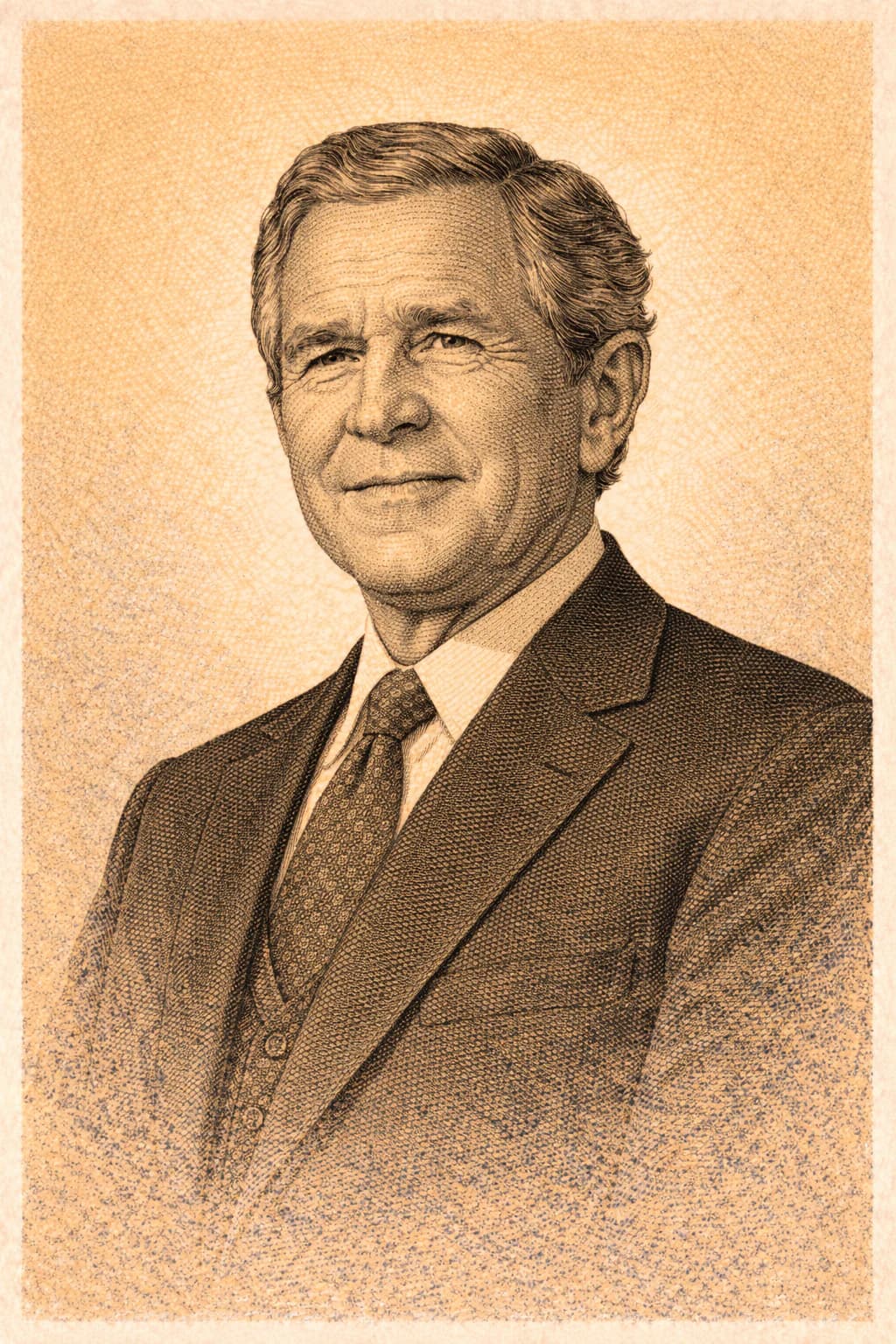
George Walker Bush was born on 6 July 1946 in New Haven, Connecticut, and raised largely in Texas, where his father, George H. W. Bush, built an oil career before entering national politics. Bush grew up inside privilege, expectation and competition, but he cultivated a more informal style than his patrician background suggested. He attended Andover, Yale and Harvard Business School, moved through the Air National Guard during the Vietnam era, and spent years searching for a settled identity. The family name opened doors, but it also created comparison. His later political appeal depended partly on making inherited status sound like plainspoken Texas confidence.
Growing up near power gave him familiarity, but not a predetermined path.
1968–1985
Searching direction
Bush's early adult life was uneven. He worked in the Texas oil business with mixed results, benefited from networks of family and investors, and later became part-owner and public face of the Texas Rangers baseball team. He also struggled with drinking before giving up alcohol in 1986, a decision he connected to religious renewal and personal discipline. These years matter because they shaped the redemption story central to his political persona: a restless son who found faith, purpose and executive confidence. Critics saw privilege repeatedly rescued by connections. Supporters saw maturity, warmth and resilience. Both readings followed him into office.
Periods of uncertainty can quietly shape future clarity.
1985–1994
Turning toward politics
Bush's political apprenticeship came through family campaigns and one early defeat. He ran unsuccessfully for Congress in West Texas in 1978, then helped with his father's presidential campaigns in 1988 and 1992. He learned message discipline, donor politics, evangelical outreach and the emotional mechanics of campaigning. By the early 1990s he had become more than a political son. He had built relationships with Texas conservatives and national Republican strategists, including Karl Rove. His style emphasized personal connection, nicknames, confidence and simplified moral framing. That style could be effective and polarizing, often at the same time.
Observation and participation laid the groundwork for his eventual leadership role.
1995–2000
Governor of Texas
Bush defeated Ann Richards in 1994 and served as governor of Texas from 1995 to 2000. He branded himself a 'compassionate conservative,' mixing tax cuts, faith-friendly social policy and education accountability. Texas governors operate within a relatively weak executive system, so Bush's success depended on negotiation with the legislature, including Democrats. Education testing and standards became central to his national pitch. His governorship made him look disciplined, likable and electable to Republicans seeking a post-Clinton candidate. It also revealed a governing habit that would recur: set broad goals, delegate heavily, trust loyal advisers and communicate in simple moral terms.
State leadership gave him a platform to demonstrate pragmatic governance.
2000
Contested election
The 2000 election against Al Gore became one of the closest and most disputed in American history. The result turned on Florida, recounts, ballot design, legal challenges and the Supreme Court's decision in Bush v. Gore, which effectively ended the recount and gave Bush the presidency through the Electoral College while Gore won the popular vote. Bush entered office promising bipartisanship and a more humble foreign policy, but also carrying questions of legitimacy among opponents. His early agenda focused on tax cuts, education reform through No Child Left Behind and faith-based initiatives. Then September 2001 changed the scale and direction of his presidency.
Starting under dispute forced him to prioritize legitimacy and unity.
2001
September 11 attacks
The attacks of 11 September 2001 killed nearly three thousand people and transformed Bush from a contested domestic president into a wartime commander in chief. His public response combined grief, resolve and a broad promise to pursue terrorist networks and the states that supported them. The United States invaded Afghanistan to destroy al-Qaeda's base and remove the Taliban government that had sheltered it. At home, the administration created the Department of Homeland Security, expanded surveillance powers through the Patriot Act and built new detention and interrogation policies. The central question of the Bush presidency became how far fear, security and executive power should reach after catastrophe.
Crisis can redefine a presidency more than any campaign promise.
2001–2008
Wars abroad
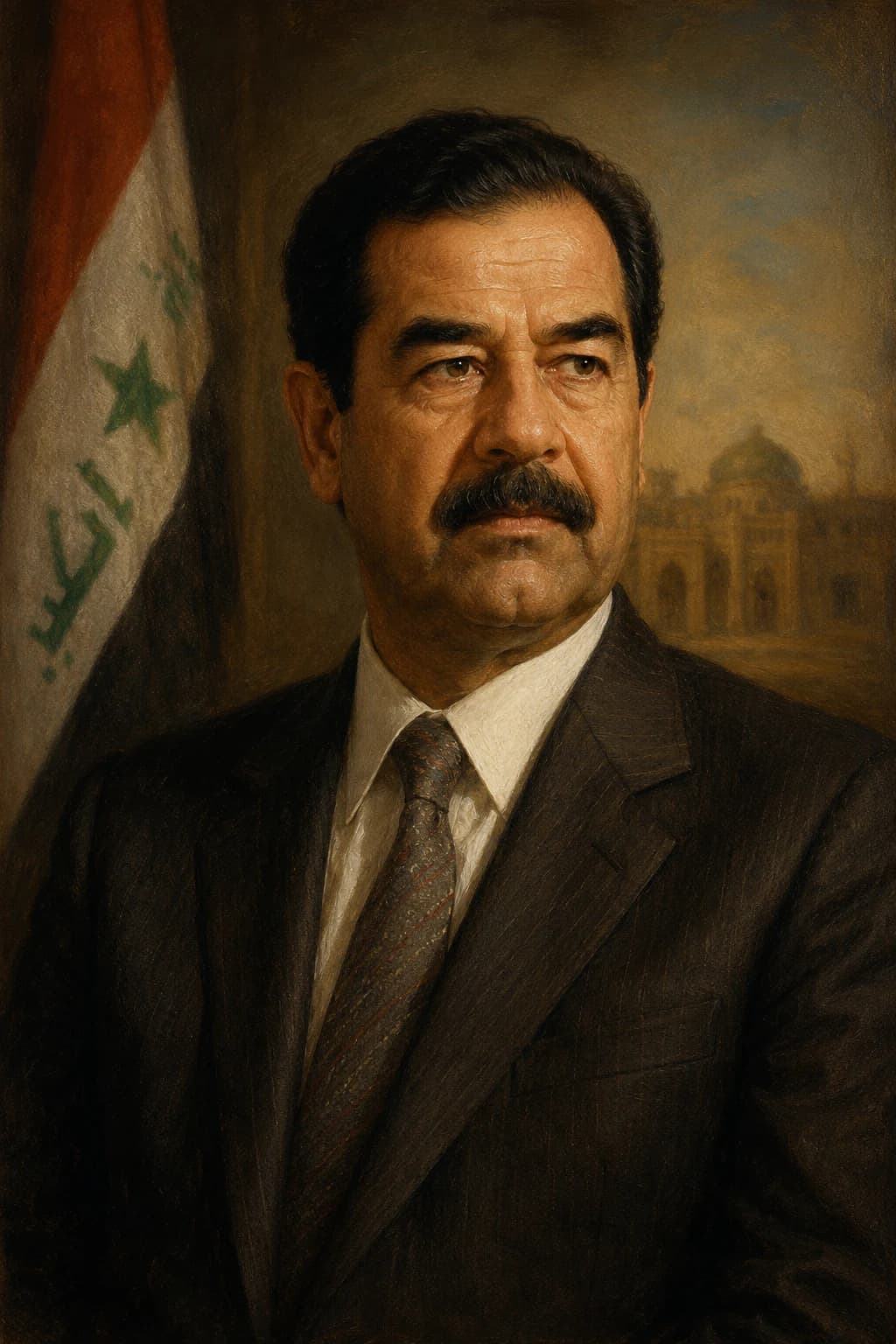
Afghanistan initially appeared successful, but al-Qaeda's leadership escaped and the conflict became a long struggle over insurgency, state-building and regional politics. Iraq became the more controversial war. In 2003 Bush ordered an invasion based on claims that Saddam Hussein possessed weapons of mass destruction and that Iraq belonged within a wider strategy to transform the Middle East. No active WMD stockpiles were found. The overthrow of Saddam was rapid; the occupation was not. Insurgency, sectarian violence, Abu Ghraib, civilian casualties and the later troop surge defined the war's political cost. Supporters argued Bush removed a brutal dictator and pursued democracy under threat. Critics argued the war was unnecessary, poorly justified and strategically damaging.
Long-term conflicts reveal the limits of initial military success.
2007–2008
Economic downturn
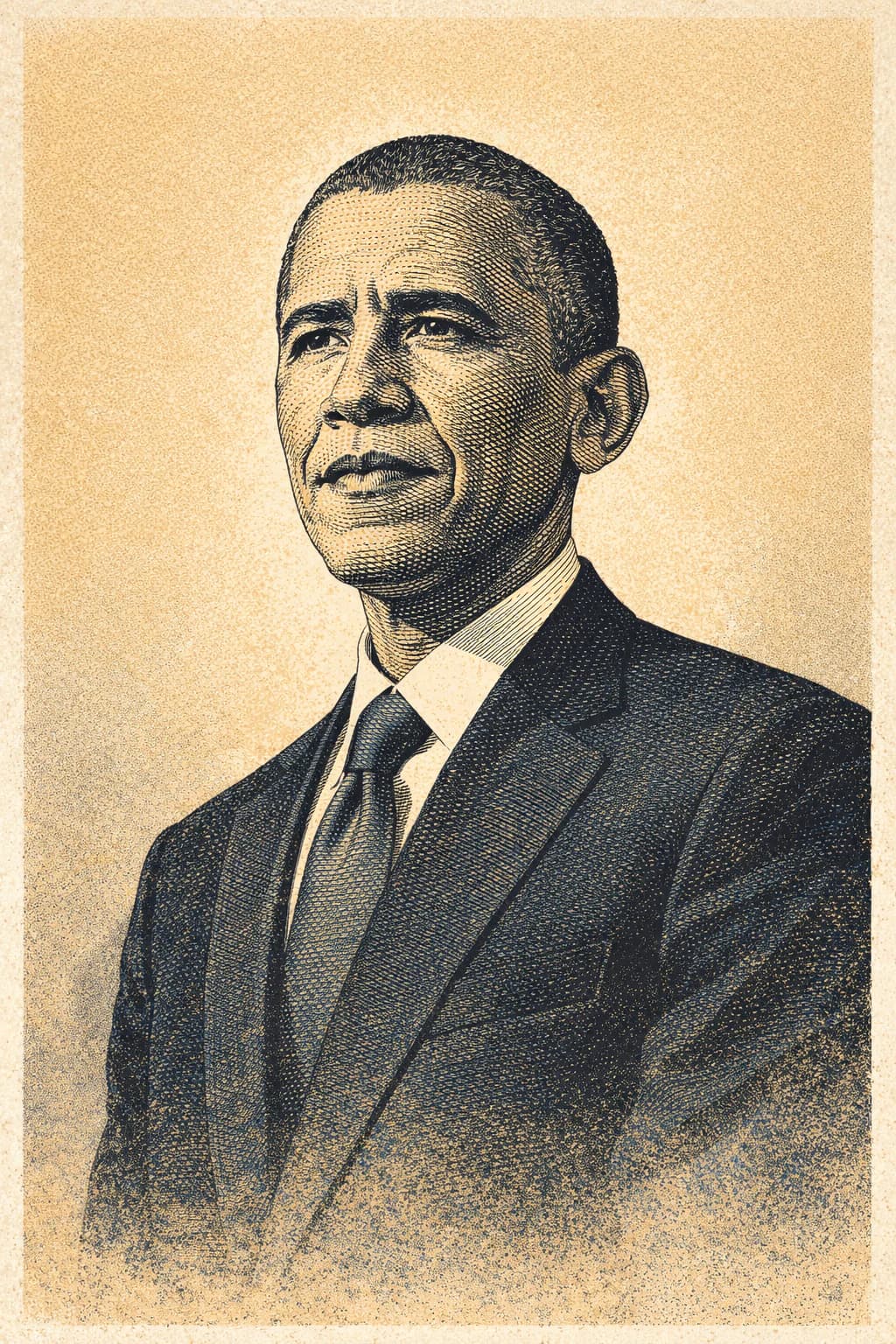
Bush's second term was damaged by Hurricane Katrina in 2005, when federal, state and local failures after the flooding of New Orleans exposed racial inequality, bureaucratic weakness and presidential detachment. Then the financial crisis of 2007-2008 struck near the end of his presidency. The housing bubble, mortgage-backed securities and fragile financial institutions threatened global collapse. Bush supported extraordinary intervention, including the Troubled Asset Relief Program, despite conservative discomfort with bailouts. The crisis added a domestic catastrophe to a presidency already defined by war. It also helped elect Barack Obama, whose campaign promised a break from Bush-era foreign policy and economic management.
Economic crises can redefine how leadership is remembered.
After 2009
Post-presidency
After leaving office in 2009, Bush largely withdrew from partisan combat, focusing on veterans, global health initiatives, painting and the George W. Bush Presidential Center. His personal favorability improved as he became less central to daily politics, but historical judgment remains sharply contested. His presidency includes major domestic policies, including tax cuts, Medicare Part D and No Child Left Behind, but its core legacy is 9/11 and the wars that followed. To ask why George W. Bush was important is to confront the power of crisis to redirect a presidency and the difficulty of measuring leadership when decisions made in fear reshape the world for decades.
Historical judgment often shifts as events are viewed from a longer distance.