Complete chronology
Full overview and deeper context for every journey step.
1784–1791
Orphaned beginnings
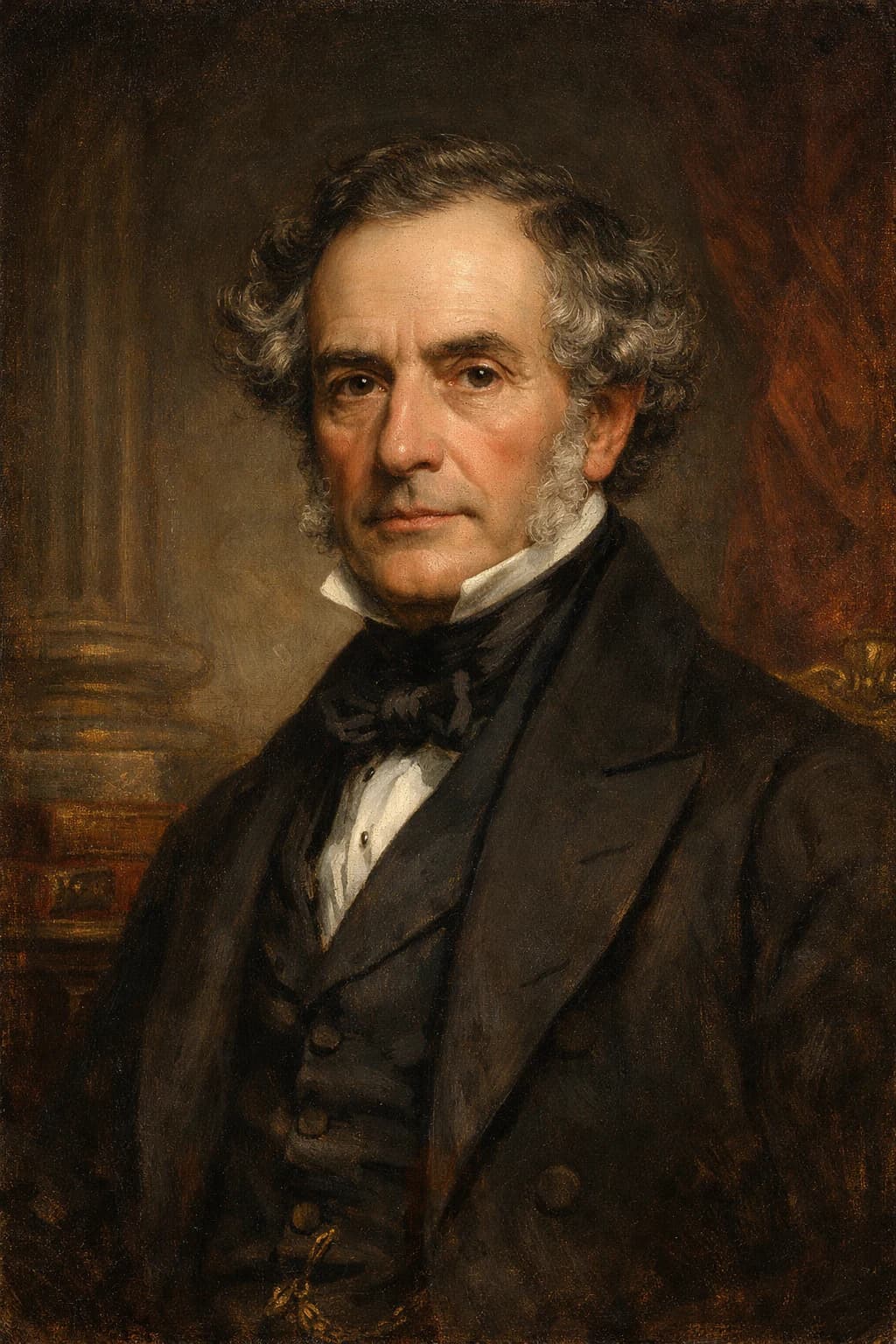
George Hamilton-Gordon was born in Edinburgh on 28 January 1784, inheriting aristocratic rank alongside early loss. His father died before he was born, and his mother died when he was still a child. As 4th Earl of Aberdeen, he possessed status, estates and access to elite politics, but his personality developed around reserve rather than display. Contemporaries often found him cold, though the surface hid deep feeling and intellectual seriousness. That emotional discipline shaped his public life. Aberdeen preferred careful judgment, private conversation and measured diplomacy to theatrical parliamentary combat. Those qualities would make him respected in foreign affairs and vulnerable in crisis leadership.
Early isolation fostered the careful, inward style that later shaped both his strengths and his limitations.
1790s–1800s
Intellectual formation
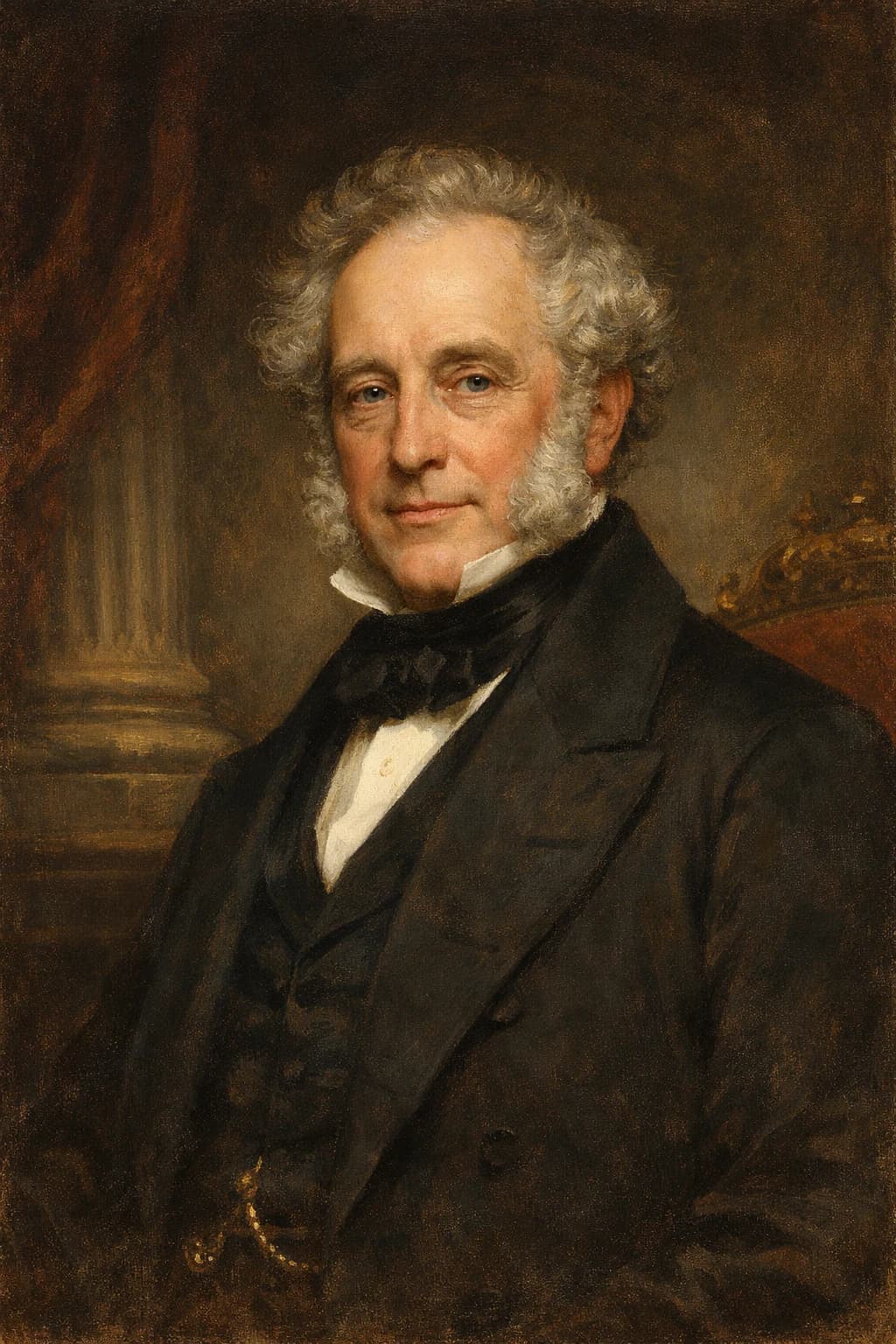
Aberdeen was educated at Harrow and St John's College, Cambridge, then deepened his formation through travel, classical study and art collecting. He became a serious scholar of ancient Greece and developed a European sensibility unusual in politicians whose world was mostly Westminster. Travel during and after the Napoleonic age taught him that states had fears, histories and interests that could not be wished away. He believed diplomacy required understanding an opponent's position before demanding compliance. This made him more sympathetic to negotiation than to public bluster. It also made him liable to underestimate the political force of public outrage at home.
Exposure to Europe taught him to value dialogue over force, a principle he struggled to uphold in turbulent times.
1806–1812
Entering politics
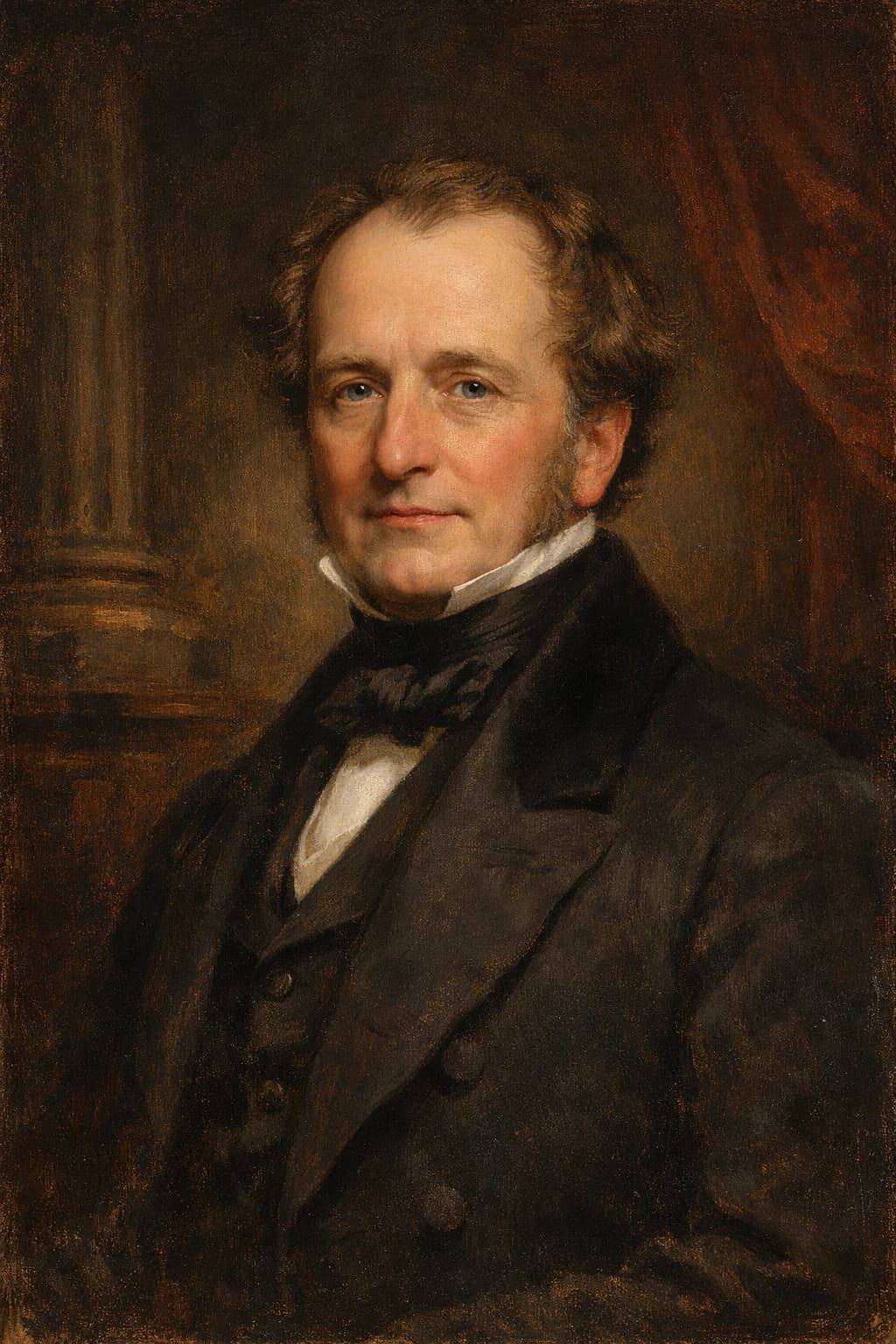
Aberdeen entered the House of Lords in a Britain dominated by the struggle against Napoleon. He was not a popular tribune and never needed to win a Commons seat, but he gained respect through knowledge, seriousness and aristocratic independence. His first major public role came through diplomacy rather than domestic agitation. In 1813 he was sent as ambassador to Austria, where he worked amid the coalition politics that brought Napoleon down. This experience mattered because it placed him inside the European balance of power at a formative moment. Aberdeen learned to value alliances, restraint and the painstaking management of great-power suspicion.
He built influence quietly, relying on consistency rather than charisma.
1810s–1820s
Diplomatic reputation
After Napoleon's defeat, Aberdeen became associated with the conservative diplomacy of European settlement. He attended the negotiations around the allied coalition and later served as Foreign Secretary under Wellington from 1828 to 1830. He was not an isolationist, but he disliked crusading foreign policy. He wanted Britain to preserve stability, avoid unnecessary wars and maintain relations with powers whose governments British liberals might dislike. This made him a natural opponent of Palmerston's more assertive style. Aberdeen's reputation rested on trust: foreign courts believed he meant what he said, and British colleagues knew he understood Europe in detail.
His success abroad rested on patience, even when domestic politics demanded quicker results.
1828–1830
Foreign Secretary
Aberdeen returned as Foreign Secretary under Robert Peel from 1841 to 1846, the office in which his abilities were most visible. He helped settle dangerous disputes with the United States, including the Webster-Ashburton Treaty over the Maine boundary, and managed the Oregon question without war. He supported Peel's broader politics of administrative competence and cautious reform, including the repeal of the Corn Laws, which split the Conservative Party. Aberdeen's foreign policy was not glamorous, but it prevented conflict at moments when national pride could easily have escalated. His achievement was negative in the best diplomatic sense: crises did not become wars.
Leadership in diplomacy revealed the tension between caution and the need for decisive action.
1852
Coalition leadership
Aberdeen became prime minister in December 1852 at the head of a coalition of Peelites, Whigs and radicals after the fall of Derby's minority Conservative government. His cabinet contained formidable talents, including Lord John Russell, William Gladstone and Lord Palmerston, but also competing ambitions and different instincts about reform and foreign affairs. Aberdeen's personal integrity helped hold the arrangement together at first. He was trusted because he was not seen as a schemer. Yet coalition leadership required more than moral authority. It required the ability to impose priorities on men who believed they were prime ministers in waiting.
His strength in compromise became a weakness when unity required firm direction.
1853–1856
Crimean War
The crisis over the Ottoman Empire, Russia and the Holy Places drew Aberdeen into the very kind of conflict he had spent his career trying to avoid. He understood Russian power and did not want Britain dragged into war by prestige and press pressure. But he also could not allow Russia to dominate the Ottoman question or split Britain from France. The result was drift: negotiation failed, public opinion hardened, and Britain entered the Crimean War in 1854. Once war began, administrative weaknesses became brutal facts. The suffering of British troops before Sevastopol, exposed by newspaper reporting, shocked the public. Aberdeen's caution, once valued as wisdom, now looked like fatal hesitation.
A leader shaped by peace found himself judged harshly in war.
1855
Fall from power
The fall of Aberdeen's government came after demands for inquiry into the conduct of the war. The Roebuck motion in 1855 exposed how little confidence Parliament still had in the ministry. Aberdeen resigned rather than try to survive a verdict that implied failure of leadership. Palmerston, more energetic and better matched to wartime public mood, succeeded him. Aberdeen's removal did not instantly fix the army, but it satisfied the demand that someone be held responsible. His downfall shows a recurring truth of government: when systems fail visibly, integrity is not enough. The public wants command, accountability and evidence that suffering has been understood.
His departure showed how quickly public trust can erode when leadership seems uncertain in crisis.
1855–1860
Measured legacy
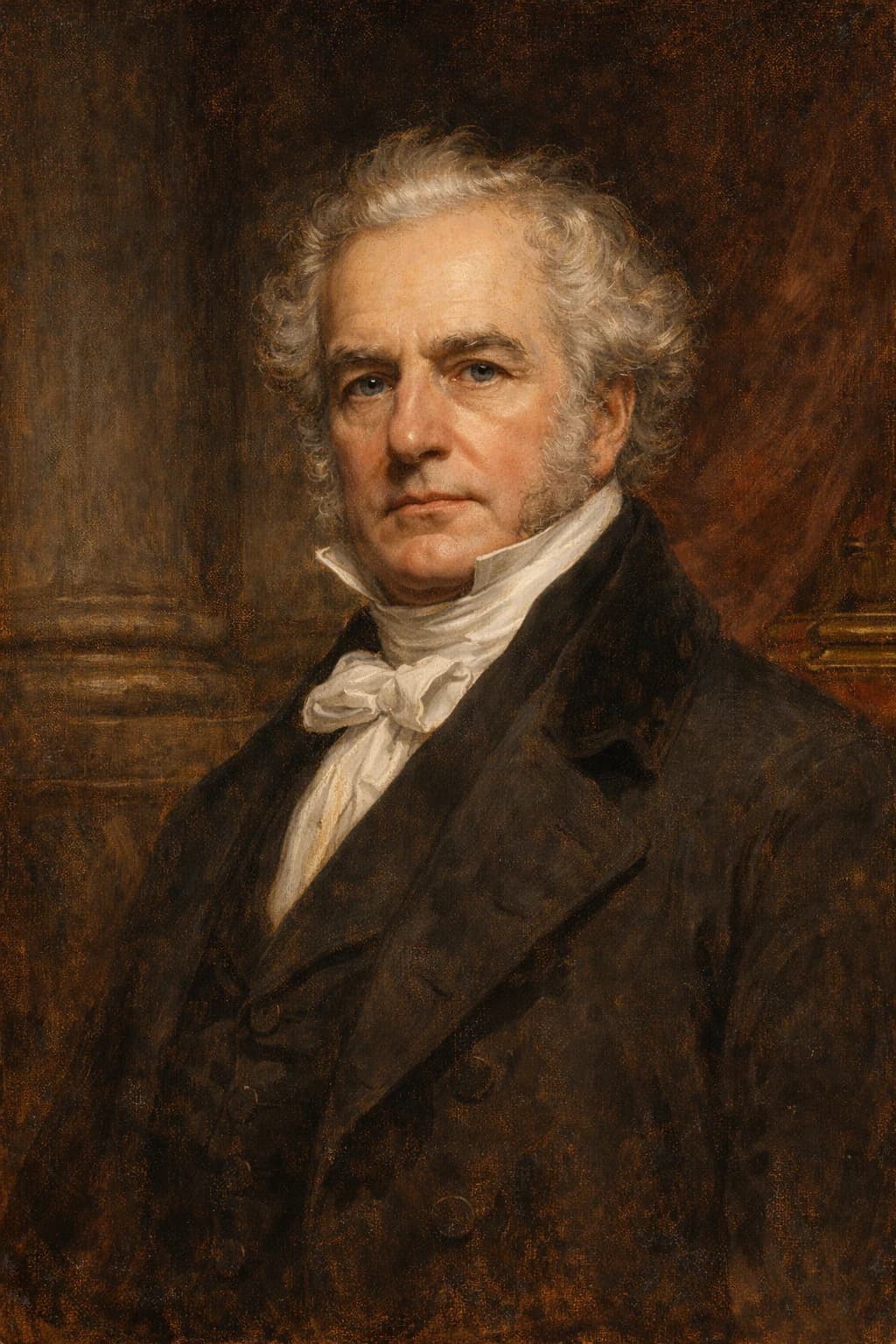
Aberdeen died in 1860, respected personally but permanently marked by Crimea. His legacy is more balanced than the old caricature of a weak premier suggests. As a diplomat, he helped keep peace, settle disputes and maintain British credibility without theatrical aggression. As prime minister, he failed to control a coalition and a war that demanded speed, clarity and administrative pressure. The same temperament that made him a trustworthy negotiator made him seem inadequate when soldiers were dying from mismanagement. To ask why Lord Aberdeen was important is to see how nineteenth-century Britain valued peace until war began, and then punished the peacemaker for not becoming a war leader quickly enough.
His life illustrates how context can redefine a leader’s strengths as weaknesses.