Complete chronology
Full overview and deeper context for every journey step.
-157
Humble beginnings
Gaius Marius was born in 157 BC at Arpinum, a municipium southeast of Rome that had already produced ambitious Italian families but did not belong to the old senatorial core. Ancient writers often exaggerated his rustic simplicity, partly because Roman aristocrats enjoyed treating successful outsiders as crude. Still, Marius was a novus homo, a new man without consular ancestors, and that mattered in a republic where noble memory functioned almost like political currency. His rise depended on military service, patronage, marriage and relentless self-presentation. He learned early that Roman politics claimed to honor virtue while often rewarding birth. That tension shaped his career: he would use popular frustration with aristocratic failure to force open offices usually guarded by elite families.
Being excluded from elite networks pushed Marius to build power through innovation rather than inheritance.
-134
Early military service
Marius first gained serious notice during the Numantine War in Spain, serving under Scipio Aemilianus in a hard campaign that demanded discipline more than glamour. Spain taught Roman officers the value of endurance, logistics, camp order and command over men far from the rituals of the Forum. Marius built a reputation for toughness and competence, the qualities that could translate battlefield respect into political opportunity. He also saw that Rome's armies were changing. Long wars, distance from home and the strain on small landholders were weakening older assumptions about citizen service. Marius did not invent every later military development, but his experience gave him a practical understanding of where reform pressure was coming from.
Real battlefield experience shaped his belief that competence mattered more than social rank.
-119
Political ascent
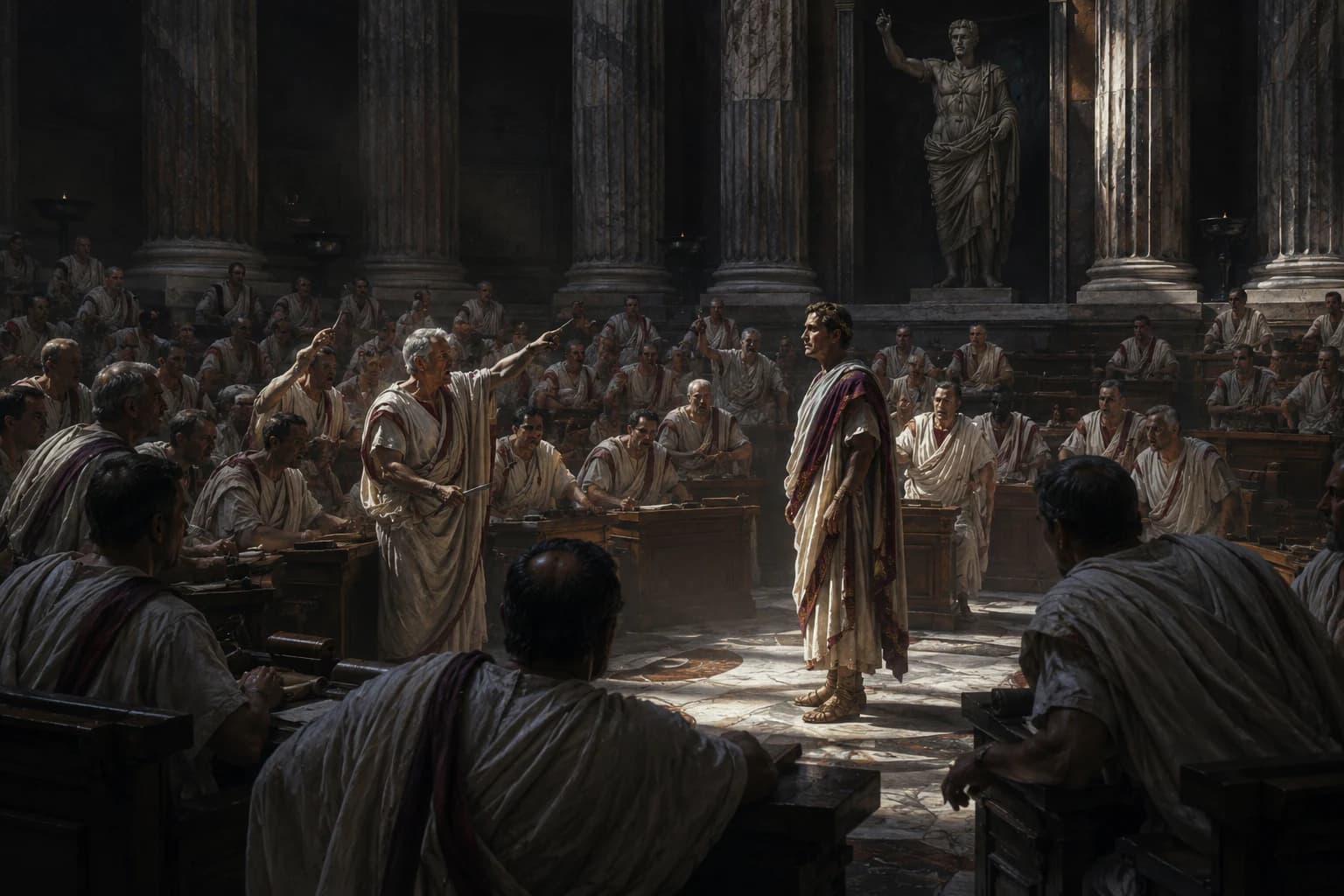
Marius entered Roman politics through the cursus honorum, winning the tribunate in 119 BC and later the praetorship, but his progress was uneven. He needed elite support, including connections with the powerful Metelli, and his marriage to Julia, aunt of Julius Caesar, tied him to an old patrician line. Yet he cultivated the image of a plain, soldierly alternative to aristocratic complacency. That image was powerful because Rome's voters were increasingly frustrated by corruption, military setbacks and senatorial self-protection. Marius did not reject the system; he fought to dominate it. His biography shows how the late Republic could reward a talented outsider while turning his resentment into political fuel.
He turned outsider status into a political advantage by aligning with broader public interests.
-107
Jugurthine War rise
The Jugurthine War in North Africa gave Marius his breakthrough. Rome's campaign against King Jugurtha of Numidia had become a scandal, exposing bribery, delay and noble incompetence. Marius, serving under Quintus Caecilius Metellus, turned public anger into a bid for the consulship in 107 BC and won command despite aristocratic resistance. He tightened discipline and pursued the war with persistence, though the final capture of Jugurtha depended heavily on Lucius Cornelius Sulla's diplomacy with King Bocchus of Mauretania. That detail later mattered, because Sulla never forgot that Marius received the greater glory. The war made Marius the man Rome turned to when noble leadership seemed exhausted.
Success in a difficult war transformed him from a rising figure into a national solution.
-107 to -100
Army reforms
The so-called Marian reforms are famous, but they need careful wording. Rome's army had already been evolving before Marius, and not every change can be pinned on one man. What he did do, in the context of manpower shortage and urgent war, was recruit capite censi, citizens with little or no property, into the legions. This widened the pool of soldiers and strengthened the move toward longer-serving, more professional armies. Equipment, training, unit organization and the soldier's dependence on commanders for booty, land and discharge rewards all became more important. The reform solved a real military problem. It also helped shift loyalty from the abstract republic toward successful generals who could provide material futures.
His reforms solved immediate problems while quietly reshaping the political role of the army.
-102 to -101
Defeating northern threats
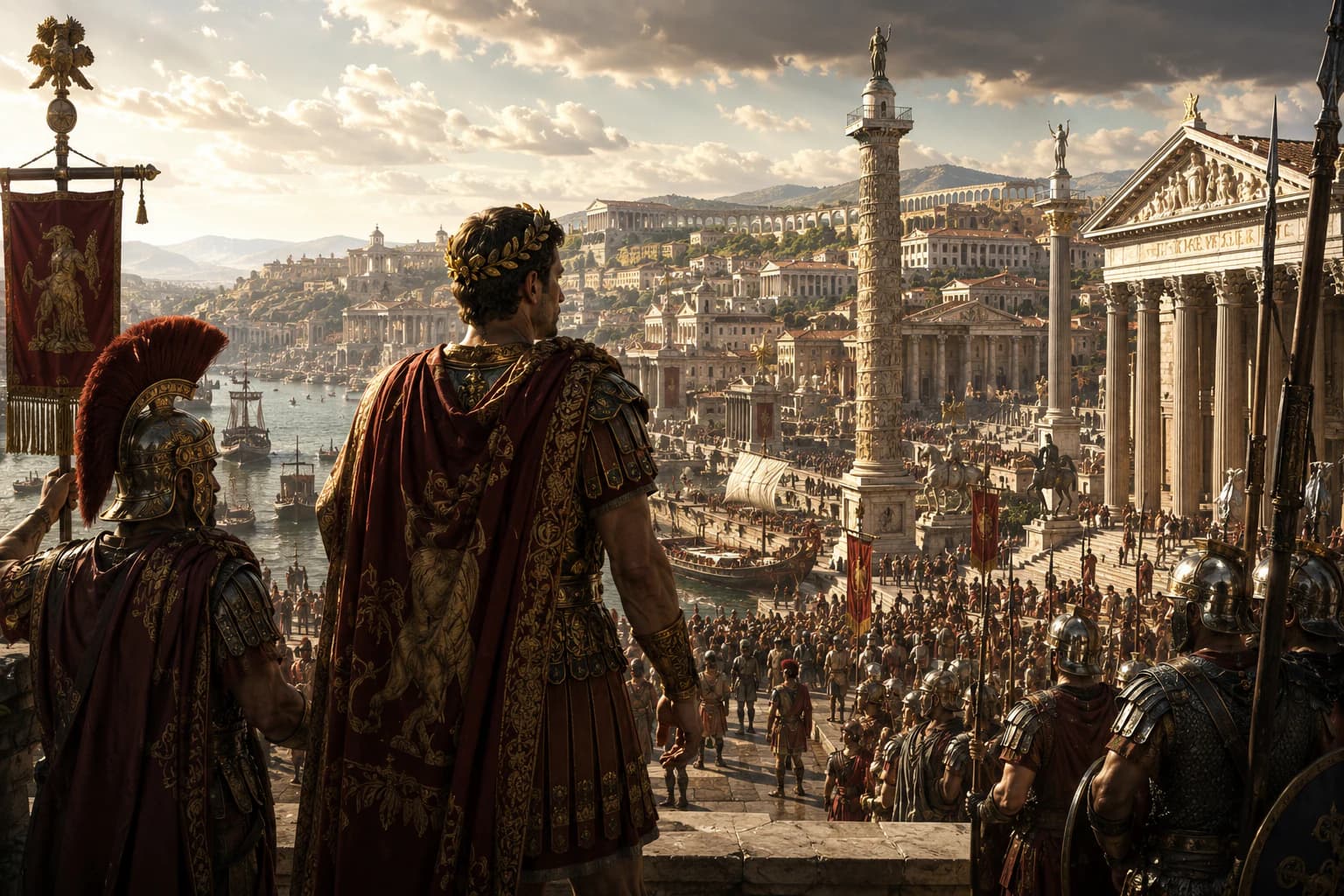
Rome's fear of the Cimbri and Teutones was intense because earlier Roman armies had suffered catastrophic defeats, including at Arausio in 105 BC. Memories of the Gallic sack of Rome still haunted aristocratic culture, and the prospect of northern peoples crossing into Italy created panic. Marius was elected consul repeatedly because the emergency seemed to demand his command. At Aquae Sextiae in 102 BC he defeated the Teutones; at Vercellae in 101 BC Roman forces crushed the Cimbri. These victories made him a savior figure. They also proved that extraordinary military necessity could justify extraordinary political office, a precedent the republic would struggle to contain.
Military triumphs strengthened his authority but also deepened reliance on individual leadership.
-104 to -100
Repeated consulships
Marius held the consulship seven times, including five consecutive years from 104 to 100 BC. Roman law and custom disliked such concentration of office, but fear of invasion made voters accept what would normally look dangerous. Once the emergency passed, the political cost became clearer. Marius had military glory but lacked the aristocratic ease and ideological subtlety needed to govern Rome's factions after victory. His alliance with popularis politicians such as Saturninus brought land proposals for veterans and confrontation with the Senate, but it ended in violence and embarrassment. The hero of Rome discovered that battlefield authority did not automatically produce durable political settlement.
Exceptional circumstances allowed him to bend rules that later leaders would break outright.
-88 to -86
Conflict and exile
The rivalry between Marius and Sulla turned personal competition into constitutional disaster. In 88 BC the command against Mithridates VI of Pontus became the prize. When political maneuvering transferred it from Sulla to Marius, Sulla did what no Roman commander had done before: he marched his army on Rome. Marius fled, humiliated and hunted, but returned when Sulla departed east. With Lucius Cornelius Cinna, he entered Rome in a violent reversal that brought killings and vengeance against enemies. The details are filtered through hostile sources, but the larger point is clear. The republic's disputes were no longer contained by elections, courts and senatorial bargaining. Armies now decided what politics could not.
His return showed that power in Rome was increasingly decided by force rather than consensus.
-86
End and legacy
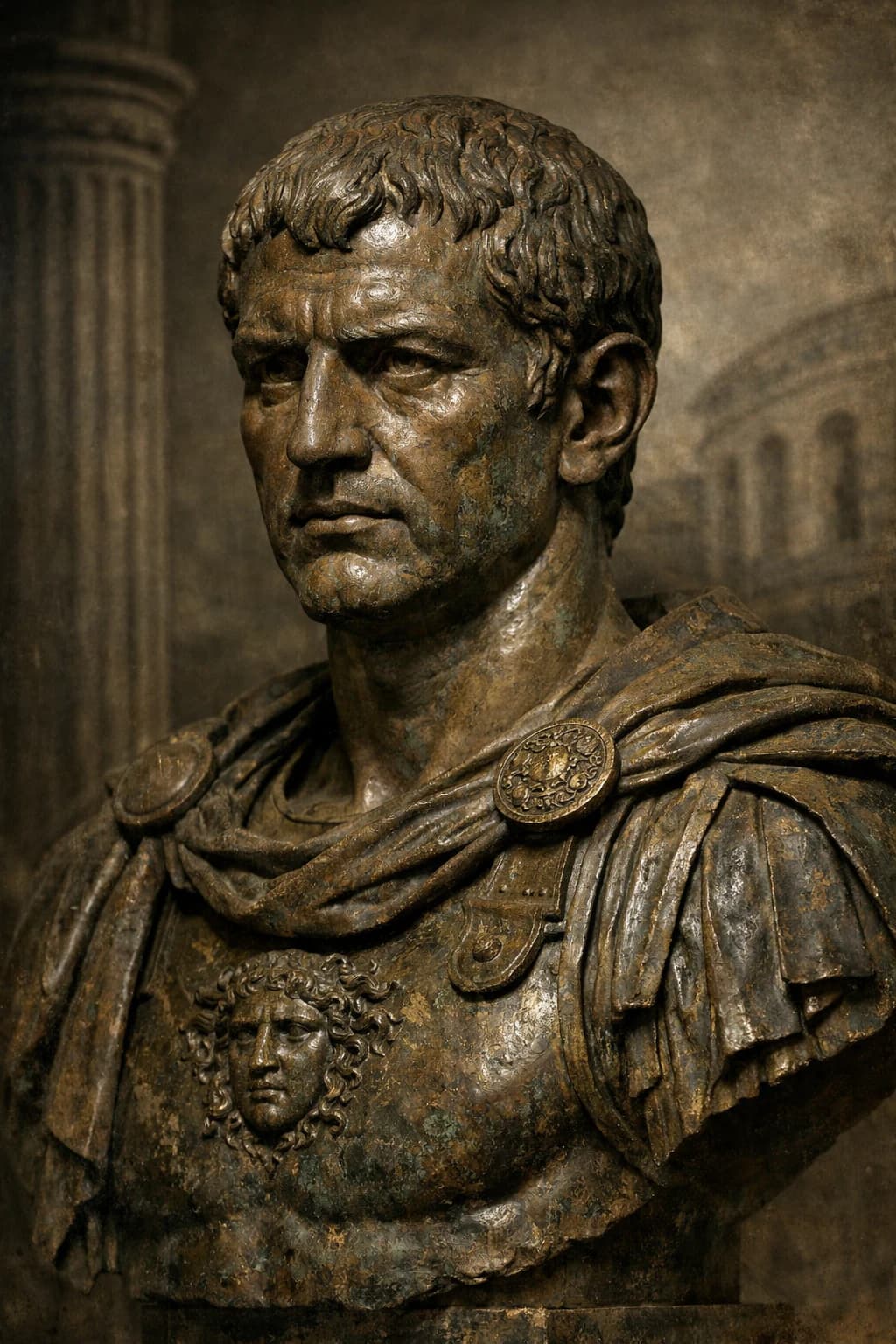
Marius achieved his seventh consulship in 86 BC and died only days into it, an old man at the center of a city scarred by political revenge. His legacy is inseparable from both rescue and ruin. He defeated enemies who genuinely threatened Rome, opened command to talent beyond the oldest noble houses and accelerated military changes that made Rome's armies more effective. Yet the patterns around him helped break republican restraint: repeated office, personal armies, veteran rewards, popular mobilization and violence against rivals. Marius did not cause the fall of the Republic by himself. But he showed later men, including Sulla, Pompey and Caesar, that a general with soldiers, grievances and popular legitimacy could bend the state around himself.
His legacy lies not only in what he achieved, but in the political patterns he set in motion.