Complete chronology
Full overview and deeper context for every journey step.
1312
Born into crisis
Edward III entered the world in November 1312 while his father's reign was already buckling under political pressure. Edward II's dependence on favourites, conflict with magnates, and later defeat at Bannockburn created a royal inheritance shadowed by mistrust. The younger Edward was not responsible for any of this, but dynastic reputation attaches itself early. He grew up in a court where kingship had become contested and where the authority of the crown could no longer be taken for granted. That background helps explain the energy of his adult rule. Edward III's reign would become, in part, a long project of restoration: restoring command, honour, military prestige, and the sense that the king of England could again lead rather than be managed.
A difficult inheritance can become the starting point for renewal rather than decline.
1327–1330
Under regency
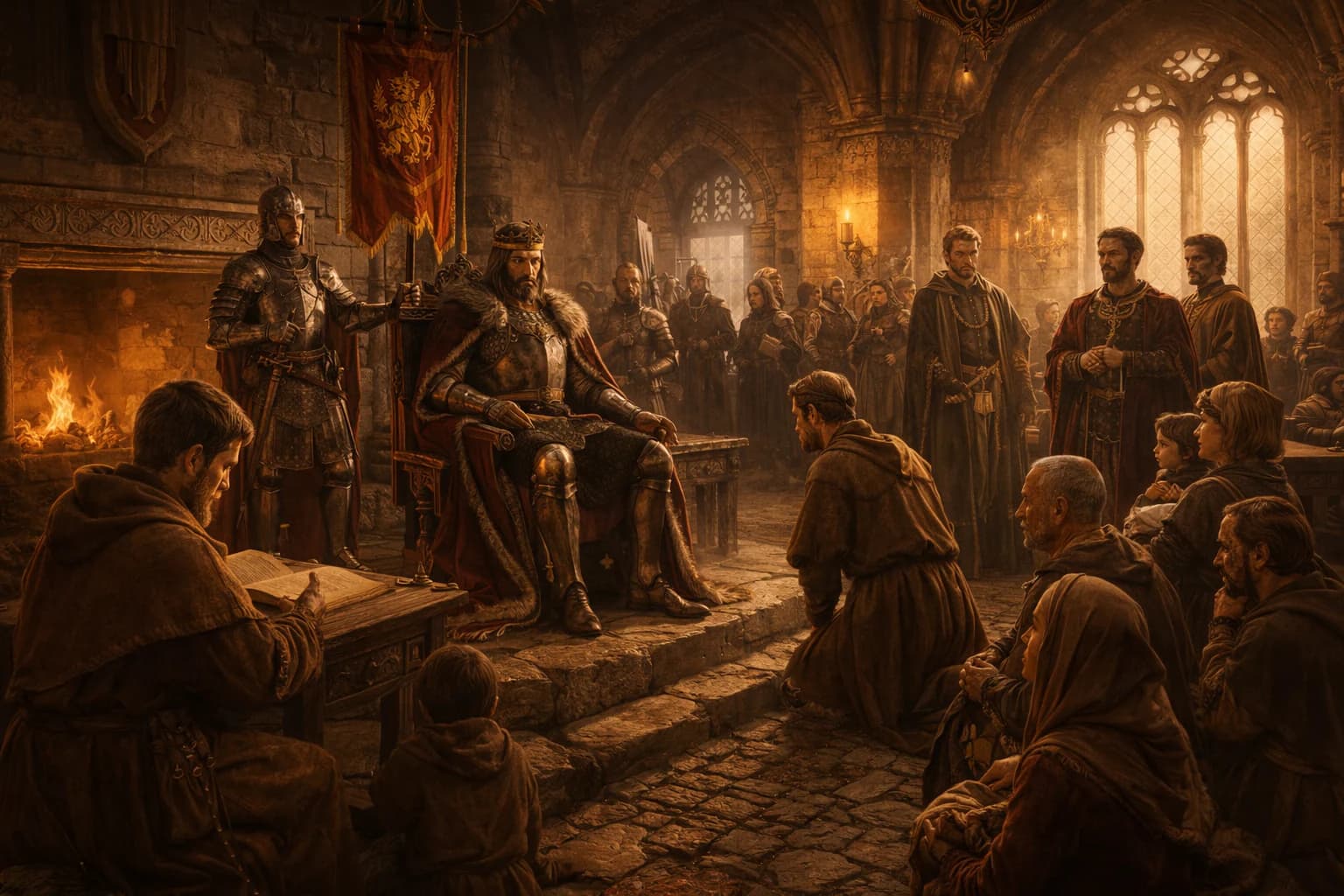
Edward III was crowned at fourteen, but the crown did not yet mean control. His mother Isabella and her ally Roger Mortimer governed in his name after overthrowing Edward II. At first their regime could claim to have rescued England from misrule, but it quickly acquired the same smell of monopoly and intimidation that had ruined the previous reign. Mortimer amassed titles, wealth, and influence, while the humiliating peace with Scotland in 1328 recognised Robert Bruce's kingship and abandoned English claims. For the young Edward, this was an education in the difference between ceremony and power. He was king in law, yet he watched another man exercise authority at the centre of government.
Experiencing powerlessness early can shape a ruler’s determination to later assert control.
1330
Seizing power
Edward's first great political act came at Nottingham Castle in October 1330. With a small group of trusted companions, he entered the castle through a secret passage, seized Mortimer, and ended the regime that had governed in his name. Mortimer was executed; Isabella was treated more carefully, removed from power but not destroyed. The coup mattered because it allowed Edward to present himself as the king who had rescued the crown from captivity. He was still young, but the action showed nerve, calculation, and an instinct for symbolic drama. From this point, his authority rested on personal initiative rather than inherited title alone.
A decisive break from earlier control can redefine a ruler’s legitimacy.
1337
Claim to France
Edward's claim to France was dynastic, legalistic, and opportunistic all at once. Through his mother Isabella, daughter of Philip IV of France, he could argue a blood claim to the Capetian succession after the direct male line failed. French political society rejected succession through the female line and accepted Philip VI of Valois instead. For years, Edward acknowledged Philip in awkward negotiations over Gascony, the English king's remaining continental possession. By 1337, conflict over feudal authority, alliances in the Low Countries, wool trade, and prestige pushed the dispute into open war. Edward's claim to the French crown did not simply express ambition. It gave a legal and emotional shape to a struggle over whether the king of England would remain a subordinate duke in France or challenge the Valois monarchy itself.
Ambitious claims can redefine a nation’s direction for generations.
1340s–1350s
Victories abroad
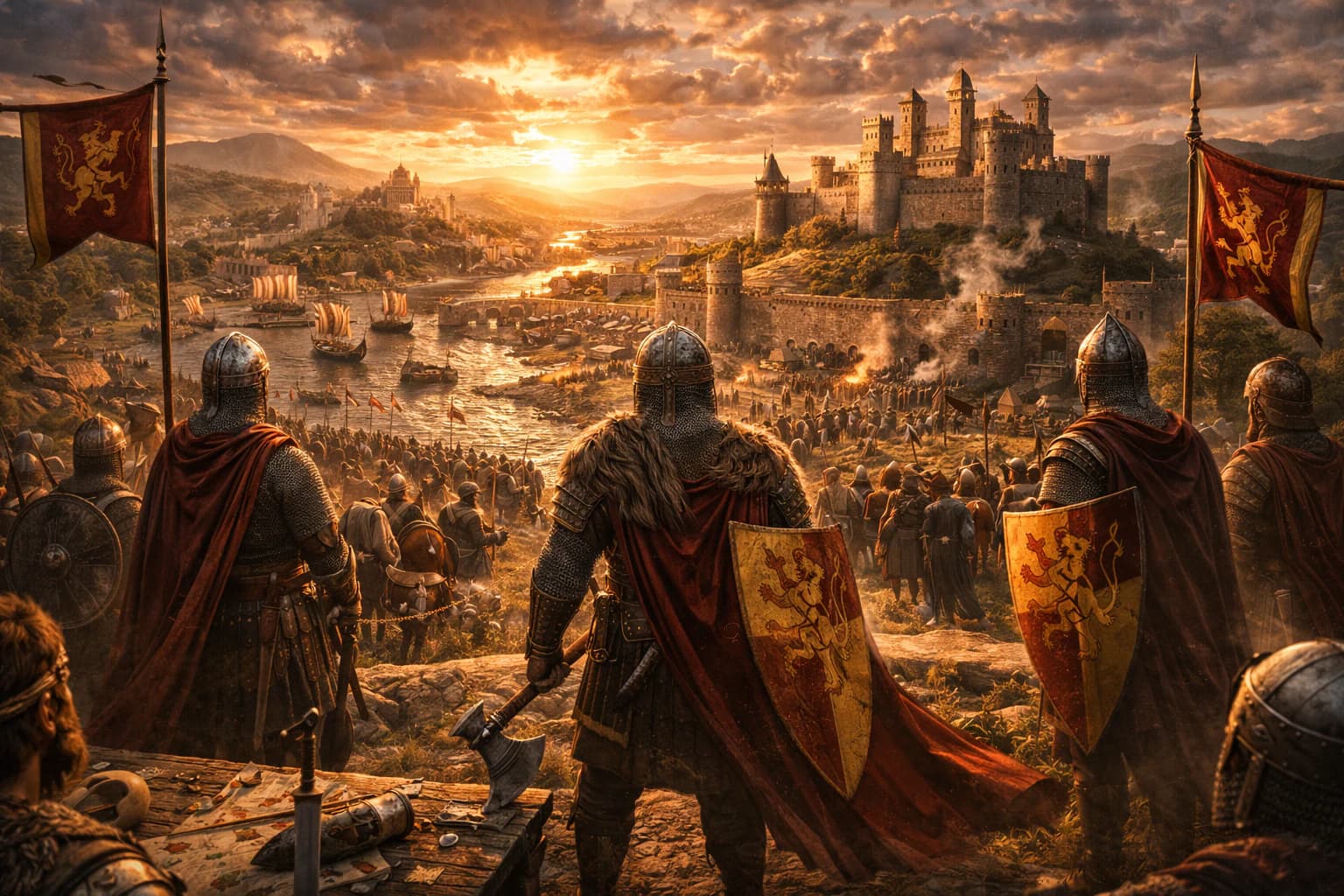
The first decade of the war made Edward look like the architect of a new English military age. At Sluys in 1340, he destroyed much of the French fleet, giving England control of the Channel. At Crecy in 1346, his army defeated a much larger French force through defensive positioning, disciplined command, and the destructive power of longbowmen. The following year, Calais surrendered after a long siege, becoming England's crucial foothold on the continent for more than two centuries. These victories did not conquer France, but they remade political imagination. English nobles could gain honour and profit in royal war; parliament could be persuaded to finance campaigns that seemed to produce glory; and Edward could present himself as the warrior king his father had never been.
Military success can reinforce authority and unify support behind a ruler.
1348–1350
The Black Death
The Black Death interrupted Edward's age of victory with a catastrophe no king could command away. From 1348 to 1350, plague killed a huge share of England's population, emptying villages, disrupting agriculture, and shaking assumptions about labour, wages, and social order. Edward's government responded with the Ordinance and Statute of Labourers, attempts to hold wages and workers to pre-plague conditions. These measures reveal the priorities of a landholding society frightened by scarcity and bargaining power among survivors. The crown could legislate, but it could not restore the lost population or undo the economic consequences of mass death. Edward's reign therefore sits at a turning point: medieval kingship at its most martial and confident, confronted by demographic change that would reshape England from below.
External crises can transform societies in ways even strong rulers cannot fully control.
1360s–1370s
Later struggles
Edward's high point came after his son, Edward the Black Prince, captured King John II of France at Poitiers in 1356. The Treaty of Bretigny in 1360 gave the English crown expanded territories in Aquitaine and a vast ransom, while Edward renounced his immediate claim to the French throne. It looked like astonishing success. Yet the settlement was difficult to make permanent. In the 1360s and 1370s, Charles V of France and his commander Bertrand du Guesclin avoided the kind of set-piece battles that had favoured the English. They recovered towns, rebuilt royal authority, and wore down English positions. The Black Prince's brutal sack of Limoges in 1370 damaged his reputation, while illness reduced his effectiveness. Edward's war had won glory, but holding conquest proved harder than achieving it.
Sustaining success over time often proves harder than achieving it initially.
1370s
Final years
The last phase of Edward's reign darkened the memory of its earlier brilliance. The king aged, withdrew from vigorous rule, and became increasingly associated with Alice Perrers, whose influence attracted bitter criticism. In 1376, the Good Parliament attacked corruption, impeached royal officials, and challenged the court circle around the king. That same year Edward the Black Prince died, removing the adult heir whose military fame had helped sustain the dynasty's prestige. The succession now passed to the prince's young son, the future Richard II. Edward III, once the model of restored royal command, ended his reign amid criticism, financial strain, military reversal, and uncertainty about minority rule.
A leader’s final phase can shape how their entire reign is remembered.
1377 onward
Enduring impact
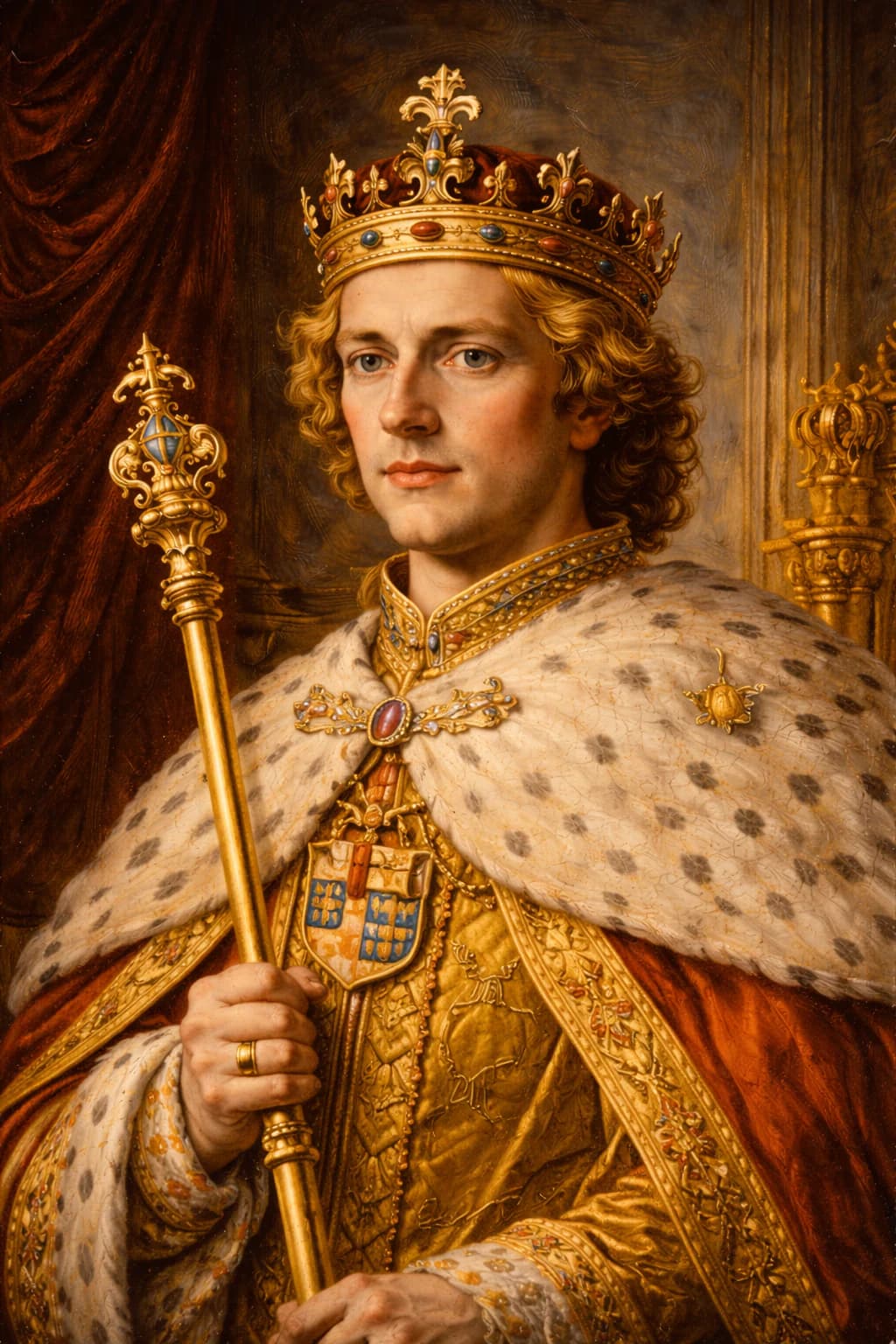
Edward III mattered because he made English monarchy feel powerful again after the disgrace of his father's reign. He overthrew Mortimer, ruled for half a century, cultivated chivalric kingship through the Order of the Garter, and turned war with France into a defining arena for aristocratic ambition and national prestige. His victories at Sluys, Crecy, Calais, and the wider success around Poitiers gave England a military mythology that would echo through later centuries. Yet his legacy was not simple triumph. The Hundred Years' War became a long burden as well as a source of glory. Taxation and parliament grew together because war had to be funded. His many sons created powerful dynastic lines whose rival claims would later feed the Wars of the Roses. Edward III revived royal confidence, but he also set England on paths that were expensive, violent, and difficult to leave.
A ruler’s influence can extend far beyond their lifetime through the paths they set in motion.