Complete chronology
Full overview and deeper context for every journey step.
1890
Kansas beginnings
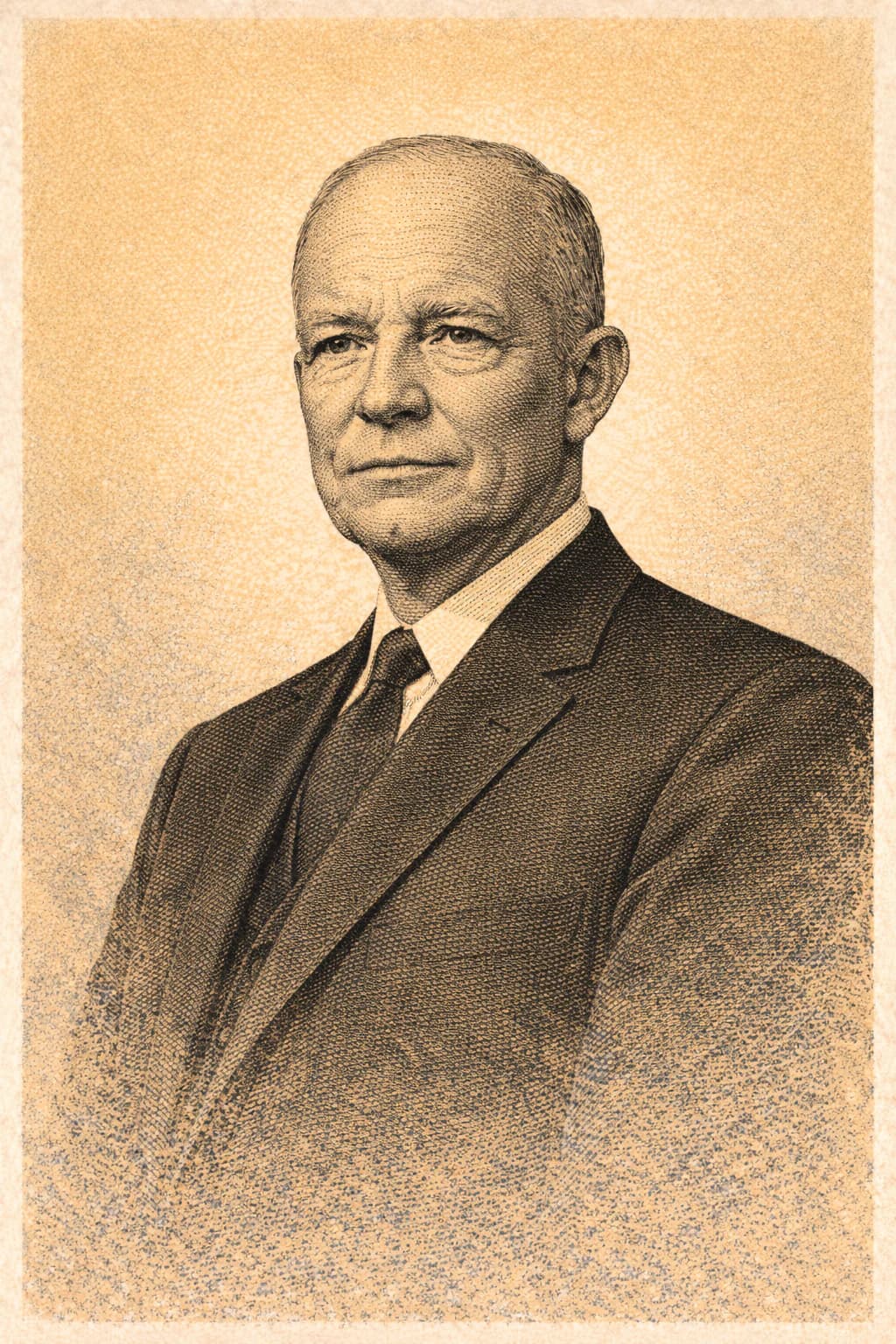
Dwight David Eisenhower was born in Denison, Texas, in 1890 and raised in Abilene, Kansas, in a large family with modest means and strong religious and moral discipline. His parents valued work, restraint, education, and self-command. Abilene gave Eisenhower a different political language from the aristocratic ease of some Allied leaders he later commanded. He learned to manage conflict without making every disagreement personal, a habit that became one of his greatest assets. His youth was not a straight road to power. He worked, played sports, absorbed lessons about cooperation, and developed the patient, watchful style that later made people underestimate him. Eisenhower’s strength was never flamboyance. It was the ability to keep pressure from turning into panic.
A restrained and disciplined childhood quietly prepared him for leadership under immense pressure.
1911–1915
West Point training
Eisenhower entered West Point in 1911 and graduated in 1915 in the famous class the stars fell on, so named because so many members later became generals. He was not the academy’s top scholar, and a football injury ended one early dream, but he excelled at relationships, discipline, and leadership among peers. West Point trained him to think institutionally: orders, chains of command, logistics, and the morale of groups mattered as much as individual brilliance. He also formed friendships and rivalries that would shape the U.S. Army for decades. Eisenhower’s gift was not battlefield glamour. It was the rare ability to earn trust across temperaments, a quality that later allowed him to manage generals more famous, more difficult, and sometimes more brilliant than himself.
Leadership often grows through collaboration and character rather than top academic performance.
1915–1941
Quiet early service
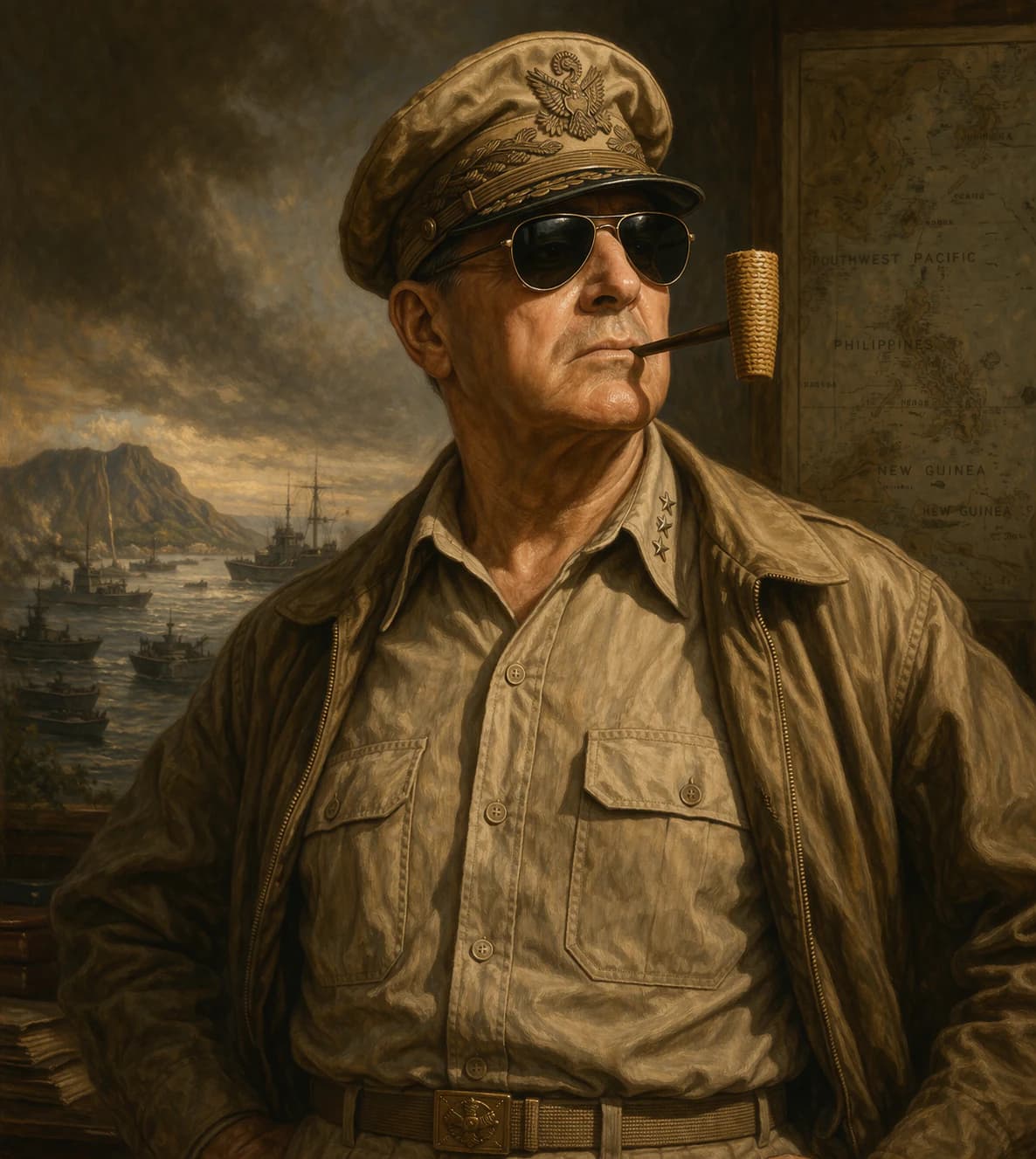
Eisenhower missed combat in the First World War, a disappointment that could have stalled a more theatrical officer. Instead, he became expert in training, tanks, staff work, and planning. He served under demanding mentors, including Fox Conner, John J. Pershing, Douglas MacArthur, and George C. Marshall. Conner in particular pushed him to study history, coalition war, and the dangers of unpreparedness. Eisenhower learned how armies move before they fight: transport, supply, staff coordination, maps, personalities, and political objectives. These were not glamorous lessons, but they were exactly the ones needed for modern war. By 1941 he had not commanded troops in battle, yet Marshall recognized in him the calm intelligence required to organize vast operations under pressure.
Preparation in overlooked roles can build the foundation for later decisive leadership.
1941–1942
Rapid promotion
After Pearl Harbor, Eisenhower’s career accelerated with astonishing speed. Marshall brought him to Washington, where he worked on war plans and quickly impressed senior leaders with clarity, discipline, and strategic breadth. The United States faced a global conflict requiring choices between Europe and the Pacific, coordination with Britain and the Soviet Union, and the rapid expansion of an army still learning modern coalition warfare. Eisenhower’s temperament mattered. He could absorb pressure, simplify complexity, and speak plainly to political leaders without grandstanding. In 1942 he was sent to command U.S. forces in the European theatre and then Allied operations in North Africa. His rise was not luck alone. War exposed the value of the staff officer who could turn competing ambitions into a workable plan.
Moments of crisis often accelerate the rise of those prepared to handle complexity.
1942–1944
Allied commander
Eisenhower’s command in North Africa, Sicily, Italy, and then northwest Europe taught him that coalition warfare is part strategy, part diplomacy, and part emotional discipline. He had to work with Winston Churchill, Franklin Roosevelt, Bernard Montgomery, George Patton, Charles de Gaulle, and commanders whose national priorities did not always align. His genius was not that he always made the best tactical judgement; it was that he kept the alliance functioning. In 1943 he was chosen as Supreme Allied Commander for Operation Overlord, the invasion of France. The appointment recognized his political-military skill. He could make British and American forces accept one command structure, keep egos contained, and preserve unity long enough for industrial power and battlefield planning to take effect.
Successful leadership at scale depends as much on diplomacy as on strategy.
1944
D-Day invasion
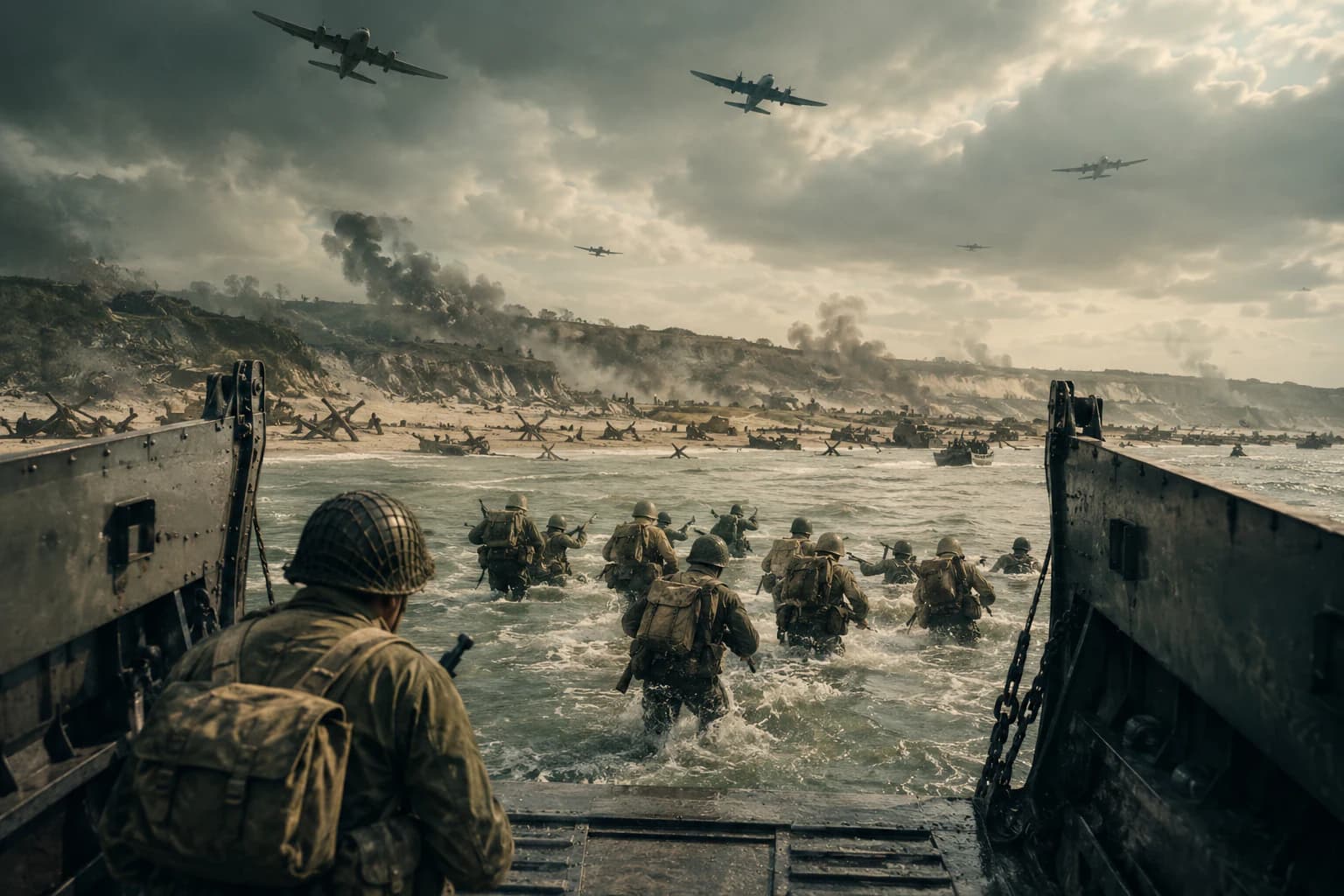
D-Day on 6 June 1944 was the largest amphibious invasion in history and one of the most dangerous decisions of the war. Eisenhower had to approve the launch despite uncertain weather, German defenses, logistical complexity, and the knowledge that failure could delay liberation for months. The operation required coordination of armies, navies, air forces, deception plans, airborne drops, landing craft, supply chains, and political expectations. Eisenhower’s role was not to storm a beach but to decide when others would. Before the invasion, he drafted a note accepting full responsibility if it failed. That small document reveals his leadership better than any slogan. He understood command as accountability. The landings succeeded, opened the western front, and began the liberation of France.
Great leaders accept responsibility even when outcomes remain uncertain.
1945
Victory in Europe
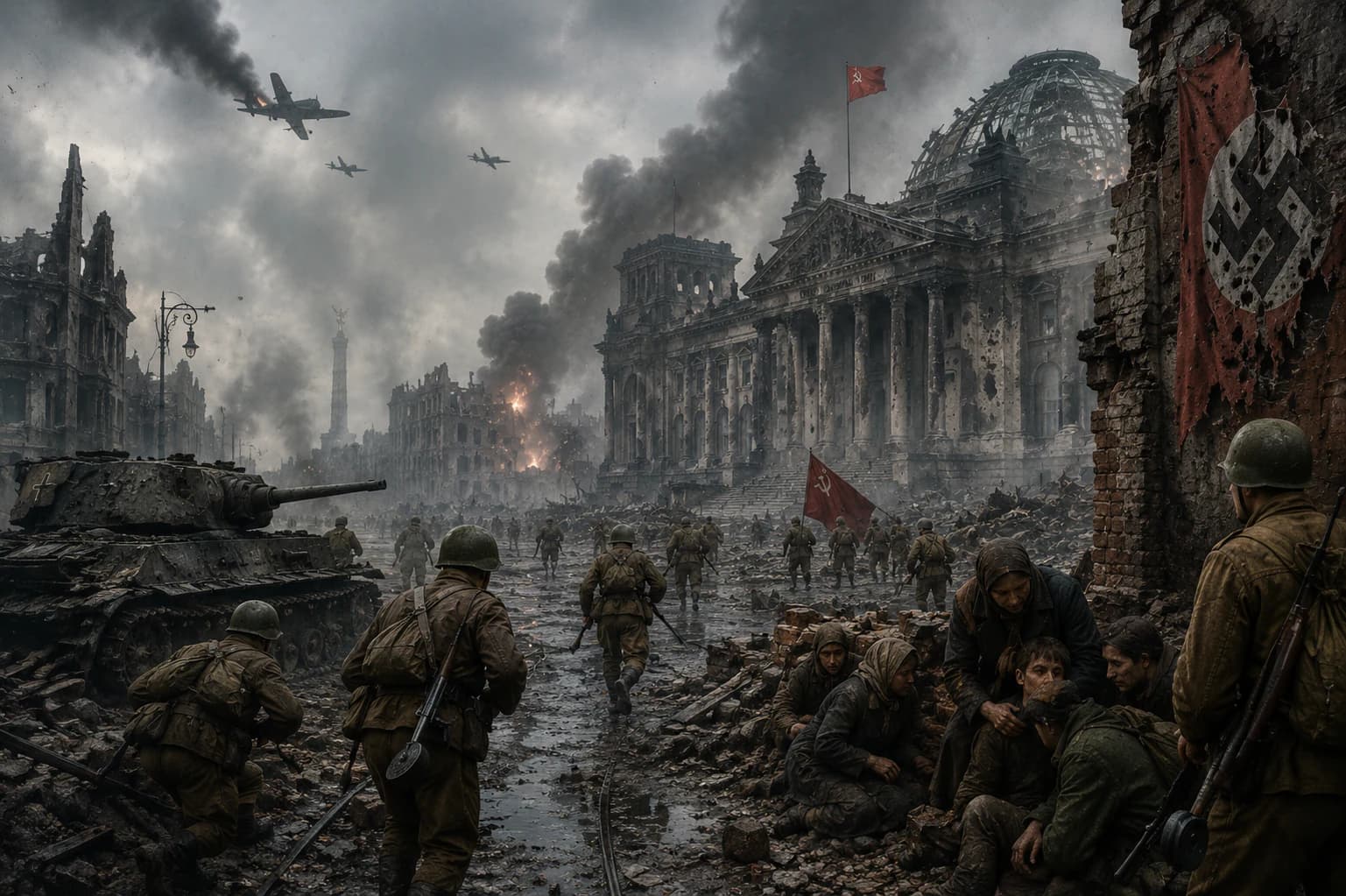
After Normandy, Eisenhower managed the long and costly campaign across France, Belgium, the Netherlands, and Germany. He faced arguments over broad-front strategy versus concentrated thrusts, the failure of Operation Market Garden, supply crises, Patton’s rapid advances, Montgomery’s demands, and the shock of the Battle of the Bulge. His decisions have been debated ever since, especially by admirers of more aggressive commanders. Yet Eisenhower’s central objective was to defeat Germany while keeping the alliance intact. He also insisted on witnessing the liberated concentration camps, understanding that evidence of Nazi crimes had to be preserved. Germany surrendered in May 1945. Eisenhower emerged as one of the few military leaders whose reputation rested as much on restraint and coordination as on victory itself.
Sustained coordination can turn initial breakthroughs into lasting success.
1953–1961
President years
Eisenhower became president in 1953 as a Republican who promised competence, peace, and balance after years of war and Cold War anxiety. He ended active U.S. fighting in Korea, expanded nuclear deterrence, relied on alliances, and used covert operations in places such as Iran and Guatemala, decisions whose consequences outlasted his presidency. At home he accepted much of the New Deal settlement, supported the Interstate Highway System, balanced budgets in several years, and governed with a cautious moderation that later historians have taken more seriously than many contemporaries did. Civil rights exposed both his caution and his constitutional responsibility: he signed civil rights legislation and sent federal troops to Little Rock in 1957 to enforce school desegregation. Eisenhower preferred order, but he knew federal authority sometimes had to defend it.
Steady, restrained leadership can be a deliberate strategy in uncertain global conditions.
1961–1969
Enduring influence
Eisenhower left office in 1961 with a farewell address that has become one of the most famous warnings in American political history. The former Supreme Allied Commander cautioned against the military-industrial complex, not because he was naive about danger, but because he understood permanent mobilization from the inside. He feared that democracy could be distorted by the alliance of defense spending, industry, technology, and political influence. His final years were spent as an elder statesman, respected even by many opponents. Eisenhower’s legacy is unusually balanced: victorious general, Cold War manager, infrastructure president, cautious civil rights enforcer, and critic of unchecked military power. He matters because he made restraint look like strength. In an age of ideological heat, he treated leadership as the discipline of preventing catastrophe.
Leaders who understand power deeply are often the most cautious in wielding it.