Complete chronology
Full overview and deeper context for every journey step.
1829–1850s
Early Life
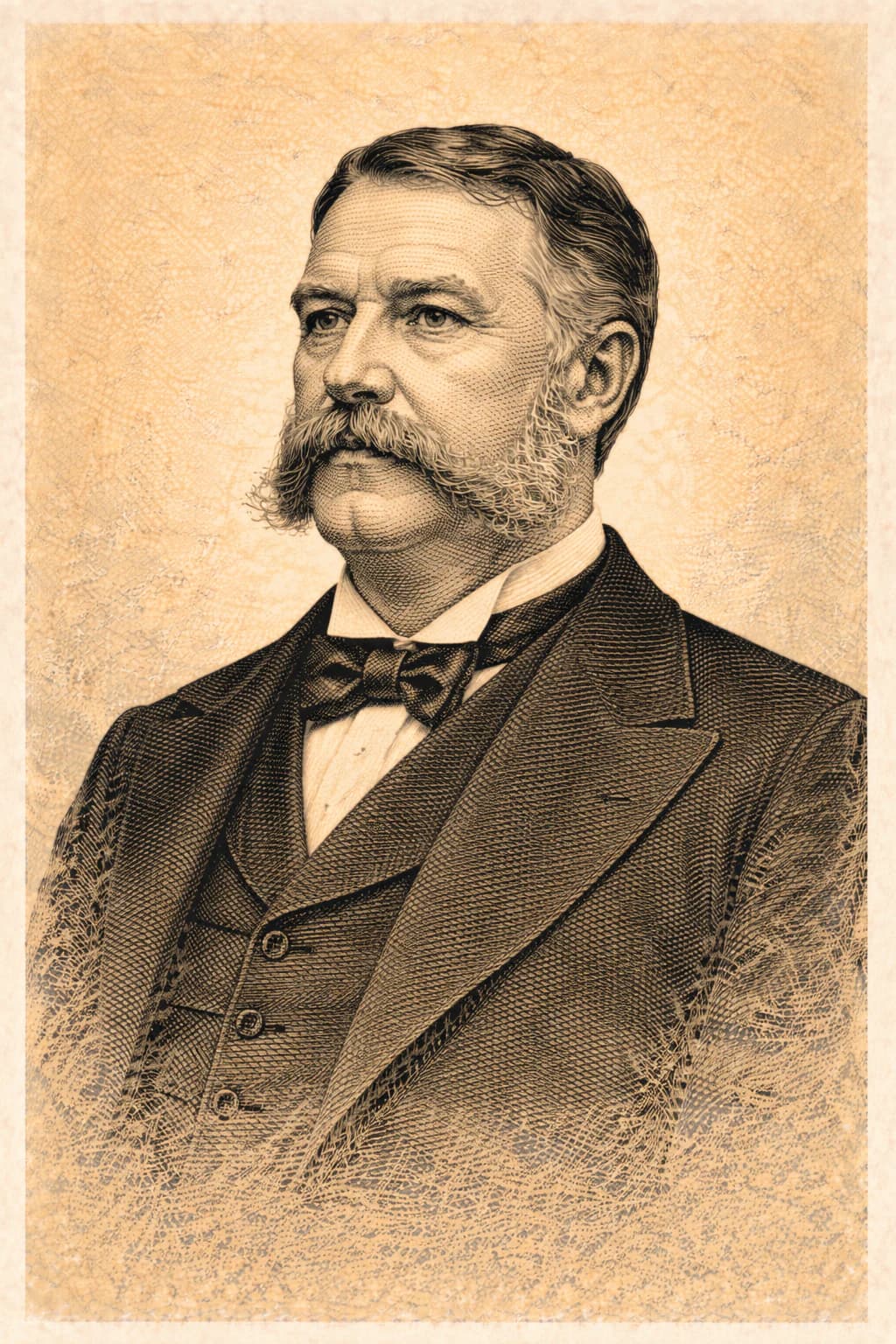
Chester Alan Arthur was born in Fairfield, Vermont, in 1829, the son of William Arthur, an Irish-born Baptist minister, and Malvina Stone Arthur. His childhood was shaped by sermons, schoolrooms, and frequent moves across Vermont and New York as his father took new posts. That background mattered. Arthur was not born into one of the old national political families, but he grew up in a home that valued literacy, argument, respectability, and public service. He attended Union College, taught school, studied law, and learned how a disciplined young man could climb in a society where education and connections were beginning to matter as much as inherited status. The future president would later become famous for polished manners and urban political skill, but the roots of that composure lay in a restless, self-improving northern upbringing.
A strong educational foundation gave him flexibility to move between professions and politics.
1850s–1860s
Legal Career
Arthur’s move into New York law placed him inside one of the most energetic and politically charged cities in the United States. He worked in the office of Erastus D. Culver, an antislavery lawyer and congressman, and became involved in cases that connected legal practice with the politics of civil rights. In the Lemmon slave case, Arthur helped challenge the claim that enslaved people brought into New York could still be held as property there. During the Civil War, he served as quartermaster general for New York, a logistical role that required organization rather than battlefield glory. He proved efficient, honest in office, and good at managing people. Those qualities made him useful to the Republican Party machine that was taking shape around wartime loyalty, patronage, and urban organization.
Professional success in a major city helped connect him to the networks that drive political advancement.
1860s–1870s
Party Involvement
Arthur rose through the Republican organization attached to Senator Roscoe Conkling, the dominant New York boss and leader of the Stalwart faction. The Stalwarts defended the patronage system: government jobs rewarded party loyalty, built campaign armies, and kept local organizations obedient. Arthur was not a demagogue or public visionary. His talent was managerial. He understood how appointments, favors, dinners, clubs, letters, and loyalties held a party together. That made him powerful, but it also fixed his public reputation. Reformers saw men like Arthur as polished servants of a corrupt system, even when they admitted his personal conduct was more respectable than the system itself. By the 1870s, he had become exactly the kind of insider that civil service reformers wanted to dislodge.
His rise was built on mastering the internal mechanics of party politics.
1871–1878
Customs Collector
The Collector of the Port of New York controlled one of the richest federal offices in the country. Customs duties supplied a huge share of government revenue, and the New York Custom House employed hundreds of men whose jobs could be used to strengthen party discipline. Arthur held the post from 1871 until 1878, and by most accounts he ran the office capably, even elegantly. The problem was not simply personal dishonesty; it was the structure of power. Employees were expected to contribute to campaigns, political loyalty mattered, and public administration blurred into party maintenance. President Rutherford B. Hayes, determined to weaken Conkling’s machine, removed Arthur from the office. The dismissal humiliated Arthur, but it also made him a symbol of the very patronage order that would define the crisis of his presidency.
His role showed how governance and political reward were deeply intertwined in the era.
1881
Vice Presidency
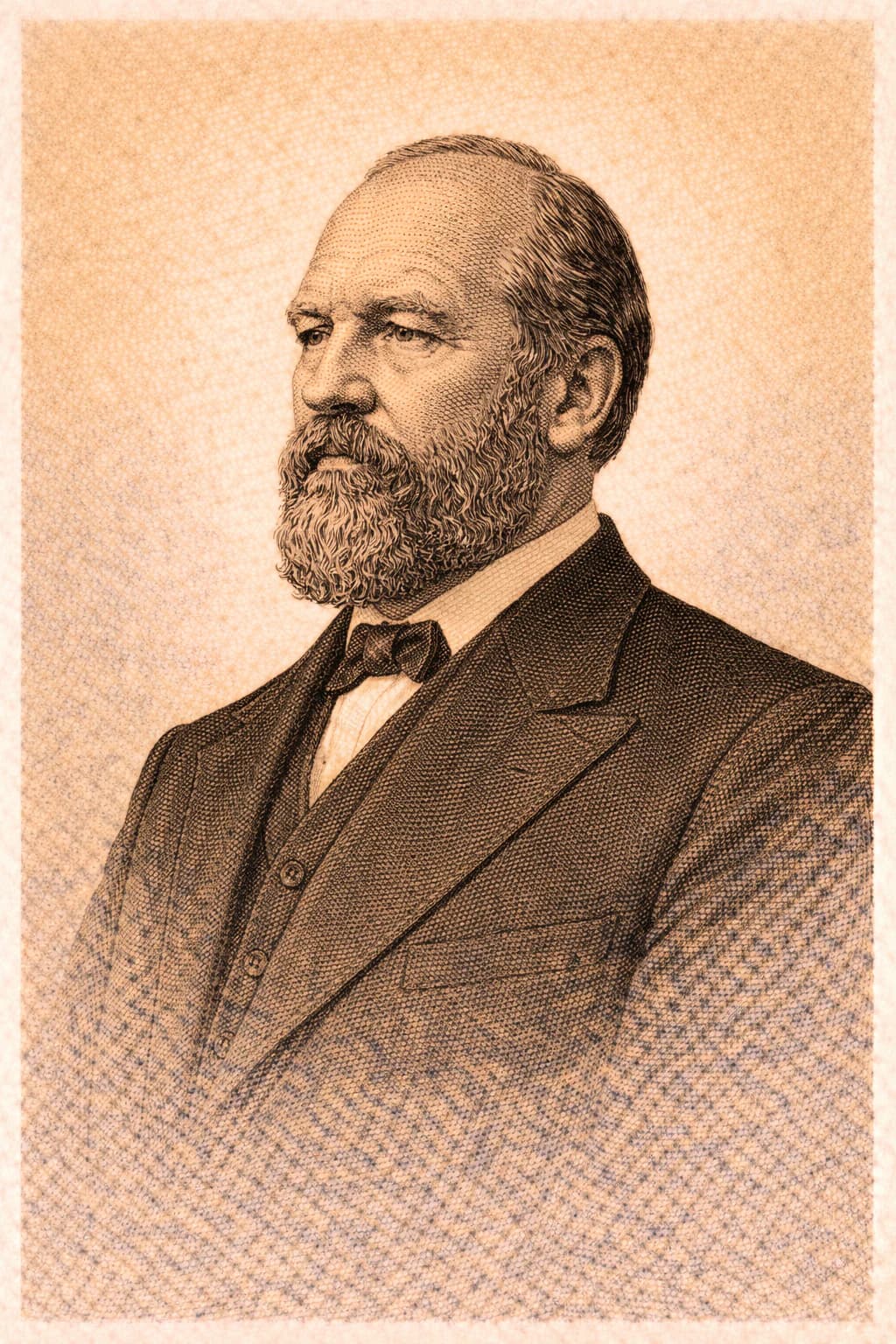
Arthur became vice president because the Republican Party needed factional balance. James A. Garfield, associated with the Half-Breed wing of the party, required a Stalwart running mate to keep New York and Conkling’s supporters inside the coalition. Arthur accepted the nomination against Conkling’s advice and entered an office with little formal power but immense symbolic risk. Many reformers regarded him as a troubling choice: a machine politician placed one heartbeat from the presidency. The fear grew sharper after Charles J. Guiteau shot Garfield in July 1881 while claiming, falsely and delusionally, to have acted for the Stalwarts. Arthur had no part in the crime, but the association was politically poisonous. Before he could lead, he had to survive suspicion.
Even seemingly secondary roles can become pivotal under changing circumstances.
1881
Unexpected Presidency
Garfield died in September 1881 after weeks of suffering, and Arthur became president under a cloud of grief, anger, and doubt. Few Americans expected greatness. Some doubted he had the moral independence to govern beyond Conkling’s shadow. Arthur understood the danger of appearing merely as the machine’s beneficiary. He moved cautiously, retained several Garfield men at first, and gradually showed an unexpected dignity in office. He also faced private illness, likely Bright’s disease, which limited his energy and may have deepened his sense that he had little time to build a reputation worth keeping. The presidency did not transform him into a radical reformer, but it forced him to choose whether he would remain a factional operator or become a national steward.
Unexpected leadership can create space for transformation under public pressure.
1883
Civil Service Reform
The Pendleton Civil Service Reform Act of 1883 became Arthur’s defining achievement. It created a Civil Service Commission and placed a portion of federal jobs under competitive examination rather than party recommendation. The law was limited at first, covering only part of the federal workforce, and patronage did not vanish overnight. Still, its principle was revolutionary in the world Arthur had inhabited: public office was not supposed to be private party property. Garfield’s assassination gave reform moral urgency, but Arthur’s signature gave it presidential force. The irony is the point. A man elevated by the patronage culture helped begin its long retreat. His support was practical, partly political, and perhaps partly personal, but the result changed the expectations of American government.
He redefined his legacy by supporting reforms that challenged the system he once benefited from.
1885
End of Presidency
Arthur’s presidency included more than civil service reform. He supported naval modernization, vetoed an extravagant rivers and harbors bill as wasteful, and signed the Chinese Exclusion Act only after vetoing an even harsher version, a reminder that reform in one field did not make his record morally simple. He sought the 1884 Republican nomination without much force, constrained by illness and lacking a natural factional home. The Stalwarts no longer fully trusted him, while reformers respected him more than they loved him. James G. Blaine won the nomination, and Arthur left office in 1885 with unusual restraint. He returned to New York, destroyed many personal papers, and died the next year, leaving historians with a presidency easier to reassess than to romanticize.
Even meaningful achievements do not always guarantee continued political support.
After 1886
Historical Legacy
Chester A. Arthur is important because his presidency exposes a central tension in Gilded Age America: a modernizing country was still governed through personal favors, party machines, and offices treated as rewards. Arthur did not end that world, but he helped make it harder to defend. His life moved from antislavery law to machine politics, from the New York Custom House to the White House, from suspicion to a measure of respect. He was no Lincoln, and he left no sweeping national vision. Yet the Pendleton Act gave later presidents and reformers a foundation on which to professionalize federal administration. Arthur’s legacy is therefore not loud but structural. He matters because he proved that an accidental president, even one formed by a compromised system, could choose to leave that system weaker than he found it.
His legacy shows how leaders can be redefined by the choices they make in office.