Complete chronology
Full overview and deeper context for every journey step.
1853
English beginnings
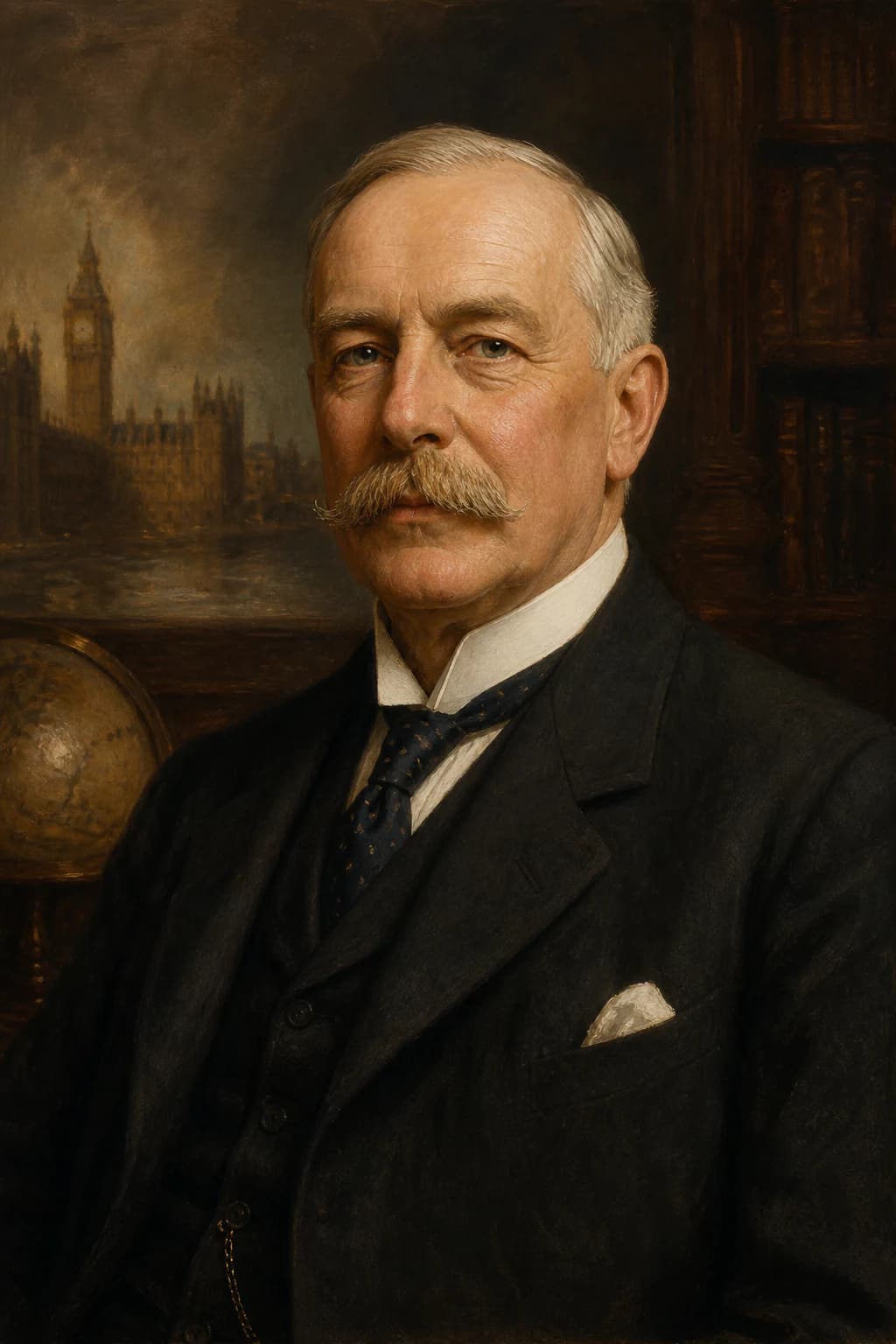
Cecil John Rhodes was born on 5 July 1853 in Bishop's Stortford, Hertfordshire, the son of an Anglican clergyman. In 1870 he was sent to southern Africa, partly for health reasons and partly to join a brother already there. The timing was decisive. Diamonds had been discovered around Kimberley, and a rush of prospectors, financiers, labourers, and speculators was remaking the interior. Rhodes arrived with limited means but extraordinary appetite. He worked claims, studied the market, and moved between South Africa and Oxford, cultivating both imperial confidence and social polish. His early life did not simply produce a businessman; it produced a man who imagined private wealth and British expansion as parts of one project.
Rhodes's career began where mineral wealth and imperial ambition met on the ground.
1870s-1888
Diamond wealth
Rhodes became rich by understanding that the diamond industry rewarded consolidation more than romance. Kimberley's early chaos gave way to corporate concentration, and Rhodes proved ruthless in the struggle to control claims and output. With allies and financiers, including support from the Rothschild banking network, he expanded his holdings until De Beers Consolidated Mines was formed in 1888. The company dominated diamond production and gave Rhodes the resources to enter politics on a scale few colonial politicians could match. Wealth did not moderate him. It enlarged his horizon. He used capital to shape newspapers, elections, land schemes, and imperial lobbying. His mining empire also depended on coercive labour systems and racial exclusion, realities central to any honest biography of Cecil Rhodes.
Rhodes turned mineral capitalism into a political instrument.
1890-1896
Cape power
Rhodes became prime minister of the Cape Colony in 1890, giving him formal office to match his financial influence. He advocated expansion northward through the British South Africa Company, whose royal charter helped project British authority into territories later known as Southern and Northern Rhodesia. Rhodes imagined a British-dominated Africa linked by telegraph, railways, settlers, and commerce. His vision was grand, but it was not benign. It advanced settler rule, company power, and dispossession. In Cape politics he also supported measures that weakened African political participation, including the Glen Grey Act of 1894, which helped tighten labour control and restrict landholding. Rhodes could speak the language of progress, education, and development while building structures that entrenched racial hierarchy.
Rhodes's imperialism was not only an idea; it was legislation, capital, land policy, and armed company rule.
1895-1896
Jameson Raid
Rhodes's most damaging political crisis came with the Jameson Raid. In December 1895, Leander Starr Jameson led an armed incursion into the South African Republic, hoping to trigger an Uitlander uprising against Paul Kruger's government. The plan failed quickly and embarrassingly. Rhodes's exact management of the scheme has been debated in detail, but his political responsibility was clear enough to force his resignation as Cape prime minister in 1896. The raid mattered far beyond one man's fall. It convinced Boer leaders that British mining and imperial interests were prepared to use force and conspiracy to seize the Transvaal's future. It humiliated Britain diplomatically and sharpened mistrust before the Second Boer War.
The Jameson Raid turned Rhodes from imperial visionary to symbol of reckless colonial overreach.
1902
Legacy
Cecil Rhodes died at Muizenberg near Cape Town on 26 March 1902, before the Second Boer War formally ended. His will funded the Rhodes Scholarships at Oxford, one of the world's most famous educational endowments, designed to cultivate leadership across the English-speaking world and beyond. Yet the scholarship cannot be separated from the fortune and worldview that created it. Rhodes's name was attached to territories, statues, universities, and imperial mythology; it has also become central to arguments over colonial violence, racial hierarchy, and public memory. He helped shape southern Africa through mining monopolies, chartered conquest, settler politics, and imperial imagination. His legacy forces a difficult question: how should societies remember figures whose gifts, institutions, and achievements were built within systems of exploitation?
Rhodes remains important because his legacy is both material and moral: borders, wealth, education, and unresolved argument.