Complete chronology
Full overview and deeper context for every journey step.
c. 406
Nomadic Beginnings
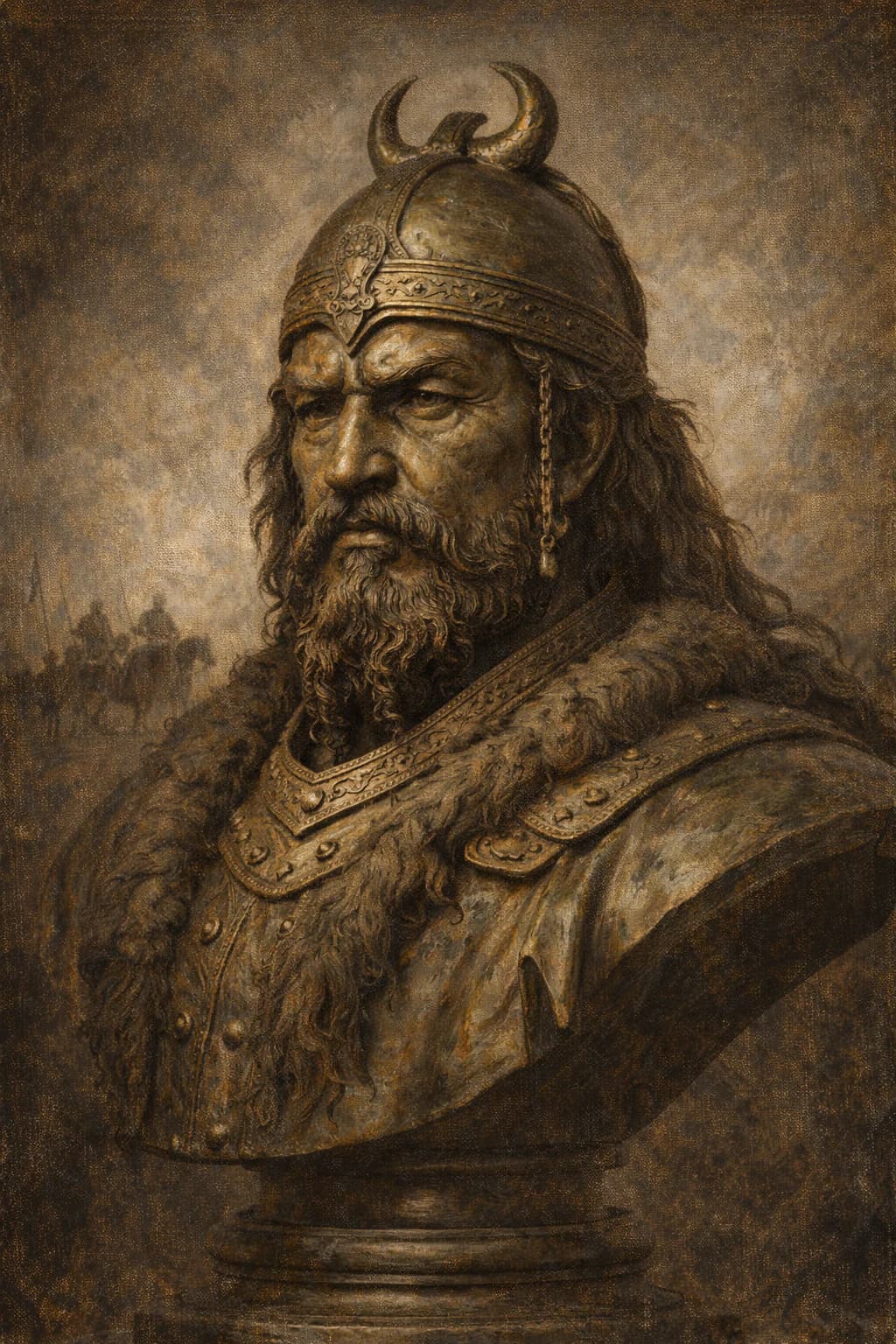
Attila was born into the ruling circles of the Huns around the early fifth century, at a time when Roman power was under pressure from migrations, frontier wars, internal politics, and rival military elites. The Huns were not a single simple tribe but a confederation of peoples held together by leadership, plunder, tribute, marriage alliances, and military success. Their world was mobile, horse-centered, and politically flexible, but it was also deeply connected to Rome. Hunnic leaders negotiated with emperors, served as allies and enemies, and understood the wealth that Roman diplomacy could provide. Attila's early life is poorly documented, and hostile Roman writers shaped much of what survives. Even so, his later career shows a ruler who understood both steppe warfare and imperial bargaining. He did not merely raid blindly; he turned fear, speed, and negotiation into a system of power.
Growing up within both mobility and political awareness gave Attila an unusual blend of warrior instinct and strategic calculation.
434
Joint Leadership
Attila and his brother Bleda became joint rulers of the Huns around 434, inheriting authority from their uncle Rua. Their first major dealings were with the Eastern Roman Empire, which agreed to increased tribute and concessions in an attempt to secure peace along the Danube frontier. Tribute was not a sign of Roman stupidity; it was a practical tool emperors used to buy time and redirect threats. For Attila and Bleda, it was fuel. Roman gold helped reward followers, bind subject groups, and strengthen the prestige of Hunnic leadership. Joint rule also created internal tension. We know little about the brothers' relationship beyond the later fact that Bleda disappeared from power, probably killed or removed around 445. The shared-rule period taught Attila that diplomacy and violence worked best together: a treaty could be as useful as a raid if it made Rome pay.
Power shared is often temporary, especially when ambition and opportunity begin to diverge.
445
Sole Authority
After Bleda's death, Attila ruled alone and became the central figure holding the Hunnic confederation together. That authority depended less on bureaucratic institutions than on personal command, success in war, and the ability to distribute wealth. Attila's court drew envoys, subject leaders, warriors, and Roman negotiators, creating a political center that impressed and unnerved outsiders. The historian Priscus, who visited Attila's court, described a ruler less extravagantly barbaric than Roman propaganda might suggest: austere in personal habits, alert to rank, and fully conscious of diplomatic theater. Sole rule allowed Attila to focus Hunnic pressure with unusual intensity. He could threaten, negotiate, raid, and withdraw according to advantage. His power was real, but it was also delicate. A confederation built around victory had to keep winning or keep being paid.
Unchallenged leadership allowed Attila to convert potential power into decisive action.
440–447
Pressure on the East
Attila's campaigns against the Eastern Roman Empire in the 440s were devastating. Taking advantage of frontier weakness, diplomatic disputes, and Roman commitments elsewhere, Hunnic forces crossed the Danube, attacked cities, and forced Constantinople's government into humiliating payments. The great walls of Constantinople itself remained a barrier, but much of the Balkan interior suffered badly. Attila did not usually seek to administer Roman provinces permanently. His aim was tribute, captives, prestige, and recognition of Hunnic power. That strategy was effective because it turned Rome's wealth into Hunnic cohesion. Every payment from the empire could be redistributed among followers and allies. The Eastern court eventually strengthened defenses and became less vulnerable, but Attila had shown that a Roman emperor could be made to negotiate under fear. His success was psychological as well as military.
Attila understood that economic strain could be as powerful as battlefield victories.
late 440s
Peak Expansion
At the height of his power, Attila dominated a vast zone across Central and Eastern Europe, but his empire was unlike Rome. It had no marble capital, no stable tax bureaucracy, and no uniform citizenship. It was a political-military confederation of Huns, Goths, Gepids, Alans, and other groups tied to Attila by fear, reward, obligation, and the expectation of victory. This kind of empire could move quickly and strike hard, but it required constant maintenance. Subject peoples had to believe obedience was safer or more profitable than revolt. Roman gold, captured wealth, and successful campaigns were therefore not luxuries; they were the glue of the system. Attila's court became a place where the Roman world and steppe power met face to face. Its scale made him formidable, but its dependence on his personal authority made long-term survival uncertain.
An empire built on movement and loyalty must be constantly reinforced to endure.
451
Western Campaign
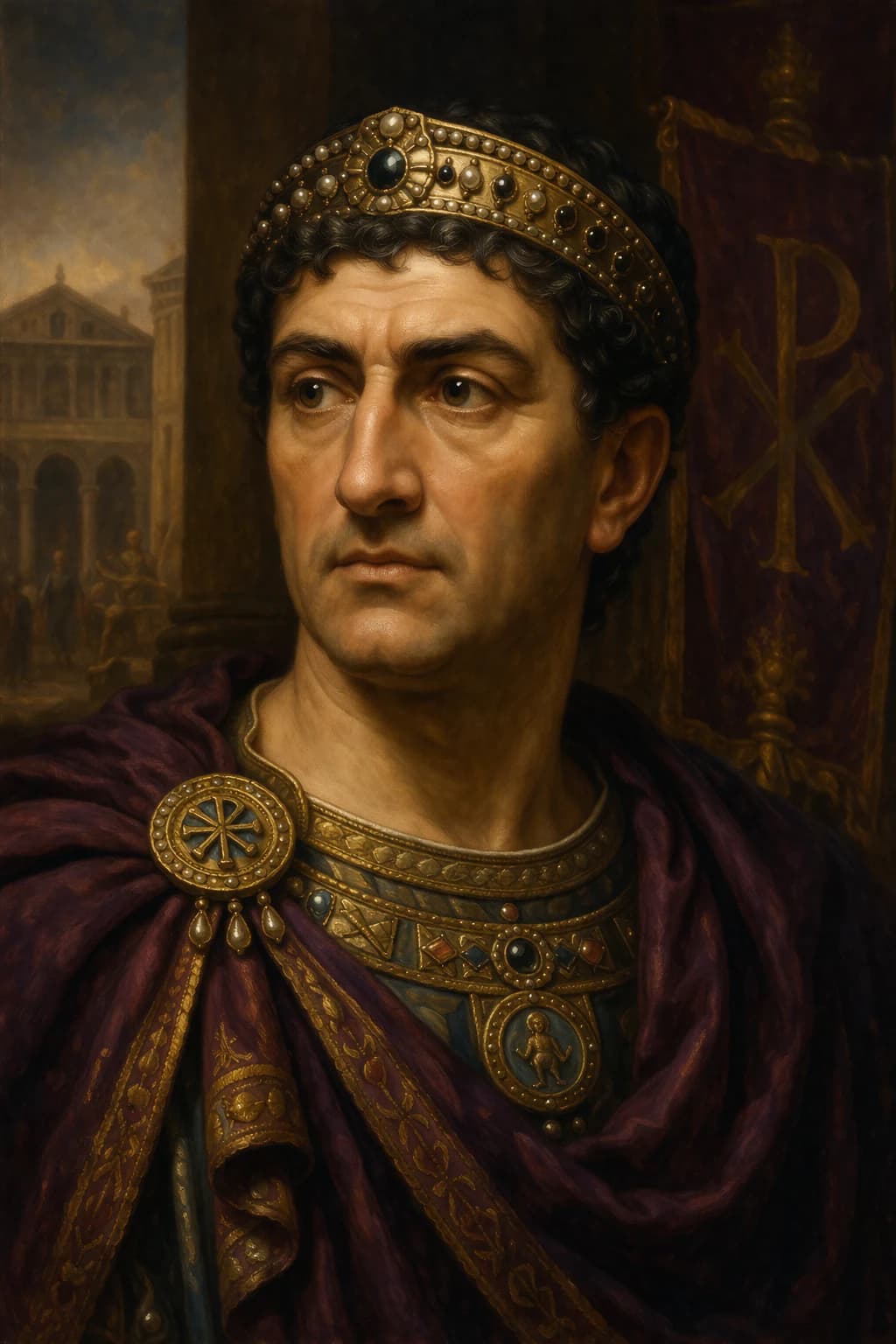
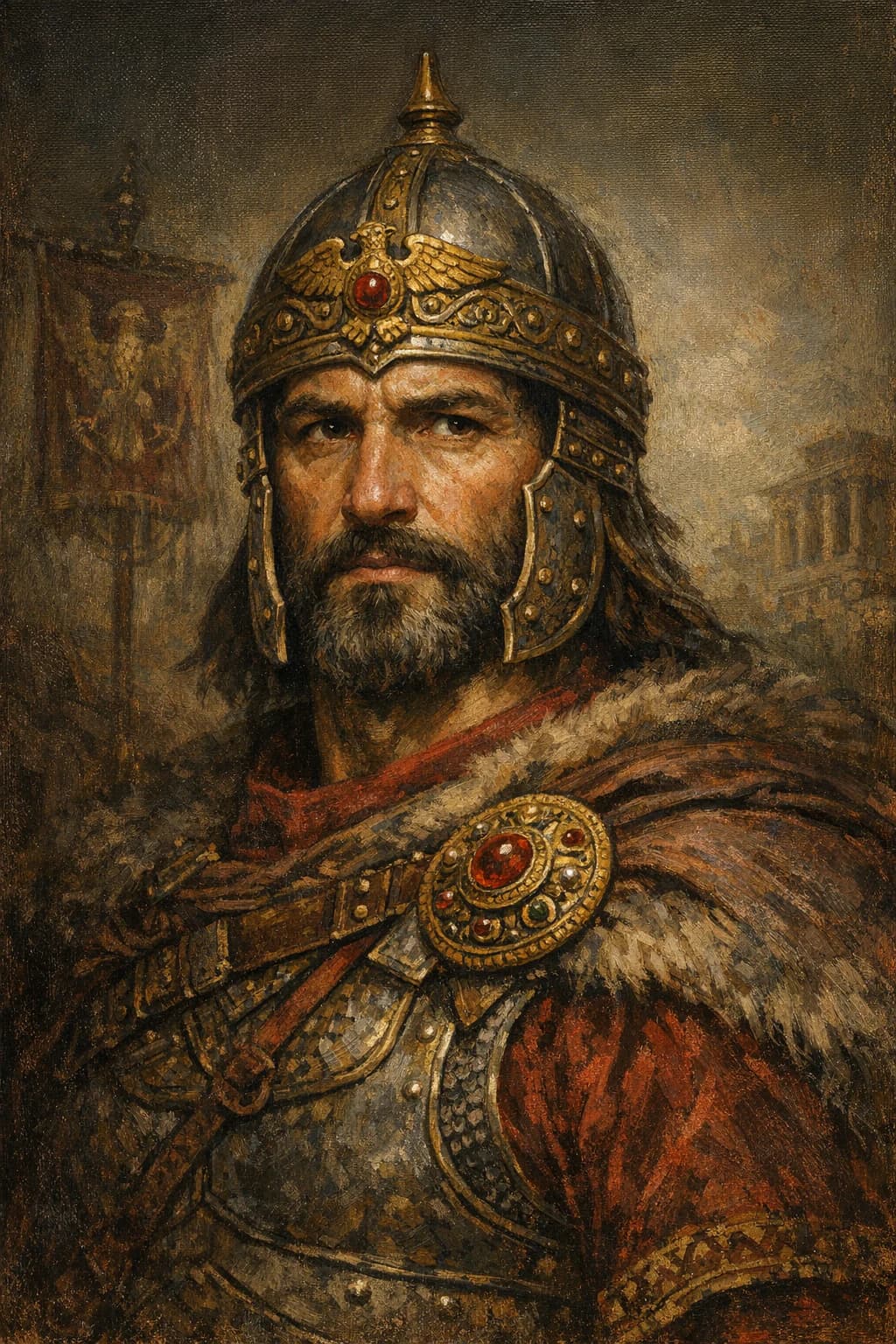
In 451, Attila turned west into Gaul, a move shaped by Roman factional politics, opportunity, and the strange episode of Honoria, the sister of Emperor Valentinian III, whose appeal to Attila was interpreted by him as a marriage claim and a demand for territory. His invasion forced an unusual coalition under the Roman general Aetius, joined by Visigoths and other groups who had their own reasons to resist Hunnic domination. The Battle of the Catalaunian Plains was brutal and strategically complex. It did not annihilate Attila, but it stopped his advance and showed that Roman diplomacy could still assemble effective resistance when survival demanded it. The battle also complicates the idea of a simple Rome-versus-barbarians world. Many so-called barbarian groups fought on both sides. The late Roman West survived through alliances as much as legions.
Even the most feared power can be restrained when rivals set aside divisions.
452
March into Italy
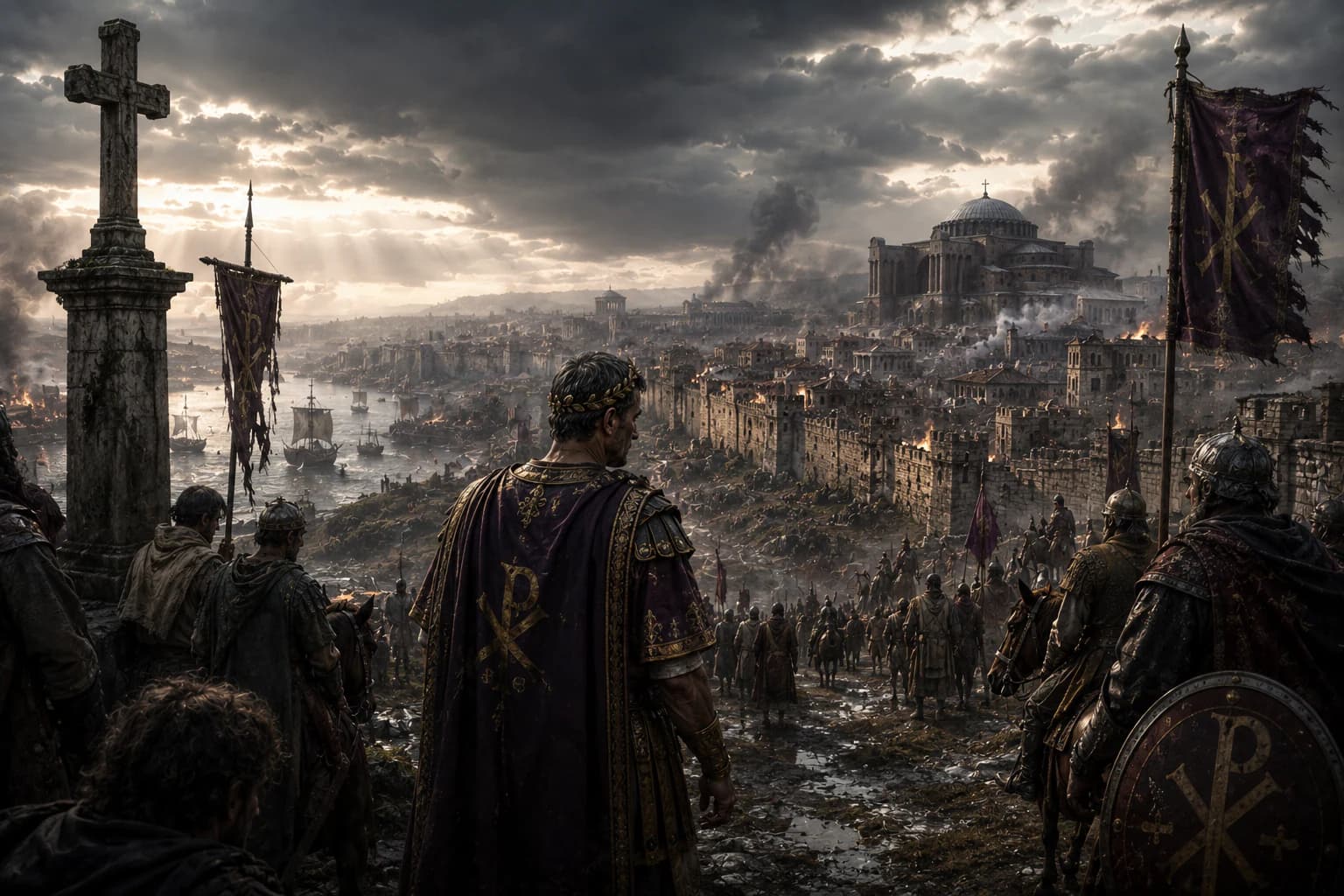
Attila invaded Italy in 452, attacking northern cities including Aquileia, which was devastated after resistance. The campaign terrified the Western Roman court and later Christian memory gave special prominence to Pope Leo I's meeting with Attila. Medieval tradition imagined Leo turning Attila back almost by spiritual force, but the historical explanation was probably more practical and less miraculous. Italy was difficult to supply, disease may have struck the army, famine conditions limited resources, Eastern Roman pressure threatened Hunnic lands, and negotiation offered a way to withdraw with prestige. Attila's retreat was not proof that he had become weak, but it did reveal the limits of his model. Raiding and coercion worked best when movement, forage, and political leverage aligned. Italy strained all three. Even the most feared army had to eat.
Strategic withdrawal can reflect calculation rather than weakness.
453
Sudden Death
Attila died suddenly in 453, reportedly on the night of a marriage to a woman named Ildico. Ancient accounts say he suffered a fatal hemorrhage, though the circumstances have invited suspicion and legend ever since. What matters politically is how quickly his power system weakened after him. His sons tried to divide or preserve authority, but subject peoples saw opportunity. At the Battle of Nedao in 454, a coalition including the Gepids helped break Hunnic dominance in central Europe. The speed of collapse shows how much Attila's empire depended on one ruler's prestige. Rome had institutions that could survive bad emperors; Attila's confederation needed a leader able to command reward, fear, and expectation. When he vanished, the bargain that held the system together began to fail.
Empires centered on one individual often struggle to survive that individual’s loss.
post-453
Enduring Reputation
Attila's legacy has always been larger than the evidence. Roman and Christian writers made him a scourge, sometimes an instrument of divine punishment. Later traditions in parts of Europe remembered him differently, as a mighty king or ancestral figure. Modern historians see neither a mindless destroyer nor a noble freedom fighter, but a formidable ruler of a steppe confederation who exploited Roman weakness with unusual skill. His campaigns did not single-handedly destroy the Western Roman Empire, which had deeper structural problems, but they intensified pressure on a world already strained by military, fiscal, and political crisis. Attila remains important because his life reveals the late antique frontier as a connected zone of diplomacy, tribute, migration, alliance, and violence. The legend is thunderous; the history is more interesting.
A powerful reputation can outlast both achievements and the structures that produced them.