People

Archimedes

Archimedes of Syracuse was a Greek mathematician, engineer, and inventor born around 287 BC. He advanced geometry, mechanics, hydrostatics, and siege engineering, and died during the Roman capture of Syracuse in 212 BC.

Born
c. 287 BCE
Died
212 BCE
Role
Mathematician and engineer

Greek mathematician and engineer (c. 287 BC-212 BC)

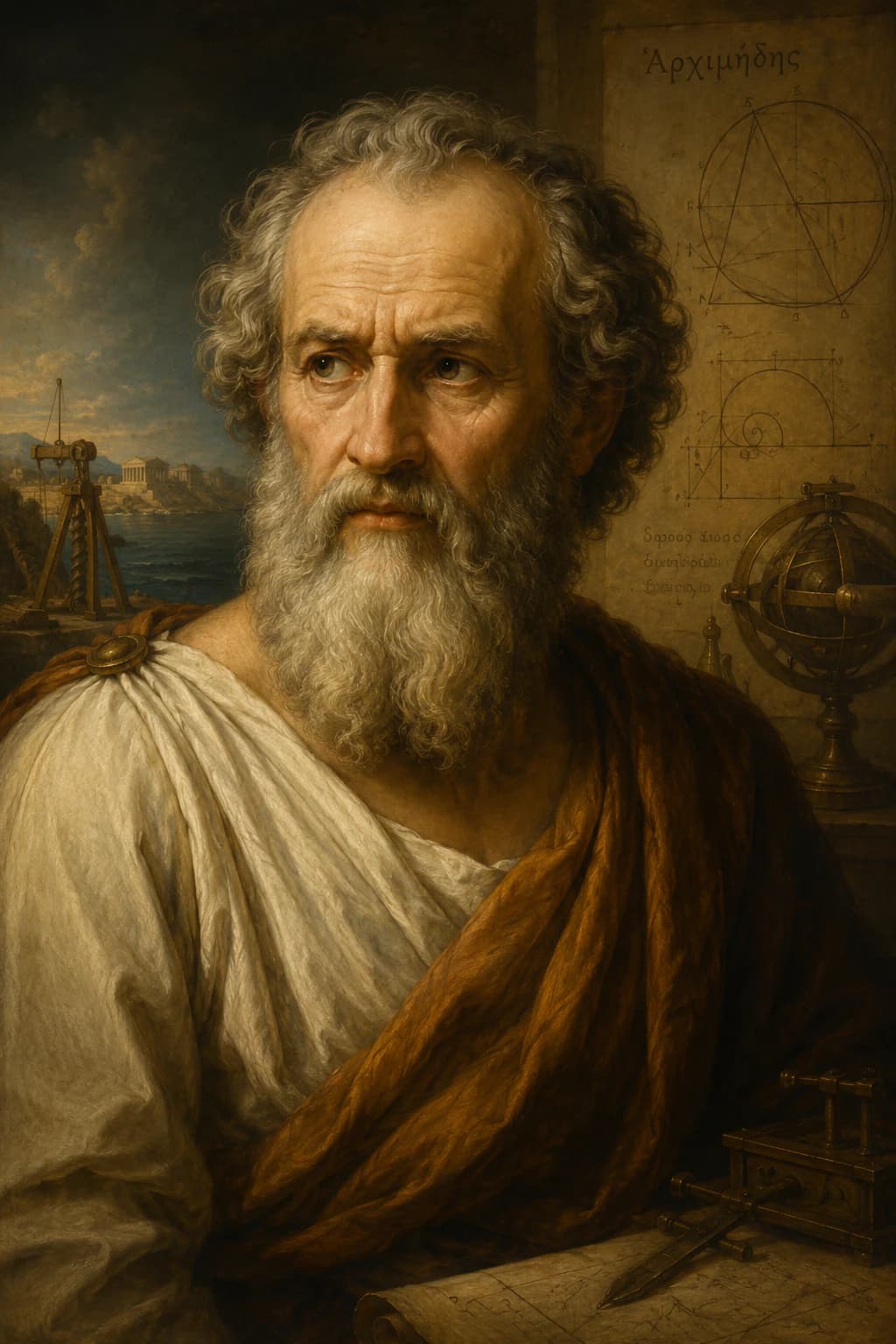
AI-generated portrait of Archimedes with mathematical and engineering instruments
AI-assisted historical reconstruction

An illustrative reconstruction based on historical context. It is not a photograph or documentary likeness. Image policy

Quick answer

Archimedes of Syracuse was a Greek mathematician, engineer, and inventor born around 287 BC. He advanced geometry, mechanics, hydrostatics, and siege engineering, and died during the Roman capture of Syracuse in 212 BC.

Born
c. 287 BCE
Died
212 BCE
Role
Mathematician and engineer
Years
c. 287-212 BCE
Quick facts

Profile details

Additional identity and tagging details that are not already covered in the introduction.

Full name
Archimedes of Syracuse
Region
Sicily, Greek world, Syracuse
Facts

Archimedes timeline facts

Selected specifics from this profile's life story.

c. 287 BC
Syracusan world

Archimedes was born in Syracuse, a Greek city in Sicily connected to the wider Hellenistic world.

third century BC
Geometry and measurement

Archimedes made major advances in geometry, including work on circles, spheres, cylinders, areas, and volumes.

third century BC
Mechanics and buoyancy

Archimedes studied levers, centers of gravity, and buoyancy, linking mathematical reasoning with physical behavior.

214-212 BC
Siege of Syracuse

During Rome's siege of Syracuse, Archimedes was remembered for defensive machines that made the city difficult to capture.

Life Journey

Mathematics, machines, and the defence of Syracuse

Follow Archimedes through geometry, mechanics, and the Roman siege of his city.

Complete chronology

c. 287 BC

Syracusan world

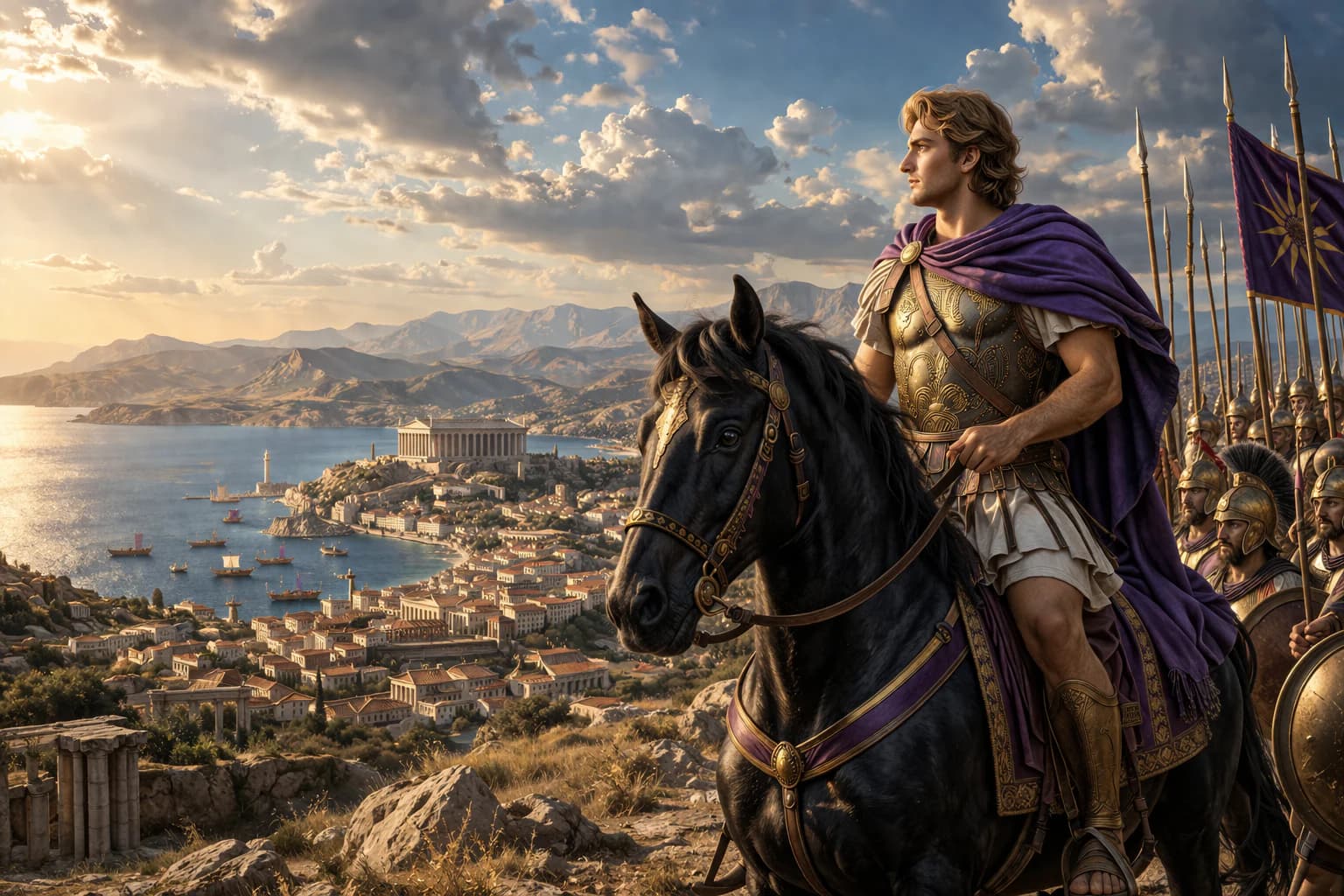
Archimedes lived in Syracuse, a powerful Greek city on Sicily. The city stood between Greek, Carthaginian, and Roman worlds, and its political position made technical skill useful as well as admired. Ancient tradition links Archimedes with study in Alexandria, though the details are uncertain. What is clear is that his work belonged to a Hellenistic culture where mathematics, mechanics, astronomy, and engineering could reinforce one another.
third century BC

Geometry and measurement

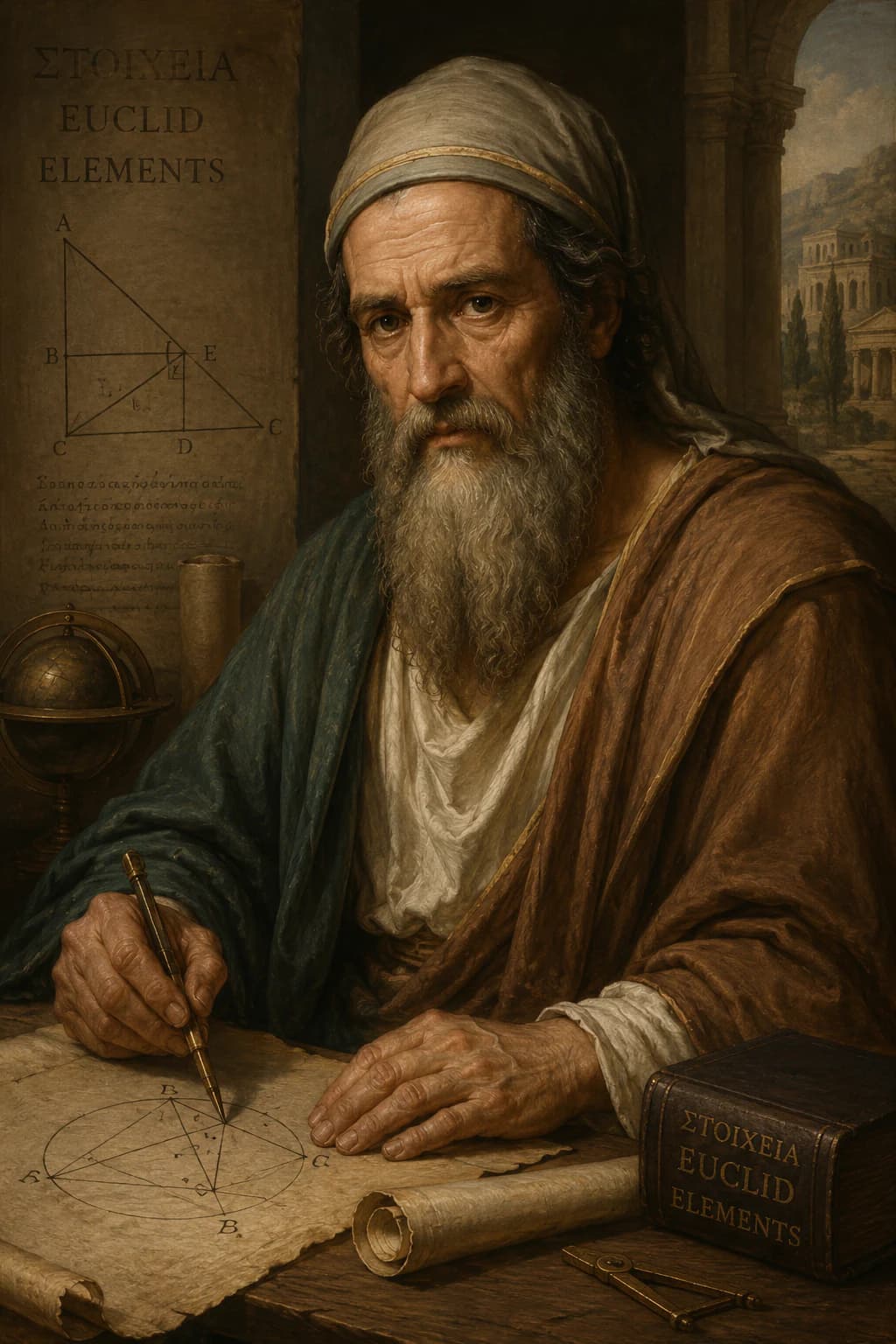
Archimedes's mathematical writings show extraordinary control of measurement and proof. He approximated pi, explored areas and volumes, and treated the sphere and cylinder with special pride. His methods sometimes anticipated later ideas about limits by comparing figures through exhaustion. He was not simply solving isolated puzzles. He was expanding what Greek geometry could measure.

third century BC

Mechanics and buoyancy

Archimedes became famous for applying mathematics to mechanics. His work on levers and centers of gravity helped turn physical problems into geometrical ones. The principle of buoyancy associated with him explained why objects float or sink according to displaced fluid. Later stories about a royal crown and a sudden discovery in the bath may be embellished, but they preserve a real memory: Archimedes made nature intelligible through measurement.

214-212 BC

Siege of Syracuse

When Rome besieged Syracuse during the Second Punic War, Archimedes became part of the city's defensive memory. Ancient accounts describe cranes, catapults, and devices that disrupted Roman attacks. Some details may be dramatized, but the broader point is credible: his engineering skill mattered in war. Syracuse eventually fell in 212 BC, and Archimedes was killed during the Roman sack despite orders that he be spared. His death became a symbol of fragile knowledge in a violent world.

Continue in context

Connected stories

Move from the profile into the wider events and settings this figure belongs to.

Tertiary paths

Content note

This profile is written for educational use and connects to related Stories of History pages. The main portrait is an AI-assisted historical reconstruction, included as an illustrative aid rather than documentary evidence. Image policy

References

Sources & Further Reading

Reliable reference works, archives and reading paths connected to this profile.

Further reading

  1. Encyclopaedia Britannica, Search results for Archimedes,” accessed June 2026.Open source
  2. WorldCat, Books and library holdings for Archimedes,” accessed June 2026.Open source

Primary sources

  1. Library of Congress, Search results for Archimedes,” accessed June 2026.Open source

Reviewed claim sources

Loading reviewed claim sources...

A weekly route through history

Find out first about the latest published stories, feature notes and occasional Premium offers in one weekly email.